

Chicken, broilers or fryers, light meat, meat and skin, cooked, stewed
Whole food · Poultry Products

Photo: Wikipedia
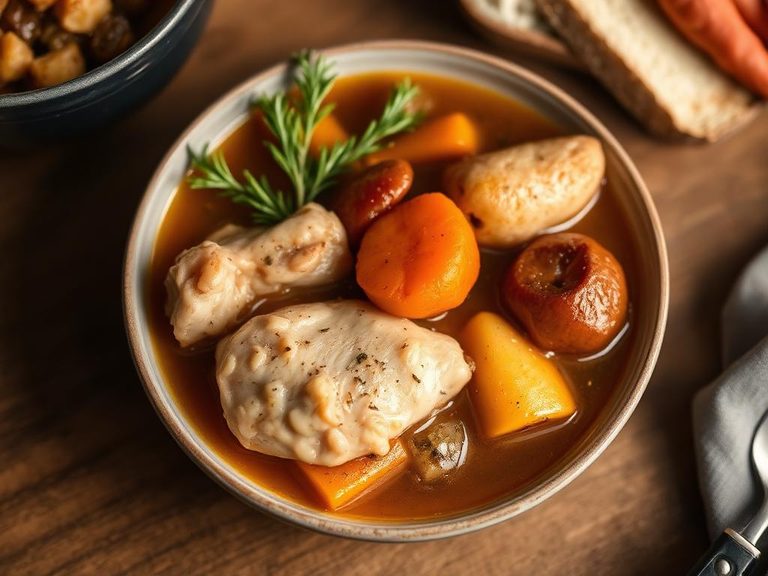
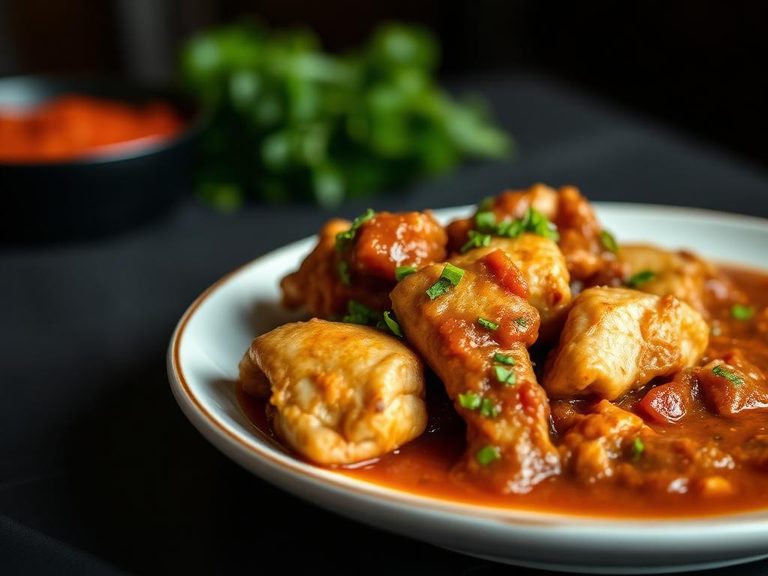
This is tender, succulent white meat from a young chicken, slow-cooked until it practically falls apart. The stewing process renders the skin and meat incredibly moist, creating a rich, savory flavor without any breading or frying. It's a lean protein powerhouse, packing over 26 grams of protein per 100 grams with virtually no carbohydrates.
Calorie split: 54% protein · 0% carbs · 46% fat
↓ Full nutrition💚 Why it's loved
People adore it for its comforting, melt-in-your-mouth texture and deep, savory flavor that forms the perfect base for countless soups, stews, and braises. Its mild taste makes it incredibly versatile, acting as a canvas for herbs, spices, and sauces from every culinary tradition.
⚠️ Watch-outs & how to enjoy it better
The skin adds significant saturated fat and calories, which may be a concern for those monitoring fat intake. To enjoy it healthily, simply remove the skin before eating or use it to flavor a broth and then discard. Also, ensure it's cooked thoroughly to avoid foodborne illness.
Key benefits
- Excellent source of high-quality, complete protein
- Very low in carbohydrates and sugars
- Rich in B vitamins like niacin and B6
- Provides essential minerals like selenium and phosphorus
- Stewing retains moisture and nutrients better than some high-heat methods
🍽️ Popular dishes
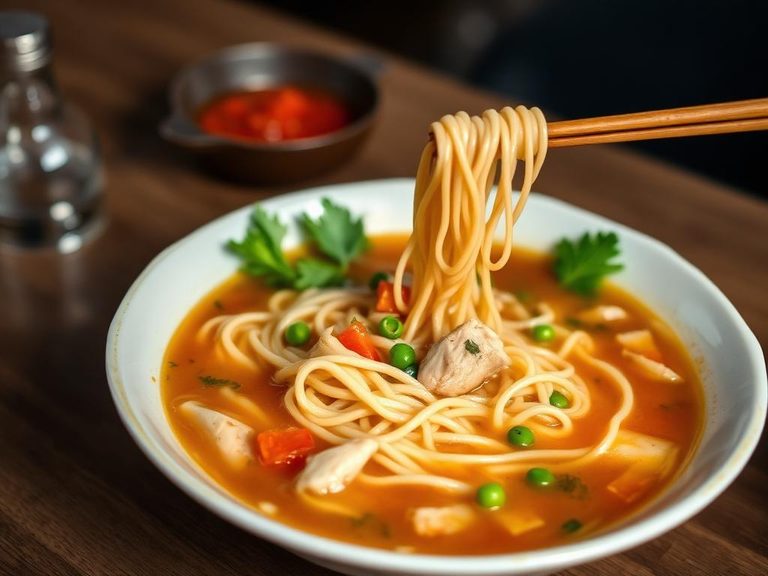
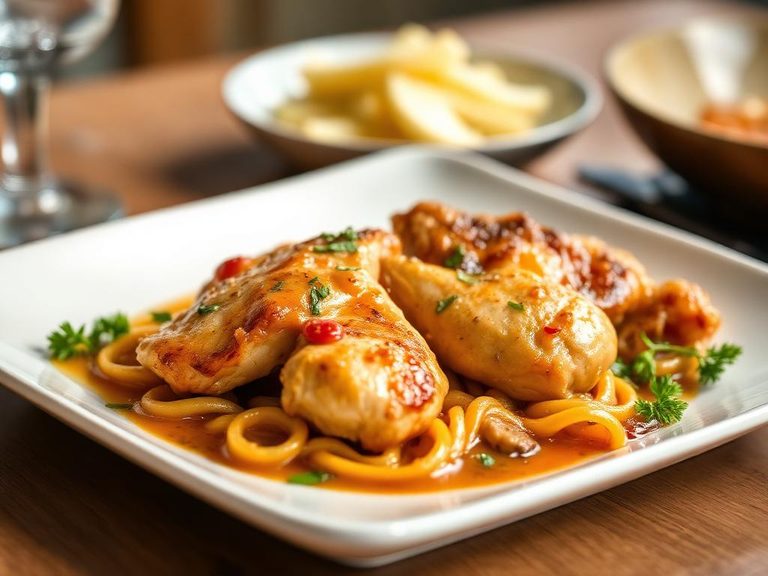
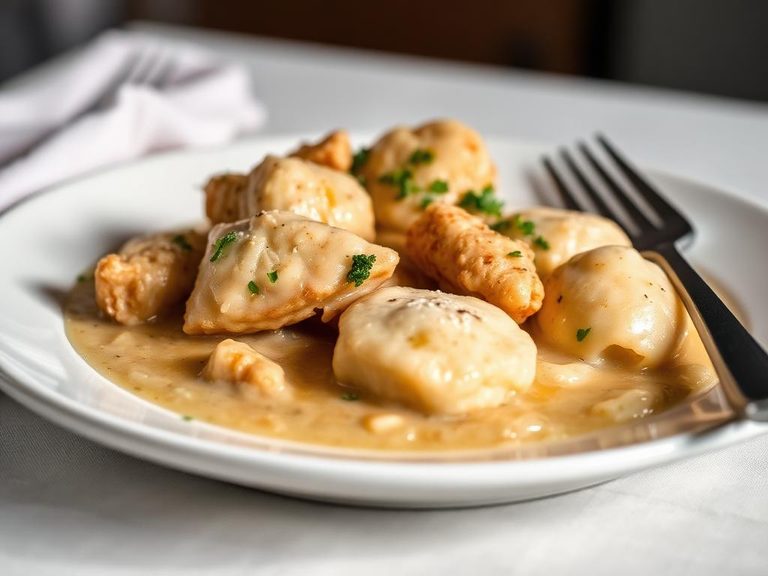
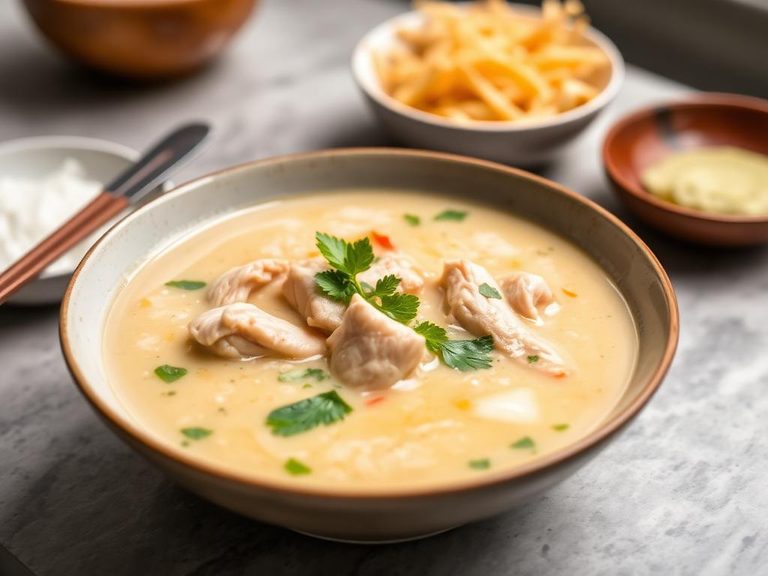
🌍 Where it's eaten
💡 Did you know?
The term 'broiler' refers to a young chicken of about 6-10 weeks old, specifically bred for rapid growth and tender meat, while 'fryer' is a similar age but slightly heavier.
Full nutrition (USDA data · scales with serving)
| Water | 65.1 g |
| Energy | 201 kcal |
| Energy | 841 kj |
| Protein | 26.1 g |
| Total lipid (fat) | 10.0 g |
| Ash | 0.78 g |
| Carbohydrate, by difference | 0.00 g |
| Fiber, total dietary | 0.00 g |
| Calcium, Ca | 13.0 mg |
| Iron, Fe | 0.98 mg |
| Magnesium, Mg | 20.0 mg |
| Phosphorus, P | 146 mg |
| Potassium, K | 167 mg |
| Sodium, Na | 63.0 mg |
| Zinc, Zn | 1.1 mg |
| Copper, Cu | 0.04 mg |
| Manganese, Mn | 0.02 mg |
| Selenium, Se | 21.2 ug |
| Vitamin C, total ascorbic acid | 0.00 mg |
| Thiamin | 0.04 mg |
| Riboflavin | 0.11 mg |
| Niacin | 6.9 mg |
| Pantothenic acid | 0.54 mg |
| Vitamin B-6 | 0.27 mg |
| Folate, total | 3.0 ug |
| Folic acid | 0.00 ug |
| Folate, food | 3.0 ug |
| Folate, DFE | 3.0 ug |
| Vitamin B-12 | 0.20 ug |
| Vitamin A, RAE | 29.0 ug |
| Retinol | 29.0 ug |
| Vitamin A, IU | 96.0 iu |
| Alcohol, ethyl | 0.00 g |
Fat & fatty acid profile (per 100g)
| Fatty acids, total saturated | 2.8 g |
| SFA 4:0 | 0.00 g |
| SFA 6:0 | 0.00 g |
| SFA 8:0 | 0.00 g |
| SFA 10:0 | 0.00 g |
| SFA 12:0 | 0.01 g |
| SFA 14:0 | 0.08 g |
| SFA 16:0 | 2.1 g |
| SFA 18:0 | 0.56 g |
| Fatty acids, total monounsaturated | 3.9 g |
| MUFA 16:1 | 0.53 g |
| MUFA 18:1 | 3.2 g |
| MUFA 20:1 | 0.11 g |
| MUFA 22:1 | 0.00 g |
| Fatty acids, total polyunsaturated | 2.1 g |
| PUFA 18:2 | 1.8 g |
| PUFA 18:3 | 0.08 g |
| PUFA 18:4 | 0.00 g |
| PUFA 20:4 | 0.08 g |
| PUFA 20:5 n-3 (EPA) | 0.01 g |
| PUFA 22:5 n-3 (DPA) | 0.02 g |
| PUFA 22:6 n-3 (DHA) | 0.03 g |
| Cholesterol | 74.0 mg |
Amino acid profile (per 100g)
| Tryptophan | 0.29 g |
| Threonine | 1.1 g |
| Isoleucine | 1.3 g |
| Leucine | 1.9 g |
| Lysine | 2.1 g |
| Methionine | 0.70 g |
| Cystine | 0.35 g |
| Phenylalanine | 1.0 g |
| Tyrosine | 0.85 g |
| Valine | 1.3 g |
| Arginine | 1.6 g |
| Histidine | 0.77 g |
| Alanine | 1.5 g |
| Aspartic acid | 2.3 g |
| Glutamic acid | 3.8 g |
| Glycine | 1.6 g |
| Proline | 1.2 g |
| Serine | 0.92 g |
FAQ
What's the difference between 'broiler' and 'fryer' chicken?
The terms are often used interchangeably today. Historically, 'broilers' were younger and smaller (6-10 weeks), ideal for roasting or broiling, while 'fryers' were slightly older and heavier (7-12 weeks). Nutritionally, they are very similar.
Is the skin included in the nutritional data?
Yes, the data is for 'meat and skin.' The skin contributes a significant portion of the fat (9.97g per 100g). Removing it would reduce the fat and calorie content substantially.
Why is the carb count 0g?
Pure animal muscle tissue contains negligible carbohydrates. Any carbs in a chicken dish would come from added ingredients like flour thickeners, vegetables, or sauces, not the chicken itself.
What does 'stewed' mean for the cooking method?
Stewing involves simmering the chicken slowly in a small amount of liquid (like broth, wine, or tomatoes) in a covered pot. This method breaks down connective tissue, resulting in very tender, flavorful meat and a rich cooking liquid.
Nutrient density (calculated · NRF9.3)
Nutrient Rich Foods index: beneficial nutrients (protein, fiber, vitamins, minerals) minus saturated fat, added sugar & sodium, per 100 kcal.
NRF9.3 index — Fulgoni, Keast & Drewnowski, 2009. Computed from USDA nutrients.
Weight-loss friendliness (composite index)
Energy density 2.01 kcal/g · 52% calories from protein · 0.0 g fiber · 0.0 g sugar per 100 g.
Composite of energy density (Rolls et al., 1999), protein & fiber satiety, minus sugar. A calculated heuristic — ranks satiety-per-calorie, not a clinical measure.
Dietary load (calculated from USDA values)
Potential renal acid load. Positive = acid-forming, negative = alkaline-forming.
Sodium-to-potassium ratio: 0.38 (lower is better — aim for ≤ 1)
Sodium:potassium per WHO potassium guidance. Computed from USDA nutrients.