

Cereal or granola bar, nonfat
Common food

Photo: Wikipedia
A nonfat cereal or granola bar is a compact, shelf-stable snack made primarily from toasted grains, often bound with sweeteners and baked into a firm, chewy, or crunchy rectangle. It delivers a straightforward, sweet cereal-milk flavor profile with a texture that can range from a soft, oat-based chew to a crisp, rice-cereal crunch. Nutritionally, it is a dense source of carbohydrates, providing quick energy with virtually no fat.
Calorie split: 7% protein · 91% carbs · 2% fat
↓ Full nutrition💚 Why it's loved
People love it for its ultimate convenience and reliable, sweet taste that satisfies a quick hunger pang or sugar craving. Its portability and long shelf life make it a staple in lunchboxes, desk drawers, and hiking packs.
⚠️ Watch-outs & how to enjoy it better
The high sugar content (over 45g per 100g) can lead to rapid blood sugar spikes and subsequent crashes, leaving you hungry soon after. To counteract this, pair it with a source of protein or healthy fat (like a handful of nuts or a cheese stick) and practice strict portion control, treating it as an occasional energy boost rather than a foundational snack.
Key benefits
- Provides rapid, portable energy from carbohydrates
- Very low in fat (less than 1g per 100g)
- Source of dietary fiber (7.4g per 100g)
- Convenient for on-the-go snacking or meal replacement
- Offers a consistent, predictable calorie source
🍽️ Popular dishes
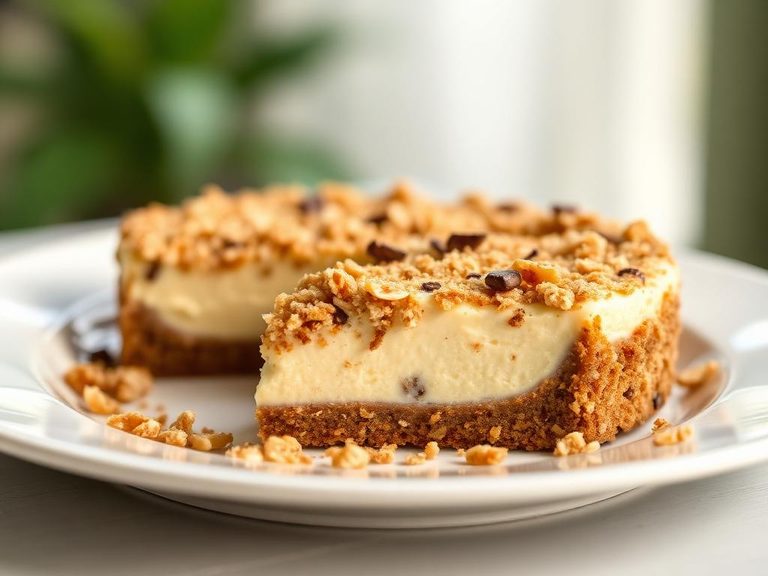

🌍 Where it's eaten
💡 Did you know?
The first commercial granola bar was created in 1975 by General Mills as a way to repurpose broken pieces of their Cheerios cereal that couldn't be sold in boxes.
Full nutrition (USDA data · scales with serving)
| Water | 13.7 g |
| Energy | 342 kcal |
| Protein | 5.9 g |
| Total lipid (fat) | 0.90 g |
| Carbohydrate, by difference | 77.6 g |
| Fiber, total dietary | 7.4 g |
| Total Sugars | 45.2 g |
| Calcium, Ca | 3.0 mg |
| Iron, Fe | 4.0 mg |
| Magnesium, Mg | 50.0 mg |
| Phosphorus, P | 122 mg |
| Potassium, K | 220 mg |
| Sodium, Na | 16.0 mg |
| Zinc, Zn | 1.4 mg |
| Copper, Cu | 0.23 mg |
| Selenium, Se | 8.3 ug |
| Vitamin C, total ascorbic acid | 1.7 mg |
| Thiamin | 0.03 mg |
| Riboflavin | 0.07 mg |
| Niacin | 0.40 mg |
| Vitamin B-6 | 1.6 mg |
| Folate, total | 316 ug |
| Folic acid | 302 ug |
| Folate, food | 14.0 ug |
| Folate, DFE | 527 ug |
| Choline, total | 22.6 mg |
| Vitamin B-12 | 0.18 ug |
| Vitamin B-12, added | 0.00 ug |
| Vitamin A, RAE | 1.0 ug |
| Retinol | 0.00 ug |
| Carotene, beta | 12.0 ug |
| Carotene, alpha | 0.00 ug |
| Cryptoxanthin, beta | 9.0 ug |
| Lycopene | 0.00 ug |
| Lutein + zeaxanthin | 113 ug |
| Vitamin E (alpha-tocopherol) | 0.22 mg |
| Vitamin E, added | 0.00 mg |
| Vitamin D (D2 + D3) | 0.00 ug |
| Vitamin K (phylloquinone) | 1.3 ug |
| Alcohol, ethyl | 0.00 g |
| Caffeine | 0.00 mg |
| Theobromine | 0.00 mg |
Fat & fatty acid profile (per 100g)
| Fatty acids, total saturated | 0.20 g |
| SFA 4:0 | 0.00 g |
| SFA 6:0 | 0.00 g |
| SFA 8:0 | 0.00 g |
| SFA 10:0 | 0.00 g |
| SFA 12:0 | 0.00 g |
| SFA 14:0 | 0.00 g |
| SFA 16:0 | 0.17 g |
| SFA 18:0 | 0.02 g |
| Fatty acids, total monounsaturated | 0.24 g |
| MUFA 16:1 | 0.00 g |
| MUFA 18:1 | 0.24 g |
| MUFA 20:1 | 0.00 g |
| MUFA 22:1 | 0.00 g |
| Fatty acids, total polyunsaturated | 0.35 g |
| PUFA 18:2 | 0.33 g |
| PUFA 18:3 | 0.02 g |
| PUFA 18:4 | 0.00 g |
| PUFA 20:4 | 0.00 g |
| PUFA 20:5 n-3 (EPA) | 0.00 g |
| PUFA 22:5 n-3 (DPA) | 0.00 g |
| PUFA 22:6 n-3 (DHA) | 0.00 g |
| Cholesterol | 0.00 mg |
Amino acid profile (per 100g)
Estimated from Cereals ready-to-eat, granola, homemade — USDA does not publish this profile for Cereal or granola bar.
| Tryptophan | 0.19 g |
| Threonine | 0.48 g |
| Isoleucine | 0.55 g |
| Leucine | 0.98 g |
| Lysine | 0.63 g |
| Methionine | 0.23 g |
| Cystine | 0.30 g |
| Phenylalanine | 0.67 g |
| Tyrosine | 0.38 g |
| Valine | 0.70 g |
| Arginine | 1.3 g |
| Histidine | 0.35 g |
| Alanine | 0.69 g |
| Aspartic acid | 1.4 g |
| Glutamic acid | 3.1 g |
| Glycine | 0.81 g |
| Proline | 0.66 g |
| Serine | 0.67 g |
| Hydroxyproline | 0.00 g |
FAQ
Is a nonfat granola bar a healthy snack?
It can be part of a balanced diet due to its fiber and energy, but its very high sugar content means it should be consumed in moderation. It's best viewed as an occasional energy source, not a nutrient-dense health food.
Why does it have so much sugar if it's nonfat?
Sugar is a primary ingredient used for binding, texture, and flavor. Removing fat often leads manufacturers to increase sugar to maintain palatability and shelf stability.
How can I make it a more balanced snack?
Pair it with a protein source like Greek yogurt, a hard-boiled egg, or a small handful of nuts. This combination slows sugar absorption and provides longer-lasting satiety.
Nutrient density (calculated · NRF9.3)
Nutrient Rich Foods index: beneficial nutrients (protein, fiber, vitamins, minerals) minus saturated fat, added sugar & sodium, per 100 kcal.
NRF9.3 index — Fulgoni, Keast & Drewnowski, 2009. Computed from USDA nutrients.
Weight-loss friendliness (composite index)
Energy density 3.42 kcal/g · 7% calories from protein · 7.4 g fiber · 45.2 g sugar per 100 g.
Composite of energy density (Rolls et al., 1999), protein & fiber satiety, minus sugar. A calculated heuristic — ranks satiety-per-calorie, not a clinical measure.
Dietary load (calculated from USDA values)
Potential renal acid load. Positive = acid-forming, negative = alkaline-forming.
Sodium-to-potassium ratio: 0.07 (lower is better — aim for ≤ 1)
Sodium:potassium per WHO potassium guidance. Computed from USDA nutrients.