

Cereal, chocolate crispy
Common food

Photo: Wikipedia
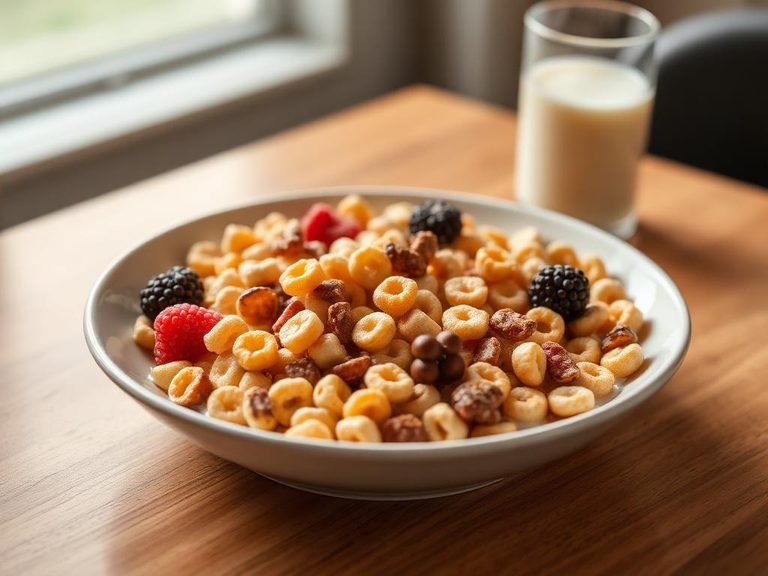
Chocolate crispy cereal consists of puffed rice or wheat kernels coated in a sweet, cocoa-flavored shell, delivering a light, airy crunch with a mild chocolate taste. Nutritionally, it is a high-carbohydrate, low-protein breakfast option, with over 35g of sugar per 100g, making it more of an indulgent treat than a balanced meal.
Calorie split: 6% protein · 85% carbs · 10% fat
↓ Full nutrition💚 Why it's loved
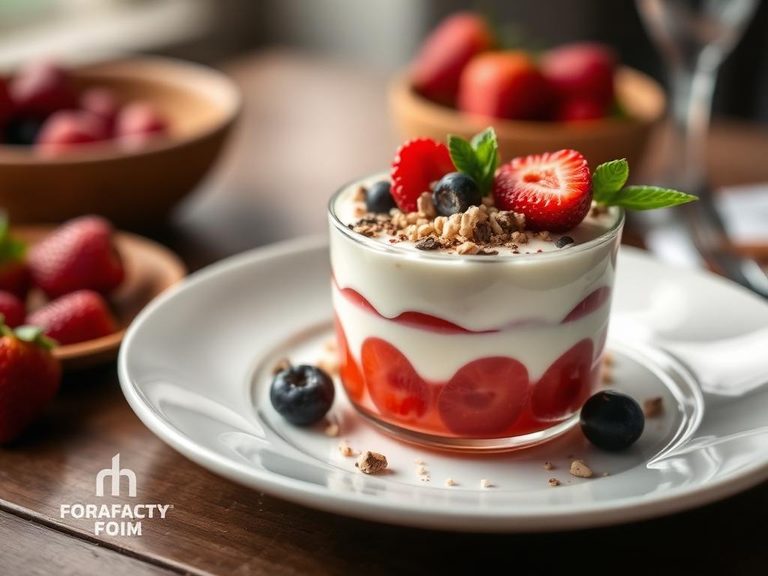
People love it for the satisfying crunch and the nostalgic, sweet chocolate flavor that makes breakfast feel like a treat. It's incredibly versatile, enjoyed with cold milk, sprinkled on yogurt, or eaten dry by the handful.
⚠️ Watch-outs & how to enjoy it better
Its very high sugar content (35.52g per 100g) can lead to rapid blood-sugar spikes and subsequent energy crashes. To counteract this, pair it with a source of protein or healthy fat like Greek yogurt, nuts, or a hard-boiled egg, and practice strict portion control.
Key benefits
- Quick source of energy from simple carbohydrates
- Convenient, no-cook breakfast or snack
- Light texture is easy to eat and digest
- Often fortified with vitamins and minerals
🍽️ Popular dishes


🌍 Where it's eaten
💡 Did you know?
The 'crispy' texture often comes from extrusion cooking, where the grain mixture is forced through a die under high pressure and temperature, puffing it instantly as it exits.
Full nutrition (USDA data · scales with serving)
| Water | 6.7 g |
| Energy | 380 kcal |
| Protein | 5.3 g |
| Total lipid (fat) | 4.2 g |
| Carbohydrate, by difference | 81.8 g |
| Fiber, total dietary | 1.4 g |
| Total Sugars | 35.5 g |
| Calcium, Ca | 10.0 mg |
| Iron, Fe | 9.6 mg |
| Magnesium, Mg | 28.0 mg |
| Phosphorus, P | 82.0 mg |
| Potassium, K | 89.0 mg |
| Sodium, Na | 547 mg |
| Zinc, Zn | 0.91 mg |
| Copper, Cu | 0.25 mg |
| Selenium, Se | 3.6 ug |
| Vitamin C, total ascorbic acid | 0.00 mg |
| Thiamin | 0.50 mg |
| Riboflavin | 0.49 mg |
| Niacin | 6.7 mg |
| Vitamin B-6 | 0.66 mg |
| Folate, total | 307 ug |
| Folic acid | 296 ug |
| Folate, food | 12.0 ug |
| Folate, DFE | 514 ug |
| Choline, total | 5.5 mg |
| Vitamin B-12 | 0.89 ug |
| Vitamin B-12, added | 0.89 ug |
| Vitamin A, RAE | 0.00 ug |
| Retinol | 0.00 ug |
| Carotene, beta | 0.00 ug |
| Carotene, alpha | 0.00 ug |
| Cryptoxanthin, beta | 0.00 ug |
| Lycopene | 0.00 ug |
| Lutein + zeaxanthin | 1.0 ug |
| Vitamin E (alpha-tocopherol) | 0.58 mg |
| Vitamin E, added | 0.00 mg |
| Vitamin D (D2 + D3) | 4.9 ug |
| Vitamin K (phylloquinone) | 2.2 ug |
| Alcohol, ethyl | 0.00 g |
| Caffeine | 7.0 mg |
| Theobromine | 61.0 mg |
Fat & fatty acid profile (per 100g)
| Fatty acids, total saturated | 0.66 g |
| SFA 4:0 | 0.00 g |
| SFA 6:0 | 0.00 g |
| SFA 8:0 | 0.00 g |
| SFA 10:0 | 0.00 g |
| SFA 12:0 | 0.00 g |
| SFA 14:0 | 0.01 g |
| SFA 16:0 | 0.42 g |
| SFA 18:0 | 0.19 g |
| Fatty acids, total monounsaturated | 2.2 g |
| MUFA 16:1 | 0.01 g |
| MUFA 18:1 | 2.2 g |
| MUFA 20:1 | 0.06 g |
| MUFA 22:1 | 0.00 g |
| Fatty acids, total polyunsaturated | 0.99 g |
| PUFA 18:2 | 0.73 g |
| PUFA 18:3 | 0.26 g |
| PUFA 18:4 | 0.00 g |
| PUFA 20:4 | 0.00 g |
| PUFA 20:5 n-3 (EPA) | 0.00 g |
| PUFA 22:5 n-3 (DPA) | 0.00 g |
| PUFA 22:6 n-3 (DHA) | 0.00 g |
| Cholesterol | 0.00 mg |
Amino acid profile (per 100g)
Estimated from Cereals ready-to-eat, POST, HONEY BUNCHES OF OATS, honey roasted — USDA does not publish this profile for Cereal.
| Tryptophan | 0.09 g |
| Threonine | 0.24 g |
| Isoleucine | 0.26 g |
| Leucine | 0.80 g |
| Lysine | 0.12 g |
| Methionine | 0.10 g |
| Cystine | 0.11 g |
| Phenylalanine | 0.39 g |
| Tyrosine | 0.21 g |
| Valine | 0.34 g |
| Arginine | 0.24 g |
| Histidine | 0.18 g |
| Alanine | 0.46 g |
| Aspartic acid | 0.48 g |
| Glutamic acid | 1.9 g |
| Glycine | 0.27 g |
| Proline | 0.49 g |
| Serine | 0.38 g |
FAQ
Is chocolate crispy cereal healthy?
It is generally considered a treat food due to its high sugar and low protein/fiber content. While it may be fortified with some vitamins, it should be consumed in moderation as part of a balanced diet.
Why does it get soggy so quickly in milk?
The puffed grain structure is porous and absorbs liquid rapidly. The sugar coating also dissolves, accelerating the loss of crunch. To maintain texture, eat it quickly or add it to milk just before serving.
Can it be part of a weight-loss diet?
Its low satiety (due to low protein and fiber) and high sugar can make portion control difficult, potentially leading to overconsumption of calories. It's not the most filling choice for a calorie-controlled diet.
Nutrient density (calculated · NRF9.3)
Nutrient Rich Foods index: beneficial nutrients (protein, fiber, vitamins, minerals) minus saturated fat, added sugar & sodium, per 100 kcal.
NRF9.3 index — Fulgoni, Keast & Drewnowski, 2009. Computed from USDA nutrients.
Weight-loss friendliness (composite index)
Energy density 3.80 kcal/g · 6% calories from protein · 1.4 g fiber · 35.5 g sugar per 100 g.
Composite of energy density (Rolls et al., 1999), protein & fiber satiety, minus sugar. A calculated heuristic — ranks satiety-per-calorie, not a clinical measure.
Dietary load (calculated from USDA values)
Potential renal acid load. Positive = acid-forming, negative = alkaline-forming.
Sodium-to-potassium ratio: 6.15 (lower is better — aim for ≤ 1)
Sodium:potassium per WHO potassium guidance. Computed from USDA nutrients.