

Cereal, bran flakes, plain
Common food

Photo: Wikipedia
Bran flakes are a crisp, toasted breakfast cereal made from wheat bran, offering a robust, earthy flavor and a satisfyingly crunchy texture that softens in milk. Nutritionally, they are a powerhouse of dietary fiber, providing over 20g per 100g, which is exceptional for supporting digestive health. Despite their high carbohydrate content, their fiber and protein profile makes them a more substantial and satiating choice than many sugary cereals.
Calorie split: 11% protein · 83% carbs · 6% fat
↓ Full nutrition💚 Why it's loved
People love bran flakes for their no-nonsense, wholesome crunch and the feeling of a 'proper' breakfast that fuels the morning. Their versatility is a key draw, as they pair well with everything from fresh fruit and yogurt to being used as a crunchy topping in baked goods.
⚠️ Watch-outs & how to enjoy it better
Some find the taste too dry, bitter, or reminiscent of cardboard, and the high fiber content can cause digestive discomfort (gas, bloating) if introduced too quickly. To counteract this, start with smaller portions, drink plenty of water, and pair the flakes with a source of protein (like Greek yogurt) or healthy fat (like nuts) to slow digestion and improve palatability.
Key benefits
- Exceptionally high in dietary fiber (20.5g/100g) for digestive regularity.
- Good source of plant-based protein (9.65g/100g) for sustained energy.
- Low in fat (2.42g/100g), making it a heart-healthy option.
- Rich in B vitamins and iron, often fortified in commercial brands.
- Promotes satiety, helping with appetite control.
🍽️ Popular dishes


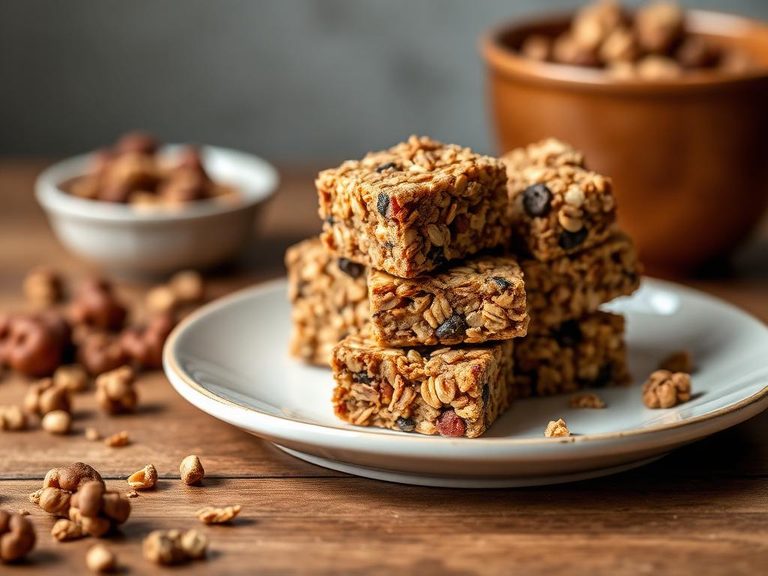
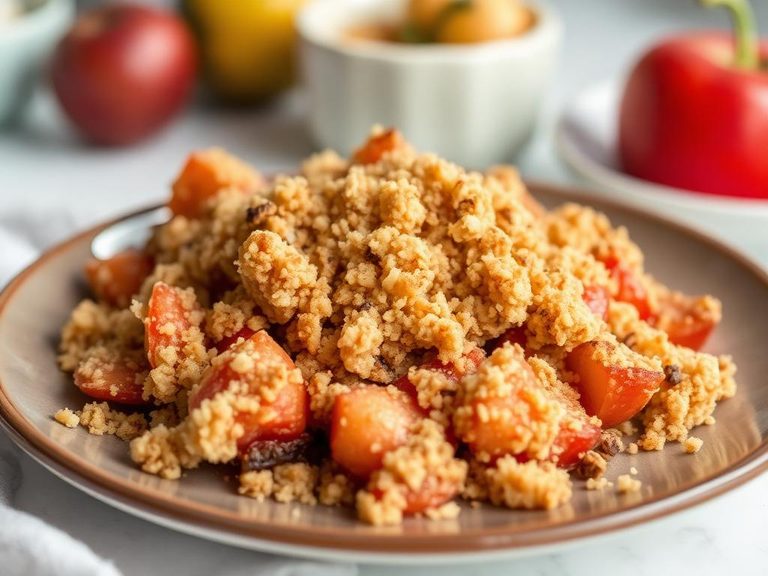
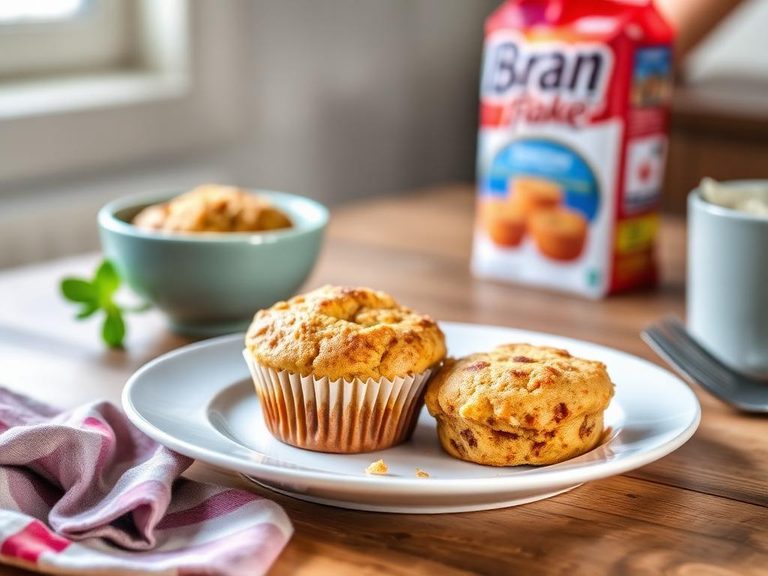
🌍 Where it's eaten
💡 Did you know?
The modern bran flake was popularized in the late 19th century by the Kellogg brothers as part of the 'health food' movement, originally intended as a digestible food for patients at their sanitarium.
Full nutrition (USDA data · scales with serving)
| Water | 8.9 g |
| Energy | 361 kcal |
| Protein | 9.7 g |
| Total lipid (fat) | 2.4 g |
| Carbohydrate, by difference | 75.0 g |
| Fiber, total dietary | 20.5 g |
| Total Sugars | 15.3 g |
| Calcium, Ca | 19.0 mg |
| Iron, Fe | 28.1 mg |
| Magnesium, Mg | 29.0 mg |
| Phosphorus, P | 108 mg |
| Potassium, K | 121 mg |
| Sodium, Na | 585 mg |
| Zinc, Zn | 0.93 mg |
| Copper, Cu | 0.17 mg |
| Selenium, Se | 16.3 ug |
| Vitamin C, total ascorbic acid | 23.1 mg |
| Thiamin | 1.1 mg |
| Riboflavin | 0.98 mg |
| Niacin | 13.3 mg |
| Vitamin B-6 | 1.4 mg |
| Folate, total | 320 ug |
| Folic acid | 302 ug |
| Folate, food | 18.0 ug |
| Folate, DFE | 531 ug |
| Choline, total | 8.4 mg |
| Vitamin B-12 | 1.8 ug |
| Vitamin B-12, added | 1.8 ug |
| Vitamin A, RAE | 0.00 ug |
| Retinol | 0.00 ug |
| Carotene, beta | 0.00 ug |
| Carotene, alpha | 0.00 ug |
| Cryptoxanthin, beta | 0.00 ug |
| Lycopene | 0.00 ug |
| Lutein + zeaxanthin | 14.0 ug |
| Vitamin E (alpha-tocopherol) | 0.22 mg |
| Vitamin E, added | 0.00 mg |
| Vitamin D (D2 + D3) | 5.0 ug |
| Vitamin K (phylloquinone) | 1.0 ug |
| Alcohol, ethyl | 0.00 g |
| Caffeine | 0.00 mg |
| Theobromine | 0.00 mg |
Fat & fatty acid profile (per 100g)
| Fatty acids, total saturated | 0.19 g |
| SFA 4:0 | 0.00 g |
| SFA 6:0 | 0.00 g |
| SFA 8:0 | 0.00 g |
| SFA 10:0 | 0.00 g |
| SFA 12:0 | 0.00 g |
| SFA 14:0 | 0.00 g |
| SFA 16:0 | 0.16 g |
| SFA 18:0 | 0.02 g |
| Fatty acids, total monounsaturated | 0.70 g |
| MUFA 16:1 | 0.00 g |
| MUFA 18:1 | 0.68 g |
| MUFA 20:1 | 0.02 g |
| MUFA 22:1 | 0.00 g |
| Fatty acids, total polyunsaturated | 0.59 g |
| PUFA 18:2 | 0.49 g |
| PUFA 18:3 | 0.09 g |
| PUFA 18:4 | 0.00 g |
| PUFA 20:4 | 0.00 g |
| PUFA 20:5 n-3 (EPA) | 0.00 g |
| PUFA 22:5 n-3 (DPA) | 0.00 g |
| PUFA 22:6 n-3 (DHA) | 0.00 g |
| Cholesterol | 0.00 mg |
Amino acid profile (per 100g)
Estimated from Cereals ready-to-eat, POST, HONEY BUNCHES OF OATS, honey roasted — USDA does not publish this profile for Cereal.
| Tryptophan | 0.09 g |
| Threonine | 0.24 g |
| Isoleucine | 0.26 g |
| Leucine | 0.80 g |
| Lysine | 0.12 g |
| Methionine | 0.10 g |
| Cystine | 0.11 g |
| Phenylalanine | 0.39 g |
| Tyrosine | 0.21 g |
| Valine | 0.34 g |
| Arginine | 0.24 g |
| Histidine | 0.18 g |
| Alanine | 0.46 g |
| Aspartic acid | 0.48 g |
| Glutamic acid | 1.9 g |
| Glycine | 0.27 g |
| Proline | 0.49 g |
| Serine | 0.38 g |
FAQ
Are bran flakes gluten-free?
No, traditional bran flakes are made from wheat bran and contain gluten. They are not suitable for people with celiac disease or gluten sensitivity.
How much sugar is in bran flakes?
Plain bran flakes contain about 15.27g of sugar per 100g, which is naturally occurring from the grain and any added sweeteners. Always check the label for added sugars.
Can bran flakes help with weight loss?
Their high fiber content promotes fullness, which can help reduce overall calorie intake. However, they are still calorie-dense (361 kcal/100g), so portion control is key.
Nutrient density (calculated · NRF9.3)
Nutrient Rich Foods index: beneficial nutrients (protein, fiber, vitamins, minerals) minus saturated fat, added sugar & sodium, per 100 kcal.
NRF9.3 index — Fulgoni, Keast & Drewnowski, 2009. Computed from USDA nutrients.
Weight-loss friendliness (composite index)
Energy density 3.61 kcal/g · 11% calories from protein · 20.5 g fiber · 15.3 g sugar per 100 g.
Composite of energy density (Rolls et al., 1999), protein & fiber satiety, minus sugar. A calculated heuristic — ranks satiety-per-calorie, not a clinical measure.
Dietary load (calculated from USDA values)
Potential renal acid load. Positive = acid-forming, negative = alkaline-forming.
Sodium-to-potassium ratio: 4.83 (lower is better — aim for ≤ 1)
Sodium:potassium per WHO potassium guidance. Computed from USDA nutrients.