

Cauliflower, frozen, cooked, boiled, drained, with salt
Whole food · Vegetables and Vegetable Products

Photo: Wikipedia
Frozen cauliflower, once boiled and drained, offers a tender yet slightly firm bite with a mild, subtly sweet, and earthy flavor. Its low-calorie profile, at just 17 kcal per 100g, makes it a nutrient-dense, fiber-rich vegetable staple. The cooking process softens its texture, making it a versatile base for various dishes.
Calorie split: 31% protein · 60% carbs · 9% fat
↓ Full nutrition💚 Why it's loved
People love it for its incredible versatility, acting as a neutral canvas that absorbs sauces and spices beautifully. It's a beloved low-carb substitute in many cuisines, from rice to pizza crusts, making healthy eating more accessible and enjoyable.
⚠️ Watch-outs & how to enjoy it better
The mild flavor can be perceived as bland or watery if overcooked, and the added salt increases sodium content, which may concern those monitoring blood pressure. To counteract, season with herbs, spices, or lemon juice instead of extra salt, and pair with a healthy fat like olive oil or avocado to enhance flavor and nutrient absorption.
Key benefits
- Excellent source of dietary fiber (2.7g per 100g) for digestive health.
- Very low in calories and fat, supporting weight management goals.
- Provides vitamin C and folate, essential for immune function and cell repair.
- High water content aids in hydration and satiety.
🍽️ Popular dishes
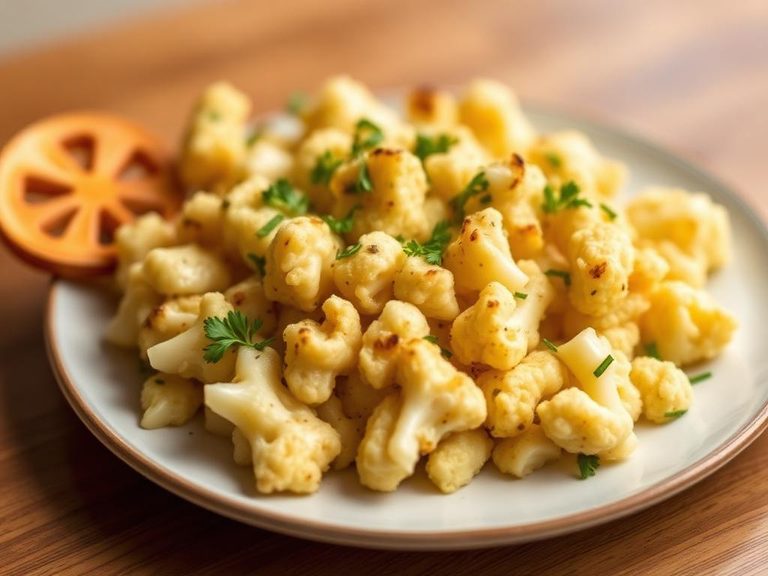
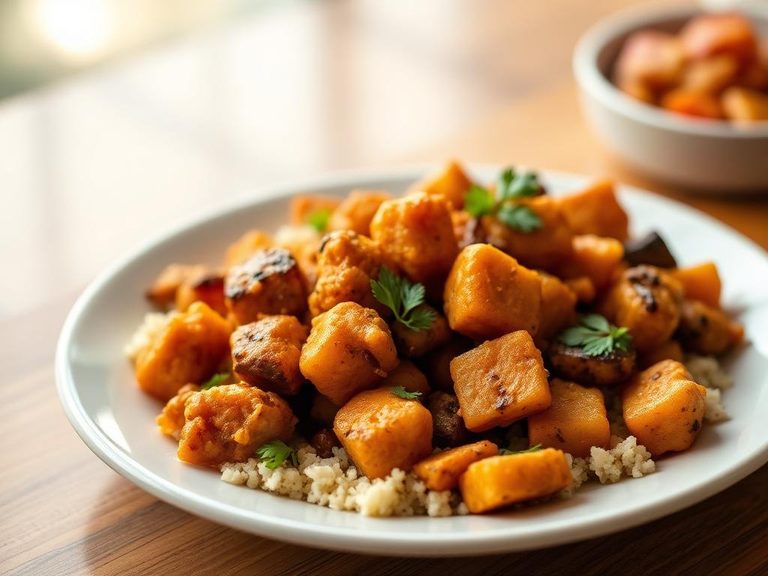

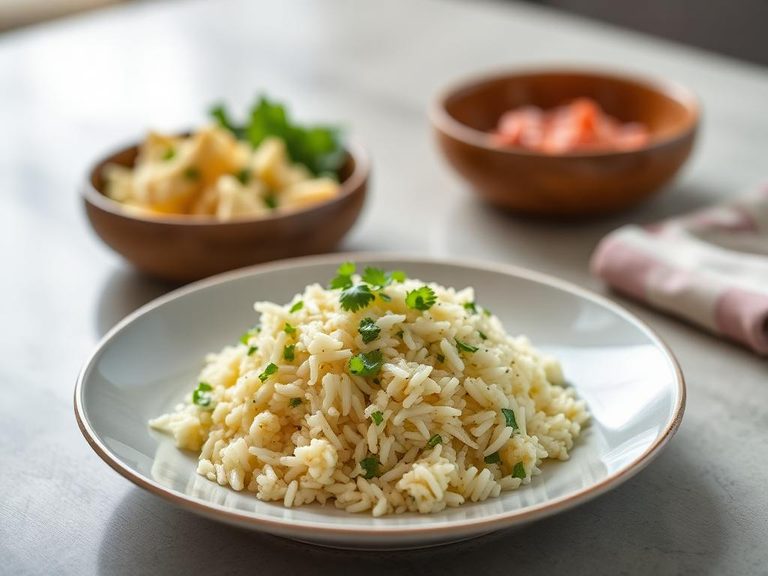
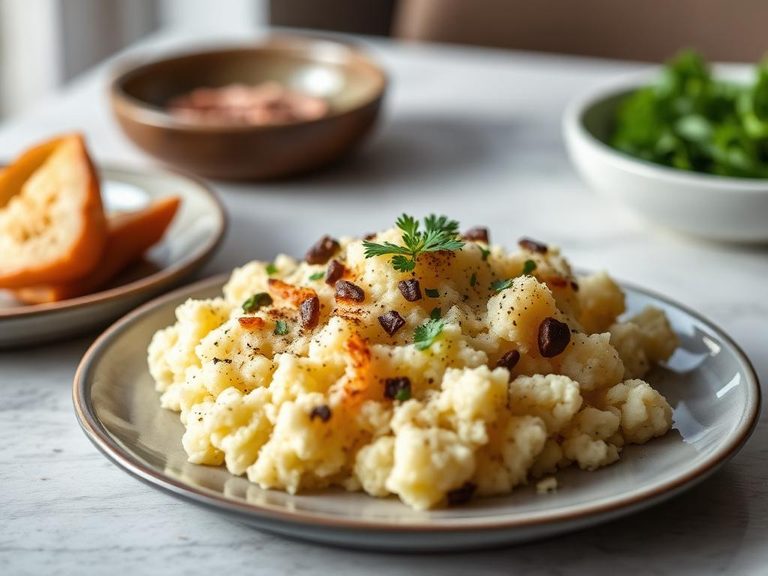
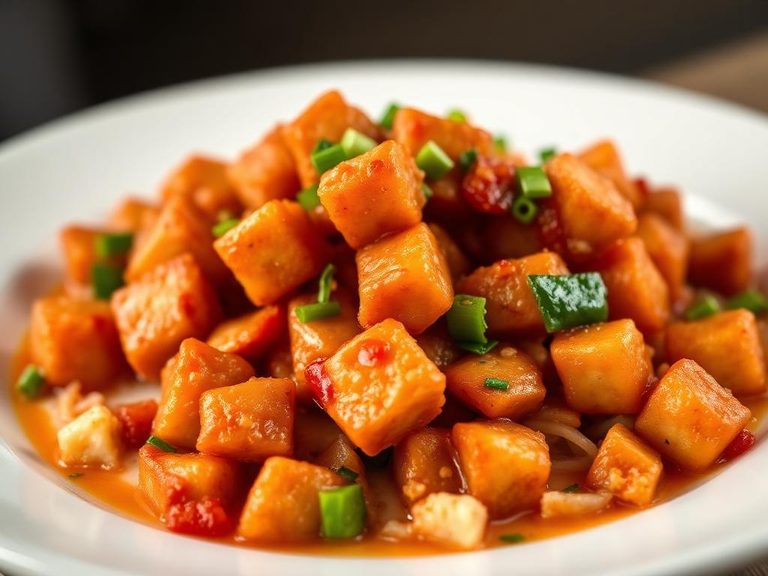
🌍 Where it's eaten
💡 Did you know?
The part of the cauliflower we eat is actually a cluster of immature flower buds, known as a 'curd,' which is harvested before the plant has a chance to bloom.
Full nutrition (USDA data · scales with serving)
| Water | 94.0 g |
| Energy | 17.0 kcal |
| Energy | 71.0 kj |
| Protein | 1.6 g |
| Total lipid (fat) | 0.22 g |
| Ash | 1.0 g |
| Carbohydrate, by difference | 3.2 g |
| Fiber, total dietary | 2.7 g |
| Total Sugars | 0.46 g |
| Calcium, Ca | 17.0 mg |
| Iron, Fe | 0.41 mg |
| Magnesium, Mg | 9.0 mg |
| Phosphorus, P | 24.0 mg |
| Potassium, K | 139 mg |
| Sodium, Na | 254 mg |
| Zinc, Zn | 0.13 mg |
| Copper, Cu | 0.02 mg |
| Manganese, Mn | 0.15 mg |
| Selenium, Se | 0.60 ug |
| Vitamin C, total ascorbic acid | 31.3 mg |
| Thiamin | 0.04 mg |
| Riboflavin | 0.05 mg |
| Niacin | 0.31 mg |
| Pantothenic acid | 0.10 mg |
| Vitamin B-6 | 0.09 mg |
| Folate, total | 41.0 ug |
| Folic acid | 0.00 ug |
| Folate, food | 41.0 ug |
| Folate, DFE | 41.0 ug |
| Choline, total | 33.5 mg |
| Betaine | 0.10 mg |
| Vitamin B-12 | 0.00 ug |
| Vitamin B-12, added | 0.00 ug |
| Vitamin A, RAE | 0.00 ug |
| Retinol | 0.00 ug |
| Carotene, beta | 6.0 ug |
| Carotene, alpha | 0.00 ug |
| Cryptoxanthin, beta | 0.00 ug |
| Vitamin A, IU | 10.0 iu |
| Lycopene | 0.00 ug |
| Lutein + zeaxanthin | 24.0 ug |
| Vitamin E (alpha-tocopherol) | 0.06 mg |
| Vitamin E, added | 0.00 mg |
| Vitamin D (D2 + D3), International Units | 0.00 iu |
| Vitamin D (D2 + D3) | 0.00 ug |
| Vitamin K (phylloquinone) | 11.9 ug |
| Caffeine | 0.00 mg |
| Theobromine | 0.00 mg |
Fat & fatty acid profile (per 100g)
| Fatty acids, total saturated | 0.03 g |
| SFA 16:0 | 0.03 g |
| SFA 18:0 | 0.00 g |
| Fatty acids, total monounsaturated | 0.01 g |
| MUFA 18:1 | 0.01 g |
| Fatty acids, total polyunsaturated | 0.10 g |
| PUFA 18:2 | 0.02 g |
| PUFA 18:3 | 0.08 g |
| Fatty acids, total trans | 0.00 g |
| Cholesterol | 0.00 mg |
Amino acid profile (per 100g)
| Tryptophan | 0.02 g |
| Threonine | 0.06 g |
| Isoleucine | 0.06 g |
| Leucine | 0.09 g |
| Lysine | 0.09 g |
| Methionine | 0.02 g |
| Cystine | 0.02 g |
| Phenylalanine | 0.06 g |
| Tyrosine | 0.04 g |
| Valine | 0.08 g |
| Arginine | 0.08 g |
| Histidine | 0.03 g |
| Alanine | 0.09 g |
| Aspartic acid | 0.19 g |
| Glutamic acid | 0.21 g |
| Glycine | 0.05 g |
| Proline | 0.07 g |
| Serine | 0.08 g |
FAQ
Is frozen cauliflower as nutritious as fresh?
Yes, frozen cauliflower is often flash-frozen at peak ripeness, which can lock in nutrients. The blanching process before freezing may cause a slight loss of water-soluble vitamins like vitamin C, but it remains a highly nutritious option, especially when fresh is out of season.
How should I store leftover cooked cauliflower?
Store leftover cooked cauliflower in an airtight container in the refrigerator for up to 3-4 days. Ensure it is cooled to room temperature before refrigerating to prevent bacterial growth.
Can I use frozen cauliflower directly in recipes?
Yes, you can use frozen cauliflower directly in many recipes like soups, stews, and stir-fries, as the cooking process will release its water. For dishes where texture is key, like roasting, it's best to thaw and pat it dry first to achieve crispiness.
Nutrient density (calculated · NRF9.3)
Nutrient Rich Foods index: beneficial nutrients (protein, fiber, vitamins, minerals) minus saturated fat, added sugar & sodium, per 100 kcal.
NRF9.3 index — Fulgoni, Keast & Drewnowski, 2009. Computed from USDA nutrients.
Weight-loss friendliness (composite index)
Energy density 0.17 kcal/g · 38% calories from protein · 2.7 g fiber · 0.5 g sugar per 100 g.
Composite of energy density (Rolls et al., 1999), protein & fiber satiety, minus sugar. A calculated heuristic — ranks satiety-per-calorie, not a clinical measure.
Dietary load (calculated from USDA values)
Potential renal acid load. Positive = acid-forming, negative = alkaline-forming.
Sodium-to-potassium ratio: 1.83 (lower is better — aim for ≤ 1)
Sodium:potassium per WHO potassium guidance. Computed from USDA nutrients.