

Carrots, cooked, from restaurant
Common food

Photo: Wikipedia
Restaurant-style cooked carrots are tender, sweet, and often glazed or buttered, offering a rich, caramelized flavor with a soft, melt-in-your-mouth texture. They are a comforting, vibrant side dish that balances natural sweetness with a savory depth, often enhanced by added fats like butter or oil. Nutritionally, they provide a moderate calorie boost with a notable fiber content, making them a satisfying addition to a meal.
Calorie split: 4% protein · 47% carbs · 49% fat
↓ Full nutrition💚 Why it's loved
People love cooked carrots for their natural sweetness, which intensifies with cooking, and their versatility in absorbing flavors from herbs, spices, and fats. They are a nostalgic comfort food in many cultures, often served as a side dish that complements meats and grains.
⚠️ Watch-outs & how to enjoy it better
Cooked carrots can cause blood sugar spikes due to their natural sugars, especially when glazed or served in large portions, making them less ideal for those managing diabetes. To counteract this, pair them with protein or healthy fats (like nuts or cheese) and practice portion control, opting for steamed or roasted versions with minimal added sugars.
Key benefits
- High in beta-carotene, which supports eye health and immune function
- Good source of dietary fiber for digestive health
- Contains antioxidants like lutein and lycopene
- Provides vitamin K1 for blood clotting and bone health
- Low in protein but can be paired with other foods for balance
🍽️ Popular dishes

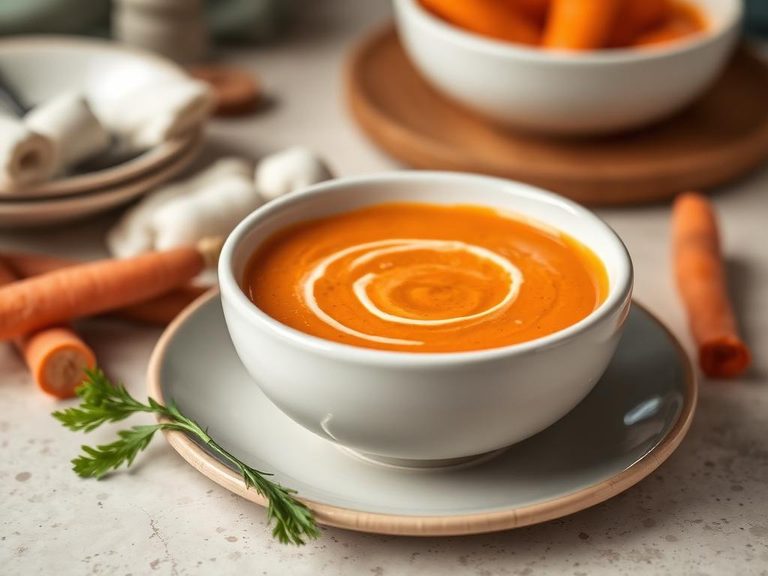



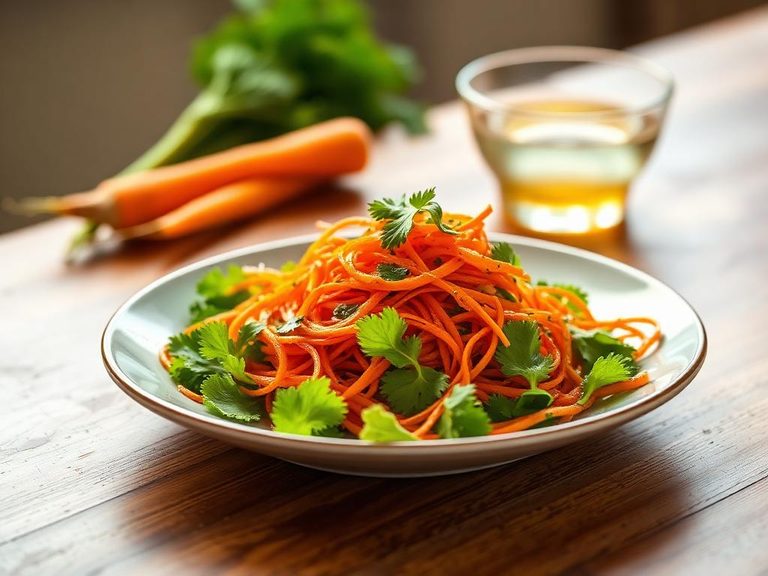
🌍 Where it's eaten
💡 Did you know?
Cooking carrots increases the bioavailability of beta-carotene by breaking down cell walls, making it easier for the body to absorb compared to raw carrots.
Full nutrition (USDA data · scales with serving)
| Water | 83.0 g |
| Energy | 86.0 kcal |
| Protein | 0.94 g |
| Total lipid (fat) | 4.7 g |
| Carbohydrate, by difference | 10.2 g |
| Fiber, total dietary | 3.1 g |
| Total Sugars | 4.7 g |
| Calcium, Ca | 30.0 mg |
| Iron, Fe | 0.15 mg |
| Magnesium, Mg | 12.0 mg |
| Phosphorus, P | 40.0 mg |
| Potassium, K | 277 mg |
| Sodium, Na | 292 mg |
| Zinc, Zn | 0.24 mg |
| Copper, Cu | 0.06 mg |
| Selenium, Se | 0.00 ug |
| Vitamin C, total ascorbic acid | 5.0 mg |
| Thiamin | 0.06 mg |
| Riboflavin | 0.09 mg |
| Niacin | 1.3 mg |
| Vitamin B-6 | 0.16 mg |
| Folate, total | 31.0 ug |
| Folic acid | 0.00 ug |
| Folate, food | 31.0 ug |
| Folate, DFE | 31.0 ug |
| Choline, total | 9.1 mg |
| Vitamin B-12 | 0.00 ug |
| Vitamin B-12, added | 0.00 ug |
| Vitamin A, RAE | 803 ug |
| Retinol | 19.0 ug |
| Carotene, beta | 7780 ug |
| Carotene, alpha | 3261 ug |
| Cryptoxanthin, beta | 0.00 ug |
| Lycopene | 1.0 ug |
| Lutein + zeaxanthin | 240 ug |
| Vitamin E (alpha-tocopherol) | 1.3 mg |
| Vitamin E, added | 0.00 mg |
| Vitamin D (D2 + D3) | 0.00 ug |
| Vitamin K (phylloquinone) | 16.6 ug |
| Alcohol, ethyl | 0.00 g |
| Caffeine | 0.00 mg |
| Theobromine | 0.00 mg |
Fat & fatty acid profile (per 100g)
| Fatty acids, total saturated | 1.2 g |
| SFA 4:0 | 0.03 g |
| SFA 6:0 | 0.02 g |
| SFA 8:0 | 0.01 g |
| SFA 10:0 | 0.03 g |
| SFA 12:0 | 0.03 g |
| SFA 14:0 | 0.11 g |
| SFA 16:0 | 0.65 g |
| SFA 18:0 | 0.23 g |
| Fatty acids, total monounsaturated | 1.5 g |
| MUFA 16:1 | 0.03 g |
| MUFA 18:1 | 1.5 g |
| MUFA 20:1 | 0.02 g |
| MUFA 22:1 | 0.00 g |
| Fatty acids, total polyunsaturated | 1.3 g |
| PUFA 18:2 | 1.2 g |
| PUFA 18:3 | 0.14 g |
| PUFA 18:4 | 0.00 g |
| PUFA 20:4 | 0.00 g |
| PUFA 20:5 n-3 (EPA) | 0.00 g |
| PUFA 22:5 n-3 (DPA) | 0.00 g |
| PUFA 22:6 n-3 (DHA) | 0.00 g |
| Cholesterol | 3.0 mg |
Amino acid profile (per 100g)
Estimated from Carrots, canned, no salt added, drained solids — USDA does not publish this profile for Carrots.
| Tryptophan | 0.01 g |
| Threonine | 0.02 g |
| Isoleucine | 0.03 g |
| Leucine | 0.03 g |
| Lysine | 0.03 g |
| Methionine | 0.00 g |
| Cystine | 0.01 g |
| Phenylalanine | 0.02 g |
| Tyrosine | 0.01 g |
| Valine | 0.03 g |
| Arginine | 0.03 g |
| Histidine | 0.01 g |
| Alanine | 0.04 g |
| Aspartic acid | 0.08 g |
| Glutamic acid | 0.12 g |
| Glycine | 0.02 g |
| Proline | 0.02 g |
| Serine | 0.02 g |
FAQ
Are cooked carrots healthier than raw carrots?
Cooking carrots can increase the availability of certain nutrients like beta-carotene, but raw carrots retain more vitamin C. Both are nutritious, so the best choice depends on your dietary needs.
How do restaurant-cooked carrots differ from home-cooked ones?
Restaurant carrots often use more butter, oil, or sugar for flavor and texture, which can increase calorie and fat content. Home-cooked versions can be lighter and more customizable.
Can cooked carrots cause digestive issues?
In large amounts, cooked carrots may cause bloating or gas due to their fiber content. Start with smaller portions and ensure adequate hydration to minimize discomfort.
Nutrient density (calculated · NRF9.3)
Nutrient Rich Foods index: beneficial nutrients (protein, fiber, vitamins, minerals) minus saturated fat, added sugar & sodium, per 100 kcal.
NRF9.3 index — Fulgoni, Keast & Drewnowski, 2009. Computed from USDA nutrients.
Weight-loss friendliness (composite index)
Energy density 0.86 kcal/g · 4% calories from protein · 3.1 g fiber · 4.7 g sugar per 100 g.
Composite of energy density (Rolls et al., 1999), protein & fiber satiety, minus sugar. A calculated heuristic — ranks satiety-per-calorie, not a clinical measure.
Dietary load (calculated from USDA values)
Potential renal acid load. Positive = acid-forming, negative = alkaline-forming.
Sodium-to-potassium ratio: 1.05 (lower is better — aim for ≤ 1)
Sodium:potassium per WHO potassium guidance. Computed from USDA nutrients.