

Candy, taffy
Common food

Photo: Wikipedia
Taffy is a chewy, pliable candy made by stretching and aerating boiled sugar syrup, creating a light, airy texture that softens as it melts in your mouth. It's a sugar-dense treat, delivering nearly 88 grams of carbohydrates and 74 grams of sugar per 100 grams, with virtually no protein, fat, or fiber.
Calorie split: 0% protein · 90% carbs · 10% fat
↓ Full nutrition💚 Why it's loved
People love taffy for its satisfying, slow-chew texture and the burst of intense, often fruity or creamy, flavors. It's a versatile candy that can be pulled, twisted, and enjoyed over time, making it a fun, interactive treat.
⚠️ Watch-outs & how to enjoy it better
Taffy is extremely high in sugar, which can contribute to blood-sugar spikes and is not ideal for those monitoring glucose levels or dental health. To enjoy mindfully, practice strict portion control (e.g., one piece) and consider pairing it with a source of protein or fat to slow sugar absorption.
Key benefits
- Quick source of energy
- Long shelf life when wrapped
- Wide variety of flavors
- Nostalgic treat for many cultures
🍽️ Popular dishes
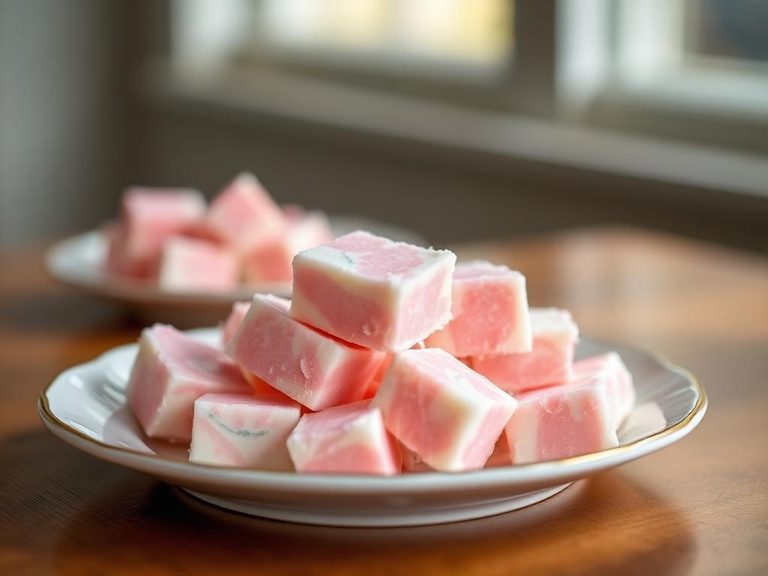
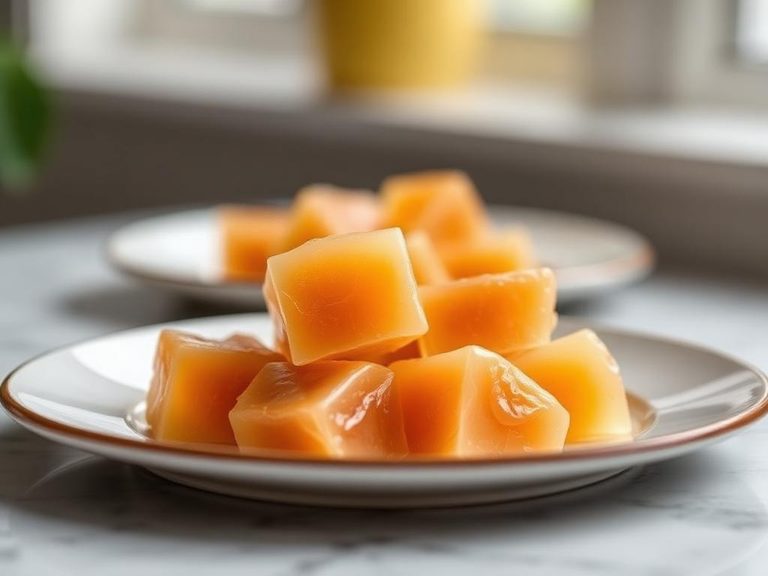
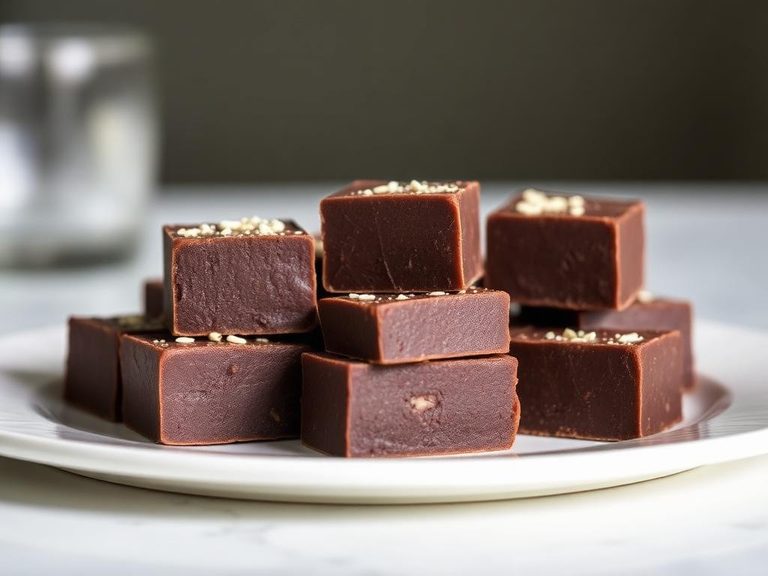
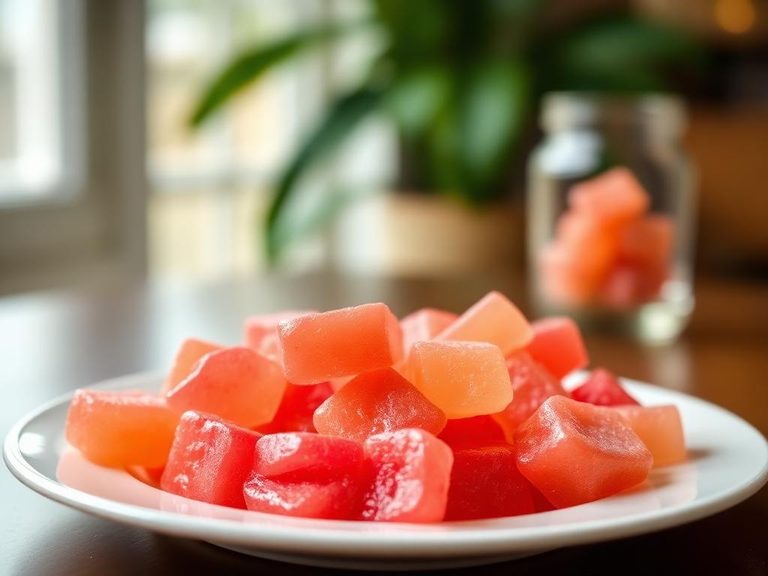
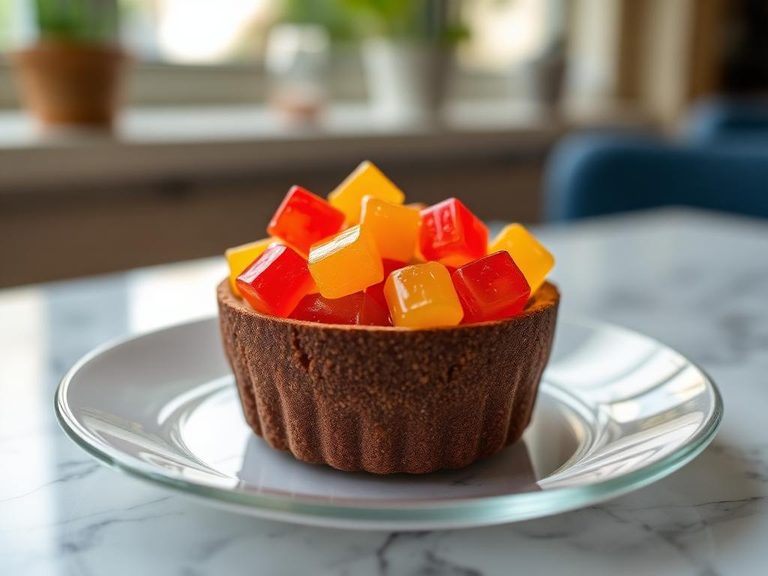
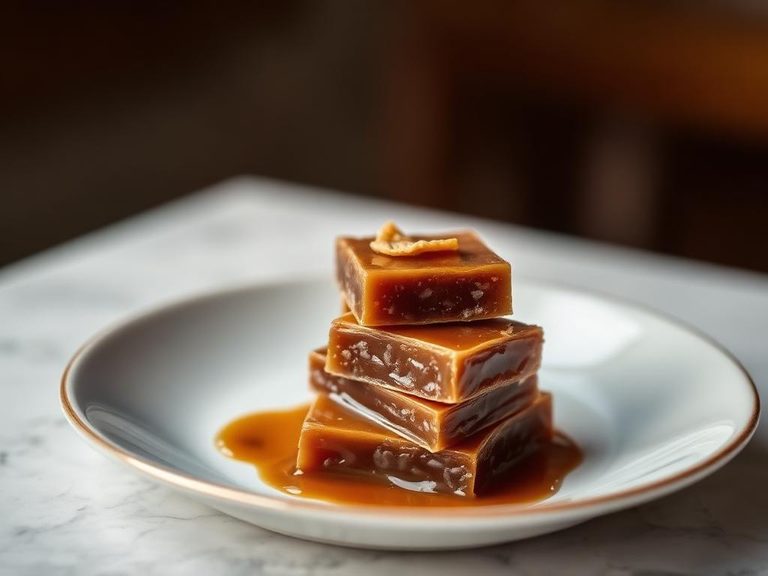
🌍 Where it's eaten
💡 Did you know?
The name 'Salt Water Taffy' is a misnomer; it doesn't contain salt water. The name originated in Atlantic City in the 1880s as a playful marketing gimmick after a candy shop was flooded with seawater.
Full nutrition (USDA data · scales with serving)
| Water | 7.6 g |
| Energy | 390 kcal |
| Protein | 0.20 g |
| Total lipid (fat) | 4.1 g |
| Carbohydrate, by difference | 87.9 g |
| Fiber, total dietary | 0.00 g |
| Total Sugars | 73.5 g |
| Calcium, Ca | 2.0 mg |
| Iron, Fe | 0.01 mg |
| Magnesium, Mg | 0.00 mg |
| Phosphorus, P | 2.0 mg |
| Potassium, K | 3.0 mg |
| Sodium, Na | 6.0 mg |
| Zinc, Zn | 0.02 mg |
| Copper, Cu | 0.01 mg |
| Selenium, Se | 0.70 ug |
| Vitamin C, total ascorbic acid | 0.00 mg |
| Thiamin | 0.00 mg |
| Riboflavin | 0.01 mg |
| Niacin | 0.00 mg |
| Vitamin B-6 | 0.00 mg |
| Folate, total | 0.00 ug |
| Folic acid | 0.00 ug |
| Folate, food | 0.00 ug |
| Folate, DFE | 0.00 ug |
| Choline, total | 0.00 mg |
| Vitamin B-12 | 0.00 ug |
| Vitamin B-12, added | 0.00 ug |
| Vitamin A, RAE | 0.00 ug |
| Retinol | 0.00 ug |
| Carotene, beta | 0.00 ug |
| Carotene, alpha | 0.00 ug |
| Cryptoxanthin, beta | 0.00 ug |
| Lycopene | 0.00 ug |
| Lutein + zeaxanthin | 3.0 ug |
| Vitamin E (alpha-tocopherol) | 0.16 mg |
| Vitamin E, added | 0.00 mg |
| Vitamin D (D2 + D3) | 0.00 ug |
| Vitamin K (phylloquinone) | 1.0 ug |
| Alcohol, ethyl | 0.00 g |
| Caffeine | 0.00 mg |
| Theobromine | 0.00 mg |
Fat & fatty acid profile (per 100g)
| Fatty acids, total saturated | 3.9 g |
| SFA 4:0 | 0.00 g |
| SFA 6:0 | 0.01 g |
| SFA 8:0 | 0.16 g |
| SFA 10:0 | 0.13 g |
| SFA 12:0 | 1.8 g |
| SFA 14:0 | 0.61 g |
| SFA 16:0 | 0.34 g |
| SFA 18:0 | 0.85 g |
| Fatty acids, total monounsaturated | 0.00 g |
| MUFA 16:1 | 0.00 g |
| MUFA 18:1 | 0.00 g |
| MUFA 20:1 | 0.00 g |
| MUFA 22:1 | 0.00 g |
| Fatty acids, total polyunsaturated | 0.00 g |
| PUFA 18:2 | 0.00 g |
| PUFA 18:3 | 0.00 g |
| PUFA 18:4 | 0.00 g |
| PUFA 20:4 | 0.00 g |
| PUFA 20:5 n-3 (EPA) | 0.00 g |
| PUFA 22:5 n-3 (DPA) | 0.00 g |
| PUFA 22:6 n-3 (DHA) | 0.00 g |
| Cholesterol | 0.00 mg |
Amino acid profile (per 100g)
Estimated from Oil, industrial, coconut, principal uses candy coatings, oil sprays, roasting nuts — USDA does not publish this profile for Candy.
| Tryptophan | 0.00 g |
| Threonine | 0.00 g |
| Isoleucine | 0.00 g |
| Leucine | 0.00 g |
| Lysine | 0.00 g |
| Methionine | 0.00 g |
| Cystine | 0.00 g |
| Phenylalanine | 0.00 g |
| Tyrosine | 0.00 g |
| Valine | 0.00 g |
| Arginine | 0.00 g |
| Histidine | 0.00 g |
| Alanine | 0.00 g |
| Aspartic acid | 0.00 g |
| Glutamic acid | 0.00 g |
| Glycine | 0.00 g |
| Proline | 0.00 g |
| Serine | 0.00 g |
FAQ
Is taffy the same as toffee?
No. Taffy is chewy and aerated, while toffee is hard, brittle, and caramelized, often containing butter and nuts.
Why is it called 'pulling' taffy?
The process of repeatedly stretching and folding the warm candy mass to incorporate air and create its signature chewy texture is called 'pulling.'
Can you make taffy at home?
Yes, with a candy thermometer, patience, and proper technique. The process involves cooking sugar, corn syrup, and butter to the 'hard-ball' stage, then cooling and pulling the mass.
Nutrient density (calculated · NRF9.3)
Nutrient Rich Foods index: beneficial nutrients (protein, fiber, vitamins, minerals) minus saturated fat, added sugar & sodium, per 100 kcal.
NRF9.3 index — Fulgoni, Keast & Drewnowski, 2009. Computed from USDA nutrients.
Weight-loss friendliness (composite index)
Energy density 3.90 kcal/g · 0% calories from protein · 0.0 g fiber · 73.5 g sugar per 100 g.
Composite of energy density (Rolls et al., 1999), protein & fiber satiety, minus sugar. A calculated heuristic — ranks satiety-per-calorie, not a clinical measure.
Dietary load (calculated from USDA values)
Potential renal acid load. Positive = acid-forming, negative = alkaline-forming.
Sodium-to-potassium ratio: 2.00 (lower is better — aim for ≤ 1)
Sodium:potassium per WHO potassium guidance. Computed from USDA nutrients.