

Candy, licorice
Common food

Photo: Wikipedia
Licorice candy is a chewy, aromatic confection made from the extract of the licorice root, delivering a distinctive sweet, earthy, and slightly anise-like flavor. Its texture can range from soft and pliable to firm and fibrous, depending on the formulation. Nutritionally, it is a near-pure carbohydrate source, providing 98.9g of carbs per 100g, almost entirely from sugars.
Calorie split: 0% protein · 100% carbs · 0% fat
↓ Full nutrition💚 Why it's loved
People love licorice for its complex, polarizing flavor that is simultaneously sweet, bitter, and herbal, offering a taste experience unlike other candies. It holds deep cultural significance in many European and Scandinavian countries, where it is a beloved, nostalgic treat.
⚠️ Watch-outs & how to enjoy it better
The high sugar content (58.97g per 100g) can contribute to blood-sugar spikes and dental issues if consumed excessively. Furthermore, excessive consumption of licorice containing glycyrrhizin can lead to elevated blood pressure and potassium loss. To enjoy it responsibly, practice strict portion control and consider pairing it with a source of protein or fat (like nuts) to slow sugar absorption, and avoid it if you have hypertension or are on certain medications.
Key benefits
- Contains glycyrrhizin, a compound studied for potential anti-inflammatory properties
- Provides a quick source of energy from its high carbohydrate content
- Can serve as a digestive aid in traditional herbal practices
- Offers a unique flavor profile used to balance other tastes in confections
- Often fat-free and protein-free, making it a simple sugar-based treat
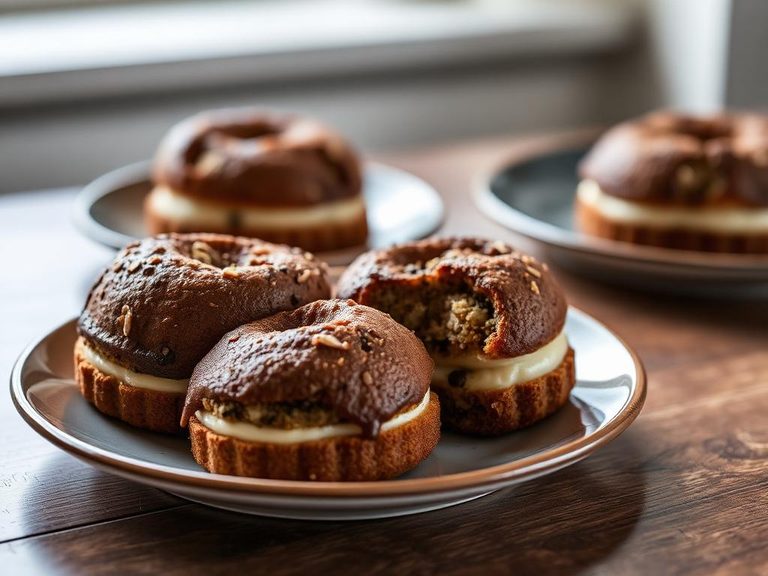
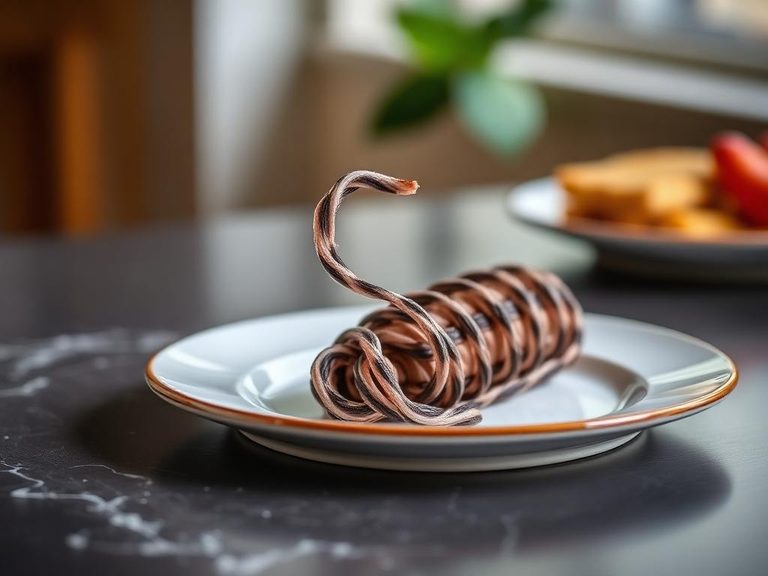
🍽️ Popular dishes
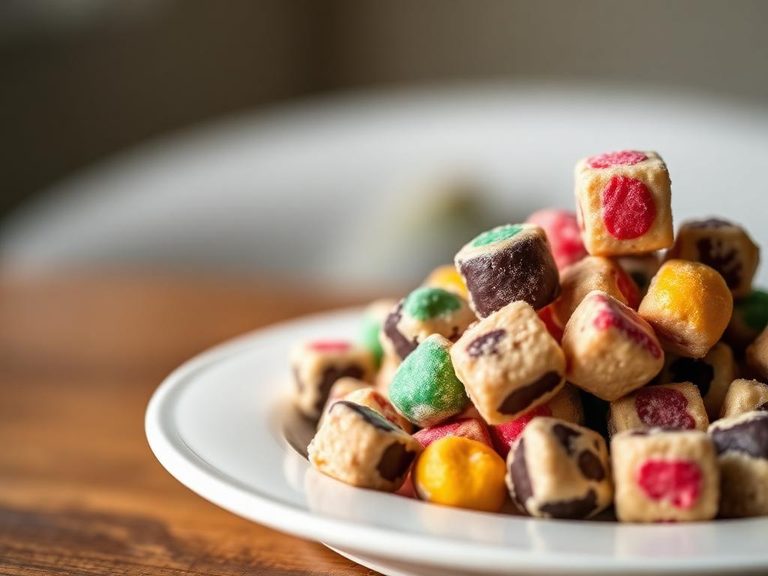
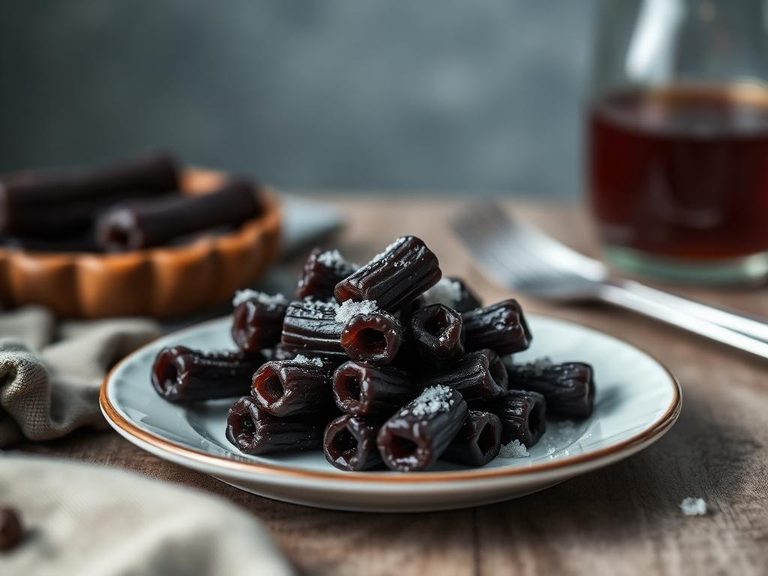
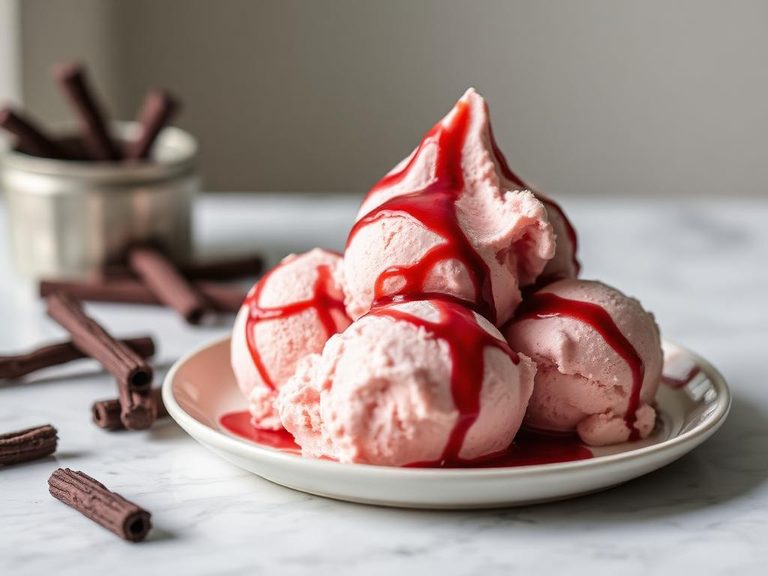
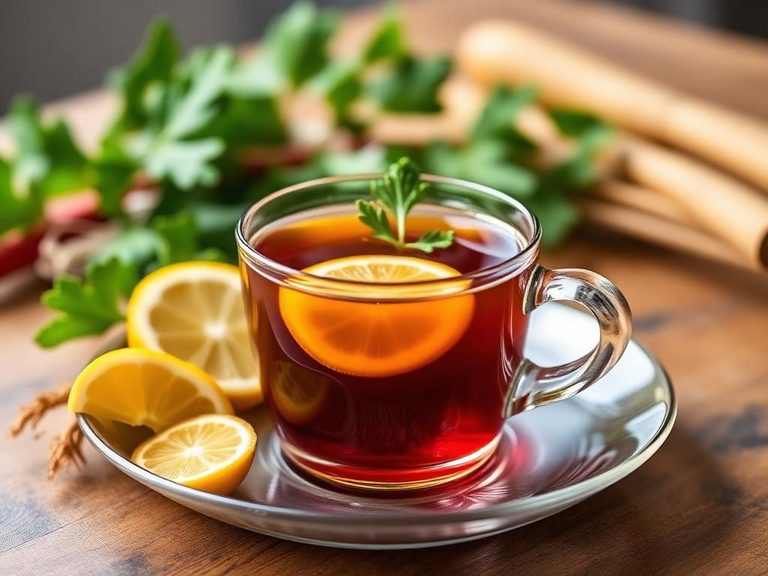
🌍 Where it's eaten
💡 Did you know?
The distinctive flavor compound in licorice root, glycyrrhizin, is estimated to be 30 to 50 times sweeter than sugar, which is why even a small amount of extract can sweeten a large batch of candy.
Full nutrition (USDA data · scales with serving)
| Water | 1.0 g |
| Energy | 396 kcal |
| Protein | 0.00 g |
| Total lipid (fat) | 0.00 g |
| Carbohydrate, by difference | 98.9 g |
| Fiber, total dietary | 0.10 g |
| Total Sugars | 59.0 g |
| Calcium, Ca | 3.0 mg |
| Iron, Fe | 0.40 mg |
| Magnesium, Mg | 1.0 mg |
| Phosphorus, P | 1.0 mg |
| Potassium, K | 5.0 mg |
| Sodium, Na | 44.0 mg |
| Zinc, Zn | 0.00 mg |
| Copper, Cu | 0.01 mg |
| Selenium, Se | 0.80 ug |
| Vitamin C, total ascorbic acid | 0.00 mg |
| Thiamin | 0.01 mg |
| Riboflavin | 0.01 mg |
| Niacin | 0.01 mg |
| Vitamin B-6 | 0.01 mg |
| Folate, total | 0.00 ug |
| Folic acid | 0.00 ug |
| Folate, food | 0.00 ug |
| Folate, DFE | 0.00 ug |
| Choline, total | 0.00 mg |
| Vitamin B-12 | 0.00 ug |
| Vitamin B-12, added | 0.00 ug |
| Vitamin A, RAE | 0.00 ug |
| Retinol | 0.00 ug |
| Carotene, beta | 0.00 ug |
| Carotene, alpha | 0.00 ug |
| Cryptoxanthin, beta | 0.00 ug |
| Lycopene | 0.00 ug |
| Lutein + zeaxanthin | 0.00 ug |
| Vitamin E (alpha-tocopherol) | 0.00 mg |
| Vitamin E, added | 0.00 mg |
| Vitamin D (D2 + D3) | 0.00 ug |
| Vitamin K (phylloquinone) | 0.00 ug |
| Alcohol, ethyl | 0.00 g |
| Caffeine | 0.00 mg |
| Theobromine | 0.00 mg |
Fat & fatty acid profile (per 100g)
| Fatty acids, total saturated | 0.00 g |
| SFA 4:0 | 0.00 g |
| SFA 6:0 | 0.00 g |
| SFA 8:0 | 0.00 g |
| SFA 10:0 | 0.00 g |
| SFA 12:0 | 0.00 g |
| SFA 14:0 | 0.00 g |
| SFA 16:0 | 0.00 g |
| SFA 18:0 | 0.00 g |
| Fatty acids, total monounsaturated | 0.00 g |
| MUFA 16:1 | 0.00 g |
| MUFA 18:1 | 0.00 g |
| MUFA 20:1 | 0.00 g |
| MUFA 22:1 | 0.00 g |
| Fatty acids, total polyunsaturated | 0.00 g |
| PUFA 18:2 | 0.00 g |
| PUFA 18:3 | 0.00 g |
| PUFA 18:4 | 0.00 g |
| PUFA 20:4 | 0.00 g |
| PUFA 20:5 n-3 (EPA) | 0.00 g |
| PUFA 22:5 n-3 (DPA) | 0.00 g |
| PUFA 22:6 n-3 (DHA) | 0.00 g |
| Cholesterol | 0.00 mg |
Amino acid profile (per 100g)
Estimated from Oil, industrial, coconut, principal uses candy coatings, oil sprays, roasting nuts — USDA does not publish this profile for Candy.
| Tryptophan | 0.00 g |
| Threonine | 0.00 g |
| Isoleucine | 0.00 g |
| Leucine | 0.00 g |
| Lysine | 0.00 g |
| Methionine | 0.00 g |
| Cystine | 0.00 g |
| Phenylalanine | 0.00 g |
| Tyrosine | 0.00 g |
| Valine | 0.00 g |
| Arginine | 0.00 g |
| Histidine | 0.00 g |
| Alanine | 0.00 g |
| Aspartic acid | 0.00 g |
| Glutamic acid | 0.00 g |
| Glycine | 0.00 g |
| Proline | 0.00 g |
| Serine | 0.00 g |
FAQ
Is licorice candy actually made from the licorice plant?
Authentic licorice candy is flavored with extract from the root of the Glycyrrhiza glabra plant. However, many modern 'licorice-flavored' candies use anise oil or other artificial flavorings instead.
Why is some licorice black and some red?
Black licorice gets its color and primary flavor from licorice root extract. Red 'licorice' (like Twizzlers) typically contains no licorice root and is flavored with strawberry or cherry and colored with food dyes.
Can eating licorice be bad for you?
Yes, excessive consumption of black licorice containing glycyrrhizin can cause serious health issues, including high blood pressure, low potassium levels, and heart rhythm problems. This is a particular concern for those over 40. Moderation is key.
Nutrient density (calculated · NRF9.3)
Nutrient Rich Foods index: beneficial nutrients (protein, fiber, vitamins, minerals) minus saturated fat, added sugar & sodium, per 100 kcal.
NRF9.3 index — Fulgoni, Keast & Drewnowski, 2009. Computed from USDA nutrients.
Weight-loss friendliness (composite index)
Energy density 3.96 kcal/g · 0% calories from protein · 0.1 g fiber · 59.0 g sugar per 100 g.
Composite of energy density (Rolls et al., 1999), protein & fiber satiety, minus sugar. A calculated heuristic — ranks satiety-per-calorie, not a clinical measure.
Dietary load (calculated from USDA values)
Potential renal acid load. Positive = acid-forming, negative = alkaline-forming.
Sodium-to-potassium ratio: 8.80 (lower is better — aim for ≤ 1)
Sodium:potassium per WHO potassium guidance. Computed from USDA nutrients.