

Candy, cotton
Common food

Photo: Wikipedia
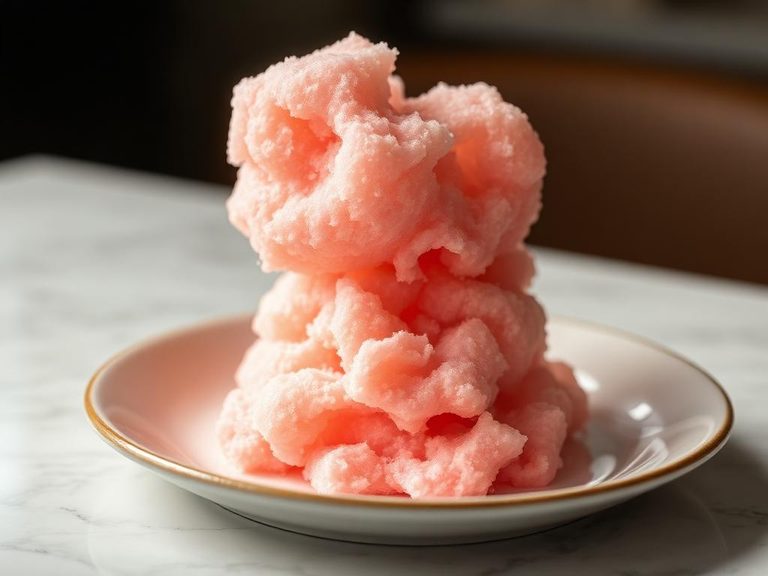
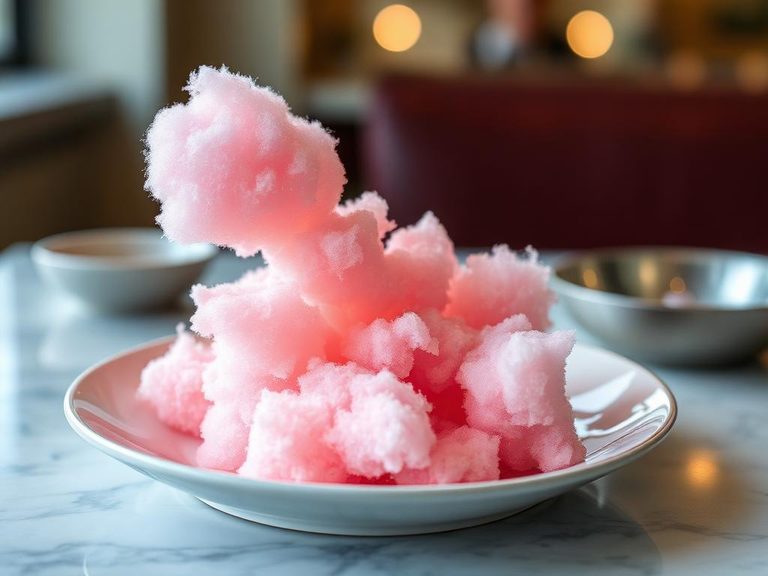
Cotton candy is an ethereal cloud of pure, spun sugar, created by melting sugar and forcing it through tiny holes to form delicate, web-like strands. Its texture is uniquely light and airy, dissolving almost instantly on the tongue into a burst of intense sweetness. Nutritionally, it is almost entirely carbohydrate (99.6g per 100g), providing a rapid source of energy with virtually no protein, fat, or fiber.
Calorie split: 0% protein · 99% carbs · 1% fat
↓ Full nutrition💚 Why it's loved
People love cotton candy for its nostalgic, whimsical appeal and its signature melt-in-your-mouth sensation that delivers a pure, uncomplicated sugar rush. It's a staple of carnivals, circuses, and sporting events, symbolizing fun and childhood joy.
⚠️ Watch-outs & how to enjoy it better
Its primary downside is the extreme concentration of sugar (99.8g per 100g), which can cause a rapid spike in blood sugar levels, making it unsuitable for frequent consumption, especially for those managing diabetes or insulin resistance. To counteract this, enjoy it only in small portions on special occasions and consider pairing it with a source of protein or fat (like a handful of nuts) if possible, to slightly slow sugar absorption.
Key benefits
- Provides a quick source of glucose for immediate energy
- Fat-free and contains no cholesterol
- Low in sodium
- Can be a fun, occasional treat for celebrations and fairs
- Gluten-free and typically free of common allergens like nuts or dairy
🍽️ Popular dishes


🌍 Where it's eaten
💡 Did you know?
The first cotton candy machine was patented in 1899 by a dentist, William Morrison, and candy maker John C. Wharton, who introduced it at the 1904 World's Fair as 'Fairy Floss.'
Full nutrition (USDA data · scales with serving)
| Water | 0.02 g |
| Energy | 401 kcal |
| Protein | 0.00 g |
| Total lipid (fat) | 0.32 g |
| Carbohydrate, by difference | 99.6 g |
| Fiber, total dietary | 0.00 g |
| Total Sugars | 99.8 g |
| Calcium, Ca | 1.0 mg |
| Iron, Fe | 0.05 mg |
| Magnesium, Mg | 0.00 mg |
| Phosphorus, P | 0.00 mg |
| Potassium, K | 2.0 mg |
| Sodium, Na | 1.0 mg |
| Zinc, Zn | 0.01 mg |
| Copper, Cu | 0.01 mg |
| Selenium, Se | 0.60 ug |
| Vitamin C, total ascorbic acid | 0.00 mg |
| Thiamin | 0.00 mg |
| Riboflavin | 0.02 mg |
| Niacin | 0.00 mg |
| Vitamin B-6 | 0.00 mg |
| Folate, total | 0.00 ug |
| Folic acid | 0.00 ug |
| Folate, food | 0.00 ug |
| Folate, DFE | 0.00 ug |
| Choline, total | 0.00 mg |
| Vitamin B-12 | 0.00 ug |
| Vitamin B-12, added | 0.00 ug |
| Vitamin A, RAE | 0.00 ug |
| Retinol | 0.00 ug |
| Carotene, beta | 0.00 ug |
| Carotene, alpha | 0.00 ug |
| Cryptoxanthin, beta | 0.00 ug |
| Lycopene | 0.00 ug |
| Lutein + zeaxanthin | 0.00 ug |
| Vitamin E (alpha-tocopherol) | 0.00 mg |
| Vitamin E, added | 0.00 mg |
| Vitamin D (D2 + D3) | 0.00 ug |
| Vitamin K (phylloquinone) | 0.00 ug |
| Alcohol, ethyl | 0.00 g |
| Caffeine | 0.00 mg |
| Theobromine | 0.00 mg |
Fat & fatty acid profile (per 100g)
| Fatty acids, total saturated | 0.00 g |
| SFA 4:0 | 0.00 g |
| SFA 6:0 | 0.00 g |
| SFA 8:0 | 0.00 g |
| SFA 10:0 | 0.00 g |
| SFA 12:0 | 0.00 g |
| SFA 14:0 | 0.00 g |
| SFA 16:0 | 0.00 g |
| SFA 18:0 | 0.00 g |
| Fatty acids, total monounsaturated | 0.00 g |
| MUFA 16:1 | 0.00 g |
| MUFA 18:1 | 0.00 g |
| MUFA 20:1 | 0.00 g |
| MUFA 22:1 | 0.00 g |
| Fatty acids, total polyunsaturated | 0.00 g |
| PUFA 18:2 | 0.00 g |
| PUFA 18:3 | 0.00 g |
| PUFA 18:4 | 0.00 g |
| PUFA 20:4 | 0.00 g |
| PUFA 20:5 n-3 (EPA) | 0.00 g |
| PUFA 22:5 n-3 (DPA) | 0.00 g |
| PUFA 22:6 n-3 (DHA) | 0.00 g |
| Cholesterol | 0.00 mg |
Amino acid profile (per 100g)
Estimated from Oil, industrial, coconut, principal uses candy coatings, oil sprays, roasting nuts — USDA does not publish this profile for Candy.
| Tryptophan | 0.00 g |
| Threonine | 0.00 g |
| Isoleucine | 0.00 g |
| Leucine | 0.00 g |
| Lysine | 0.00 g |
| Methionine | 0.00 g |
| Cystine | 0.00 g |
| Phenylalanine | 0.00 g |
| Tyrosine | 0.00 g |
| Valine | 0.00 g |
| Arginine | 0.00 g |
| Histidine | 0.00 g |
| Alanine | 0.00 g |
| Aspartic acid | 0.00 g |
| Glutamic acid | 0.00 g |
| Glycine | 0.00 g |
| Proline | 0.00 g |
| Serine | 0.00 g |
FAQ
Is cotton candy just sugar?
Essentially, yes. It's made from sugar that has been heated and spun into fine threads. While it may contain trace amounts of flavorings and food coloring, its nutritional profile is overwhelmingly that of pure sucrose.
How is cotton candy made?
Sugar is melted in a spinning head. Centrifugal force pushes the liquid sugar through tiny holes, where it instantly solidifies into thin strands upon contact with the air. These strands are then gathered onto a cone or stick.
Why does cotton candy dissolve so fast?
Its structure is over 95% air. The extremely thin sugar strands have a very high surface area and dissolve almost instantly when they come into contact with moisture, like the saliva in your mouth.
Nutrient density (calculated · NRF9.3)
Nutrient Rich Foods index: beneficial nutrients (protein, fiber, vitamins, minerals) minus saturated fat, added sugar & sodium, per 100 kcal.
NRF9.3 index — Fulgoni, Keast & Drewnowski, 2009. Computed from USDA nutrients.
Weight-loss friendliness (composite index)
Energy density 4.01 kcal/g · 0% calories from protein · 0.0 g fiber · 99.8 g sugar per 100 g.
Composite of energy density (Rolls et al., 1999), protein & fiber satiety, minus sugar. A calculated heuristic — ranks satiety-per-calorie, not a clinical measure.
Dietary load (calculated from USDA values)
Potential renal acid load. Positive = acid-forming, negative = alkaline-forming.
Sodium-to-potassium ratio: 0.50 (lower is better — aim for ≤ 1)
Sodium:potassium per WHO potassium guidance. Computed from USDA nutrients.