

Candies, halavah, plain
Whole food · Sweets

Photo: Wikipedia
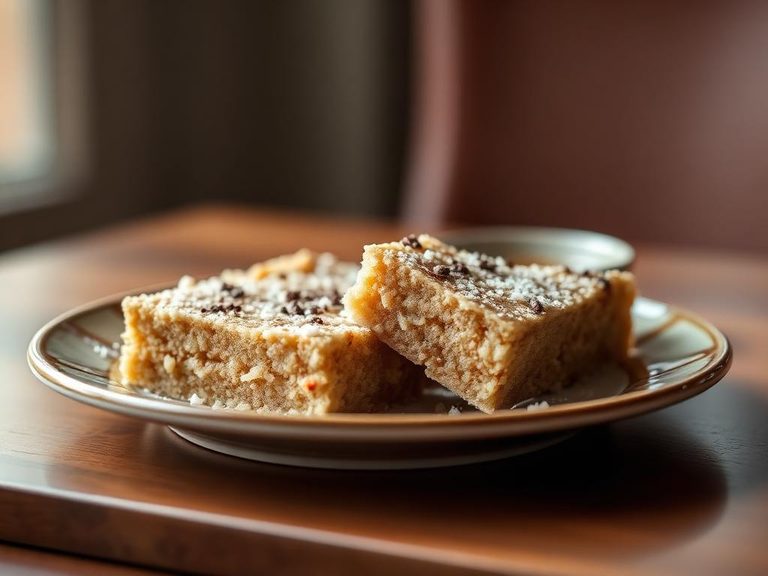
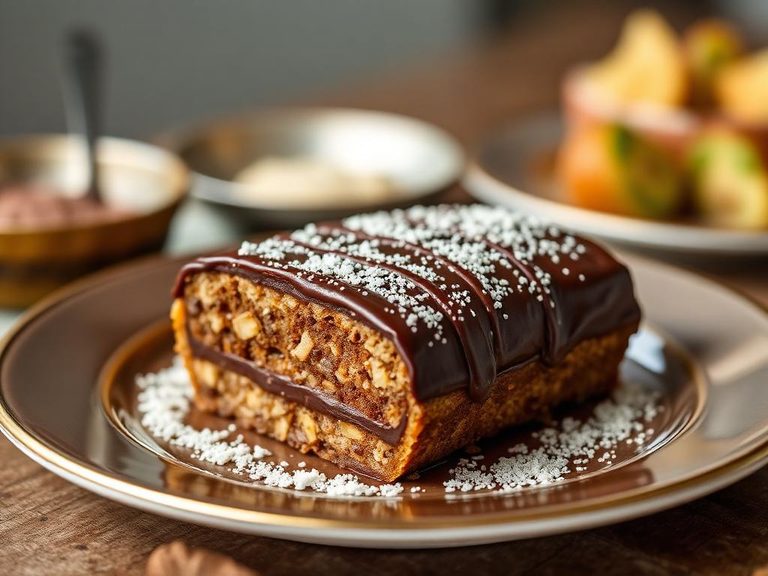
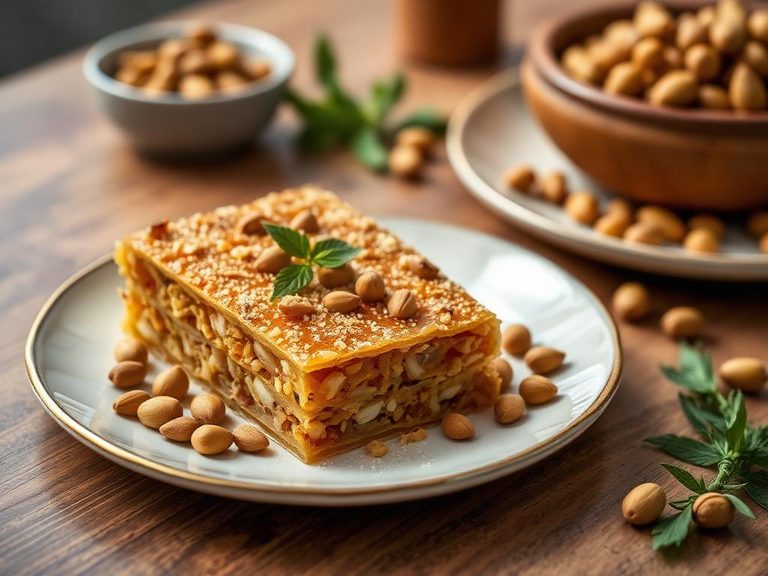
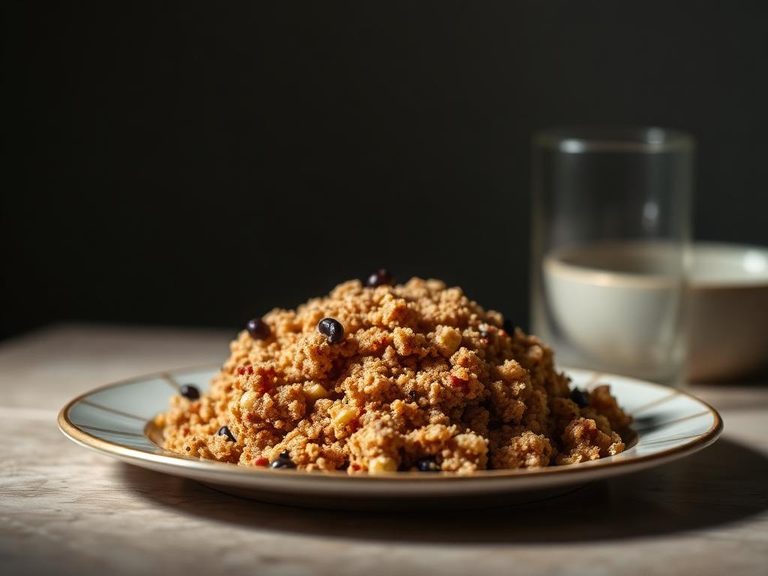
Halavah is a dense, crumbly confection made from tahini (sesame paste) and sugar, often flavored with vanilla or cocoa. Its texture is uniquely flaky yet melts in the mouth, offering a rich, nutty sweetness. Nutritionally, it's a calorie-dense source of plant-based protein and healthy fats from sesame.
Calorie split: 10% protein · 50% carbs · 40% fat
↓ Full nutrition💚 Why it's loved
People love halavah for its intense, unique sesame flavor and satisfyingly crumbly texture that dissolves on the tongue. It's a beloved treat in many cultures, often enjoyed as a sweet snack or a celebratory confection.
⚠️ Watch-outs & how to enjoy it better
Its high sugar and calorie content can cause blood-sugar spikes, making it unsuitable for those monitoring glycemic load. It's also very calorie-dense, so portion control is key. To counteract, pair a small piece with protein (like nuts) or fat to slow sugar absorption, and be mindful of serving size.
Key benefits
- Good source of plant-based protein from sesame seeds
- Provides healthy unsaturated fats and fiber
- Naturally gluten-free (if prepared in a gluten-free facility)
- Contains minerals like calcium, magnesium, and iron from tahini
- Offers a quick energy boost from its carbohydrate and fat content
🍽️ Popular dishes
🌍 Where it's eaten
💡 Did you know?
The word 'halavah' comes from the Hebrew word for 'milk,' though traditional halavah is dairy-free; its creamy texture is achieved entirely from the emulsion of tahini and sugar syrup.
Full nutrition (USDA data · scales with serving)
| Water | 3.7 g |
| Energy | 469 kcal |
| Energy | 1962 kj |
| Protein | 12.5 g |
| Total lipid (fat) | 21.5 g |
| Ash | 1.8 g |
| Carbohydrate, by difference | 60.5 g |
| Fiber, total dietary | 4.5 g |
| Calcium, Ca | 33.0 mg |
| Iron, Fe | 4.5 mg |
| Magnesium, Mg | 218 mg |
| Phosphorus, P | 607 mg |
| Potassium, K | 187 mg |
| Sodium, Na | 195 mg |
| Zinc, Zn | 4.3 mg |
| Copper, Cu | 1.2 mg |
| Manganese, Mn | 0.87 mg |
| Selenium, Se | 11.5 ug |
| Vitamin C, total ascorbic acid | 0.10 mg |
| Thiamin | 0.42 mg |
| Riboflavin | 0.09 mg |
| Niacin | 2.9 mg |
| Pantothenic acid | 0.17 mg |
| Vitamin B-6 | 0.35 mg |
| Folate, total | 65.0 ug |
| Folic acid | 0.00 ug |
| Folate, food | 65.0 ug |
| Folate, DFE | 65.0 ug |
| Vitamin B-12 | 0.04 ug |
| Vitamin A, RAE | 0.00 ug |
| Retinol | 0.00 ug |
| Carotene, beta | 0.00 ug |
| Carotene, alpha | 0.00 ug |
| Cryptoxanthin, beta | 0.00 ug |
| Vitamin A, IU | 2.0 iu |
| Alcohol, ethyl | 0.00 g |
Fat & fatty acid profile (per 100g)
| Fatty acids, total saturated | 4.1 g |
| SFA 4:0 | 0.00 g |
| SFA 6:0 | 0.00 g |
| SFA 8:0 | 0.00 g |
| SFA 10:0 | 0.00 g |
| SFA 12:0 | 0.00 g |
| SFA 14:0 | 0.00 g |
| SFA 16:0 | 2.1 g |
| SFA 18:0 | 1.8 g |
| Fatty acids, total monounsaturated | 8.2 g |
| MUFA 16:1 | 0.03 g |
| MUFA 18:1 | 8.1 g |
| MUFA 20:1 | 0.04 g |
| MUFA 22:1 | 0.00 g |
| Fatty acids, total polyunsaturated | 8.5 g |
| PUFA 18:2 | 8.4 g |
| PUFA 18:3 | 0.06 g |
| PUFA 18:4 | 0.00 g |
| PUFA 20:4 | 0.00 g |
| PUFA 20:5 n-3 (EPA) | 0.00 g |
| PUFA 22:5 n-3 (DPA) | 0.00 g |
| PUFA 22:6 n-3 (DHA) | 0.00 g |
| Cholesterol | 0.00 mg |
Amino acid profile (per 100g)
Estimated from Candies, honey-combed, with peanut butter — USDA does not publish this profile for Candies.
| Tryptophan | 0.09 g |
| Threonine | 0.21 g |
| Isoleucine | 0.24 g |
| Leucine | 0.61 g |
| Lysine | 0.27 g |
| Methionine | 0.10 g |
| Cystine | 0.09 g |
| Phenylalanine | 0.47 g |
| Tyrosine | 0.33 g |
| Valine | 0.31 g |
| Arginine | 1.1 g |
| Histidine | 0.22 g |
| Alanine | 0.36 g |
| Aspartic acid | 1.2 g |
| Glutamic acid | 2.0 g |
| Glycine | 0.56 g |
| Proline | 0.55 g |
| Serine | 0.58 g |
FAQ
Is halavah the same as halva?
Yes, 'halavah' is the Hebrew pronunciation, while 'halva' is the more common English term. They refer to the same type of confection, though recipes vary by region.
Why is halavah crumbly?
The crumbly, flaky texture results from the sugar syrup crystallizing and forming a structure around the tiny particles of tahini (sesame paste) during the cooking and cooling process.
Does halavah contain dairy?
Traditional Middle Eastern halavah is typically dairy-free, made from tahini and sugar. However, some modern or regional variations might include milk or butter, so always check the ingredients.
Nutrient density (calculated · NRF9.3)
Nutrient Rich Foods index: beneficial nutrients (protein, fiber, vitamins, minerals) minus saturated fat, added sugar & sodium, per 100 kcal.
NRF9.3 index — Fulgoni, Keast & Drewnowski, 2009. Computed from USDA nutrients.
Weight-loss friendliness (composite index)
Energy density 4.69 kcal/g · 11% calories from protein · 4.5 g fiber · 0.0 g sugar per 100 g.
Composite of energy density (Rolls et al., 1999), protein & fiber satiety, minus sugar. A calculated heuristic — ranks satiety-per-calorie, not a clinical measure.
Dietary load (calculated from USDA values)
Potential renal acid load. Positive = acid-forming, negative = alkaline-forming.
Sodium-to-potassium ratio: 1.04 (lower is better — aim for ≤ 1)
Sodium:potassium per WHO potassium guidance. Computed from USDA nutrients.