

Beef, Australian, imported, Wagyu, external fat, Aust. marble score 4/5, raw
Whole food · Beef Products

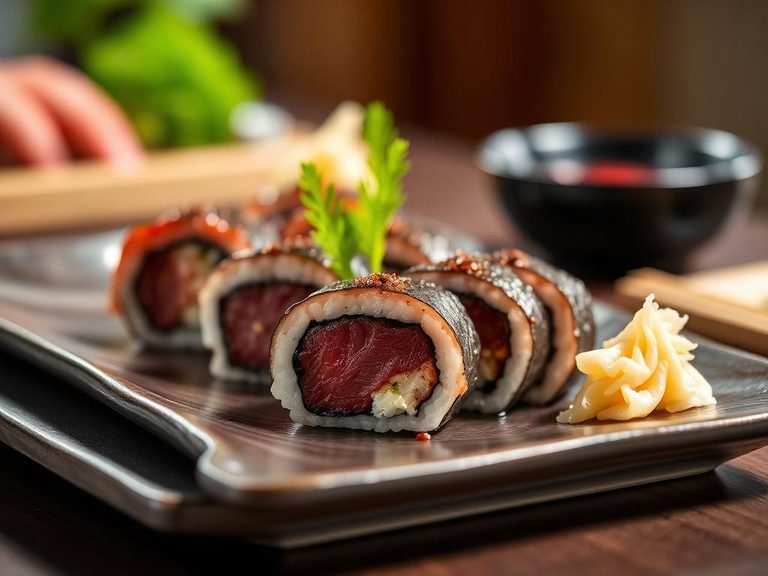
Photo: Wikipedia
This is raw, imported Australian Wagyu beef external fat, a prized culinary ingredient known for its exceptionally high intramuscular fat content, or marbling. It has a soft, buttery texture and a rich, savory, umami-forward flavor that melts at low temperatures. Nutritionally, it is an extremely energy-dense food, providing nearly all its calories from fat.
Calorie split: 4% protein · 0% carbs · 96% fat
↓ Full nutrition💚 Why it's loved
Chefs and food lovers prize it for its unparalleled ability to add a luxurious, buttery richness and deep umami flavor to dishes. It's a cornerstone of Japanese cuisine and a symbol of premium dining, celebrated for its melt-in-the-mouth quality.
⚠️ Watch-outs & how to enjoy it better
Due to its extremely high fat and calorie content (over 63g fat per 100g), it should be used sparingly by those monitoring calorie or saturated fat intake. It is not suitable for low-fat diets. Tip: Use it as a flavoring agent or cooking medium in small amounts rather than as the main protein, and balance meals with fiber-rich vegetables.
Key benefits
- Rich in monounsaturated fats, particularly oleic acid.
- Source of fat-soluble vitamins like Vitamin E.
- High in conjugated linoleic acid (CLA), a naturally occurring fatty acid.
- Provides essential fatty acids for cell function.
- Enhances the flavor and mouthfeel of lean dishes when used as a cooking fat.
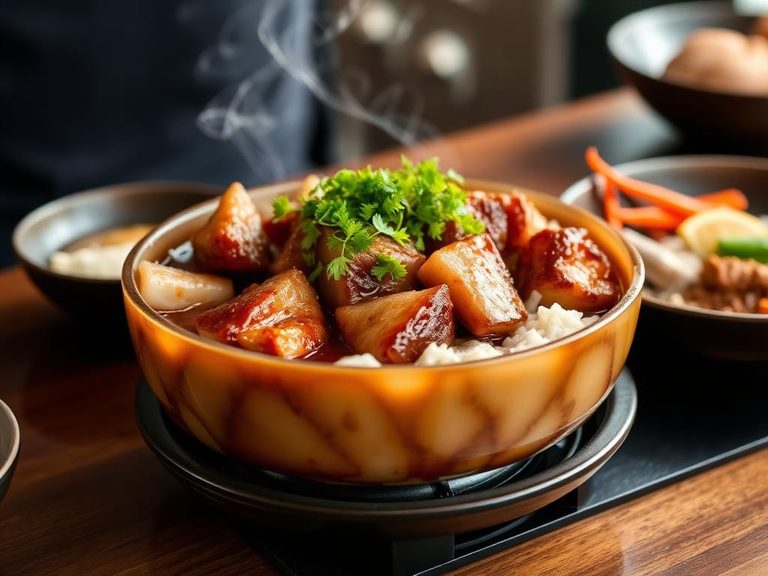
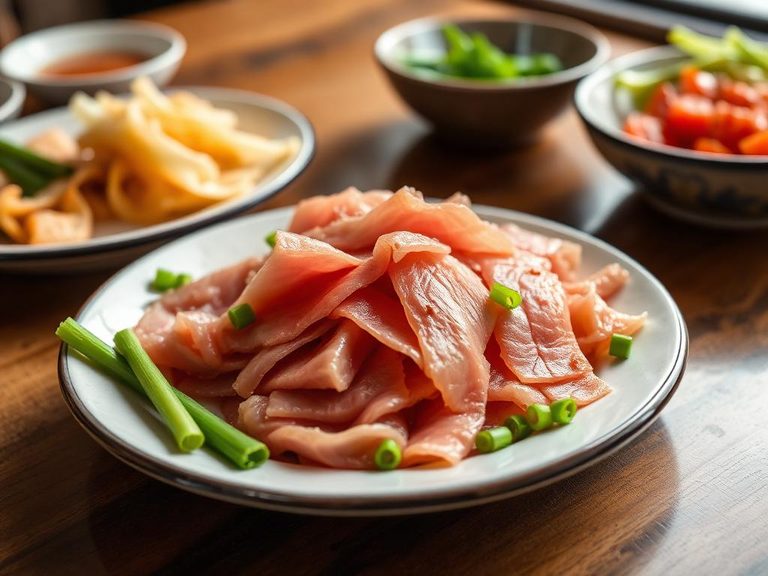
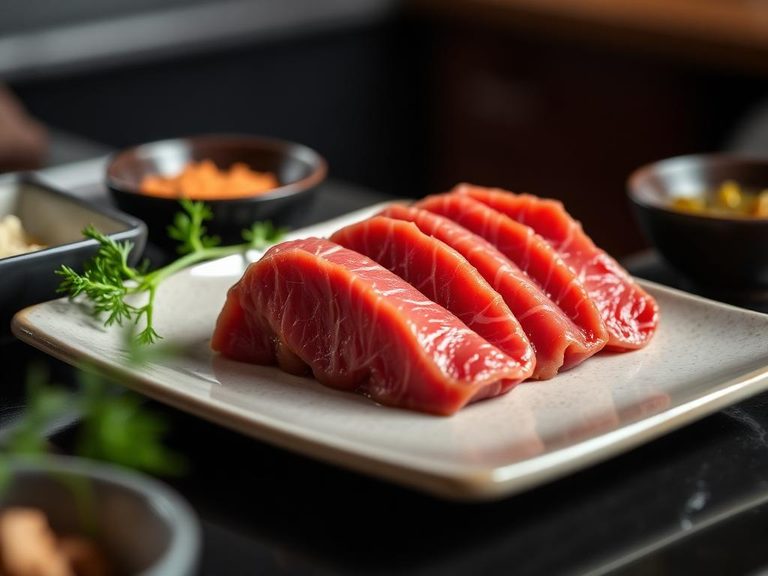
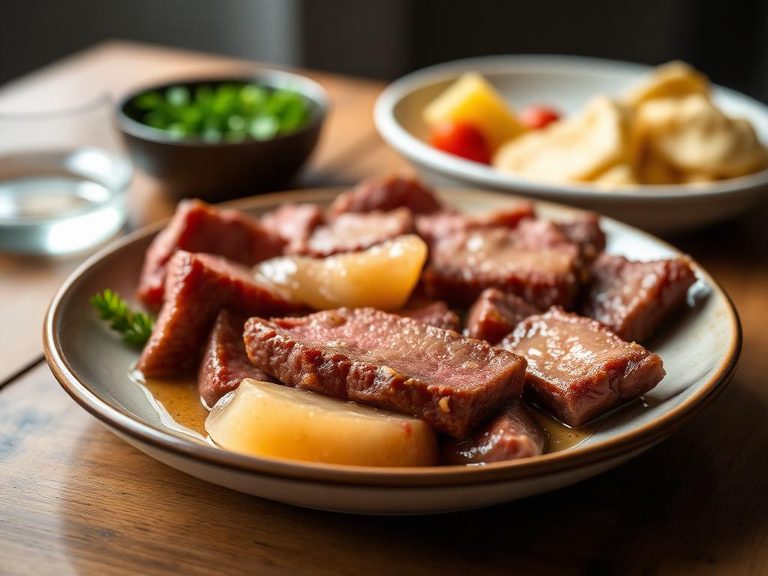
🍽️ Popular dishes
🌍 Where it's eaten
💡 Did you know?
The term 'Wagyu' literally translates to 'Japanese cow,' and the genetics of the four breeds that qualify are so valuable that their export was banned from Japan for many years.
Full nutrition (USDA data · scales with serving)
| Water | 30.3 g |
| Energy | 596 kcal |
| Energy | 2492 kj |
| Protein | 6.5 g |
| Total lipid (fat) | 63.3 g |
| Ash | 0.40 g |
| Carbohydrate, by difference | 0.00 g |
| Fiber, total dietary | 0.00 g |
| Total Sugars | 0.00 g |
| Sucrose | 0.00 g |
| Glucose | 0.00 g |
| Fructose | 0.00 g |
| Lactose | 0.00 g |
| Maltose | 0.00 g |
| Galactose | 0.00 g |
| Calcium, Ca | 2.0 mg |
| Iron, Fe | 1.0 mg |
| Sodium, Na | 37.0 mg |
| Vitamin C, total ascorbic acid | 0.00 mg |
| Vitamin A, RAE | 22.0 ug |
| Retinol | 22.0 ug |
| Vitamin A, IU | 74.0 iu |
Fat & fatty acid profile (per 100g)
| Fatty acids, total saturated | 22.5 g |
| SFA 10:0 | 0.02 g |
| SFA 12:0 | 0.04 g |
| SFA 14:0 | 1.7 g |
| SFA 15:0 | 0.27 g |
| SFA 16:0 | 12.7 g |
| SFA 17:0 | 0.75 g |
| SFA 18:0 | 7.0 g |
| SFA 20:0 | 0.05 g |
| SFA 22:0 | 0.01 g |
| SFA 24:0 | 0.01 g |
| Fatty acids, total monounsaturated | 31.6 g |
| MUFA 14:1 | 0.53 g |
| MUFA 16:1 | 2.2 g |
| MUFA 18:1 | 28.7 g |
| MUFA 18:1 c | 25.8 g |
| MUFA 18:1-11 t (18:1t n-7) | 2.5 g |
| MUFA 20:1 | 0.18 g |
| Fatty acids, total polyunsaturated | 1.6 g |
| PUFA 18:2 | 1.4 g |
| PUFA 18:2 n-6 c,c | 0.97 g |
| PUFA 18:3 | 0.14 g |
| PUFA 18:3 n-3 c,c,c (ALA) | 0.05 g |
| PUFA 18:3i | 0.08 g |
| PUFA 18:4 | 0.01 g |
| PUFA 20:2 n-6 c,c | 0.01 g |
| PUFA 20:3 | 0.01 g |
| PUFA 20:4 | 0.02 g |
| PUFA 20:5 n-3 (EPA) | 0.01 g |
| PUFA 22:5 n-3 (DPA) | 0.01 g |
| Fatty acids, total trans | 3.3 g |
| Fatty acids, total trans-monoenoic | 2.8 g |
| TFA 18:1 t | 2.8 g |
| TFA 18:2 t not further defined | 0.41 g |
| Fatty acids, total trans-polyenoic | 0.49 g |
| Cholesterol | 73.0 mg |
Amino acid profile (per 100g)
Estimated from Beef, variety meats and by-products, mechanically separated beef, raw — USDA does not publish this profile for Beef.
| Tryptophan | 0.17 g |
| Threonine | 0.47 g |
| Isoleucine | 0.58 g |
| Leucine | 1.2 g |
| Lysine | 1.2 g |
| Methionine | 0.43 g |
| Cystine | 0.23 g |
| Phenylalanine | 0.64 g |
| Tyrosine | 0.38 g |
| Valine | 0.92 g |
| Arginine | 1.2 g |
| Histidine | 0.44 g |
| Alanine | 1.0 g |
| Aspartic acid | 1.3 g |
| Glutamic acid | 2.1 g |
| Glycine | 1.2 g |
| Proline | 0.92 g |
| Serine | 0.57 g |
FAQ
What is the difference between Wagyu external fat and marbled fat within the meat?
External fat is the fat cap or trim from the outside of the cut, while marbled fat (intramuscular fat) is the fat woven within the muscle fibers. Both are prized for flavor, but the external fat is often rendered down for cooking.
Is Australian Wagyu as good as Japanese Wagyu?
Australian Wagyu is highly regarded for its quality and consistency, often using Japanese genetics. While grading systems differ, a high marble score (like 4/5) indicates excellent marbling and flavor, offering a premium experience often at a more accessible point.
How should I store this raw Wagyu fat?
For short-term use (a few days), keep it refrigerated in an airtight container. For longer storage, wrap it tightly in freezer paper or vacuum-seal it and freeze it for up to 6 months.
Nutrient density (calculated · NRF9.3)
Nutrient Rich Foods index: beneficial nutrients (protein, fiber, vitamins, minerals) minus saturated fat, added sugar & sodium, per 100 kcal.
NRF9.3 index — Fulgoni, Keast & Drewnowski, 2009. Computed from USDA nutrients.
Weight-loss friendliness (composite index)
Energy density 5.96 kcal/g · 4% calories from protein · 0.0 g fiber · 0.0 g sugar per 100 g.
Composite of energy density (Rolls et al., 1999), protein & fiber satiety, minus sugar. A calculated heuristic — ranks satiety-per-calorie, not a clinical measure.