

Beef, Australian, imported, grass-fed, round, top round cap-off steak/roast, boneless, separable lean only, raw
Whole food · Beef Products

Photo: Wikipedia
This is a lean, boneless cut from the top of the beef round, prized for its deep red color and fine-grained texture. When raw, it's a firm, versatile canvas for marinades and quick cooking methods. Its standout nutritional feature is an exceptionally high protein-to-fat ratio, making it a powerhouse for muscle-building diets.
Calorie split: 69% protein · 0% carbs · 31% fat
↓ Full nutrition💚 Why it's loved
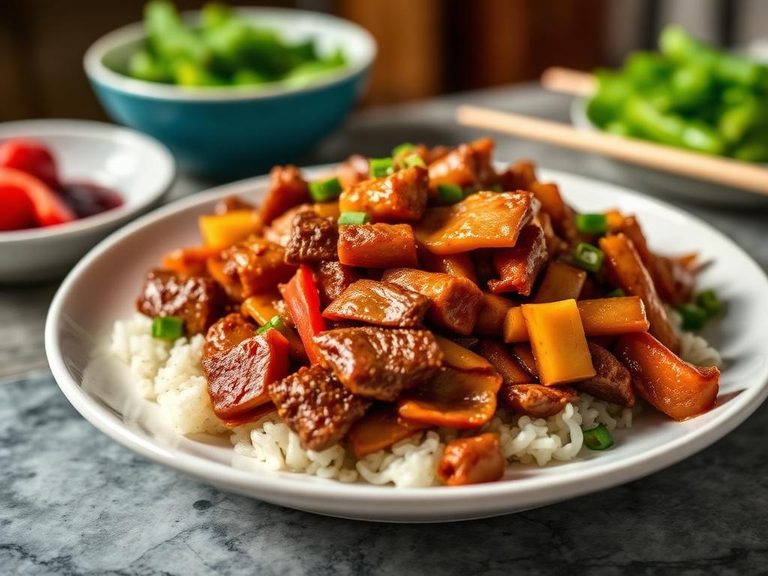
Home cooks and grill masters love it for its clean, beefy flavor that doesn't rely on fat for satisfaction. It's a lean workhorse that can be sliced thin for stir-fries, pounded for scaloppine, or roasted whole for a healthy centerpiece.
⚠️ Watch-outs & how to enjoy it better
Its extreme leanness means it can become tough and dry if overcooked, as there's little intramuscular fat to provide moisture. To counteract this, use a meat thermometer, cook to medium-rare or medium, and let it rest fully before slicing against the grain.
Key benefits
- Excellent source of complete, high-quality protein
- Very low in total and saturated fat
- Naturally carb-free and sugar-free
- Rich in iron, zinc, and B vitamins like B12
- Grass-fed sourcing may offer a better omega-3 fatty acid profile
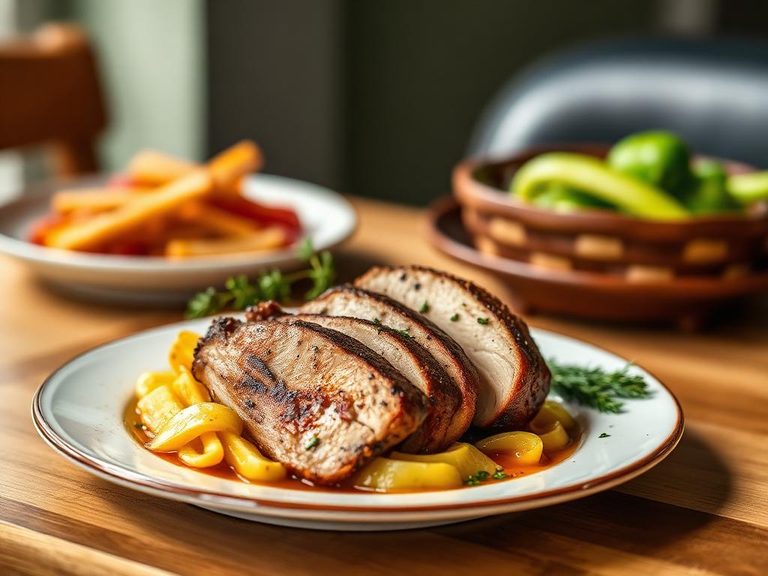
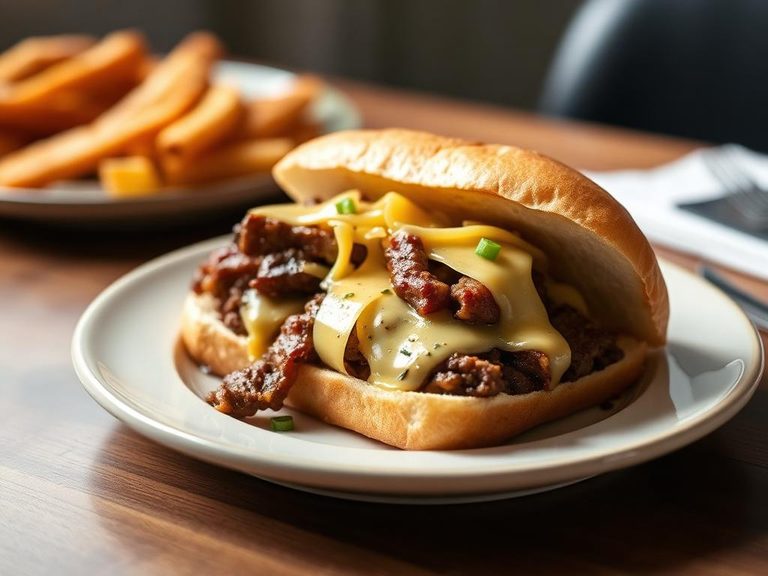
🍽️ Popular dishes
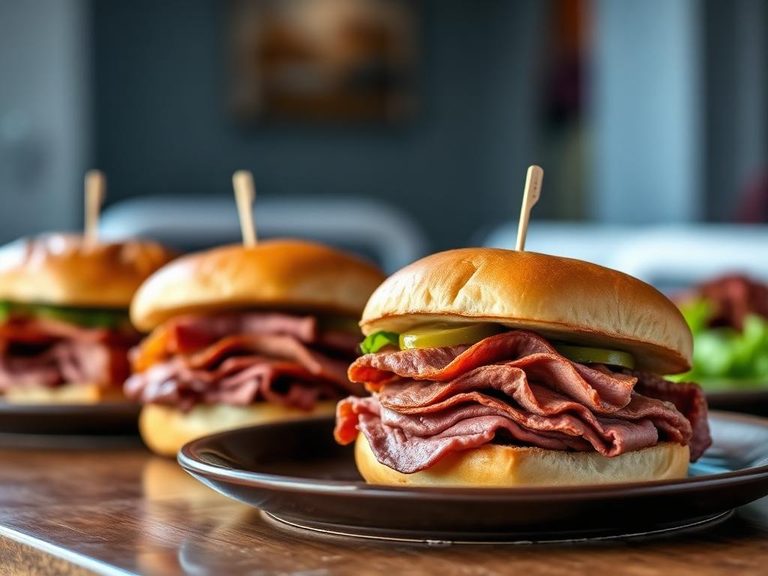
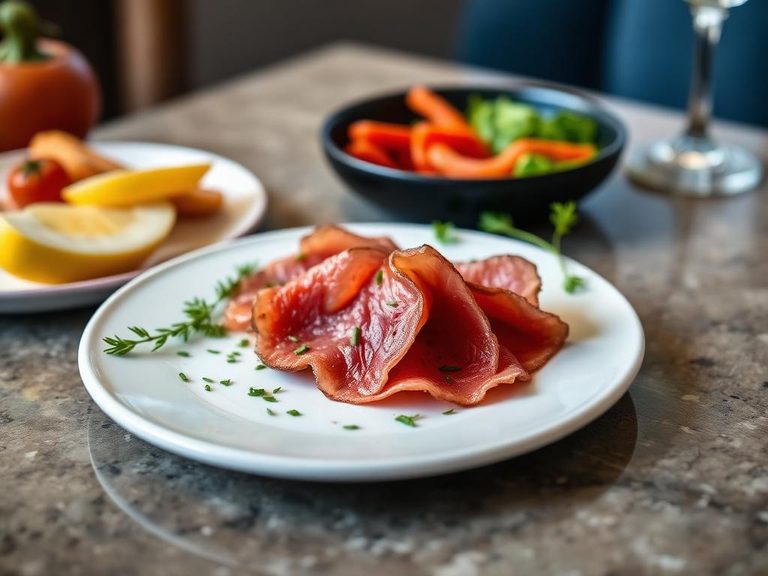
🌍 Where it's eaten
💡 Did you know?
The 'cap-off' designation means the 'cap' of fat and the small muscle (the gracilis) that sits atop the main top round muscle has been removed, yielding an even more uniform and lean piece of meat.
Full nutrition (USDA data · scales with serving)
| Water | 73.0 g |
| Energy | 129 kcal |
| Energy | 542 kj |
| Protein | 22.4 g |
| Total lipid (fat) | 4.4 g |
| Ash | 1.1 g |
| Carbohydrate, by difference | 0.00 g |
| Fiber, total dietary | 0.00 g |
| Total Sugars | 0.00 g |
| Calcium, Ca | 5.0 mg |
| Iron, Fe | 2.3 mg |
| Sodium, Na | 60.0 mg |
| Vitamin C, total ascorbic acid | 0.00 mg |
| Vitamin A, RAE | 0.00 ug |
| Carotene, beta | 0.00 ug |
| Carotene, alpha | 0.00 ug |
| Cryptoxanthin, beta | 0.00 ug |
| Vitamin A, IU | 0.00 iu |
| Lycopene | 0.00 ug |
| Lutein + zeaxanthin | 0.00 ug |
| Alcohol, ethyl | 0.00 g |
| Caffeine | 0.00 mg |
| Theobromine | 0.00 mg |
Fat & fatty acid profile (per 100g)
| Fatty acids, total saturated | 1.8 g |
| SFA 4:0 | 0.00 g |
| SFA 6:0 | 0.00 g |
| SFA 8:0 | 0.00 g |
| SFA 10:0 | 0.01 g |
| SFA 12:0 | 0.01 g |
| SFA 14:0 | 0.09 g |
| SFA 15:0 | 0.02 g |
| SFA 16:0 | 0.99 g |
| SFA 17:0 | 0.05 g |
| SFA 18:0 | 0.61 g |
| SFA 20:0 | 0.01 g |
| SFA 22:0 | 0.01 g |
| Fatty acids, total monounsaturated | 1.9 g |
| MUFA 14:1 | 0.02 g |
| MUFA 16:1 | 0.11 g |
| MUFA 18:1 | 1.7 g |
| MUFA 18:1 c | 1.6 g |
| MUFA 20:1 | 0.01 g |
| Fatty acids, total polyunsaturated | 0.29 g |
| PUFA 18:2 | 0.16 g |
| PUFA 18:2 n-6 c,c | 0.14 g |
| PUFA 18:3 | 0.04 g |
| PUFA 18:3 n-3 c,c,c (ALA) | 0.03 g |
| PUFA 18:3i | 0.01 g |
| PUFA 18:4 | 0.00 g |
| PUFA 20:4 | 0.05 g |
| PUFA 20:5 n-3 (EPA) | 0.02 g |
| PUFA 22:5 n-3 (DPA) | 0.03 g |
| Fatty acids, total trans | 0.14 g |
| Fatty acids, total trans-monoenoic | 0.12 g |
| TFA 18:1 t | 0.12 g |
| TFA 18:2 t not further defined | 0.02 g |
| Fatty acids, total trans-polyenoic | 0.02 g |
| Cholesterol | 48.0 mg |
Amino acid profile (per 100g)
| Tryptophan | 0.26 g |
| Threonine | 1.0 g |
| Isoleucine | 0.98 g |
| Leucine | 1.9 g |
| Lysine | 2.0 g |
| Methionine | 0.65 g |
| Cystine | 0.24 g |
| Phenylalanine | 0.87 g |
| Tyrosine | 0.80 g |
| Valine | 1.0 g |
| Arginine | 1.5 g |
| Histidine | 0.74 g |
| Alanine | 1.3 g |
| Aspartic acid | 2.1 g |
| Glutamic acid | 3.6 g |
| Glycine | 1.00 g |
| Proline | 0.92 g |
| Serine | 0.88 g |
| Hydroxyproline | 0.11 g |
FAQ
Is this the same as 'eye of round'?
No. They are adjacent muscles in the hindquarter. The top round is generally larger, slightly more tender, and has a more uniform shape, making it better for roasting. The eye of round is a smaller, tighter, and leaner cylinder often used for jerky or deli roast beef.
What's the best way to cook it to avoid toughness?
For steaks, high-heat, quick methods like grilling or pan-searing to medium-rare are ideal. For roasts, sear first, then roast at a moderate temperature (325°F/160°C) to an internal temp of 130-135°F (54-57°C), then rest for 15 minutes. Always slice thinly against the grain.
Why is it labeled 'Australian, imported'?
This indicates the beef was sourced from cattle raised in Australia and then processed and shipped to other markets, like the United States. Australia is a major global exporter of high-quality, grass-fed beef.
Nutrient density (calculated · NRF9.3)
Nutrient Rich Foods index: beneficial nutrients (protein, fiber, vitamins, minerals) minus saturated fat, added sugar & sodium, per 100 kcal.
NRF9.3 index — Fulgoni, Keast & Drewnowski, 2009. Computed from USDA nutrients.
Weight-loss friendliness (composite index)
Energy density 1.29 kcal/g · 69% calories from protein · 0.0 g fiber · 0.0 g sugar per 100 g.
Composite of energy density (Rolls et al., 1999), protein & fiber satiety, minus sugar. A calculated heuristic — ranks satiety-per-calorie, not a clinical measure.