

Banana, baked
Common food

Photo: Wikipedia
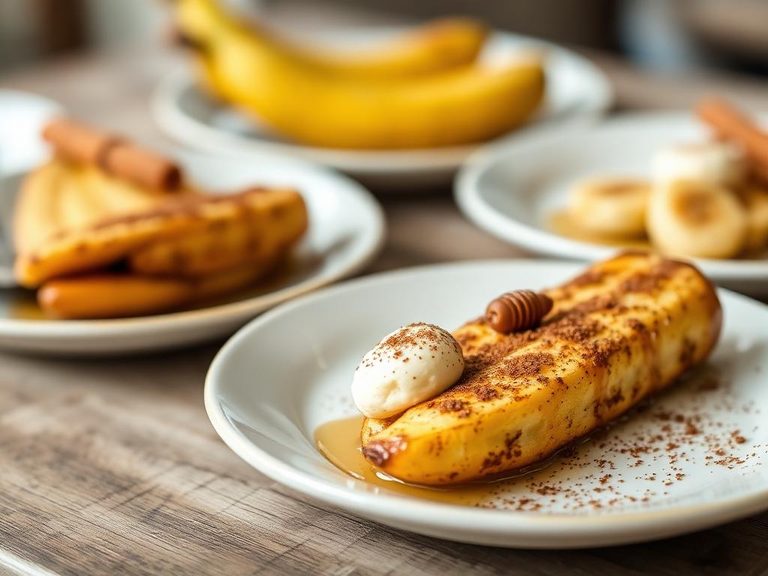
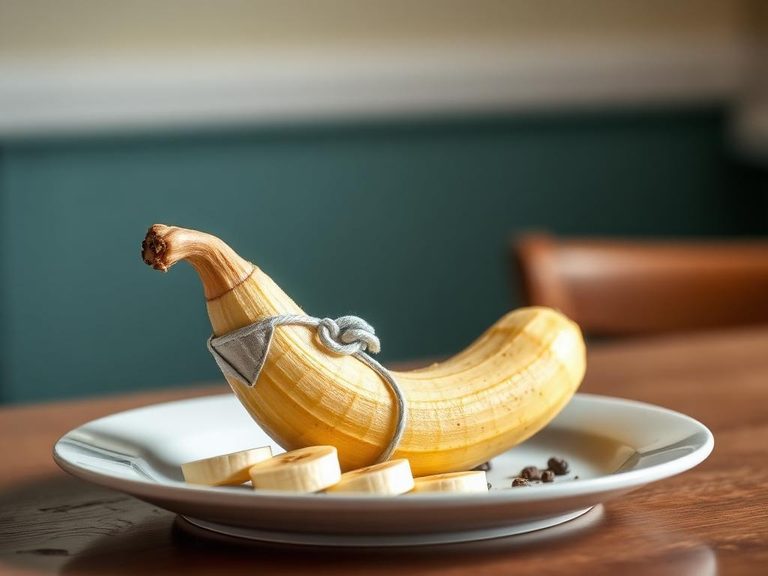
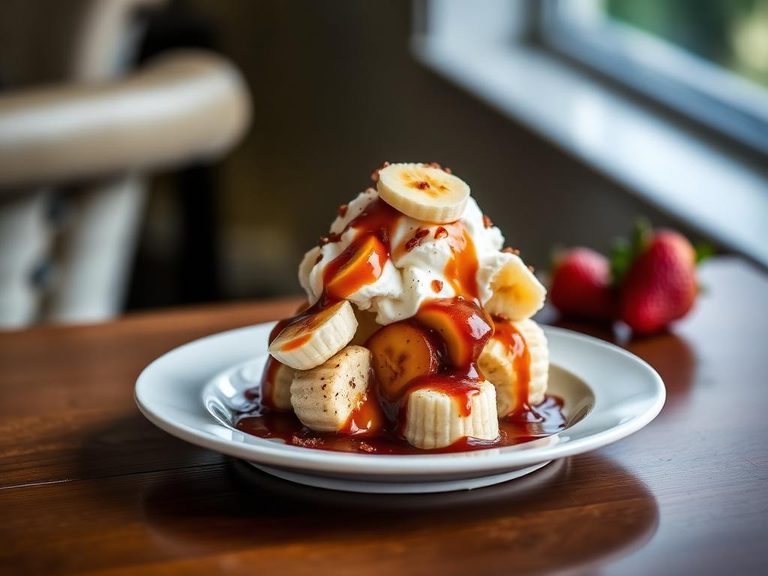
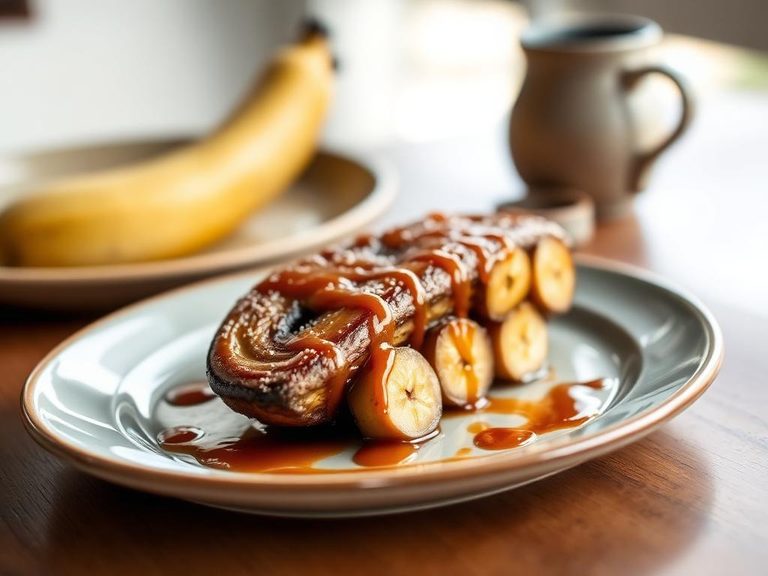
A whole banana, baked in its skin until the flesh turns soft, jammy, and intensely sweet. The heat caramelizes its natural sugars, creating a warm, comforting dessert with a texture similar to a thick pudding. Nutritionally, it's a concentrated source of quick energy and potassium, with a higher sugar density than its raw counterpart.
Calorie split: 2% protein · 80% carbs · 18% fat
↓ Full nutrition💚 Why it's loved
People love it for its warm, caramelized sweetness and pudding-like comfort, often enjoyed as a simple, healthy dessert. It's also a beloved, versatile base for countless toppings and fillings across cultures.
⚠️ Watch-outs & how to enjoy it better
Its high natural sugar content can cause rapid blood-sugar spikes, especially when eaten alone. To counteract this, pair it with a source of protein or fat, like a dollop of Greek yogurt or a handful of nuts, to slow sugar absorption. Those monitoring calorie intake should be mindful, as baking concentrates the sugars and calories per volume compared to a raw banana.
Key benefits
- Excellent source of potassium for heart and muscle function.
- Provides quick, natural energy from easily digestible carbs.
- Contains prebiotic fiber to support gut health.
- A simple, whole-food dessert with no added fats or processed ingredients.
- The baking process makes its nutrients highly bioavailable.
🍽️ Popular dishes
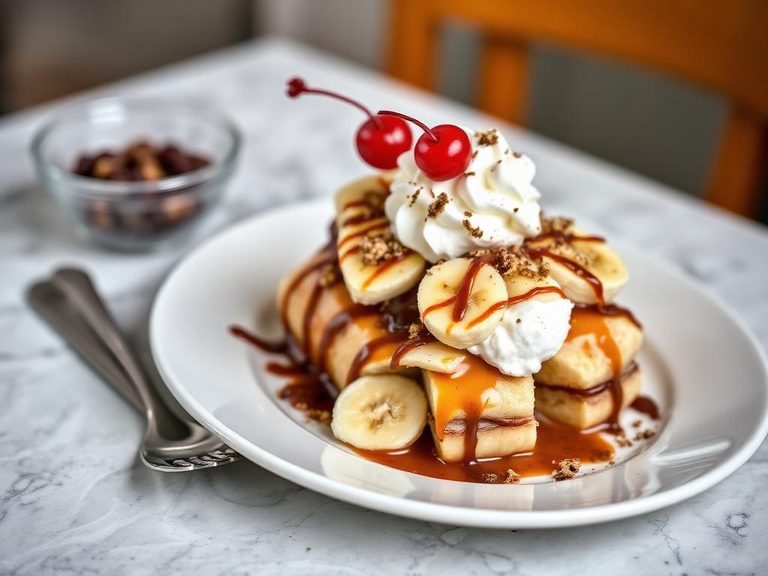
🌍 Where it's eaten
💡 Did you know?
Baking a banana in its skin is a traditional method in many tropical regions to quickly ripen and sweeten slightly underripe fruit, making it edible and delicious.
Full nutrition (USDA data · scales with serving)
| Water | 62.8 g |
| Energy | 161 kcal |
| Protein | 0.82 g |
| Total lipid (fat) | 3.2 g |
| Carbohydrate, by difference | 32.4 g |
| Fiber, total dietary | 1.8 g |
| Total Sugars | 24.7 g |
| Calcium, Ca | 13.0 mg |
| Iron, Fe | 0.06 mg |
| Magnesium, Mg | 30.0 mg |
| Phosphorus, P | 24.0 mg |
| Potassium, K | 322 mg |
| Sodium, Na | 3.0 mg |
| Zinc, Zn | 0.17 mg |
| Copper, Cu | 0.10 mg |
| Selenium, Se | 0.10 ug |
| Vitamin C, total ascorbic acid | 10.4 mg |
| Thiamin | 0.05 mg |
| Riboflavin | 0.00 mg |
| Niacin | 0.64 mg |
| Vitamin B-6 | 0.21 mg |
| Folate, total | 9.0 ug |
| Folic acid | 0.00 ug |
| Folate, food | 9.0 ug |
| Folate, DFE | 9.0 ug |
| Choline, total | 11.2 mg |
| Vitamin B-12 | 0.00 ug |
| Vitamin B-12, added | 0.00 ug |
| Vitamin A, RAE | 28.0 ug |
| Retinol | 26.0 ug |
| Carotene, beta | 13.0 ug |
| Carotene, alpha | 6.0 ug |
| Cryptoxanthin, beta | 0.00 ug |
| Lycopene | 0.00 ug |
| Lutein + zeaxanthin | 20.0 ug |
| Vitamin E (alpha-tocopherol) | 0.11 mg |
| Vitamin E, added | 0.00 mg |
| Vitamin D (D2 + D3) | 0.00 ug |
| Vitamin K (phylloquinone) | 0.40 ug |
| Alcohol, ethyl | 0.00 g |
| Caffeine | 0.00 mg |
| Theobromine | 0.00 mg |
Fat & fatty acid profile (per 100g)
| Fatty acids, total saturated | 1.7 g |
| SFA 4:0 | 0.07 g |
| SFA 6:0 | 0.05 g |
| SFA 8:0 | 0.03 g |
| SFA 10:0 | 0.07 g |
| SFA 12:0 | 0.08 g |
| SFA 14:0 | 0.25 g |
| SFA 16:0 | 0.86 g |
| SFA 18:0 | 0.27 g |
| Fatty acids, total monounsaturated | 0.63 g |
| MUFA 16:1 | 0.05 g |
| MUFA 18:1 | 0.55 g |
| MUFA 20:1 | 0.00 g |
| MUFA 22:1 | 0.00 g |
| Fatty acids, total polyunsaturated | 0.17 g |
| PUFA 18:2 | 0.13 g |
| PUFA 18:3 | 0.04 g |
| PUFA 18:4 | 0.00 g |
| PUFA 20:4 | 0.00 g |
| PUFA 20:5 n-3 (EPA) | 0.00 g |
| PUFA 22:5 n-3 (DPA) | 0.00 g |
| PUFA 22:6 n-3 (DHA) | 0.00 g |
| Cholesterol | 8.0 mg |
Amino acid profile (per 100g)
Estimated from Babyfood, cereal, oatmeal, with bananas, prepared with whole milk — USDA does not publish this profile for Banana.
| Tryptophan | 0.08 g |
| Threonine | 0.16 g |
| Isoleucine | 0.19 g |
| Leucine | 0.31 g |
| Lysine | 0.31 g |
| Methionine | 0.09 g |
| Cystine | 0.04 g |
| Phenylalanine | 0.18 g |
| Tyrosine | 0.21 g |
| Valine | 0.23 g |
| Arginine | 0.12 g |
| Histidine | 0.10 g |
| Alanine | 0.13 g |
| Aspartic acid | 0.29 g |
| Glutamic acid | 0.78 g |
| Glycine | 0.11 g |
| Proline | 0.37 g |
| Serine | 0.14 g |
FAQ
How do you bake a banana?
Simply place a whole, unpeeled banana on a baking sheet and bake at 375°F (190°C) for 15-20 minutes, until the skin is black and the fruit is soft inside.
Is baked banana healthier than raw banana?
They have similar nutrient profiles, but baking concentrates the sugars and calories by reducing water content. Baking doesn't add nutrients but makes them more digestible.
Can I freeze baked bananas?
Yes, once cooled, the flesh can be scooped out and frozen for use in smoothies, ice cream, or as a ready-to-eat sweet treat.
Nutrient density (calculated · NRF9.3)
Nutrient Rich Foods index: beneficial nutrients (protein, fiber, vitamins, minerals) minus saturated fat, added sugar & sodium, per 100 kcal.
NRF9.3 index — Fulgoni, Keast & Drewnowski, 2009. Computed from USDA nutrients.
Weight-loss friendliness (composite index)
Energy density 1.61 kcal/g · 2% calories from protein · 1.8 g fiber · 24.7 g sugar per 100 g.
Composite of energy density (Rolls et al., 1999), protein & fiber satiety, minus sugar. A calculated heuristic — ranks satiety-per-calorie, not a clinical measure.
Dietary load (calculated from USDA values)
Potential renal acid load. Positive = acid-forming, negative = alkaline-forming.
Sodium-to-potassium ratio: 0.01 (lower is better — aim for ≤ 1)
Sodium:potassium per WHO potassium guidance. Computed from USDA nutrients.