

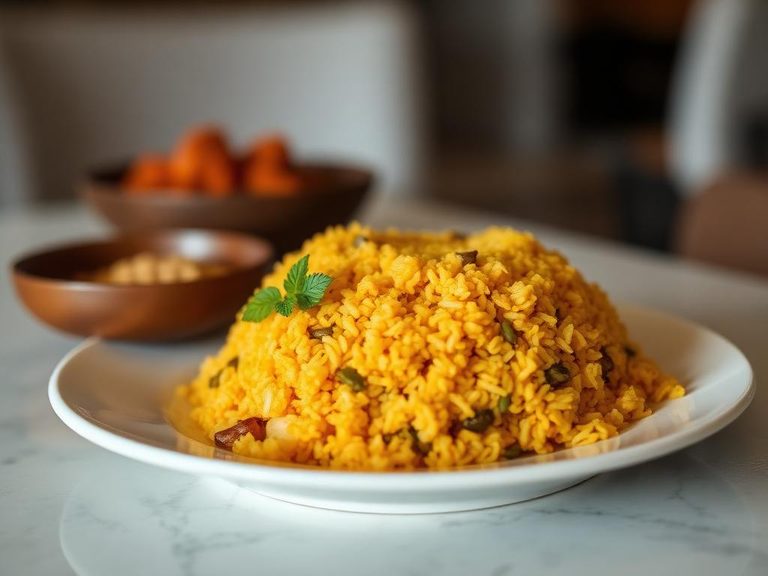
Yellow rice with seasoning, dry packet mix, unprepared
Whole food · Meals, Entrees, and Side Dishes

Photo: Wikipedia
This is a vibrant, turmeric-stained rice mix designed for quick preparation, offering a fluffy texture with a warm, aromatic flavor profile. Nutritionally, it's a high-carbohydrate energy source, providing substantial fuel with minimal fat and a modest protein content.
Calorie split: 8% protein · 87% carbs · 5% fat
↓ Full nutrition💚 Why it's loved
People love it for its ability to instantly transform plain rice into a flavorful, aromatic side dish that pairs beautifully with a wide range of proteins and stews. Its cultural significance in festive and everyday meals across many cuisines makes it a comforting and versatile staple.
⚠️ Watch-outs & how to enjoy it better
As a refined, high-glycemic carbohydrate, it can cause rapid blood-sugar spikes, making it less ideal for those managing diabetes or insulin resistance. The dry packet mix often contains significant sodium. To counteract, pair it with a source of protein (like beans, chicken, or fish) and healthy fats (like avocado or olive oil) to slow digestion and moderate the glycemic response, and be mindful of portion sizes.
Key benefits
- Quick-cooking convenience for busy meals
- High-carbohydrate content for sustained energy
- Low in fat and a source of dietary fiber
- Adds vibrant color and aromatic flavor to dishes
- Shelf-stable pantry staple
🍽️ Popular dishes
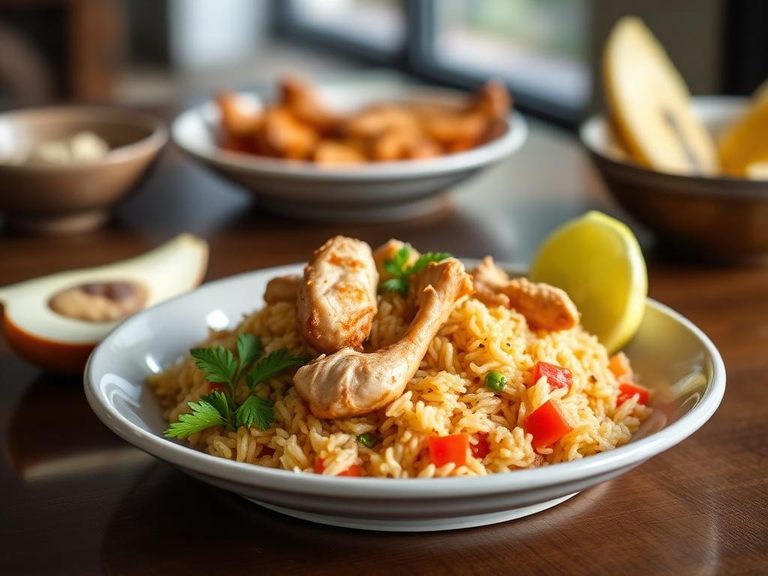
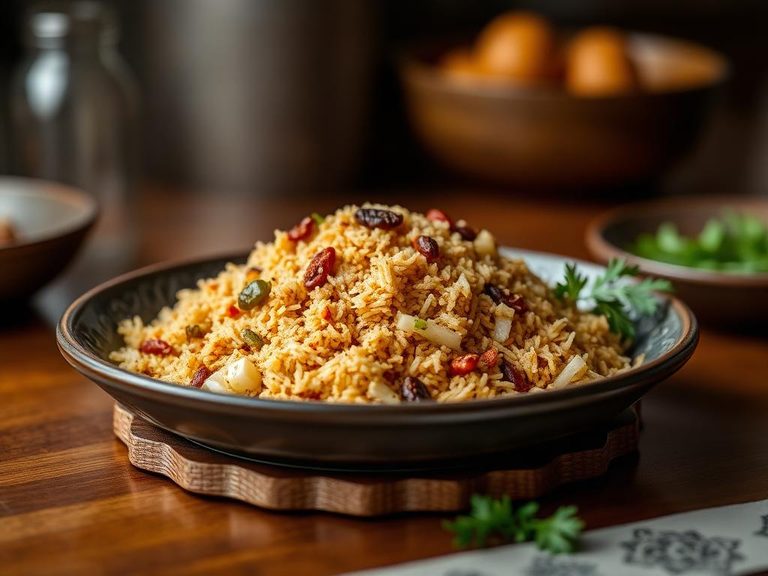
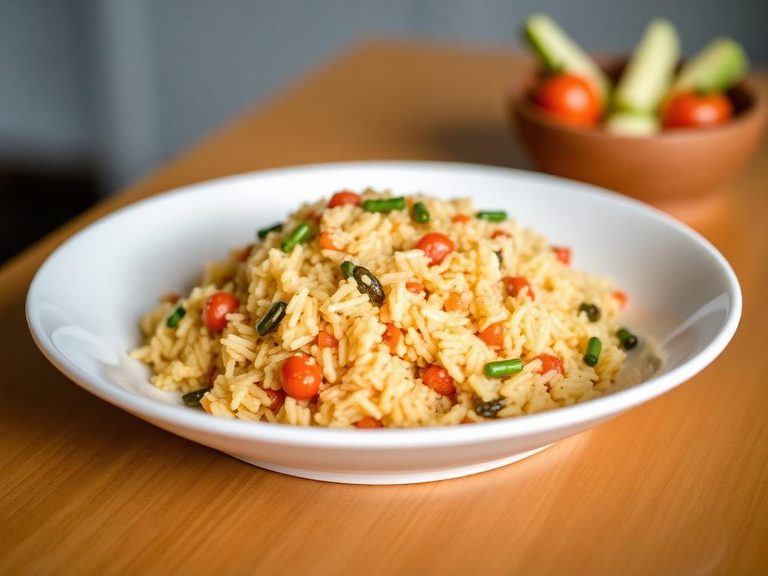
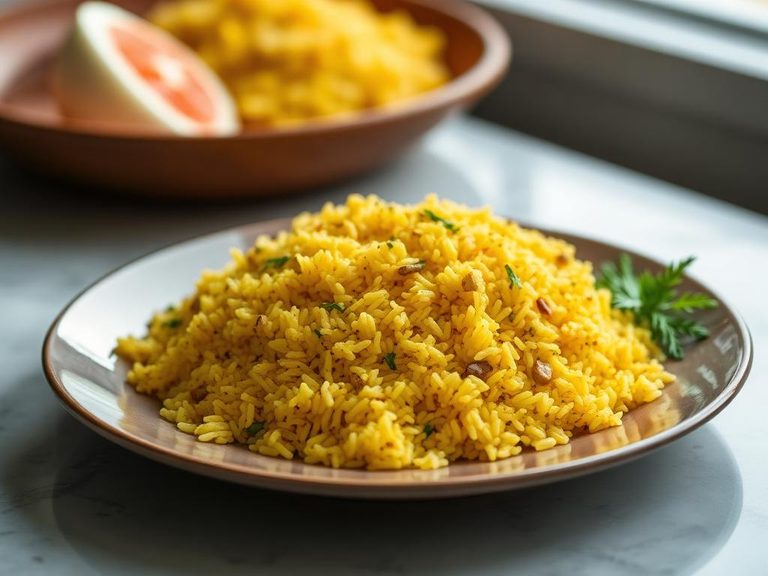
🌍 Where it's eaten
💡 Did you know?
The signature yellow color in many seasoning packets comes from turmeric, a spice so potent it has been used for centuries not only as a dye and flavoring but also as a traditional textile colorant.
Full nutrition (USDA data · scales with serving)
| Water | 10.8 g |
| Energy | 343 kcal |
| Energy | 1433 kj |
| Protein | 7.0 g |
| Total lipid (fat) | 1.8 g |
| Ash | 5.8 g |
| Carbohydrate, by difference | 74.7 g |
| Fiber, total dietary | 1.8 g |
| Total Sugars | 1.8 g |
| Calcium, Ca | 35.0 mg |
| Iron, Fe | 2.5 mg |
| Magnesium, Mg | 112 mg |
| Phosphorus, P | 174 mg |
| Potassium, K | 801 mg |
| Sodium, Na | 1316 mg |
| Zinc, Zn | 1.2 mg |
| Copper, Cu | 0.27 mg |
| Selenium, Se | 10.6 ug |
| Vitamin C, total ascorbic acid | 0.00 mg |
| Thiamin | 0.40 mg |
| Riboflavin | 0.13 mg |
| Niacin | 3.5 mg |
| Vitamin B-6 | 0.58 mg |
| Folate, total | 140 ug |
| Folic acid | 112 ug |
| Folate, food | 28.0 ug |
| Folate, DFE | 219 ug |
| Choline, total | 8.5 mg |
| Vitamin B-12 | 0.00 ug |
| Vitamin B-12, added | 0.00 ug |
| Vitamin A, RAE | 9.0 ug |
| Retinol | 0.00 ug |
| Carotene, beta | 0.00 ug |
| Carotene, alpha | 0.00 ug |
| Cryptoxanthin, beta | 0.00 ug |
| Vitamin A, IU | 175 iu |
| Lycopene | 0.00 ug |
| Lutein + zeaxanthin | 1.0 ug |
| Vitamin E (alpha-tocopherol) | 0.25 mg |
| Vitamin E, added | 0.00 mg |
| Vitamin D (D2 + D3), International Units | 0.00 iu |
| Vitamin D (D2 + D3) | 0.00 ug |
| Vitamin K (phylloquinone) | 0.60 ug |
| Alcohol, ethyl | 0.00 g |
| Caffeine | 0.00 mg |
| Theobromine | 0.00 mg |
Fat & fatty acid profile (per 100g)
| Fatty acids, total saturated | 0.00 g |
| SFA 4:0 | 0.00 g |
| SFA 6:0 | 0.00 g |
| SFA 8:0 | 0.00 g |
| SFA 10:0 | 0.00 g |
| SFA 12:0 | 0.00 g |
| SFA 13:0 | 0.00 g |
| SFA 14:0 | 0.00 g |
| SFA 15:0 | 0.00 g |
| SFA 16:0 | 0.00 g |
| SFA 17:0 | 0.00 g |
| SFA 18:0 | 0.00 g |
| SFA 20:0 | 0.00 g |
| SFA 22:0 | 0.00 g |
| SFA 24:0 | 0.00 g |
| Fatty acids, total monounsaturated | 0.43 g |
| MUFA 14:1 | 0.00 g |
| MUFA 15:1 | 0.00 g |
| MUFA 16:1 | 0.00 g |
| MUFA 17:1 | 0.00 g |
| MUFA 18:1 | 0.43 g |
| MUFA 20:1 | 0.00 g |
| MUFA 22:1 | 0.00 g |
| MUFA 24:1 c | 0.00 g |
| Fatty acids, total polyunsaturated | 0.83 g |
| PUFA 18:2 | 0.40 g |
| PUFA 18:3 | 0.43 g |
| PUFA 18:4 | 0.00 g |
| PUFA 20:2 n-6 c,c | 0.00 g |
| PUFA 20:3 | 0.00 g |
| PUFA 20:4 | 0.00 g |
| PUFA 20:5 n-3 (EPA) | 0.00 g |
| PUFA 22:5 n-3 (DPA) | 0.00 g |
| PUFA 22:6 n-3 (DHA) | 0.00 g |
| Fatty acids, total trans | 0.00 g |
| Cholesterol | 0.00 mg |
FAQ
What gives yellow rice its color?
The primary coloring agent is turmeric, a bright yellow spice from the ginger family. Some mixes may also use annatto or saffron for color and flavor.
Is yellow rice the same as saffron rice?
Not necessarily. While both are yellow, saffron rice uses the expensive saffron threads for color and a distinct flavor. Most yellow rice seasoning packets use the more affordable turmeric as the main coloring and flavoring spice.
How does the nutrition change when cooked?
The dry mix is calorie-dense. When cooked with water, the volume and weight increase significantly, reducing the calories per serving. The provided nutritional values are for the unprepared mix.
Nutrient density (calculated · NRF9.3)
Nutrient Rich Foods index: beneficial nutrients (protein, fiber, vitamins, minerals) minus saturated fat, added sugar & sodium, per 100 kcal.
NRF9.3 index — Fulgoni, Keast & Drewnowski, 2009. Computed from USDA nutrients.
Weight-loss friendliness (composite index)
Energy density 3.43 kcal/g · 8% calories from protein · 1.8 g fiber · 1.8 g sugar per 100 g.
Composite of energy density (Rolls et al., 1999), protein & fiber satiety, minus sugar. A calculated heuristic — ranks satiety-per-calorie, not a clinical measure.
Dietary load (calculated from USDA values)
Potential renal acid load. Positive = acid-forming, negative = alkaline-forming.
Sodium-to-potassium ratio: 1.64 (lower is better — aim for ≤ 1)
Sodium:potassium per WHO potassium guidance. Computed from USDA nutrients.