Nasi Kuning
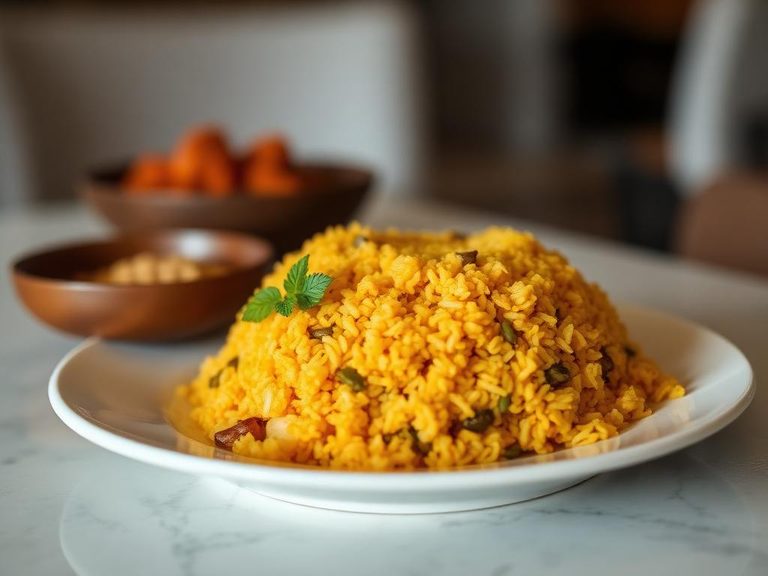
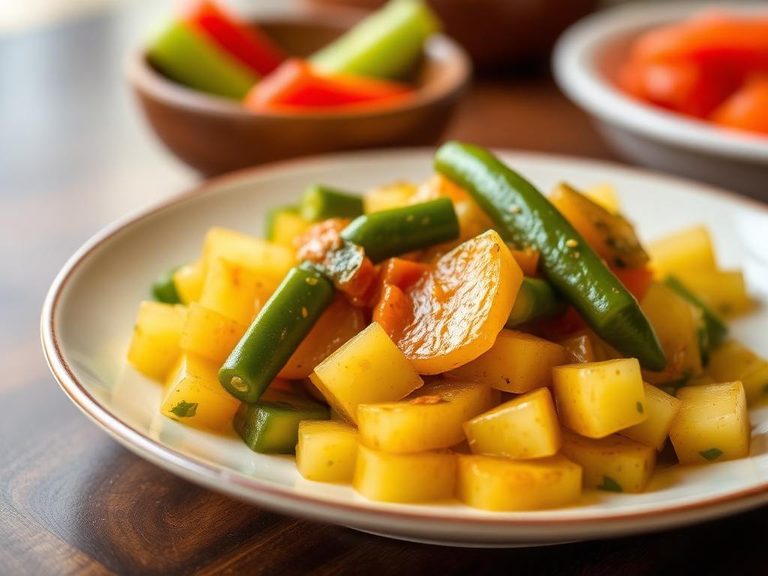
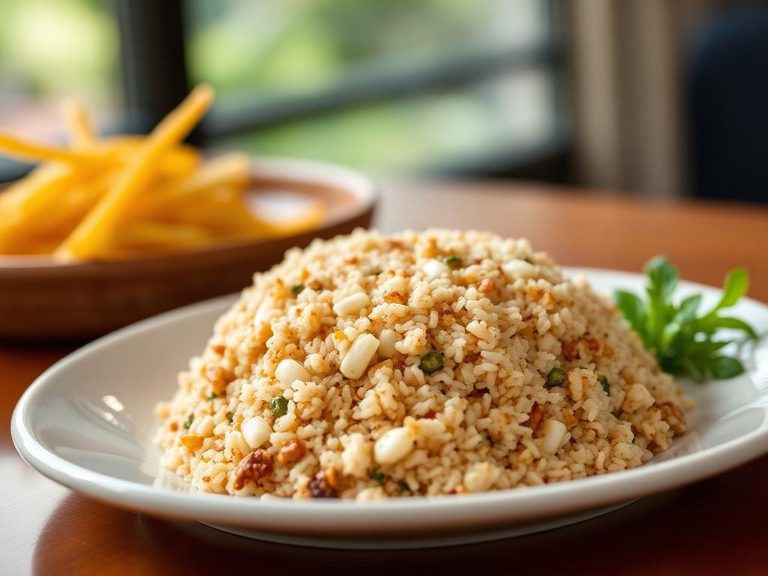
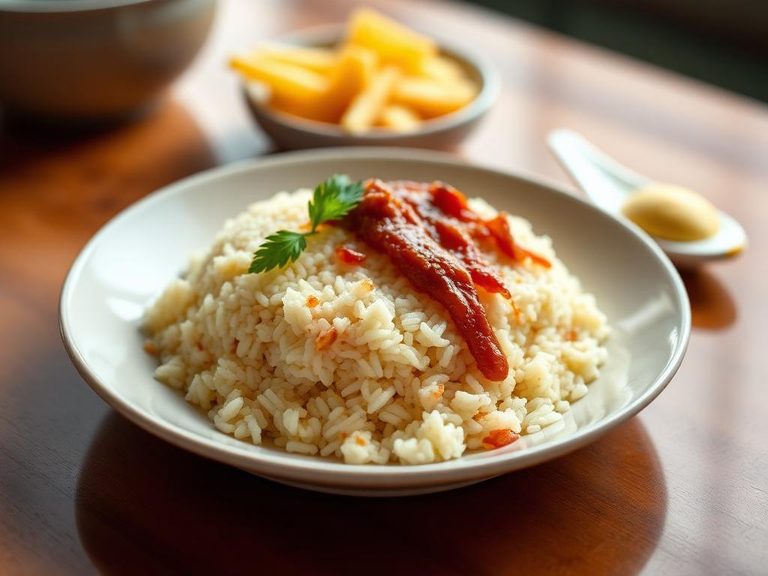
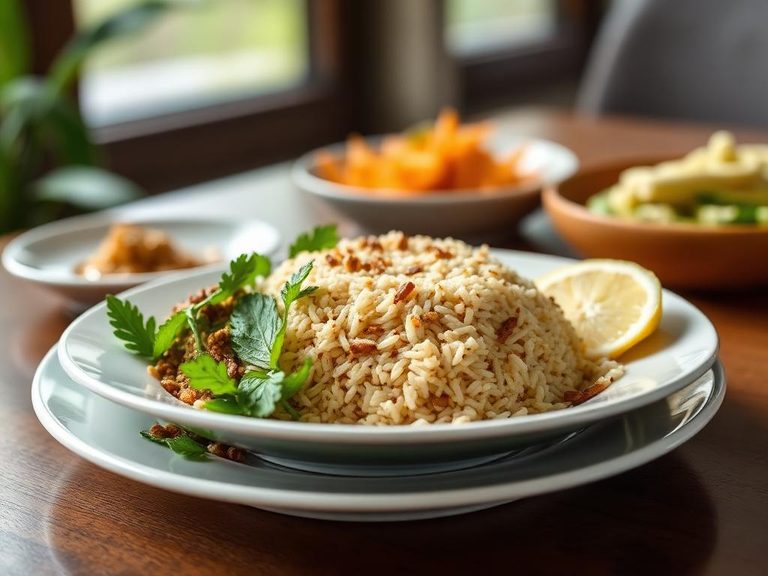
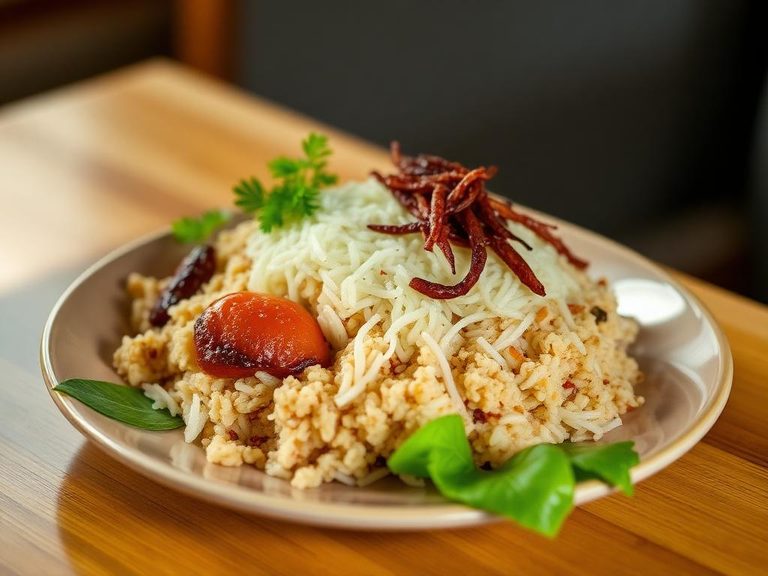
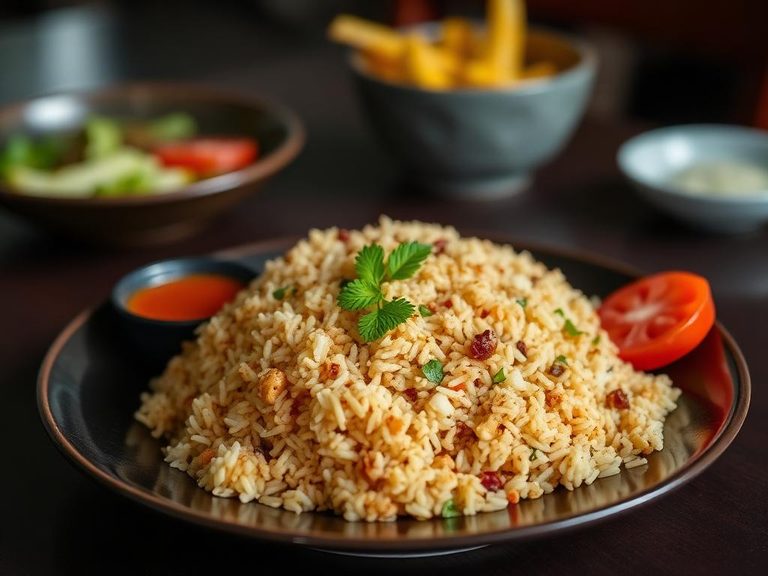
Nasi Kuning is a vibrant Indonesian dish featuring fragrant yellow rice, colored and flavored with turmeric and often cooked in coconut milk. It is traditionally served as a cone-shaped mound (tumpeng) or on a plate, accompanied by a variety of side dishes like shredded omelette, fried chicken, tempeh, tofu, and spicy sambal. Originating from Java and other parts of Indonesia, it is a celebratory staple for festivals, birthdays, and communal gatherings.
🍽️ Nutrition at a glance
This dish is high in carbohydrates from the rice, with moderate fat from the coconut milk and side dishes, and protein from accompanying items like chicken, egg, and tempeh. A typical serving provides a good source of energy, with key nutrients including iron, B vitamins, and some fiber, and a rough calorie count of 500-700 per serving depending on portion and sides.
Nutrition breakdown
| Calories | 450 kcal |
| Protein | 12 g |
| Carbs | 65 g |
| Fat | 18 g |
| Fiber | 4 g |
| Sugar | 5 g |
| Sodium | 600 mg |
| Iron | 3 mg |
| Potassium | 400 mg |
| Vitamin B1 (Thiamine) | 0.2 mg |
| Vitamin B2 (Riboflavin) | 0.1 mg |
| Vitamin B3 (Niacin) | 2.5 mg |
| Folate | 60 µg |
| Magnesium | 50 mg |
| Phosphorus | 150 mg |
Per 1 plate (350 g) · estimated, varies by recipe
💡 What's interesting
Culturally, the cone shape of tumpeng symbolizes a mountain and prosperity, often used in ceremonies to express gratitude. Nutritionally, the turmeric not only gives the rice its golden hue but also contains curcumin, an antioxidant with anti-inflammatory properties.