

Water convolvulus, cooked, boiled, drained, without salt
Whole food · Vegetables and Vegetable Products

Photo: Wikipedia
Water convolvulus, also known as water spinach or ong choy, is a leafy green aquatic vegetable with long, hollow stems and tender leaves. When boiled and drained, it has a mild, slightly earthy flavor with a satisfyingly crisp-tender texture. It is exceptionally low in calories while providing a good source of fiber and plant-based protein.
Calorie split: 33% protein · 59% carbs · 9% fat
↓ Full nutrition💚 Why it's loved
People love it for its unique, crunchy texture that holds up well in stir-fries and soups, and its ability to absorb the flavors of sauces and seasonings. It is a beloved staple in many Asian cuisines, symbolizing freshness and home-style cooking.
⚠️ Watch-outs & how to enjoy it better
Its hollow stems can trap dirt or grit, so thorough washing is essential. As a leafy green, it contains oxalates, which can be a concern for individuals prone to certain kidney stones; pairing it with calcium-rich foods or boiling it can help mitigate this. It has a short shelf life and can wilt quickly if not used fresh.
Key benefits
- Very low calorie density, ideal for volume eating
- Good source of dietary fiber for digestive health
- Provides plant-based protein with minimal fat
- Rich in vitamins A and C, and minerals like iron
- Naturally hydrating due to high water content
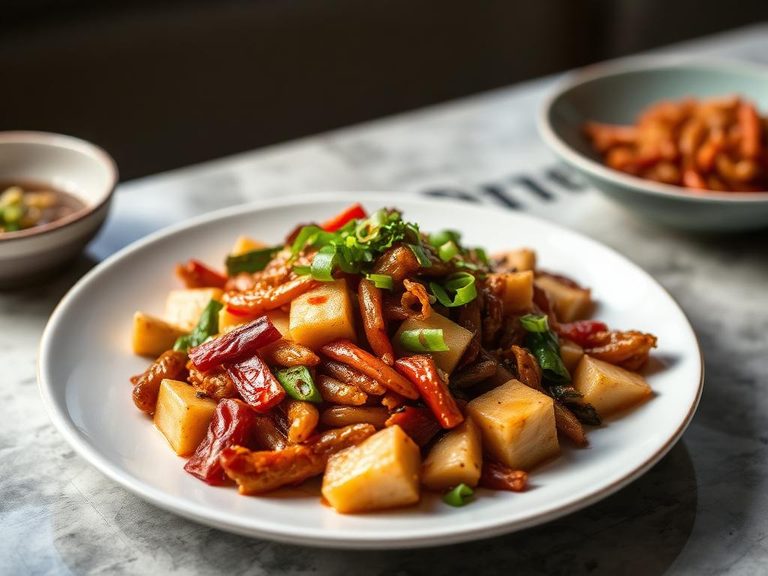
🍽️ Popular dishes
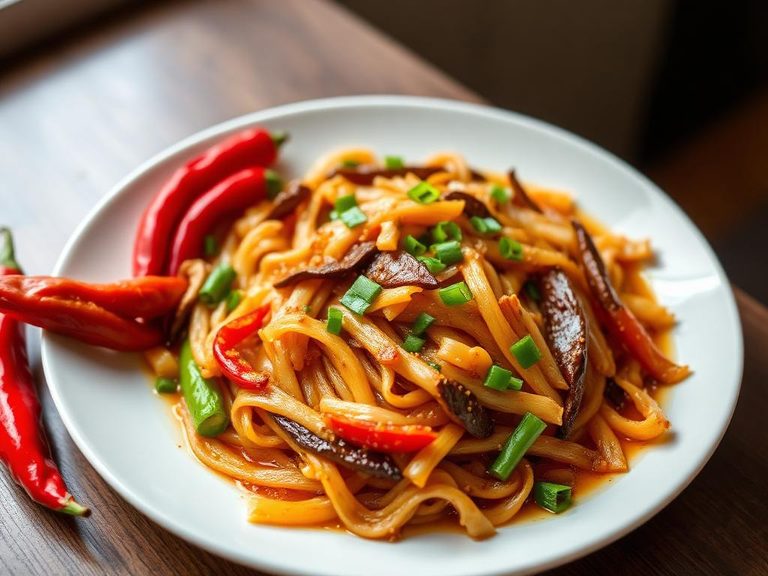
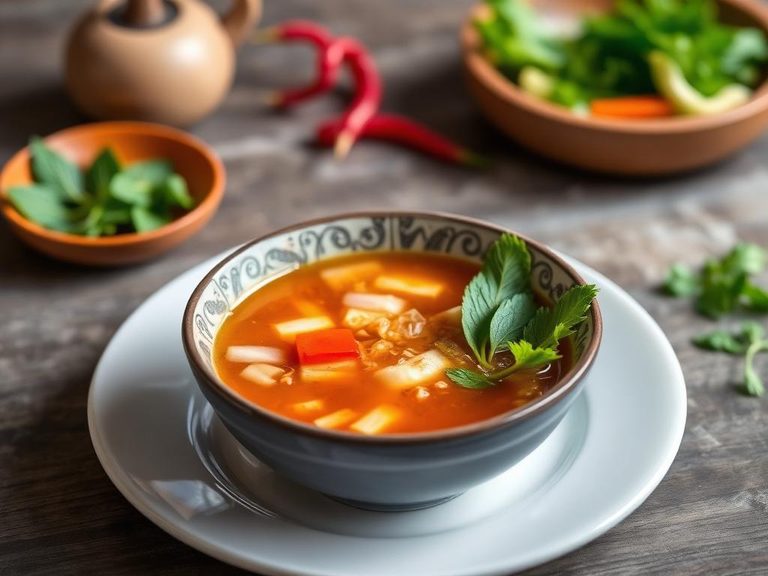
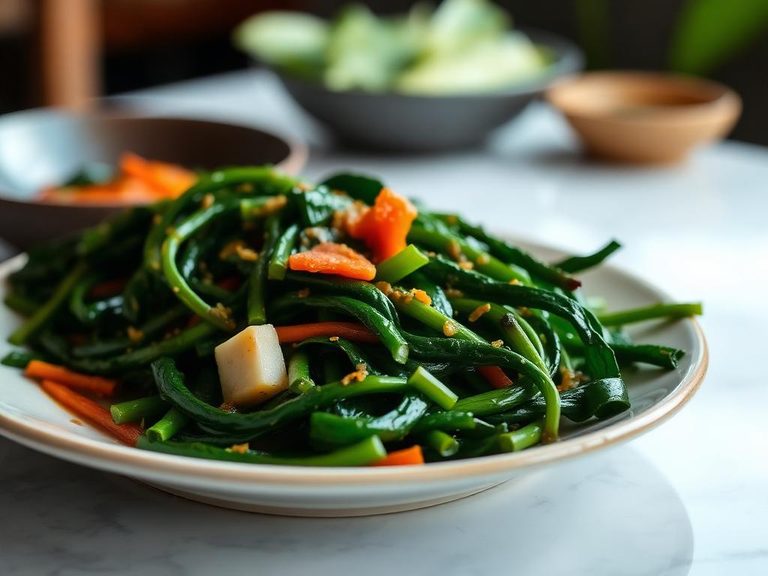
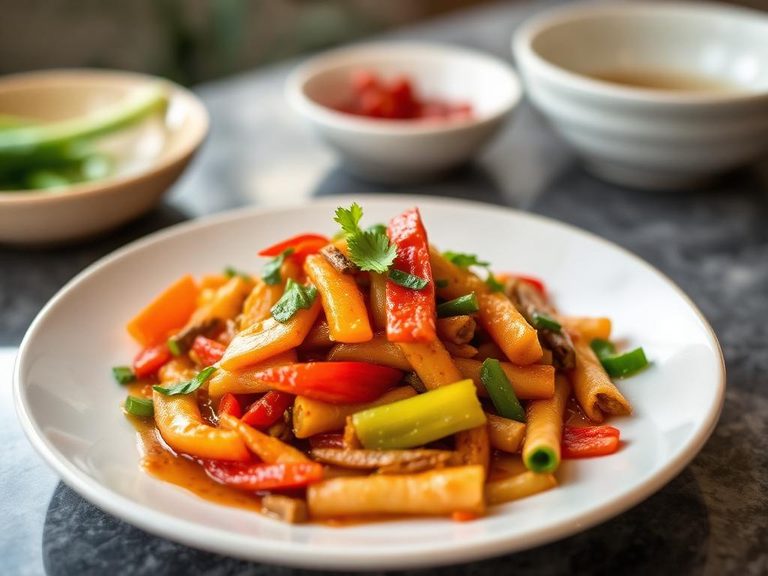
🌍 Where it's eaten
💡 Did you know?
Despite its name, water convolvulus is not a true spinach but is botanically related to the morning glory flower.
Full nutrition (USDA data · scales with serving)
| Water | 92.9 g |
| Energy | 20.0 kcal |
| Energy | 85.0 kj |
| Protein | 2.1 g |
| Total lipid (fat) | 0.24 g |
| Ash | 1.1 g |
| Carbohydrate, by difference | 3.7 g |
| Fiber, total dietary | 1.9 g |
| Calcium, Ca | 54.0 mg |
| Iron, Fe | 1.3 mg |
| Magnesium, Mg | 30.0 mg |
| Phosphorus, P | 42.0 mg |
| Potassium, K | 284 mg |
| Sodium, Na | 122 mg |
| Zinc, Zn | 0.16 mg |
| Copper, Cu | 0.02 mg |
| Manganese, Mn | 0.14 mg |
| Selenium, Se | 0.90 ug |
| Vitamin C, total ascorbic acid | 16.0 mg |
| Thiamin | 0.05 mg |
| Riboflavin | 0.08 mg |
| Niacin | 0.50 mg |
| Pantothenic acid | 0.13 mg |
| Vitamin B-6 | 0.08 mg |
| Folate, total | 35.0 ug |
| Folic acid | 0.00 ug |
| Folate, food | 35.0 ug |
| Folate, DFE | 35.0 ug |
| Vitamin B-12 | 0.00 ug |
| Vitamin A, RAE | 260 ug |
| Retinol | 0.00 ug |
| Vitamin A, IU | 5200 iu |
| Vitamin D (D2 + D3), International Units | 0.00 iu |
| Vitamin D (D2 + D3) | 0.00 ug |
| Alcohol, ethyl | 0.00 g |
Fat & fatty acid profile (per 100g)
| Fatty acids, total saturated | 0.04 g |
| SFA 4:0 | 0.00 g |
| SFA 6:0 | 0.00 g |
| SFA 8:0 | 0.00 g |
| SFA 10:0 | 0.00 g |
| SFA 12:0 | 0.00 g |
| SFA 14:0 | 0.01 g |
| SFA 16:0 | 0.03 g |
| SFA 18:0 | 0.00 g |
| Fatty acids, total monounsaturated | 0.01 g |
| MUFA 16:1 | 0.00 g |
| MUFA 18:1 | 0.00 g |
| MUFA 20:1 | 0.00 g |
| MUFA 22:1 | 0.00 g |
| Fatty acids, total polyunsaturated | 0.10 g |
| PUFA 18:2 | 0.01 g |
| PUFA 18:3 | 0.08 g |
| PUFA 18:4 | 0.00 g |
| PUFA 20:4 | 0.00 g |
| PUFA 20:5 n-3 (EPA) | 0.00 g |
| PUFA 22:5 n-3 (DPA) | 0.00 g |
| PUFA 22:6 n-3 (DHA) | 0.00 g |
| Fatty acids, total trans | 0.00 g |
| Cholesterol | 0.00 mg |
Amino acid profile (per 100g)
| Threonine | 0.11 g |
| Isoleucine | 0.08 g |
| Leucine | 0.12 g |
| Lysine | 0.09 g |
| Methionine | 0.04 g |
| Cystine | 0.02 g |
| Phenylalanine | 0.10 g |
| Tyrosine | 0.06 g |
| Valine | 0.11 g |
| Arginine | 0.12 g |
| Histidine | 0.04 g |
| Alanine | 0.09 g |
| Aspartic acid | 0.52 g |
| Glutamic acid | 0.20 g |
| Glycine | 0.08 g |
| Proline | 0.07 g |
| Serine | 0.10 g |
FAQ
What's the difference between water spinach and regular spinach?
They are from different plant families. Water spinach has hollow stems and a milder flavor, thriving in wet environments, while regular spinach has flat leaves and a more robust, earthy taste.
How do I clean it properly?
Soak the stems and leaves in cold water for 10-15 minutes, swish them around to loosen any dirt trapped in the hollow stems, then rinse thoroughly under running water.
Can I eat it raw?
It is almost always cooked, as cooking softens the fibrous stems and makes it more palatable. Cooking also helps reduce oxalate content.
Nutrient density (calculated · NRF9.3)
Nutrient Rich Foods index: beneficial nutrients (protein, fiber, vitamins, minerals) minus saturated fat, added sugar & sodium, per 100 kcal.
NRF9.3 index — Fulgoni, Keast & Drewnowski, 2009. Computed from USDA nutrients.
Weight-loss friendliness (composite index)
Energy density 0.20 kcal/g · 42% calories from protein · 1.9 g fiber · 0.0 g sugar per 100 g.
Composite of energy density (Rolls et al., 1999), protein & fiber satiety, minus sugar. A calculated heuristic — ranks satiety-per-calorie, not a clinical measure.
Dietary load (calculated from USDA values)
Potential renal acid load. Positive = acid-forming, negative = alkaline-forming.
Sodium-to-potassium ratio: 0.43 (lower is better — aim for ≤ 1)
Sodium:potassium per WHO potassium guidance. Computed from USDA nutrients.