

Taro leaves, cooked
Common food

Photo: Wikipedia
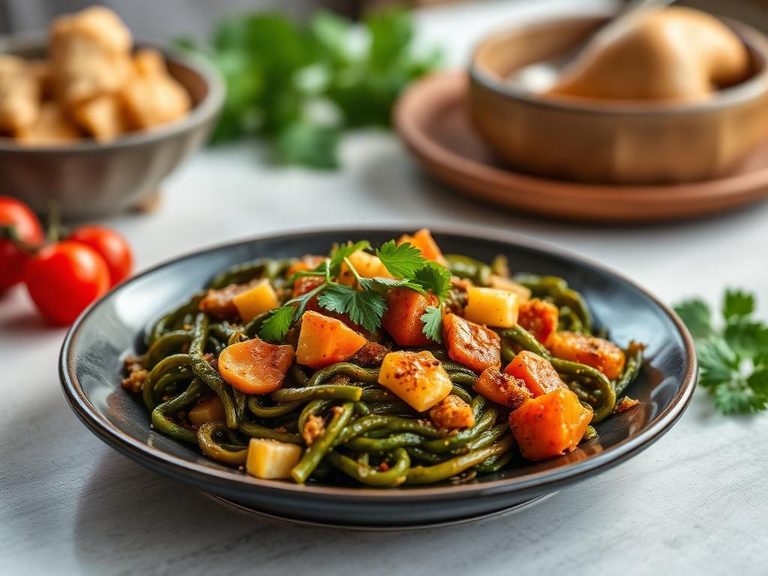
Cooked taro leaves are tender, slightly earthy greens with a mild, spinach-like flavor and a silky, melt-in-your-mouth texture when simmered properly. They are a surprisingly nutrient-dense food, offering a solid 5.19g of protein and 3.9g of fiber per 100g, alongside a notable fat content of 3.51g, which is unusual for a leafy green. This combination makes them a satisfying, low-calorie staple that provides both substance and nutrition.
Calorie split: 26% protein · 35% carbs · 39% fat
↓ Full nutrition💚 Why it's loved
People love taro leaves for their ability to absorb rich, savory flavors like coconut milk, garlic, and chili, becoming a creamy, comforting dish. They are a beloved cultural staple in Pacific Island, Southeast Asian, and West African cuisines, often prepared as a hearty, soul-satisfying side or main.
⚠️ Watch-outs & how to enjoy it better
Raw taro leaves contain calcium oxalate and other irritants that can cause a painful, itchy sensation in the mouth and throat. To counteract this, they must be cooked thoroughly (boiled, steamed, or simmered) for at least 15-20 minutes, often with an acidic ingredient like lemon juice or tamarind to help neutralize the compounds.
Key benefits
- Rich in plant-based protein for a leafy green
- High in dietary fiber to support digestion
- Good source of healthy fats compared to other greens
- Low calorie density, ideal for weight management
- Contains essential vitamins and minerals like Vitamin A and potassium
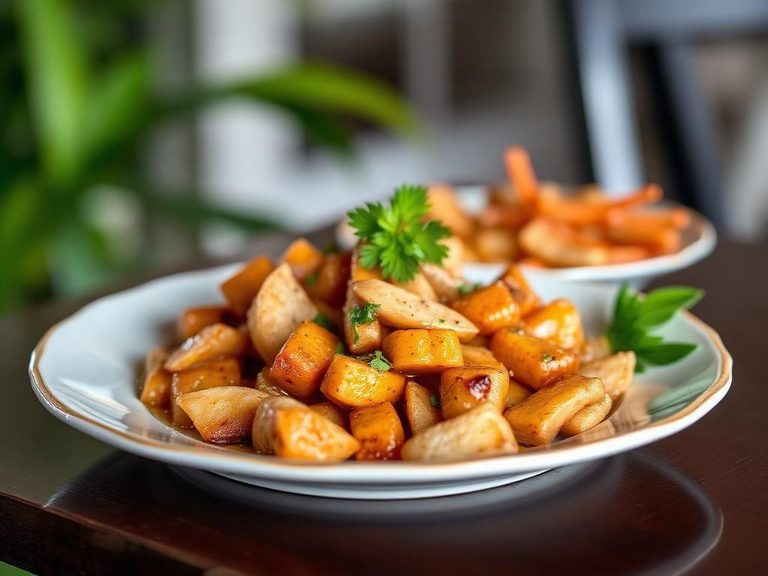
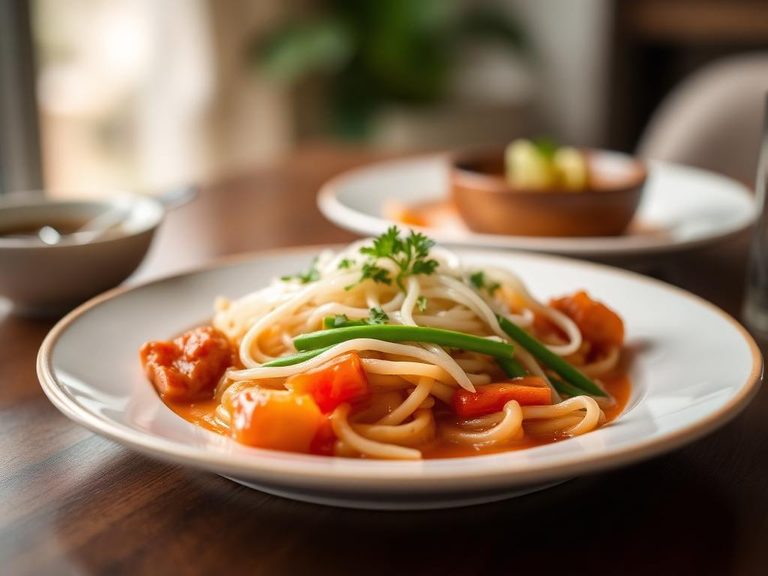
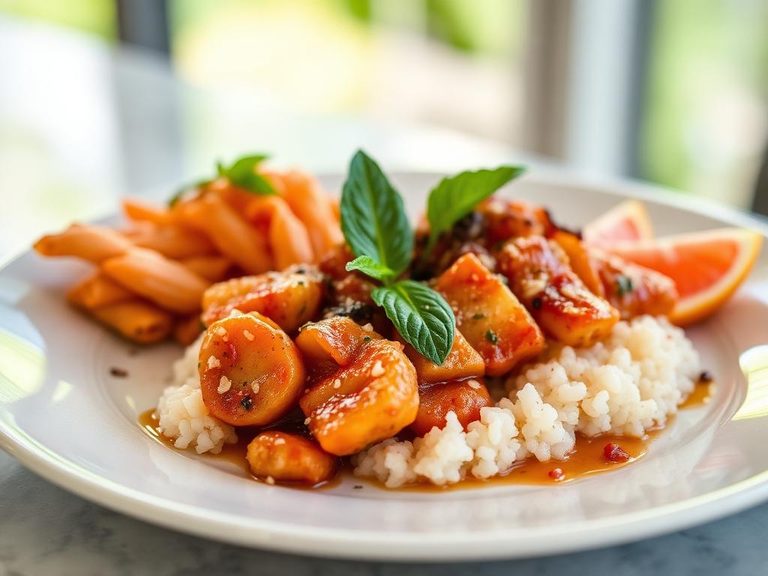
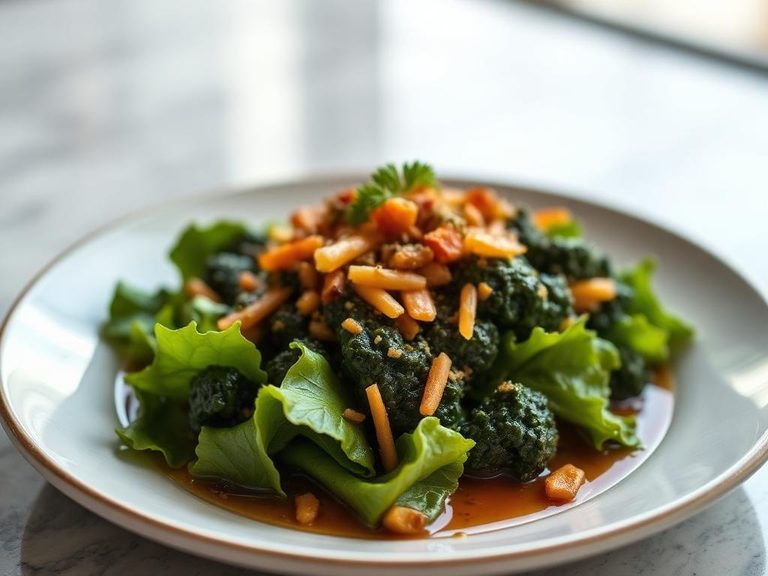
🍽️ Popular dishes
🌍 Where it's eaten
💡 Did you know?
The calcium oxalate crystals in raw taro leaves are needle-shaped, which is why they cause a stinging sensation, but thorough cooking breaks them down completely, making the leaves safe and delicious to eat.
Full nutrition (USDA data · scales with serving)
| Water | 82.0 g |
| Energy | 68.0 kcal |
| Protein | 5.2 g |
| Total lipid (fat) | 3.5 g |
| Carbohydrate, by difference | 7.0 g |
| Fiber, total dietary | 3.9 g |
| Total Sugars | 3.1 g |
| Calcium, Ca | 112 mg |
| Iron, Fe | 2.4 mg |
| Magnesium, Mg | 47.0 mg |
| Phosphorus, P | 63.0 mg |
| Potassium, K | 675 mg |
| Sodium, Na | 133 mg |
| Zinc, Zn | 0.43 mg |
| Copper, Cu | 0.28 mg |
| Selenium, Se | 0.90 ug |
| Vitamin C, total ascorbic acid | 37.9 mg |
| Thiamin | 0.20 mg |
| Riboflavin | 0.45 mg |
| Niacin | 1.5 mg |
| Vitamin B-6 | 0.16 mg |
| Folate, total | 98.0 ug |
| Folic acid | 0.00 ug |
| Folate, food | 98.0 ug |
| Folate, DFE | 98.0 ug |
| Choline, total | 13.6 mg |
| Vitamin B-12 | 0.00 ug |
| Vitamin B-12, added | 0.00 ug |
| Vitamin A, RAE | 251 ug |
| Retinol | 12.0 ug |
| Carotene, beta | 2868 ug |
| Carotene, alpha | 0.00 ug |
| Cryptoxanthin, beta | 0.00 ug |
| Lycopene | 0.00 ug |
| Lutein + zeaxanthin | 1911 ug |
| Vitamin E (alpha-tocopherol) | 2.5 mg |
| Vitamin E, added | 0.00 mg |
| Vitamin D (D2 + D3) | 0.00 ug |
| Vitamin K (phylloquinone) | 115 ug |
| Alcohol, ethyl | 0.00 g |
| Caffeine | 0.00 mg |
| Theobromine | 0.00 mg |
Fat & fatty acid profile (per 100g)
| Fatty acids, total saturated | 0.87 g |
| SFA 4:0 | 0.02 g |
| SFA 6:0 | 0.01 g |
| SFA 8:0 | 0.01 g |
| SFA 10:0 | 0.02 g |
| SFA 12:0 | 0.02 g |
| SFA 14:0 | 0.07 g |
| SFA 16:0 | 0.53 g |
| SFA 18:0 | 0.17 g |
| Fatty acids, total monounsaturated | 1.0 g |
| MUFA 16:1 | 0.01 g |
| MUFA 18:1 | 1.00 g |
| MUFA 20:1 | 0.01 g |
| MUFA 22:1 | 0.00 g |
| Fatty acids, total polyunsaturated | 1.1 g |
| PUFA 18:2 | 0.92 g |
| PUFA 18:3 | 0.18 g |
| PUFA 18:4 | 0.00 g |
| PUFA 20:4 | 0.00 g |
| PUFA 20:5 n-3 (EPA) | 0.00 g |
| PUFA 22:5 n-3 (DPA) | 0.00 g |
| PUFA 22:6 n-3 (DHA) | 0.00 g |
| Cholesterol | 2.0 mg |
Amino acid profile (per 100g)
Estimated from Taro leaves, raw — USDA does not publish this profile for Taro leaves.
| Tryptophan | 0.05 g |
| Threonine | 0.17 g |
| Isoleucine | 0.26 g |
| Leucine | 0.39 g |
| Lysine | 0.25 g |
| Methionine | 0.08 g |
| Cystine | 0.06 g |
| Phenylalanine | 0.20 g |
| Tyrosine | 0.18 g |
| Valine | 0.26 g |
| Arginine | 0.22 g |
| Histidine | 0.11 g |
FAQ
Are taro leaves safe to eat raw?
No, raw taro leaves contain calcium oxalate and other compounds that can cause severe irritation and itching in the mouth and throat. They must always be cooked thoroughly before consumption.
How do I reduce the oxalate content in taro leaves?
Boiling or simmering the leaves in water for at least 15-20 minutes, and discarding the cooking water, helps reduce oxalate levels. Adding an acidic ingredient like lemon juice or tamarind can also aid in neutralizing irritants.
What does cooked taro leaf taste like?
Cooked taro leaves have a mild, earthy flavor similar to spinach or collard greens, with a soft, tender texture. They readily absorb the flavors of sauces, coconut milk, and spices they are cooked with.
Nutrient density (calculated · NRF9.3)
Nutrient Rich Foods index: beneficial nutrients (protein, fiber, vitamins, minerals) minus saturated fat, added sugar & sodium, per 100 kcal.
NRF9.3 index — Fulgoni, Keast & Drewnowski, 2009. Computed from USDA nutrients.
Weight-loss friendliness (composite index)
Energy density 0.68 kcal/g · 31% calories from protein · 3.9 g fiber · 3.1 g sugar per 100 g.
Composite of energy density (Rolls et al., 1999), protein & fiber satiety, minus sugar. A calculated heuristic — ranks satiety-per-calorie, not a clinical measure.
Dietary load (calculated from USDA values)
Potential renal acid load. Positive = acid-forming, negative = alkaline-forming.
Sodium-to-potassium ratio: 0.20 (lower is better — aim for ≤ 1)
Sodium:potassium per WHO potassium guidance. Computed from USDA nutrients.