

Sweet potato fries, from fresh
Common food

Photo: Wikipedia
Crispy, golden-orange sticks made from freshly sliced sweet potatoes, offering a satisfying crunch with a soft, sweet interior. They provide a good source of fiber and beta-carotene, with a moderate calorie count for a flavorful side.
Calorie split: 4% protein · 42% carbs · 54% fat
↓ Full nutrition💚 Why it's loved
People adore them for their perfect balance of savory and sweet flavors, with a texture that's both crispy and tender. They are a versatile, crowd-pleasing alternative to regular fries, often paired with dipping sauces.
⚠️ Watch-outs & how to enjoy it better
The natural sugars and carbohydrates can cause a notable blood-sugar spike, especially when fried. To counteract this, pair them with a protein-rich dip like Greek yogurt or hummus, or eat them alongside a meal with protein and healthy fats to slow digestion. Opt for baking or air-frying to reduce added fat.
Key benefits
- Rich in beta-carotene, which converts to vitamin A.
- Good source of dietary fiber for digestive health.
- Contains natural sugars for quick energy.
- Provides potassium, important for heart and muscle function.
- Can be made with minimal added fat when baked or air-fried.
🍽️ Popular dishes

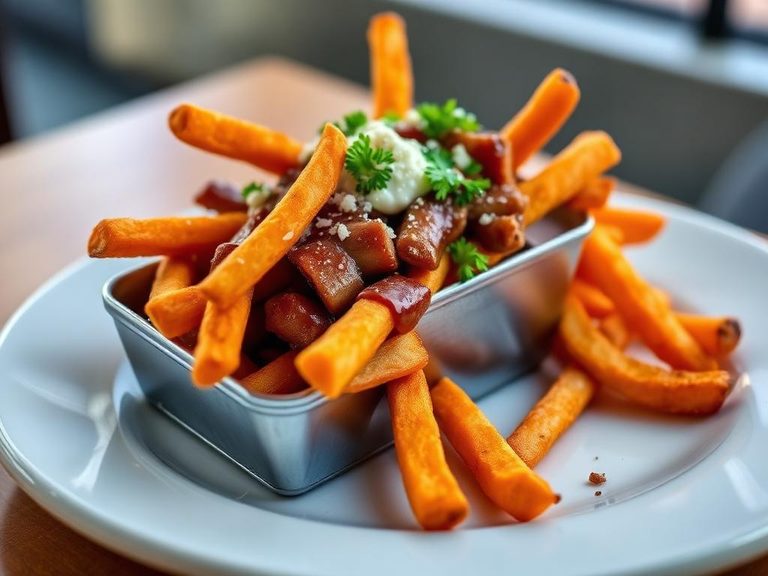
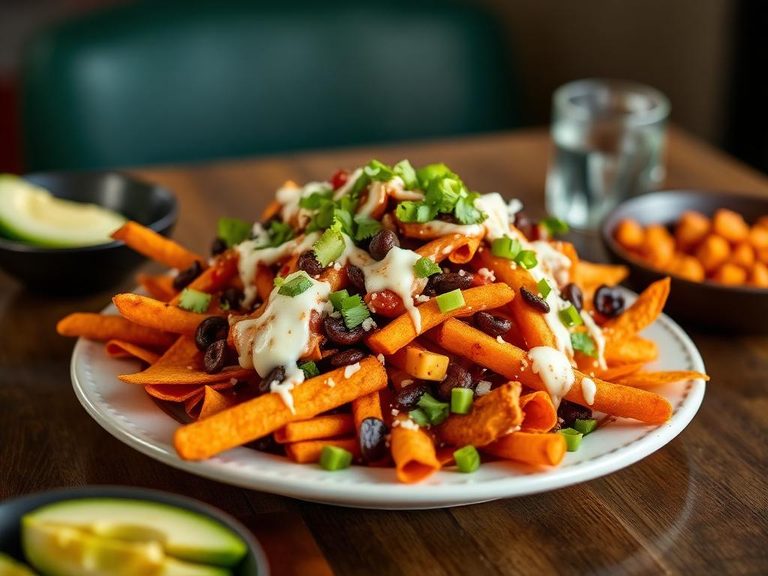
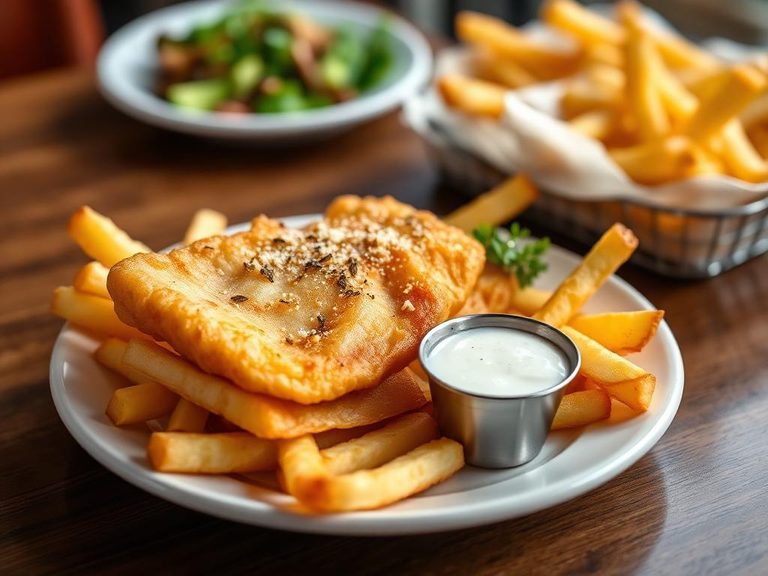
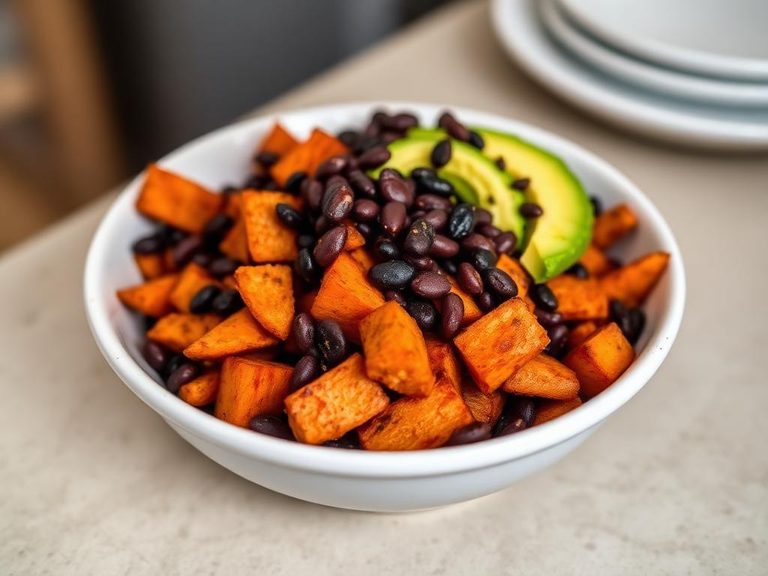
🌍 Where it's eaten
💡 Did you know?
The orange color of sweet potato fries comes from beta-carotene, an antioxidant that the body can convert into vitamin A, which is essential for eye health.
Full nutrition (USDA data · scales with serving)
| Water | 71.3 g |
| Energy | 156 kcal |
| Protein | 1.5 g |
| Total lipid (fat) | 9.4 g |
| Carbohydrate, by difference | 16.4 g |
| Fiber, total dietary | 2.8 g |
| Total Sugars | 5.7 g |
| Calcium, Ca | 21.0 mg |
| Iron, Fe | 0.39 mg |
| Magnesium, Mg | 18.0 mg |
| Phosphorus, P | 35.0 mg |
| Potassium, K | 459 mg |
| Sodium, Na | 140 mg |
| Zinc, Zn | 0.32 mg |
| Copper, Cu | 0.18 mg |
| Selenium, Se | 0.00 ug |
| Vitamin C, total ascorbic acid | 11.9 mg |
| Thiamin | 0.04 mg |
| Riboflavin | 0.05 mg |
| Niacin | 0.39 mg |
| Vitamin B-6 | 0.10 mg |
| Folate, total | 9.0 ug |
| Folic acid | 0.00 ug |
| Folate, food | 9.0 ug |
| Folate, DFE | 9.0 ug |
| Choline, total | 11.6 mg |
| Vitamin B-12 | 0.00 ug |
| Vitamin B-12, added | 0.00 ug |
| Vitamin A, RAE | 636 ug |
| Retinol | 0.00 ug |
| Carotene, beta | 7627 ug |
| Carotene, alpha | 6.0 ug |
| Cryptoxanthin, beta | 0.00 ug |
| Lycopene | 0.00 ug |
| Lutein + zeaxanthin | 0.00 ug |
| Vitamin E (alpha-tocopherol) | 2.0 mg |
| Vitamin E, added | 0.00 mg |
| Vitamin D (D2 + D3) | 0.00 ug |
| Vitamin K (phylloquinone) | 9.3 ug |
| Alcohol, ethyl | 0.00 g |
| Caffeine | 0.00 mg |
| Theobromine | 0.00 mg |
Fat & fatty acid profile (per 100g)
| Fatty acids, total saturated | 1.2 g |
| SFA 4:0 | 0.00 g |
| SFA 6:0 | 0.00 g |
| SFA 8:0 | 0.00 g |
| SFA 10:0 | 0.00 g |
| SFA 12:0 | 0.00 g |
| SFA 14:0 | 0.01 g |
| SFA 16:0 | 0.89 g |
| SFA 18:0 | 0.26 g |
| Fatty acids, total monounsaturated | 3.8 g |
| MUFA 16:1 | 0.03 g |
| MUFA 18:1 | 3.7 g |
| MUFA 20:1 | 0.06 g |
| MUFA 22:1 | 0.00 g |
| Fatty acids, total polyunsaturated | 3.5 g |
| PUFA 18:2 | 3.1 g |
| PUFA 18:3 | 0.40 g |
| PUFA 18:4 | 0.00 g |
| PUFA 20:4 | 0.00 g |
| PUFA 20:5 n-3 (EPA) | 0.00 g |
| PUFA 22:5 n-3 (DPA) | 0.00 g |
| PUFA 22:6 n-3 (DHA) | 0.00 g |
| Cholesterol | 0.00 mg |
Amino acid profile (per 100g)
Estimated from Snacks, sweet potato chips, unsalted — USDA does not publish this profile for Sweet potato fries.
| Tryptophan | 0.10 g |
| Threonine | 0.26 g |
| Isoleucine | 0.17 g |
| Leucine | 0.29 g |
| Lysine | 0.20 g |
| Methionine | 0.09 g |
| Cystine | 0.07 g |
| Phenylalanine | 0.28 g |
| Tyrosine | 0.11 g |
| Valine | 0.27 g |
| Arginine | 0.17 g |
| Histidine | 0.10 g |
| Alanine | 0.24 g |
| Aspartic acid | 1.2 g |
| Glutamic acid | 0.48 g |
| Glycine | 0.20 g |
| Proline | 0.16 g |
| Serine | 0.28 g |
FAQ
Are sweet potato fries healthier than regular fries?
They are generally higher in vitamins A and C, fiber, and antioxidants. However, their healthiness depends heavily on preparation; baked or air-fried versions are much better than deep-fried.
Why do my sweet potato fries get soggy?
This is often due to their high sugar and moisture content. To achieve crispiness, soak slices in cold water to remove starch, pat them completely dry, use a high oven temperature, and avoid overcrowding the pan.
Can I eat sweet potato fries on a low-carb diet?
Traditional sweet potato fries are relatively high in carbs (about 16g per 100g). They are not suitable for strict low-carb or keto diets but can be included in moderate-carb or balanced eating plans.
Nutrient density (calculated · NRF9.3)
Nutrient Rich Foods index: beneficial nutrients (protein, fiber, vitamins, minerals) minus saturated fat, added sugar & sodium, per 100 kcal.
NRF9.3 index — Fulgoni, Keast & Drewnowski, 2009. Computed from USDA nutrients.
Weight-loss friendliness (composite index)
Energy density 1.56 kcal/g · 4% calories from protein · 2.8 g fiber · 5.7 g sugar per 100 g.
Composite of energy density (Rolls et al., 1999), protein & fiber satiety, minus sugar. A calculated heuristic — ranks satiety-per-calorie, not a clinical measure.
Dietary load (calculated from USDA values)
Potential renal acid load. Positive = acid-forming, negative = alkaline-forming.
Sodium-to-potassium ratio: 0.31 (lower is better — aim for ≤ 1)
Sodium:potassium per WHO potassium guidance. Computed from USDA nutrients.