

Squash, winter, spaghetti, cooked, boiled, drained, or baked, with salt
Whole food · Vegetables and Vegetable Products

Photo: Wikipedia
Spaghetti squash is a winter variety that, when cooked, transforms into delicate, translucent strands resembling angel hair pasta. Its flavor is mild, slightly sweet, and nutty, with a tender, al dente texture that readily absorbs sauces. Nutritionally, it's a low-calorie, high-fiber powerhouse, offering a satisfying volume with minimal energy density.
Calorie split: 9% protein · 84% carbs · 8% fat
↓ Full nutrition💚 Why it's loved
People adore it for its magical, pasta-like texture that feels indulgent while being a vegetable, making it a beloved staple for low-carb, gluten-free, and healthy eating lifestyles. Its neutral flavor makes it a versatile canvas for bold sauces, from marinara to pesto.
⚠️ Watch-outs & how to enjoy it better
Its mild flavor can be perceived as bland or watery if not seasoned or sauced well, and its high water content can lead to a soggy dish if overcooked. To counteract this, roast or sauté the strands briefly after boiling to evaporate excess moisture, and always season generously with salt, pepper, and umami-rich ingredients like parmesan or nutritional yeast.
Key benefits
- Excellent low-calorie, high-volume food for weight management.
- Good source of dietary fiber, supporting digestive health.
- Provides vitamin C and beta-carotene (provitamin A).
- Naturally gluten-free and grain-free pasta alternative.
- High water content aids in hydration.
🍽️ Popular dishes
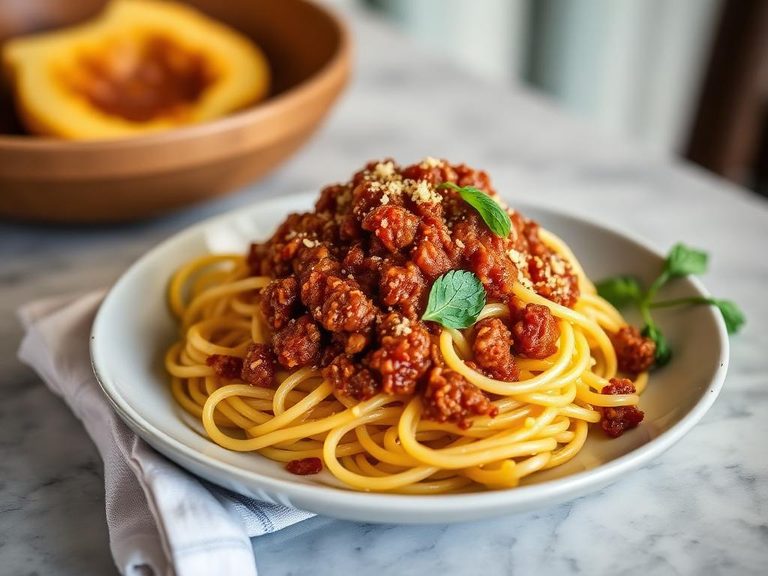
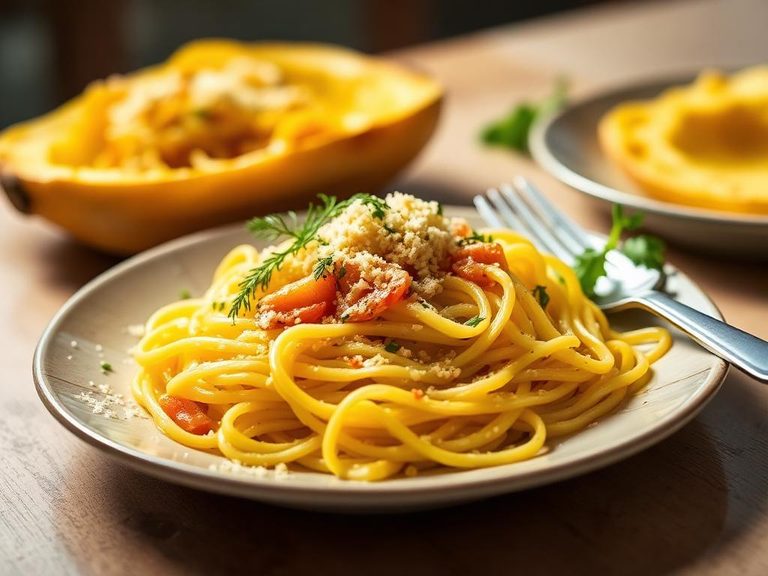
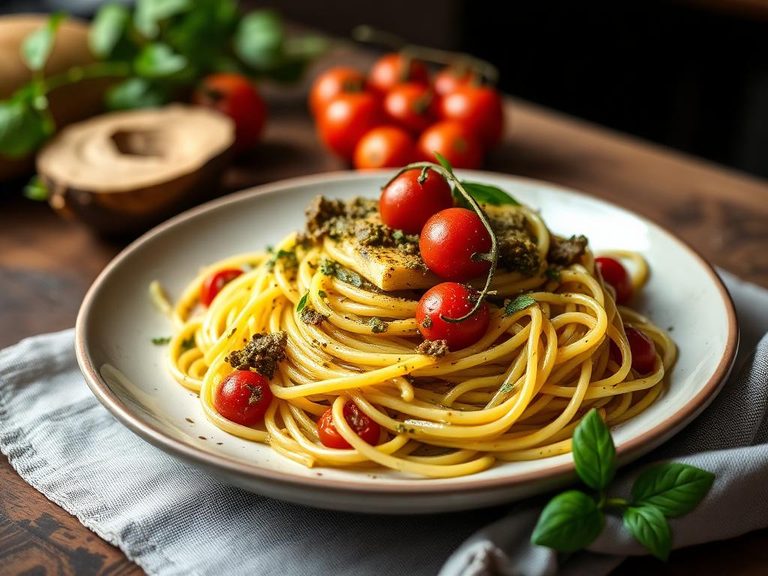
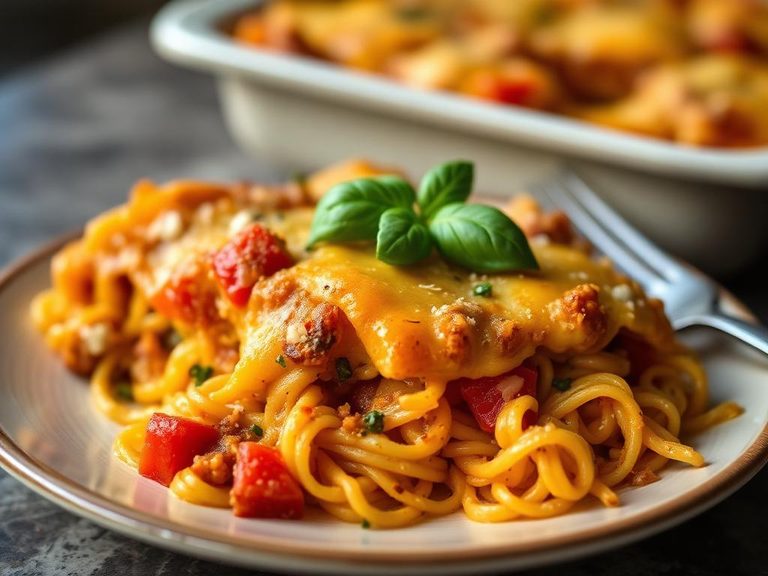
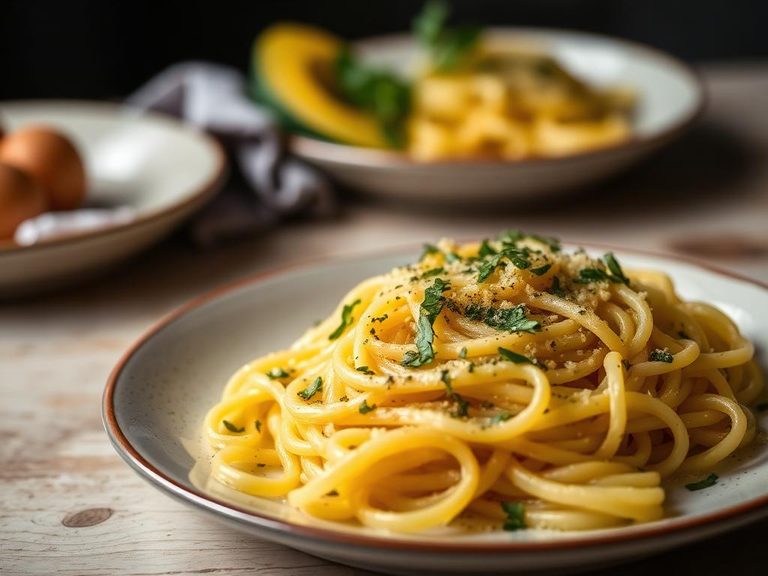
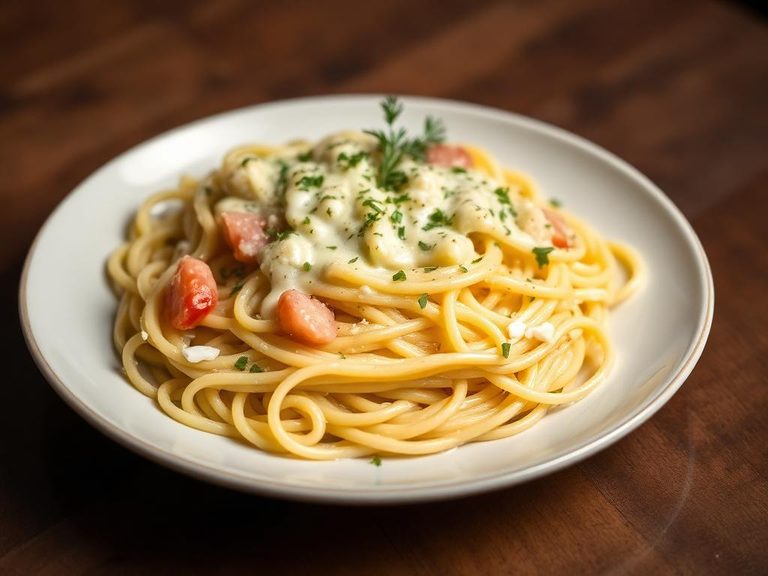
🌍 Where it's eaten
💡 Did you know?
The 'noodle' strands are not cut or extruded; they form naturally from the squash's unique fibrous flesh when a fork is dragged through the cooked interior.
Full nutrition (USDA data · scales with serving)
| Water | 92.3 g |
| Energy | 27.0 kcal |
| Energy | 113 kj |
| Protein | 0.66 g |
| Total lipid (fat) | 0.26 g |
| Ash | 0.32 g |
| Carbohydrate, by difference | 6.5 g |
| Fiber, total dietary | 1.4 g |
| Total Sugars | 2.5 g |
| Calcium, Ca | 21.0 mg |
| Iron, Fe | 0.34 mg |
| Magnesium, Mg | 11.0 mg |
| Potassium, K | 117 mg |
| Sodium, Na | 254 mg |
| Zinc, Zn | 0.20 mg |
| Copper, Cu | 0.04 mg |
| Manganese, Mn | 0.11 mg |
| Selenium, Se | 0.30 ug |
| Vitamin C, total ascorbic acid | 3.5 mg |
| Thiamin | 0.04 mg |
| Riboflavin | 0.02 mg |
| Niacin | 0.81 mg |
| Pantothenic acid | 0.35 mg |
| Vitamin B-6 | 0.10 mg |
| Folate, total | 8.0 ug |
| Folic acid | 0.00 ug |
| Folate, food | 8.0 ug |
| Folate, DFE | 8.0 ug |
| Choline, total | 7.5 mg |
| Vitamin B-12 | 0.00 ug |
| Vitamin B-12, added | 0.00 ug |
| Vitamin A, RAE | 6.0 ug |
| Retinol | 0.00 ug |
| Carotene, beta | 59.0 ug |
| Carotene, alpha | 15.0 ug |
| Cryptoxanthin, beta | 0.00 ug |
| Vitamin A, IU | 110 iu |
| Lycopene | 0.00 ug |
| Lutein + zeaxanthin | 0.00 ug |
| Vitamin E (alpha-tocopherol) | 0.12 mg |
| Vitamin E, added | 0.00 mg |
| Vitamin D (D2 + D3), International Units | 0.00 iu |
| Vitamin D (D2 + D3) | 0.00 ug |
| Vitamin K (phylloquinone) | 0.80 ug |
| Alcohol, ethyl | 0.00 g |
| Caffeine | 0.00 mg |
| Theobromine | 0.00 mg |
Fat & fatty acid profile (per 100g)
| Fatty acids, total saturated | 0.06 g |
| SFA 12:0 | 0.00 g |
| SFA 14:0 | 0.00 g |
| SFA 16:0 | 0.05 g |
| SFA 18:0 | 0.01 g |
| Fatty acids, total monounsaturated | 0.02 g |
| MUFA 16:1 | 0.00 g |
| MUFA 18:1 | 0.02 g |
| Fatty acids, total polyunsaturated | 0.13 g |
| PUFA 18:2 | 0.05 g |
| PUFA 18:3 | 0.08 g |
| Fatty acids, total trans | 0.00 g |
| Cholesterol | 0.00 mg |
Amino acid profile (per 100g)
| Tryptophan | 0.01 g |
| Threonine | 0.02 g |
| Isoleucine | 0.02 g |
| Leucine | 0.03 g |
| Lysine | 0.02 g |
| Methionine | 0.01 g |
| Cystine | 0.01 g |
| Phenylalanine | 0.02 g |
| Tyrosine | 0.02 g |
| Valine | 0.03 g |
| Arginine | 0.03 g |
| Histidine | 0.01 g |
| Alanine | 0.03 g |
| Aspartic acid | 0.06 g |
| Glutamic acid | 0.10 g |
| Glycine | 0.02 g |
| Proline | 0.02 g |
| Serine | 0.02 g |
FAQ
How do you get the spaghetti-like strands?
After cooking (boiling, baking, or microwaving) the squash until tender, simply use a fork to scrape and separate the flesh from the skin. The strands will naturally separate and resemble spaghetti.
Can you eat it raw?
No, raw spaghetti squash is very hard and not palatable. It must be cooked to soften the flesh and develop its characteristic texture and mild sweetness.
Is it the same as regular squash or zucchini?
No. It's a specific winter squash variety (Cucurbita pepo). Its unique, stringy flesh sets it apart from the solid, creamy flesh of butternut squash or the soft, seedy interior of zucchini.
Nutrient density (calculated · NRF9.3)
Nutrient Rich Foods index: beneficial nutrients (protein, fiber, vitamins, minerals) minus saturated fat, added sugar & sodium, per 100 kcal.
NRF9.3 index — Fulgoni, Keast & Drewnowski, 2009. Computed from USDA nutrients.
Weight-loss friendliness (composite index)
Energy density 0.27 kcal/g · 10% calories from protein · 1.4 g fiber · 2.5 g sugar per 100 g.
Composite of energy density (Rolls et al., 1999), protein & fiber satiety, minus sugar. A calculated heuristic — ranks satiety-per-calorie, not a clinical measure.
Dietary load (calculated from USDA values)
Sodium-to-potassium ratio: 2.17 (lower is better — aim for ≤ 1)
Sodium:potassium per WHO potassium guidance. Computed from USDA nutrients.