

Seeds, breadnut tree seeds, dried
Whole food · Nut and Seed Products

Photo: Wikipedia
Dried breadnut tree seeds, also known as kola nuts, are the caffeine-rich seeds of the West African kola nut tree. They have a hard, woody texture and a distinctly bitter, astringent flavor that becomes more palatable when chewed. Nutritionally, they are a dense source of carbohydrates and fiber, with minimal fat.
Calorie split: 9% protein · 86% carbs · 4% fat
↓ Full nutrition💚 Why it's loved
People cherish kola nuts for their role as a potent natural stimulant and a symbol of hospitality and welcome in many West African cultures. The ritual of sharing and chewing them is a deeply ingrained social practice.
⚠️ Watch-outs & how to enjoy it better
The intense bitterness is an acquired taste, and the high caffeine content can cause jitteriness, increased heart rate, or sleep disruption in sensitive individuals. To counteract this, start with a very small piece (1/4 of a nut), chew slowly, and avoid consuming them late in the day or alongside other caffeinated drinks.
Key benefits
- Contains natural caffeine for a mild stimulant effect
- High in dietary fiber (14.9g per 100g)
- Source of plant-based protein (8.62g per 100g)
- Traditionally used in social and ceremonial contexts
- Low in fat (1.68g per 100g)
🍽️ Popular dishes
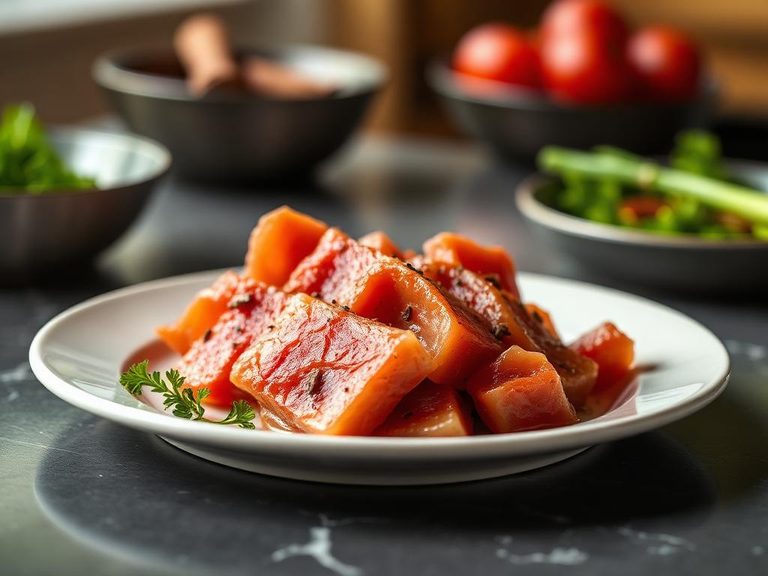
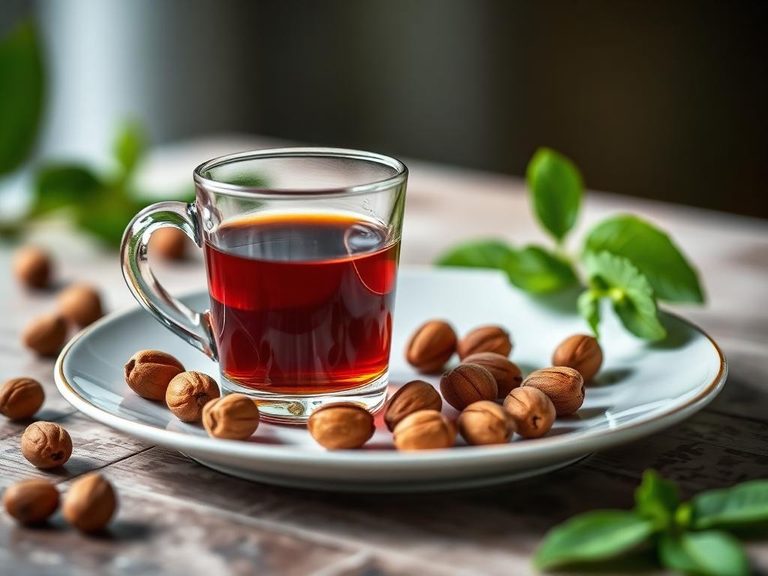
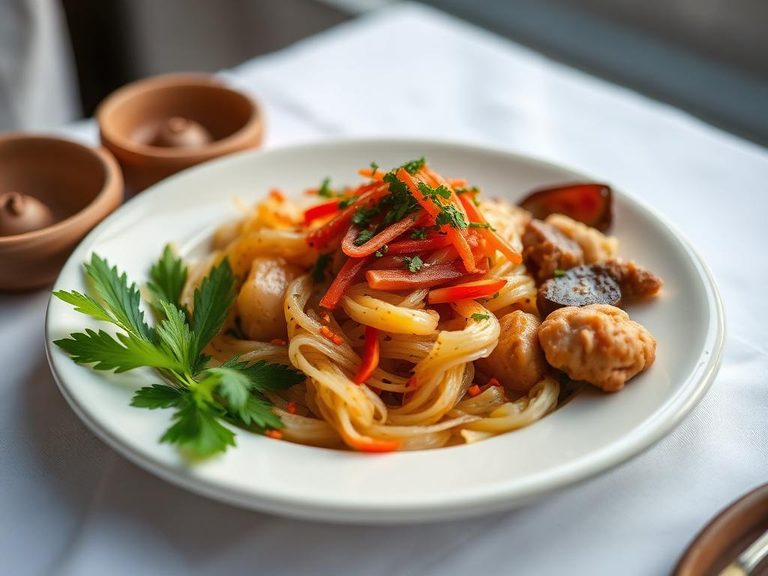


🌍 Where it's eaten
💡 Did you know?
The original flavor of Coca-Cola was derived from extracts of the kola nut, which provided its name and caffeine kick.
Full nutrition (USDA data · scales with serving)
| Water | 6.5 g |
| Energy | 367 kcal |
| Energy | 1536 kj |
| Protein | 8.6 g |
| Total lipid (fat) | 1.7 g |
| Ash | 3.8 g |
| Carbohydrate, by difference | 79.4 g |
| Fiber, total dietary | 14.9 g |
| Calcium, Ca | 94.0 mg |
| Iron, Fe | 4.6 mg |
| Magnesium, Mg | 115 mg |
| Phosphorus, P | 178 mg |
| Potassium, K | 2011 mg |
| Sodium, Na | 53.0 mg |
| Zinc, Zn | 1.9 mg |
| Copper, Cu | 2.5 mg |
| Manganese, Mn | 0.30 mg |
| Selenium, Se | 1.9 ug |
| Vitamin C, total ascorbic acid | 46.6 mg |
| Thiamin | 0.03 mg |
| Riboflavin | 0.14 mg |
| Niacin | 2.1 mg |
| Pantothenic acid | 1.9 mg |
| Vitamin B-6 | 0.69 mg |
| Folate, total | 113 ug |
| Folic acid | 0.00 ug |
| Folate, food | 113 ug |
| Folate, DFE | 113 ug |
| Vitamin B-12 | 0.00 ug |
| Vitamin A, RAE | 11.0 ug |
| Retinol | 0.00 ug |
| Vitamin A, IU | 216 iu |
| Vitamin D (D2 + D3), International Units | 0.00 iu |
| Vitamin D (D2 + D3) | 0.00 ug |
| Alcohol, ethyl | 0.00 g |
Fat & fatty acid profile (per 100g)
| Fatty acids, total saturated | 0.45 g |
| SFA 4:0 | 0.00 g |
| SFA 6:0 | 0.00 g |
| SFA 8:0 | 0.00 g |
| SFA 10:0 | 0.00 g |
| SFA 12:0 | 0.00 g |
| SFA 14:0 | 0.00 g |
| SFA 16:0 | 0.30 g |
| SFA 18:0 | 0.15 g |
| Fatty acids, total monounsaturated | 0.21 g |
| MUFA 16:1 | 0.01 g |
| MUFA 18:1 | 0.20 g |
| MUFA 20:1 | 0.00 g |
| MUFA 22:1 | 0.00 g |
| Fatty acids, total polyunsaturated | 0.90 g |
| PUFA 18:2 | 0.69 g |
| PUFA 18:3 | 0.21 g |
| PUFA 18:4 | 0.00 g |
| PUFA 20:4 | 0.00 g |
| PUFA 20:5 n-3 (EPA) | 0.00 g |
| PUFA 22:5 n-3 (DPA) | 0.00 g |
| PUFA 22:6 n-3 (DHA) | 0.00 g |
| Cholesterol | 0.00 mg |
Amino acid profile (per 100g)
| Tryptophan | 0.23 g |
| Threonine | 0.34 g |
| Isoleucine | 0.49 g |
| Leucine | 0.94 g |
| Lysine | 0.38 g |
| Methionine | 0.05 g |
| Cystine | 0.14 g |
| Phenylalanine | 0.41 g |
| Tyrosine | 0.63 g |
| Valine | 0.83 g |
| Arginine | 0.79 g |
| Histidine | 0.13 g |
| Alanine | 0.39 g |
| Aspartic acid | 0.95 g |
| Glutamic acid | 5.2 g |
| Glycine | 0.54 g |
| Proline | 0.43 g |
| Serine | 0.58 g |
FAQ
Is a kola nut the same as a cola nut?
Yes, the terms are used interchangeably. They refer to the seed of the Cola nitida or Cola acuminata tree.
How much caffeine is in a kola nut?
A single kola nut (about 20g) can contain 100-200mg of caffeine, which is roughly equivalent to 1-2 cups of coffee.
Can you eat kola nuts raw?
Yes, they are traditionally chewed raw. However, they are very bitter and hard. Some people prefer to roast or boil them to slightly reduce the bitterness.
Nutrient density (calculated · NRF9.3)
Nutrient Rich Foods index: beneficial nutrients (protein, fiber, vitamins, minerals) minus saturated fat, added sugar & sodium, per 100 kcal.
NRF9.3 index — Fulgoni, Keast & Drewnowski, 2009. Computed from USDA nutrients.
Weight-loss friendliness (composite index)
Energy density 3.67 kcal/g · 9% calories from protein · 14.9 g fiber · 0.0 g sugar per 100 g.
Composite of energy density (Rolls et al., 1999), protein & fiber satiety, minus sugar. A calculated heuristic — ranks satiety-per-calorie, not a clinical measure.
Dietary load (calculated from USDA values)
Potential renal acid load. Positive = acid-forming, negative = alkaline-forming.
Sodium-to-potassium ratio: 0.03 (lower is better — aim for ≤ 1)
Sodium:potassium per WHO potassium guidance. Computed from USDA nutrients.