

Salami, dry or hard, pork
Whole food · Sausages and Luncheon Meats

Photo: Wikipedia
Salami, dry or hard, pork is a cured sausage made from fermented and air-dried meat, typically seasoned with garlic, salt, and spices. It has a firm, dense texture with a rich, savory, and slightly tangy flavor, often with visible flecks of fat. Nutritionally, it is a high-protein, high-fat food with minimal carbohydrates.
Calorie split: 23% protein · 2% carbs · 76% fat
↓ Full nutrition💚 Why it's loved
People love salami for its intense, complex umami flavor and satisfying, chewy texture that delivers a concentrated burst of savory meatiness. It's a versatile staple in charcuterie, sandwiches, and as a standalone snack that embodies centuries of European curing tradition.
⚠️ Watch-outs & how to enjoy it better
Due to its high sodium and saturated fat content, it should be consumed in moderation, especially by those monitoring blood pressure or heart health. To counteract the sodium, pair it with fresh, hydrating vegetables or fruits and practice strict portion control, using it as a flavorful accent rather than the main component.
Key benefits
- Excellent source of complete protein for muscle maintenance.
- Provides B vitamins like B12 and niacin for energy metabolism.
- Contains minerals such as zinc and selenium for immune function.
- The fermentation process can create beneficial probiotics.
- Long shelf life without refrigeration when whole and uncut.
🍽️ Popular dishes
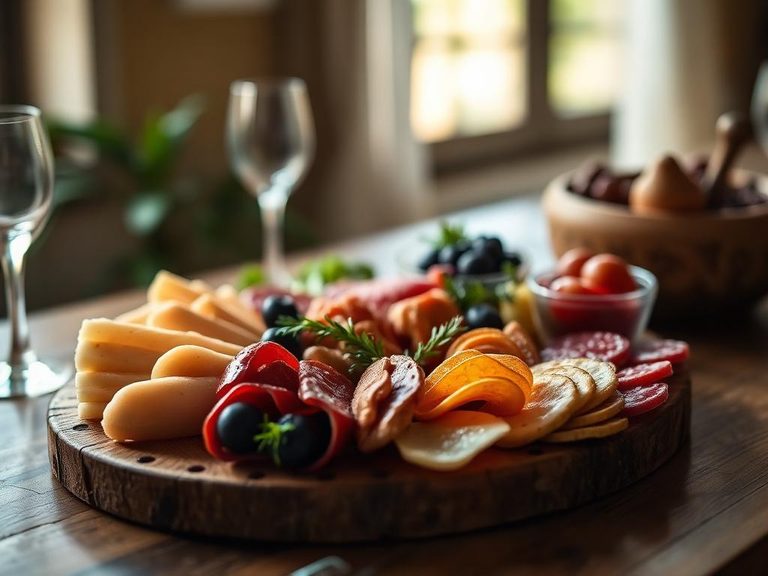
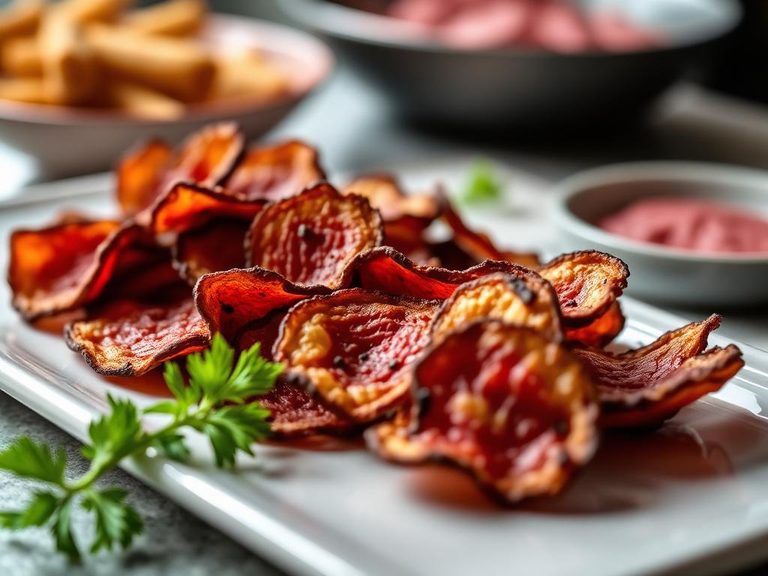
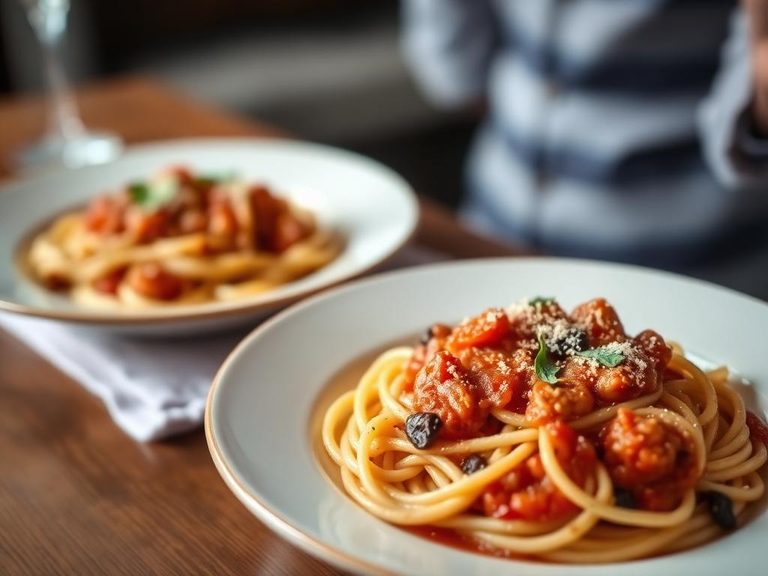
🌍 Where it's eaten
💡 Did you know?
The white, powdery coating on whole, dry-cured salami is not mold but a beneficial, edible mold (Penicillium nalgiovense) that is intentionally cultivated to protect the meat from spoilage and contribute to its distinctive flavor during aging.
Full nutrition (USDA data · scales with serving)
| Water | 36.2 g |
| Energy | 407 kcal |
| Energy | 1703 kj |
| Protein | 22.6 g |
| Total lipid (fat) | 33.7 g |
| Ash | 5.9 g |
| Carbohydrate, by difference | 1.6 g |
| Fiber, total dietary | 0.00 g |
| Calcium, Ca | 13.0 mg |
| Iron, Fe | 1.3 mg |
| Magnesium, Mg | 22.0 mg |
| Phosphorus, P | 229 mg |
| Potassium, K | 378 mg |
| Sodium, Na | 2260 mg |
| Zinc, Zn | 4.2 mg |
| Copper, Cu | 0.16 mg |
| Manganese, Mn | 0.07 mg |
| Selenium, Se | 25.4 ug |
| Vitamin C, total ascorbic acid | 0.00 mg |
| Thiamin | 0.93 mg |
| Riboflavin | 0.33 mg |
| Niacin | 5.6 mg |
| Pantothenic acid | 1.1 mg |
| Vitamin B-6 | 0.55 mg |
| Folate, total | 2.0 ug |
| Folic acid | 0.00 ug |
| Folate, food | 2.0 ug |
| Folate, DFE | 2.0 ug |
| Vitamin B-12 | 2.8 ug |
| Vitamin A, RAE | 0.00 ug |
| Retinol | 0.00 ug |
| Vitamin A, IU | 0.00 iu |
| Alcohol, ethyl | 0.00 g |
Fat & fatty acid profile (per 100g)
| Fatty acids, total saturated | 11.9 g |
| SFA 4:0 | 0.00 g |
| SFA 6:0 | 0.00 g |
| SFA 8:0 | 0.00 g |
| SFA 10:0 | 0.00 g |
| SFA 12:0 | 0.00 g |
| SFA 14:0 | 0.52 g |
| SFA 16:0 | 7.6 g |
| SFA 18:0 | 3.6 g |
| Fatty acids, total monounsaturated | 16.0 g |
| MUFA 16:1 | 1.2 g |
| MUFA 18:1 | 14.7 g |
| MUFA 20:1 | 0.00 g |
| MUFA 22:1 | 0.00 g |
| Fatty acids, total polyunsaturated | 3.7 g |
| PUFA 18:2 | 3.3 g |
| PUFA 18:3 | 0.28 g |
| PUFA 18:4 | 0.00 g |
| PUFA 20:4 | 0.16 g |
| PUFA 20:5 n-3 (EPA) | 0.00 g |
| PUFA 22:5 n-3 (DPA) | 0.00 g |
| PUFA 22:6 n-3 (DHA) | 0.00 g |
| Cholesterol | 79.0 mg |
| Phytosterols | 0.00 mg |
Amino acid profile (per 100g)
| Tryptophan | 0.25 g |
| Threonine | 1.0 g |
| Isoleucine | 1.1 g |
| Leucine | 1.6 g |
| Lysine | 1.9 g |
| Methionine | 0.47 g |
| Cystine | 0.29 g |
| Phenylalanine | 0.94 g |
| Tyrosine | 0.69 g |
| Valine | 1.1 g |
| Arginine | 1.4 g |
| Histidine | 0.61 g |
| Alanine | 1.3 g |
| Aspartic acid | 2.1 g |
| Glutamic acid | 3.8 g |
| Glycine | 1.6 g |
| Proline | 1.3 g |
| Serine | 0.90 g |
FAQ
Is the white stuff on dry salami safe to eat?
Yes, the white coating is a beneficial, edible mold that is part of the traditional curing process. It helps preserve the meat and develop flavor. If you find it unappealing, you can simply wipe it off before slicing.
How long does an unopened stick of dry salami last?
A whole, unopened stick of dry-cured salami can last for several months in a cool, dry pantry. Once cut, the exposed end should be wrapped and refrigerated to prevent it from drying out, and consumed within a few weeks.
Can I freeze dry salami?
Yes, you can freeze sliced or whole dry salami for up to 1-2 months without significant quality loss. Thaw it in the refrigerator before use. Freezing may slightly alter the texture, making it a bit more crumbly.
Nutrient density (calculated · NRF9.3)
Nutrient Rich Foods index: beneficial nutrients (protein, fiber, vitamins, minerals) minus saturated fat, added sugar & sodium, per 100 kcal.
NRF9.3 index — Fulgoni, Keast & Drewnowski, 2009. Computed from USDA nutrients.
Weight-loss friendliness (composite index)
Energy density 4.07 kcal/g · 22% calories from protein · 0.0 g fiber · 0.0 g sugar per 100 g.
Composite of energy density (Rolls et al., 1999), protein & fiber satiety, minus sugar. A calculated heuristic — ranks satiety-per-calorie, not a clinical measure.
Dietary load (calculated from USDA values)
Potential renal acid load. Positive = acid-forming, negative = alkaline-forming.
Sodium-to-potassium ratio: 5.98 (lower is better — aim for ≤ 1)
Sodium:potassium per WHO potassium guidance. Computed from USDA nutrients.