

Salad dressing, mayonnaise, imitation, milk cream
Whole food · Fats and Oils

Photo: Wikipedia
This is a light, creamy imitation mayonnaise made with milk cream, offering a smooth, spreadable texture similar to traditional mayo but with a noticeably milder, slightly tangy flavor. It's a lower-calorie, higher-carb alternative, providing a familiar creamy element to dishes without the full fat content of authentic mayonnaise.
Calorie split: 9% protein · 45% carbs · 47% fat
↓ Full nutrition💚 Why it's loved
People love it for delivering the satisfying creaminess and tang of mayonnaise in a lighter form, making it a popular choice for sandwiches, salads, and dips where a rich texture is desired without the heaviness.
⚠️ Watch-outs & how to enjoy it better
Its higher carbohydrate content compared to real mayo may be a concern for those on low-carb or ketogenic diets. To manage this, pair it with protein-rich foods like grilled chicken or eggs, and use it in controlled portions as part of a balanced meal.
Key benefits
- Lower in calories and fat than traditional mayonnaise
- Provides a creamy texture with fewer calories
- Contains some protein from dairy ingredients
- Offers a versatile base for lighter sauces and dressings
- Suitable for those monitoring fat intake
🍽️ Popular dishes
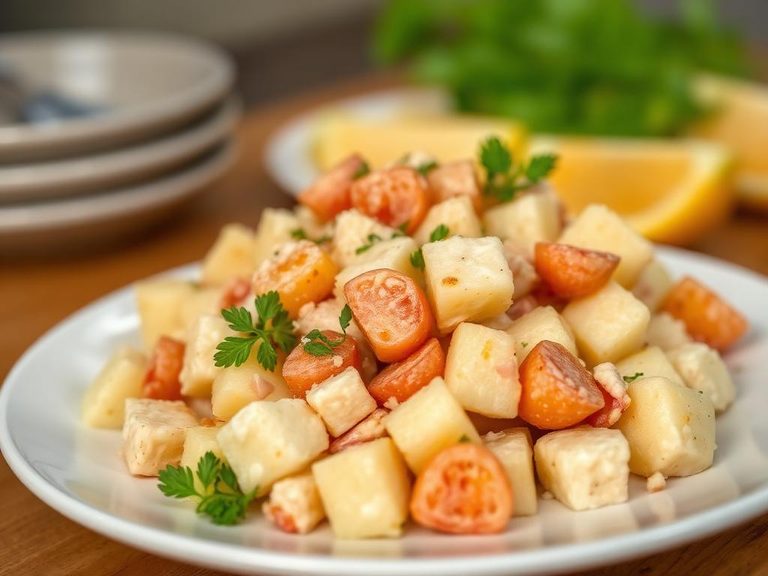
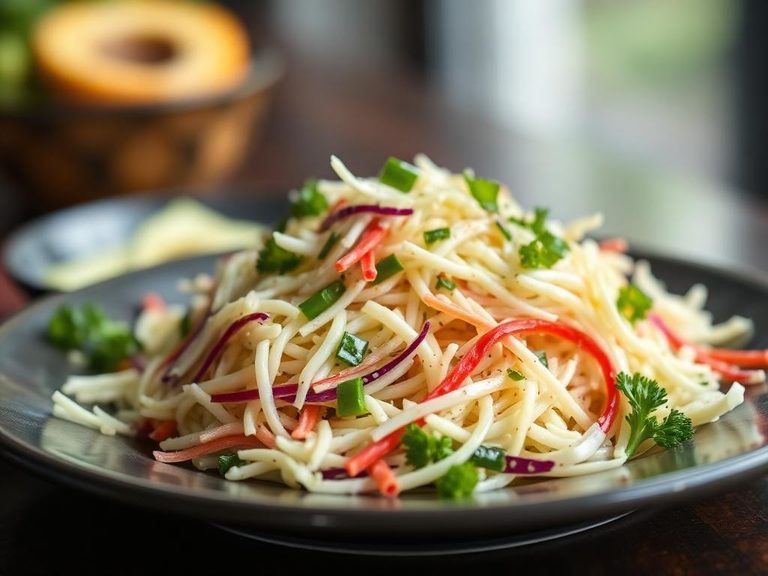
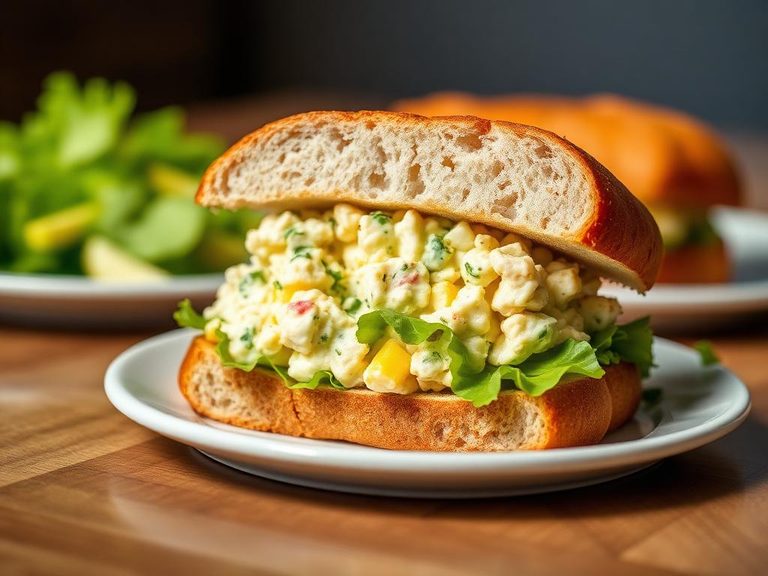
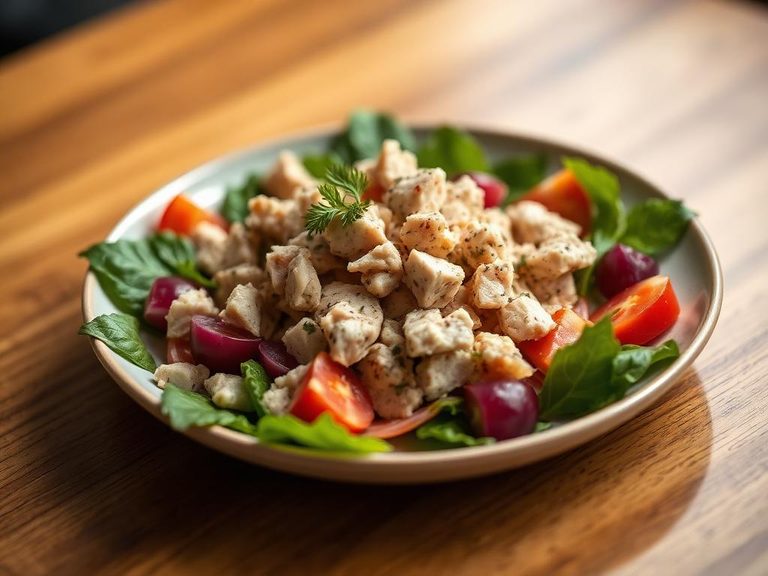

🌍 Where it's eaten
💡 Did you know?
Imitation mayonnaise products like this often use starches or gums to replicate the emulsified texture of egg yolks in traditional mayo, creating a stable, creamy product without raw eggs.
Full nutrition (USDA data · scales with serving)
| Water | 79.6 g |
| Energy | 97.0 kcal |
| Energy | 404 kj |
| Protein | 2.1 g |
| Total lipid (fat) | 5.1 g |
| Ash | 2.1 g |
| Carbohydrate, by difference | 11.1 g |
| Fiber, total dietary | 0.00 g |
| Calcium, Ca | 72.0 mg |
| Iron, Fe | 0.50 mg |
| Magnesium, Mg | 7.0 mg |
| Phosphorus, P | 57.0 mg |
| Potassium, K | 97.0 mg |
| Sodium, Na | 504 mg |
| Zinc, Zn | 0.25 mg |
| Copper, Cu | 0.01 mg |
| Manganese, Mn | 0.00 mg |
| Selenium, Se | 1.6 ug |
| Vitamin C, total ascorbic acid | 0.30 mg |
| Thiamin | 0.02 mg |
| Riboflavin | 0.10 mg |
| Niacin | 0.05 mg |
| Pantothenic acid | 0.19 mg |
| Vitamin B-6 | 0.02 mg |
| Folate, total | 3.0 ug |
| Folic acid | 0.00 ug |
| Folate, food | 3.0 ug |
| Folate, DFE | 3.0 ug |
| Vitamin B-12 | 0.23 ug |
| Vitamin A, RAE | 4.0 ug |
| Retinol | 4.0 ug |
| Vitamin A, IU | 13.0 iu |
| Vitamin E (alpha-tocopherol) | 0.40 mg |
| Alcohol, ethyl | 0.00 g |
| Caffeine | 0.00 mg |
| Theobromine | 0.00 mg |
Fat & fatty acid profile (per 100g)
| Fatty acids, total saturated | 2.8 g |
| SFA 4:0 | 0.00 g |
| SFA 6:0 | 0.00 g |
| SFA 8:0 | 0.00 g |
| SFA 10:0 | 0.00 g |
| SFA 12:0 | 0.10 g |
| SFA 14:0 | 0.40 g |
| SFA 16:0 | 1.2 g |
| SFA 18:0 | 1.0 g |
| Fatty acids, total monounsaturated | 1.7 g |
| MUFA 16:1 | 0.00 g |
| MUFA 18:1 | 1.7 g |
| MUFA 20:1 | 0.00 g |
| MUFA 22:1 | 0.00 g |
| Fatty acids, total polyunsaturated | 0.30 g |
| PUFA 18:2 | 0.20 g |
| PUFA 18:3 | 0.10 g |
| PUFA 18:4 | 0.00 g |
| PUFA 20:4 | 0.00 g |
| PUFA 20:5 n-3 (EPA) | 0.00 g |
| PUFA 22:5 n-3 (DPA) | 0.00 g |
| PUFA 22:6 n-3 (DHA) | 0.00 g |
| Cholesterol | 43.0 mg |
| Phytosterols | 6.0 mg |
Amino acid profile (per 100g)
| Tryptophan | 0.03 g |
| Threonine | 0.10 g |
| Isoleucine | 0.13 g |
| Leucine | 0.21 g |
| Lysine | 0.17 g |
| Methionine | 0.05 g |
| Cystine | 0.02 g |
| Phenylalanine | 0.10 g |
| Tyrosine | 0.10 g |
| Valine | 0.14 g |
| Arginine | 0.08 g |
| Histidine | 0.06 g |
| Alanine | 0.07 g |
| Aspartic acid | 0.16 g |
| Glutamic acid | 0.44 g |
| Glycine | 0.05 g |
| Proline | 0.20 g |
| Serine | 0.11 g |
FAQ
How does this differ from regular mayonnaise?
It's made with milk cream instead of oil and egg yolks as the primary emulsifier, resulting in fewer calories and fat but more carbohydrates.
Can I use it in baking?
It's not ideal for baking as it lacks the fat content needed for proper texture and moisture. It's best used in cold preparations like salads and spreads.
Is it a good source of nutrients?
It provides some protein from dairy but is not a significant source of vitamins or minerals. Its primary role is as a flavor and texture enhancer.
Nutrient density (calculated · NRF9.3)
Nutrient Rich Foods index: beneficial nutrients (protein, fiber, vitamins, minerals) minus saturated fat, added sugar & sodium, per 100 kcal.
NRF9.3 index — Fulgoni, Keast & Drewnowski, 2009. Computed from USDA nutrients.
Weight-loss friendliness (composite index)
Energy density 0.97 kcal/g · 9% calories from protein · 0.0 g fiber · 0.0 g sugar per 100 g.
Composite of energy density (Rolls et al., 1999), protein & fiber satiety, minus sugar. A calculated heuristic — ranks satiety-per-calorie, not a clinical measure.
Dietary load (calculated from USDA values)
Potential renal acid load. Positive = acid-forming, negative = alkaline-forming.
Sodium-to-potassium ratio: 5.20 (lower is better — aim for ≤ 1)
Sodium:potassium per WHO potassium guidance. Computed from USDA nutrients.