

Sage Valley, Gluten Free Vanilla Sandwich Cookies
Whole food · Baked Products

Photo: Wikipedia
These are delicate, crisp sandwich cookies with a sweet, creamy vanilla filling, offering a satisfying snap and melt-in-your-mouth texture. Nutritionally, they are a high-energy treat, providing nearly 500 calories per 100g, primarily from carbohydrates and sugar, with minimal protein or fiber.
Calorie split: 3% protein · 58% carbs · 40% fat
↓ Full nutrition💚 Why it's loved
People love these cookies for their classic, comforting vanilla sweetness and the satisfying textural contrast between the crisp biscuit and the smooth filling. They are a versatile snack that pairs well with coffee, milk, or tea, and evokes a sense of nostalgic, simple indulgence.
⚠️ Watch-outs & how to enjoy it better
The high sugar content (nearly 44g per 100g) can lead to rapid blood sugar spikes and is not ideal for those monitoring glucose levels or seeking nutrient-dense foods. To counteract this, pair a small portion with a source of protein or healthy fat (like a handful of nuts or a cheese stick) to slow sugar absorption, and practice strict portion control by sticking to a single serving.
Key benefits
- Gluten-free formulation for those with celiac disease or gluten sensitivity.
- Provides a quick source of energy from carbohydrates.
- Convenient, pre-portioned snack for on-the-go consumption.
- Sweet, familiar vanilla flavor profile for broad appeal.
🍽️ Popular dishes
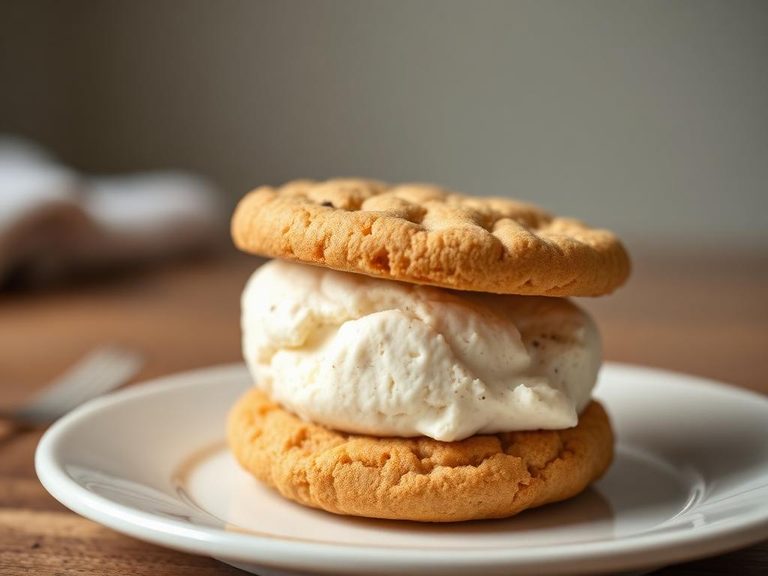
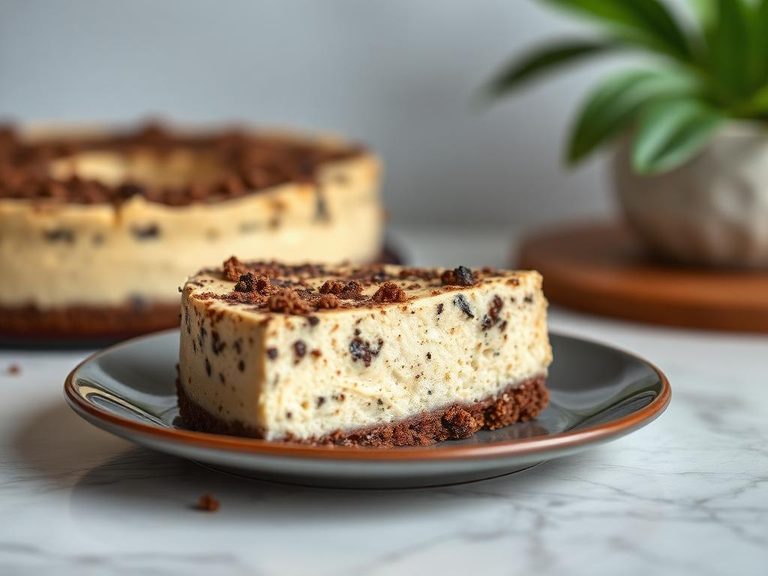

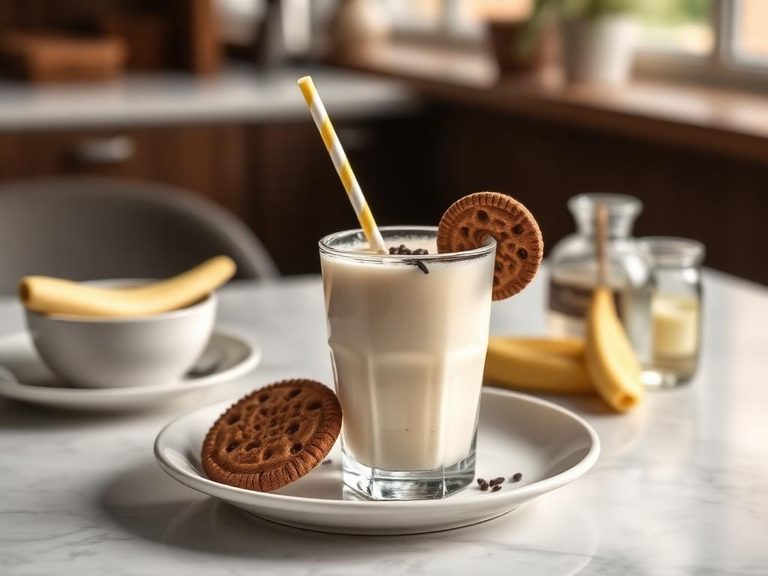
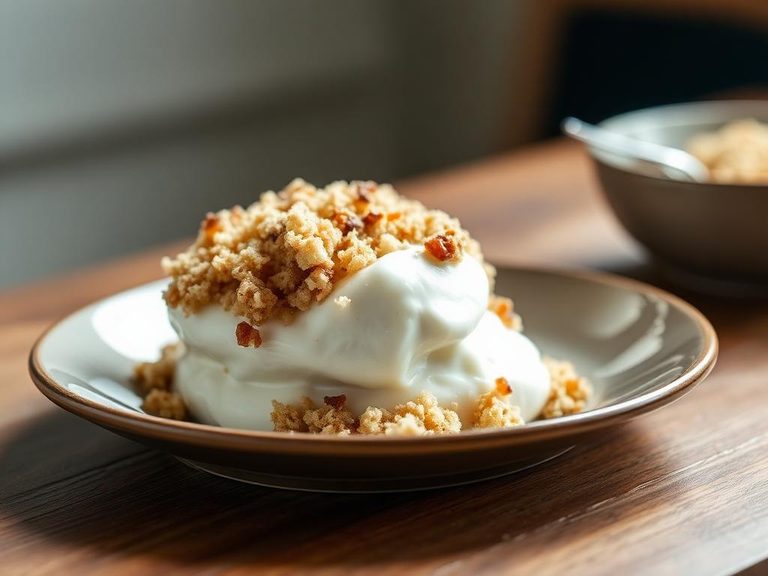
🌍 Where it's eaten
💡 Did you know?
The vanilla flavoring used in mass-produced cookies is often synthesized from vanillin, which can be derived from sources like wood pulp or petrochemicals, making it a marvel of modern food chemistry.
Full nutrition (USDA data · scales with serving)
| Water | 2.1 g |
| Energy | 499 kcal |
| Energy | 2089 kj |
| Protein | 3.1 g |
| Total lipid (fat) | 22.1 g |
| Ash | 0.79 g |
| Carbohydrate, by difference | 71.9 g |
| Fiber, total dietary | 1.0 g |
| Total Sugars | 43.9 g |
| Sucrose | 42.9 g |
| Glucose | 0.49 g |
| Fructose | 0.51 g |
| Lactose | 0.00 g |
| Maltose | 0.00 g |
| Galactose | 0.00 g |
| Starch | 28.0 g |
| Calcium, Ca | 17.0 mg |
| Iron, Fe | 0.45 mg |
| Magnesium, Mg | 17.0 mg |
| Phosphorus, P | 47.0 mg |
| Potassium, K | 144 mg |
| Sodium, Na | 212 mg |
| Zinc, Zn | 0.29 mg |
| Copper, Cu | 0.06 mg |
| Manganese, Mn | 0.21 mg |
Fat & fatty acid profile (per 100g)
| Fatty acids, total saturated | 5.9 g |
| SFA 4:0 | 0.00 g |
| SFA 6:0 | 0.00 g |
| SFA 8:0 | 0.00 g |
| SFA 10:0 | 0.00 g |
| SFA 12:0 | 0.02 g |
| SFA 14:0 | 0.10 g |
| SFA 15:0 | 0.01 g |
| SFA 16:0 | 5.0 g |
| SFA 17:0 | 0.01 g |
| SFA 18:0 | 0.65 g |
| SFA 20:0 | 0.10 g |
| SFA 22:0 | 0.04 g |
| SFA 24:0 | 0.03 g |
| Fatty acids, total monounsaturated | 10.2 g |
| MUFA 14:1 | 0.00 g |
| MUFA 15:1 | 0.00 g |
| MUFA 16:1 | 0.03 g |
| MUFA 16:1 c | 0.03 g |
| MUFA 17:1 | 0.01 g |
| MUFA 18:1 | 10.0 g |
| MUFA 18:1 c | 10.0 g |
| MUFA 20:1 | 0.15 g |
| MUFA 22:1 | 0.01 g |
| MUFA 22:1 c | 0.01 g |
| MUFA 24:1 c | 0.01 g |
| Fatty acids, total polyunsaturated | 3.8 g |
| PUFA 18:2 | 3.0 g |
| PUFA 18:2 n-6 c,c | 2.9 g |
| PUFA 18:2 CLAs | 0.00 g |
| PUFA 18:3 | 0.80 g |
| PUFA 18:3 n-3 c,c,c (ALA) | 0.77 g |
| PUFA 18:3 n-6 c,c,c | 0.03 g |
| PUFA 18:3i | 0.00 g |
| PUFA 18:4 | 0.00 g |
| PUFA 20:2 n-6 c,c | 0.01 g |
| PUFA 20:3 | 0.00 g |
| PUFA 20:3 n-3 | 0.00 g |
| PUFA 20:3 n-6 | 0.00 g |
| PUFA 20:4 | 0.01 g |
| PUFA 20:5 n-3 (EPA) | 0.00 g |
| PUFA 22:4 | 0.00 g |
| PUFA 22:5 n-3 (DPA) | 0.00 g |
| PUFA 22:6 n-3 (DHA) | 0.00 g |
| Fatty acids, total trans | 0.04 g |
| Fatty acids, total trans-monoenoic | 0.01 g |
| TFA 16:1 t | 0.00 g |
| TFA 18:1 t | 0.01 g |
| TFA 22:1 t | 0.00 g |
| TFA 18:2 t not further defined | 0.02 g |
| Fatty acids, total trans-polyenoic | 0.02 g |
FAQ
Are these cookies suitable for a vegan diet?
Not necessarily. While gluten-free, sandwich cookies often contain dairy derivatives like milk powder in the filling or butter in the biscuit. Always check the specific ingredient list for vegan compliance.
How does the nutritional profile compare to a standard butter cookie?
Per 100g, these gluten-free sandwich cookies typically have a similar calorie and fat content but may have slightly higher sugar due to the sweet filling. The key difference is the absence of wheat gluten, replaced by alternative flours like rice or tapioca starch.
What is the best way to store them to maintain freshness?
Keep them in a cool, dry place in their original sealed packaging or an airtight container. Exposure to humidity will cause the crisp biscuits to soften and the filling to become sticky.
Nutrient density (calculated · NRF9.3)
Nutrient Rich Foods index: beneficial nutrients (protein, fiber, vitamins, minerals) minus saturated fat, added sugar & sodium, per 100 kcal.
NRF9.3 index — Fulgoni, Keast & Drewnowski, 2009. Computed from USDA nutrients.
Weight-loss friendliness (composite index)
Energy density 4.99 kcal/g · 3% calories from protein · 1.0 g fiber · 43.9 g sugar per 100 g.
Composite of energy density (Rolls et al., 1999), protein & fiber satiety, minus sugar. A calculated heuristic — ranks satiety-per-calorie, not a clinical measure.
Dietary load (calculated from USDA values)
Potential renal acid load. Positive = acid-forming, negative = alkaline-forming.
Sodium-to-potassium ratio: 1.47 (lower is better — aim for ≤ 1)
Sodium:potassium per WHO potassium guidance. Computed from USDA nutrients.