

Rudi's, Gluten-Free Bakery, Original Sandwich Bread
Whole food · Baked Products
Rudi's Original Sandwich Bread is a soft, pliable gluten-free loaf with a mild, slightly sweet flavor and a texture that closely mimics traditional wheat bread. It's crafted from a blend of whole-grain flours like sorghum and brown rice, giving it a light, airy crumb. Nutritionally, it provides a solid source of fiber and is a convenient, lower-protein option for those managing their intake.
Calorie split: 4% protein · 66% carbs · 30% fat
↓ Full nutrition💚 Why it's loved
People love it because it's one of the most convincing gluten-free sandwich breads, offering a familiar, non-gritty texture that holds up well for everything from PB&J to grilled cheese. Its mild flavor makes it an incredibly versatile canvas for both sweet and savory toppings.
⚠️ Watch-outs & how to enjoy it better
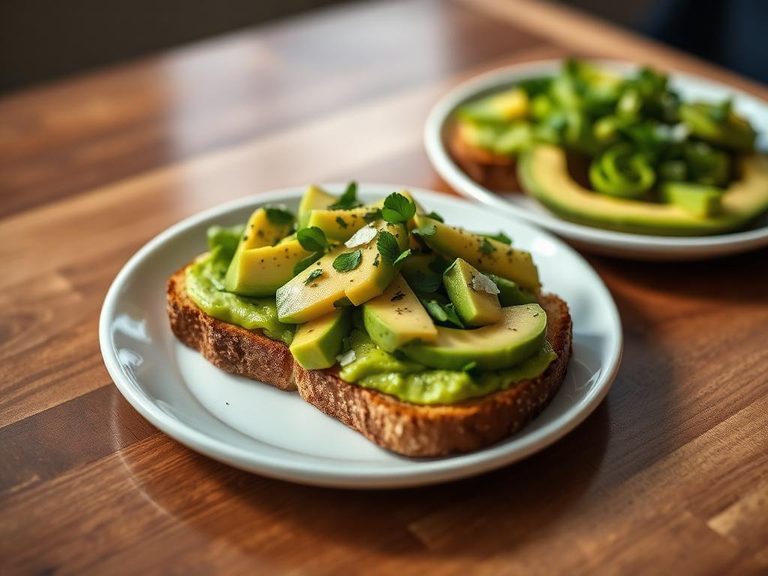
The bread's higher carbohydrate content (52.83g per 100g) can lead to quicker blood-sugar spikes, especially when eaten alone. To counteract this, always pair a slice with a protein (like turkey or egg) and a healthy fat (like avocado or nut butter) to slow digestion and stabilize energy levels.
Key benefits
- Certified gluten-free, safe for celiac disease or gluten sensitivity
- Good source of dietary fiber (3.5g per 100g)
- Made with whole-grain flours like sorghum and brown rice
- Lower in protein than many wheat breads
- Free from artificial preservatives, colors, or flavors
🍽️ Popular dishes




🌍 Where it's eaten
💡 Did you know?
Rudi's Bakery was founded in 1976 in Boulder, Colorado, by a former rock-and-roll roadie who wanted to bring organic, whole-grain breads to the market.
Full nutrition (USDA data · scales with serving)
| Water | 31.7 g |
| Energy | 320 kcal |
| Energy | 1339 kj |
| Protein | 3.1 g |
| Total lipid (fat) | 10.7 g |
| Ash | 1.7 g |
| Carbohydrate, by difference | 52.8 g |
| Fiber, total dietary | 3.5 g |
| Total Sugars | 8.4 g |
| Sucrose | 0.00 g |
| Glucose | 3.5 g |
| Fructose | 4.9 g |
| Lactose | 0.00 g |
| Maltose | 0.00 g |
| Galactose | 0.00 g |
| Starch | 33.0 g |
| Calcium, Ca | 24.0 mg |
| Iron, Fe | 0.76 mg |
| Magnesium, Mg | 11.0 mg |
| Phosphorus, P | 37.0 mg |
| Potassium, K | 92.0 mg |
| Sodium, Na | 528 mg |
| Zinc, Zn | 0.26 mg |
| Copper, Cu | 0.04 mg |
| Manganese, Mn | 0.17 mg |
Fat & fatty acid profile (per 100g)
| Fatty acids, total saturated | 0.34 g |
| SFA 4:0 | 0.00 g |
| SFA 6:0 | 0.00 g |
| SFA 8:0 | 0.00 g |
| SFA 10:0 | 0.01 g |
| SFA 12:0 | 0.01 g |
| SFA 14:0 | 0.01 g |
| SFA 15:0 | 0.00 g |
| SFA 16:0 | 0.00 g |
| SFA 17:0 | 0.01 g |
| SFA 18:0 | 0.20 g |
| SFA 20:0 | 0.06 g |
| SFA 22:0 | 0.03 g |
| SFA 24:0 | 0.02 g |
| Fatty acids, total monounsaturated | 7.4 g |
| MUFA 14:1 | 0.00 g |
| MUFA 15:1 | 0.45 g |
| MUFA 16:1 | 0.03 g |
| MUFA 16:1 c | 0.03 g |
| MUFA 17:1 | 0.01 g |
| MUFA 18:1 | 6.7 g |
| MUFA 18:1 c | 6.7 g |
| MUFA 20:1 | 0.13 g |
| MUFA 22:1 | 0.00 g |
| MUFA 22:1 c | 0.00 g |
| MUFA 24:1 c | 0.01 g |
| Fatty acids, total polyunsaturated | 2.2 g |
| PUFA 18:2 | 1.6 g |
| PUFA 18:2 n-6 c,c | 1.6 g |
| PUFA 18:2 CLAs | 0.01 g |
| PUFA 18:3 | 0.58 g |
| PUFA 18:3 n-3 c,c,c (ALA) | 0.57 g |
| PUFA 18:3 n-6 c,c,c | 0.01 g |
| PUFA 18:3i | 0.00 g |
| PUFA 18:4 | 0.00 g |
| PUFA 20:2 n-6 c,c | 0.01 g |
| PUFA 20:3 | 0.00 g |
| PUFA 20:3 n-3 | 0.00 g |
| PUFA 20:3 n-6 | 0.00 g |
| PUFA 20:4 | 0.00 g |
| PUFA 20:5 n-3 (EPA) | 0.00 g |
| PUFA 22:4 | 0.00 g |
| PUFA 22:5 n-3 (DPA) | 0.00 g |
| PUFA 22:6 n-3 (DHA) | 0.00 g |
| Fatty acids, total trans | 0.02 g |
| Fatty acids, total trans-monoenoic | 0.01 g |
| TFA 16:1 t | 0.00 g |
| TFA 18:1 t | 0.01 g |
| TFA 22:1 t | 0.00 g |
| TFA 18:2 t not further defined | 0.01 g |
| Fatty acids, total trans-polyenoic | 0.01 g |
FAQ
Is this bread suitable for a low-carb diet?
No, with nearly 53g of carbohydrates per 100g, it is relatively high in carbs and not ideal for strict low-carb or ketogenic diets.
What are the main gluten-free grains used in this bread?
The primary ingredients are typically whole-grain sorghum flour, brown rice flour, and tapioca starch.
Does it contain common allergens besides gluten?
While gluten-free, it may contain other allergens like eggs or soy depending on the specific product line. Always check the ingredient label for your specific allergens.
Nutrient density (calculated · NRF9.3)
Nutrient Rich Foods index: beneficial nutrients (protein, fiber, vitamins, minerals) minus saturated fat, added sugar & sodium, per 100 kcal.
NRF9.3 index — Fulgoni, Keast & Drewnowski, 2009. Computed from USDA nutrients.
Weight-loss friendliness (composite index)
Energy density 3.20 kcal/g · 4% calories from protein · 3.5 g fiber · 8.4 g sugar per 100 g.
Composite of energy density (Rolls et al., 1999), protein & fiber satiety, minus sugar. A calculated heuristic — ranks satiety-per-calorie, not a clinical measure.
Dietary load (calculated from USDA values)
Potential renal acid load. Positive = acid-forming, negative = alkaline-forming.
Sodium-to-potassium ratio: 5.74 (lower is better — aim for ≤ 1)
Sodium:potassium per WHO potassium guidance. Computed from USDA nutrients.