

Puddings, tapioca, dry mix, prepared with whole milk
Whole food · Sweets

Photo: Wikipedia
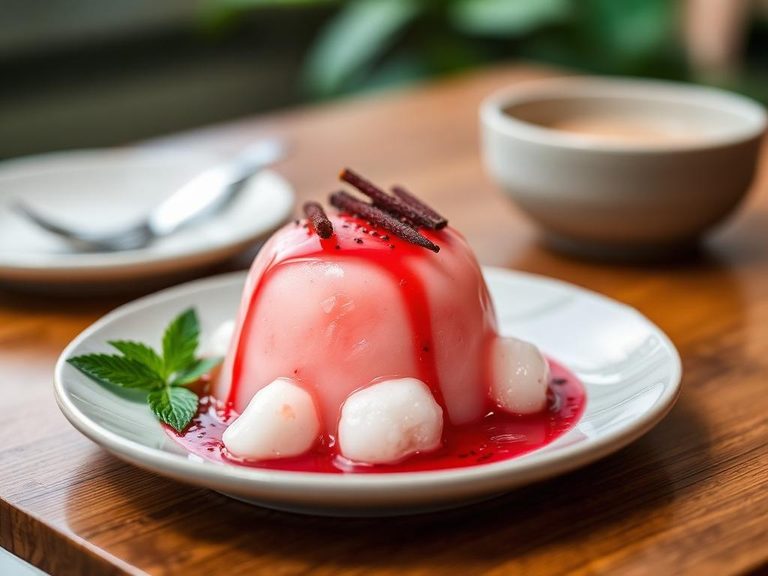
This is a comforting, nostalgic dessert made from tiny, translucent tapioca pearls that swell into soft, chewy orbs when cooked in whole milk. The result is a creamy, subtly sweet pudding with a unique, satisfying texture that's both smooth and pleasantly bouncy. Nutritionally, it's a moderate-energy treat primarily fueled by carbohydrates, with a small boost of protein and fat from the whole milk base.
Calorie split: 10% protein · 68% carbs · 23% fat
↓ Full nutrition💚 Why it's loved
People love it for its comforting, nostalgic quality and the delightful contrast between the creamy milk and the playful, chewy pearls. It's a versatile canvas that can be served warm or chilled, and customized with flavors like vanilla, cinnamon, or fruit.
⚠️ Watch-outs & how to enjoy it better
The primary downside is its high glycemic load, which can cause rapid blood sugar spikes, making it less ideal for individuals managing diabetes. To counteract this, pair a smaller portion with a source of protein (like nuts) or healthy fat (like a dollop of yogurt) to slow digestion. Also, be mindful of added sugars in some mixes.
Key benefits
- Provides quick, accessible energy from carbohydrates
- Whole milk base contributes calcium and vitamin D
- The chewy texture can promote mindful eating and satisfaction
- Simple to prepare, making it a convenient dessert option
- Naturally gluten-free, suitable for those with celiac disease
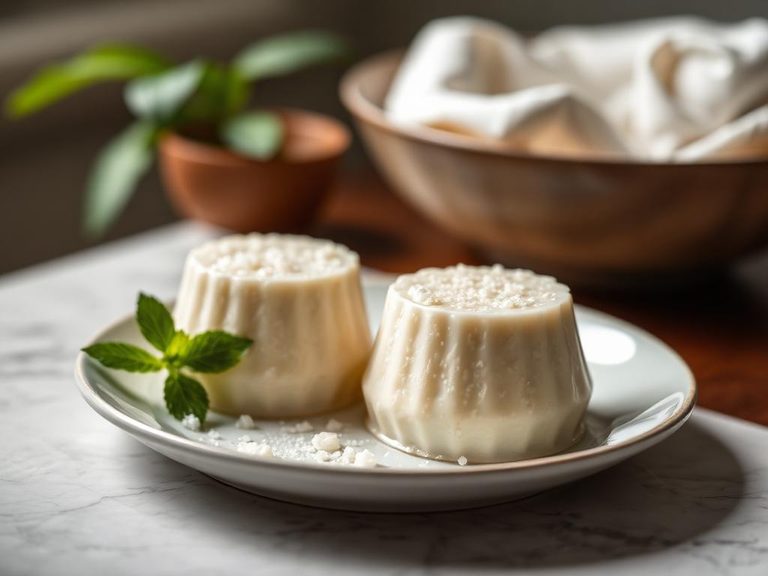
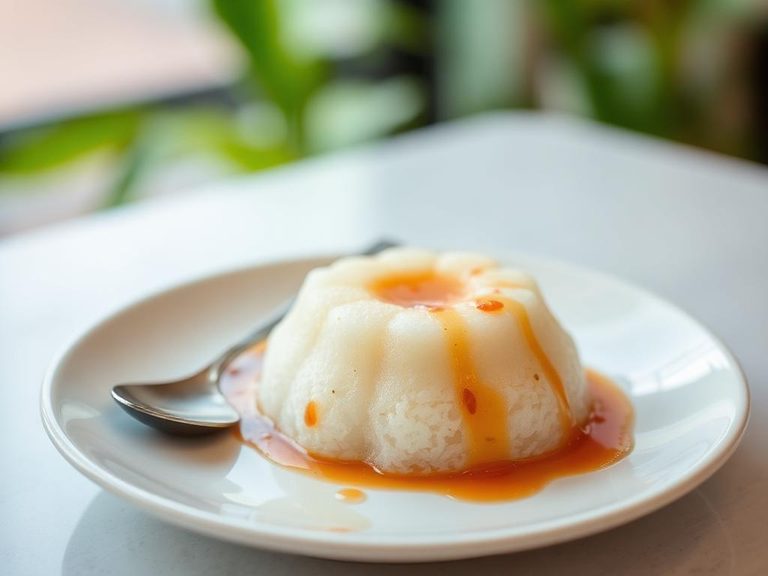
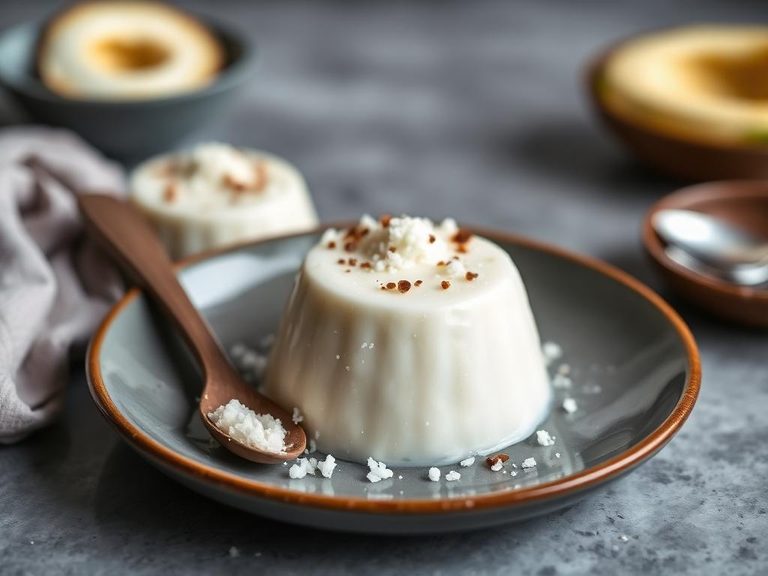
🍽️ Popular dishes

🌍 Where it's eaten
💡 Did you know?
Tapioca pearls are derived from the starchy root of the cassava plant, and the term 'frog eye salad' comes from the pasta used in some versions, which resembles tiny frog eyes.
Full nutrition (USDA data · scales with serving)
| Water | 74.0 g |
| Energy | 115 kcal |
| Energy | 481 kj |
| Protein | 2.8 g |
| Total lipid (fat) | 2.9 g |
| Ash | 0.85 g |
| Carbohydrate, by difference | 19.4 g |
| Fiber, total dietary | 0.00 g |
| Calcium, Ca | 103 mg |
| Iron, Fe | 0.06 mg |
| Magnesium, Mg | 12.0 mg |
| Phosphorus, P | 81.0 mg |
| Potassium, K | 131 mg |
| Sodium, Na | 120 mg |
| Zinc, Zn | 0.34 mg |
| Copper, Cu | 0.01 mg |
| Manganese, Mn | 0.01 mg |
| Selenium, Se | 1.9 ug |
| Vitamin C, total ascorbic acid | 0.70 mg |
| Thiamin | 0.03 mg |
| Riboflavin | 0.14 mg |
| Niacin | 0.07 mg |
| Pantothenic acid | 0.27 mg |
| Vitamin B-6 | 0.03 mg |
| Folate, total | 4.0 ug |
| Folic acid | 0.00 ug |
| Folate, food | 4.0 ug |
| Folate, DFE | 4.0 ug |
| Vitamin B-12 | 0.25 ug |
| Vitamin A, RAE | 25.0 ug |
| Retinol | 24.0 ug |
| Carotene, beta | 15.0 ug |
| Vitamin A, IU | 108 iu |
| Vitamin D (D2 + D3), International Units | 34.0 iu |
| Vitamin D (D2 + D3) | 0.90 ug |
| Alcohol, ethyl | 0.00 g |
| Caffeine | 0.00 mg |
| Theobromine | 0.00 mg |
Fat & fatty acid profile (per 100g)
| Fatty acids, total saturated | 1.7 g |
| SFA 4:0 | 0.09 g |
| SFA 6:0 | 0.06 g |
| SFA 8:0 | 0.03 g |
| SFA 10:0 | 0.07 g |
| SFA 12:0 | 0.08 g |
| SFA 14:0 | 0.29 g |
| SFA 16:0 | 0.76 g |
| SFA 18:0 | 0.35 g |
| Fatty acids, total monounsaturated | 0.79 g |
| MUFA 16:1 | 0.06 g |
| MUFA 18:1 | 0.72 g |
| MUFA 20:1 | 0.00 g |
| MUFA 22:1 | 0.00 g |
| Fatty acids, total polyunsaturated | 0.11 g |
| PUFA 18:2 | 0.06 g |
| PUFA 18:3 | 0.04 g |
| PUFA 18:4 | 0.00 g |
| PUFA 20:4 | 0.00 g |
| PUFA 20:5 n-3 (EPA) | 0.00 g |
| PUFA 22:5 n-3 (DPA) | 0.00 g |
| PUFA 22:6 n-3 (DHA) | 0.00 g |
| Cholesterol | 12.0 mg |
| Phytosterols | 0.00 mg |
Amino acid profile (per 100g)
| Tryptophan | 0.04 g |
| Threonine | 0.13 g |
| Isoleucine | 0.17 g |
| Leucine | 0.28 g |
| Lysine | 0.23 g |
| Methionine | 0.07 g |
| Cystine | 0.03 g |
| Phenylalanine | 0.14 g |
| Tyrosine | 0.14 g |
| Valine | 0.19 g |
| Arginine | 0.10 g |
| Histidine | 0.08 g |
| Alanine | 0.10 g |
| Aspartic acid | 0.22 g |
| Glutamic acid | 0.60 g |
| Glycine | 0.06 g |
| Proline | 0.28 g |
| Serine | 0.15 g |
FAQ
What's the difference between pearl tapioca and instant tapioca?
Pearl tapioca consists of larger, whole starch granules that require longer soaking and cooking to become tender. Instant or minute tapioca is pre-gelatinized and ground, allowing it to cook much faster but resulting in a less distinct, more uniform texture.
Can I make this dairy-free?
Yes, you can substitute the whole milk with plant-based alternatives like coconut milk (for a richer, tropical flavor), oat milk, or almond milk. The texture and nutritional profile will change slightly.
Why did my tapioca pudding turn out gummy or gluey?
Overcooking or using too high a heat can break down the starch excessively, leading to a gummy texture. It's best to cook it gently over medium-low heat, stirring frequently, and remove it from the heat while it's still slightly loose, as it will thicken considerably as it cools.
Nutrient density (calculated · NRF9.3)
Nutrient Rich Foods index: beneficial nutrients (protein, fiber, vitamins, minerals) minus saturated fat, added sugar & sodium, per 100 kcal.
NRF9.3 index — Fulgoni, Keast & Drewnowski, 2009. Computed from USDA nutrients.
Weight-loss friendliness (composite index)
Energy density 1.15 kcal/g · 10% calories from protein · 0.0 g fiber · 0.0 g sugar per 100 g.
Composite of energy density (Rolls et al., 1999), protein & fiber satiety, minus sugar. A calculated heuristic — ranks satiety-per-calorie, not a clinical measure.
Dietary load (calculated from USDA values)
Potential renal acid load. Positive = acid-forming, negative = alkaline-forming.
Sodium-to-potassium ratio: 0.92 (lower is better — aim for ≤ 1)
Sodium:potassium per WHO potassium guidance. Computed from USDA nutrients.