

Pretzels, soft, from school lunch
Common food

Photo: Wikipedia
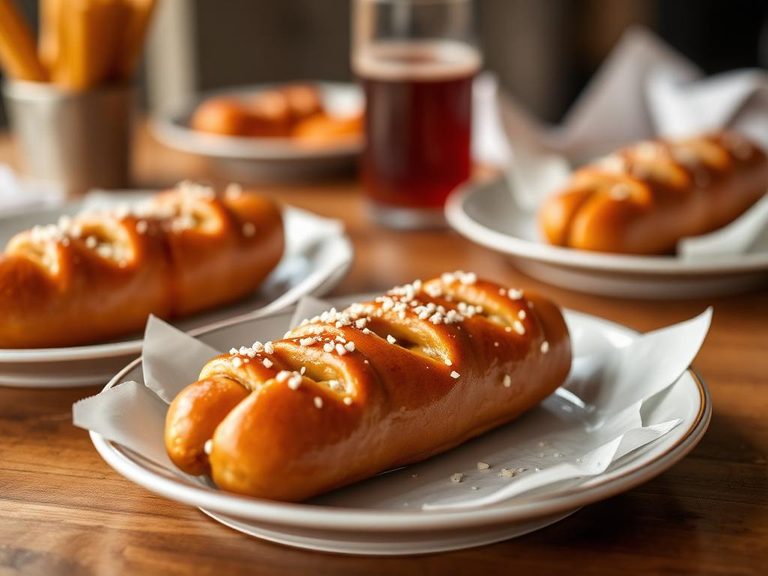
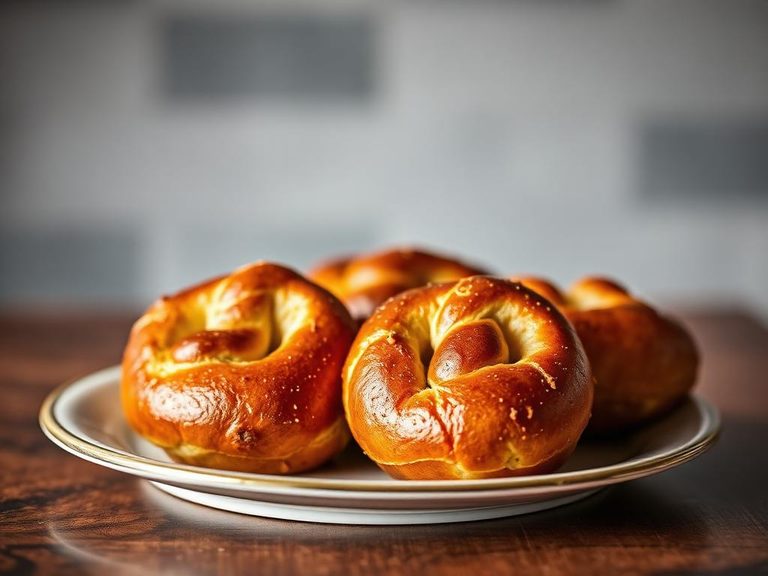
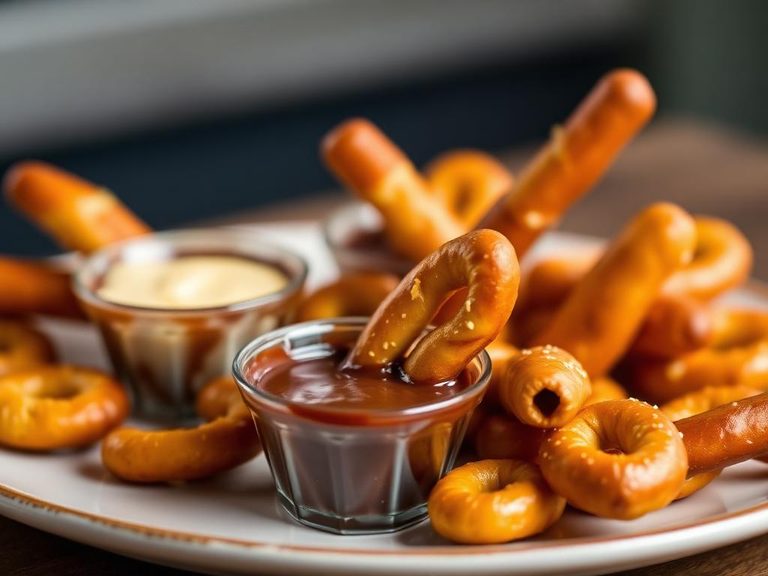
This is the classic, warm, doughy pretzel served in school cafeterias, with a soft, chewy interior and a slightly crisp, shiny brown crust. Its primary nutritional feature is being a dense source of energy from carbohydrates, with minimal fat and a modest amount of protein.
Calorie split: 10% protein · 82% carbs · 8% fat
↓ Full nutrition💚 Why it's loved
People love it for its satisfying, chewy texture and the comforting, slightly salty, malty flavor that evokes nostalgia for school days. It's incredibly versatile, perfect on its own or as a vessel for dipping in cheese sauce, mustard, or even peanut butter.
⚠️ Watch-outs & how to enjoy it better
The high carbohydrate load can cause a rapid blood-sugar spike, especially when eaten plain. It is also often high in sodium, which may be a concern for some. To counteract this, pair it with a protein or healthy fat like hummus, cheese, or a hard-boiled egg to slow digestion and stabilize blood sugar.
Key benefits
- Provides quick, accessible energy from complex carbohydrates
- Low in fat, making it a lighter snack option
- Offers a small but useful amount of plant-based protein
- Contains dietary fiber to aid digestion
- A familiar, comforting food that can boost morale
🍽️ Popular dishes

🌍 Where it's eaten
💡 Did you know?
The distinctive shiny, brown crust of a soft pretzel is created by dipping the shaped dough in a lye (sodium hydroxide) or baking soda solution before baking, which triggers a unique Maillard reaction.
Full nutrition (USDA data · scales with serving)
| Water | 14.8 g |
| Energy | 339 kcal |
| Protein | 8.6 g |
| Total lipid (fat) | 3.2 g |
| Carbohydrate, by difference | 70.7 g |
| Fiber, total dietary | 3.7 g |
| Total Sugars | 0.26 g |
| Calcium, Ca | 25.0 mg |
| Iron, Fe | 4.2 mg |
| Magnesium, Mg | 49.0 mg |
| Phosphorus, P | 123 mg |
| Potassium, K | 140 mg |
| Sodium, Na | 240 mg |
| Zinc, Zn | 1.2 mg |
| Copper, Cu | 0.17 mg |
| Selenium, Se | 20.1 ug |
| Vitamin C, total ascorbic acid | 0.00 mg |
| Thiamin | 0.41 mg |
| Riboflavin | 0.30 mg |
| Niacin | 4.7 mg |
| Vitamin B-6 | 0.08 mg |
| Folate, total | 27.0 ug |
| Folic acid | 0.00 ug |
| Folate, food | 27.0 ug |
| Folate, DFE | 27.0 ug |
| Choline, total | 20.4 mg |
| Vitamin B-12 | 0.00 ug |
| Vitamin B-12, added | 0.00 ug |
| Vitamin A, RAE | 0.00 ug |
| Retinol | 0.00 ug |
| Carotene, beta | 0.00 ug |
| Carotene, alpha | 0.00 ug |
| Cryptoxanthin, beta | 0.00 ug |
| Lycopene | 0.00 ug |
| Lutein + zeaxanthin | 28.0 ug |
| Vitamin E (alpha-tocopherol) | 0.58 mg |
| Vitamin E, added | 0.00 mg |
| Vitamin D (D2 + D3) | 0.00 ug |
| Vitamin K (phylloquinone) | 2.7 ug |
| Alcohol, ethyl | 0.00 g |
| Caffeine | 0.00 mg |
| Theobromine | 0.00 mg |
Fat & fatty acid profile (per 100g)
| Fatty acids, total saturated | 0.69 g |
| SFA 4:0 | 0.00 g |
| SFA 6:0 | 0.00 g |
| SFA 8:0 | 0.00 g |
| SFA 10:0 | 0.00 g |
| SFA 12:0 | 0.00 g |
| SFA 14:0 | 0.01 g |
| SFA 16:0 | 0.45 g |
| SFA 18:0 | 0.23 g |
| Fatty acids, total monounsaturated | 1.1 g |
| MUFA 16:1 | 0.00 g |
| MUFA 18:1 | 1.0 g |
| MUFA 20:1 | 0.00 g |
| MUFA 22:1 | 0.00 g |
| Fatty acids, total polyunsaturated | 1.0 g |
| PUFA 18:2 | 0.95 g |
| PUFA 18:3 | 0.06 g |
| PUFA 18:4 | 0.00 g |
| PUFA 20:4 | 0.00 g |
| PUFA 20:5 n-3 (EPA) | 0.00 g |
| PUFA 22:5 n-3 (DPA) | 0.00 g |
| PUFA 22:6 n-3 (DHA) | 0.00 g |
| Cholesterol | 0.00 mg |
Amino acid profile (per 100g)
Estimated from Snacks, pretzels, hard, confectioner's coating, chocolate-flavor — USDA does not publish this profile for Pretzels.
| Tryptophan | 0.10 g |
| Threonine | 0.25 g |
| Isoleucine | 0.29 g |
| Leucine | 0.53 g |
| Lysine | 0.25 g |
| Methionine | 0.13 g |
| Cystine | 0.15 g |
| Phenylalanine | 0.36 g |
| Tyrosine | 0.23 g |
| Valine | 0.33 g |
| Arginine | 0.31 g |
| Histidine | 0.16 g |
| Alanine | 0.27 g |
| Aspartic acid | 0.42 g |
| Glutamic acid | 2.2 g |
| Glycine | 0.27 g |
| Proline | 0.74 g |
| Serine | 0.36 g |
FAQ
Why is a soft pretzel so chewy?
The chewiness comes from the high-gluten flour typically used and the brief boiling in an alkaline solution (lye or baking soda) before baking. This process gelatinizes the starch on the surface, creating a distinctive crust and chew.
Are soft pretzels a healthy snack?
They are a source of energy and are low in fat, but their main nutritional component is refined carbohydrates. For a more balanced snack, it's best to eat them with a protein or fat source to help manage blood sugar response.
What is the difference between a soft pretzel and a hard pretzel?
The primary difference is moisture content. Soft pretzels are baked for a shorter time, retaining a doughy interior. Hard pretzels are baked longer to remove most of the moisture, resulting in a dry, crunchy, shelf-stable product.
Nutrient density (calculated · NRF9.3)
Nutrient Rich Foods index: beneficial nutrients (protein, fiber, vitamins, minerals) minus saturated fat, added sugar & sodium, per 100 kcal.
NRF9.3 index — Fulgoni, Keast & Drewnowski, 2009. Computed from USDA nutrients.
Weight-loss friendliness (composite index)
Energy density 3.39 kcal/g · 10% calories from protein · 3.7 g fiber · 0.3 g sugar per 100 g.
Composite of energy density (Rolls et al., 1999), protein & fiber satiety, minus sugar. A calculated heuristic — ranks satiety-per-calorie, not a clinical measure.
Dietary load (calculated from USDA values)
Potential renal acid load. Positive = acid-forming, negative = alkaline-forming.
Sodium-to-potassium ratio: 1.71 (lower is better — aim for ≤ 1)
Sodium:potassium per WHO potassium guidance. Computed from USDA nutrients.