

Pretzels, hard, plain, unsalted
Common food

Photo: Wikipedia
A hard, crunchy, bread-based snack formed into thin, elongated shapes and baked until dry and golden. Its texture is snappy and firm, with a mild, toasted wheat flavor that's subtly sweet from the dough. Nutritionally, it's a dense source of carbohydrates, providing quick energy with minimal fat.
Calorie split: 9% protein · 82% carbs · 8% fat
↓ Full nutrition💚 Why it's loved
People love its satisfying, audible crunch and its versatility as a blank canvas for dips, spreads, or just plain snacking. It's a nostalgic, comforting staple in many cultures, often associated with casual gatherings and European-style bakeries.
⚠️ Watch-outs & how to enjoy it better
The very low moisture content and dense carbohydrate profile can make it feel dry and may lead to a rapid blood-sugar spike if eaten alone in large quantities. As a wheat product, it contains gluten, a common allergen. To counteract this, pair it with protein-rich dips like hummus or cheese, or with healthy fats like nut butter to slow digestion and promote satiety.
Key benefits
- Provides quick energy from complex carbohydrates
- Low in fat (3.5g per 100g)
- Contains some dietary fiber (2.8g per 100g)
- A good source of plant-based protein (9.1g per 100g)
- Typically low in sugar (2.21g per 100g)
🍽️ Popular dishes
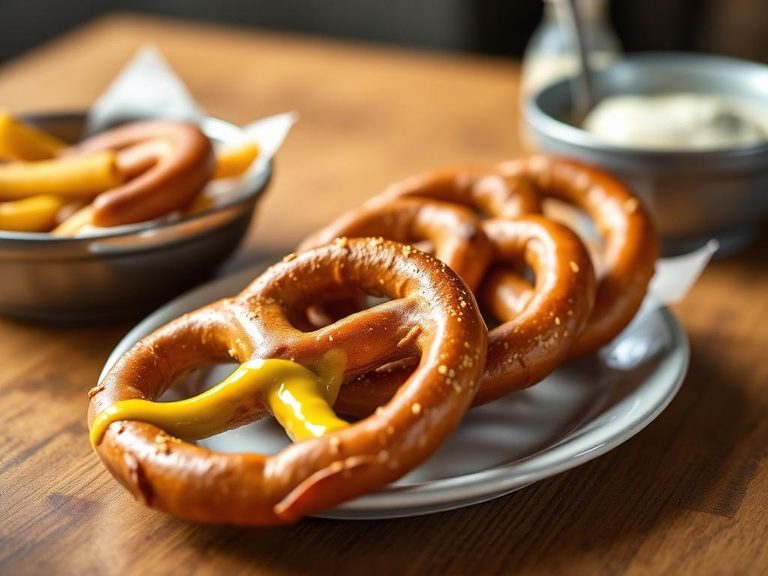
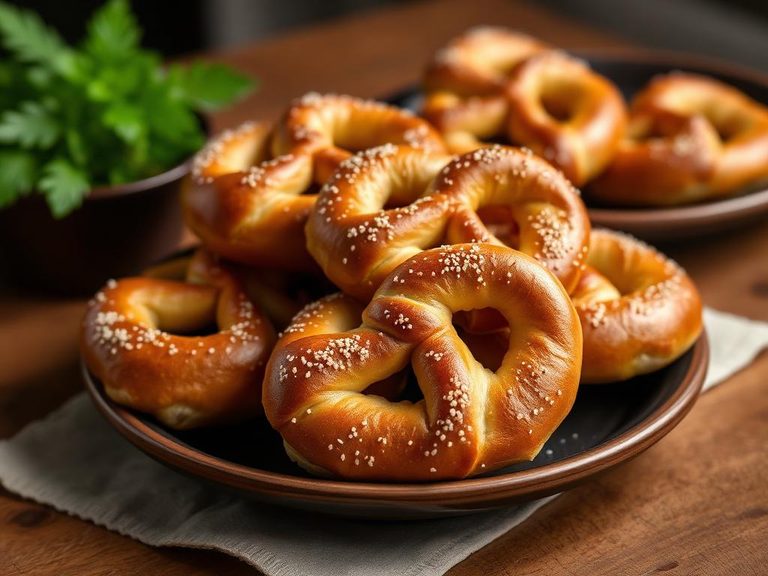

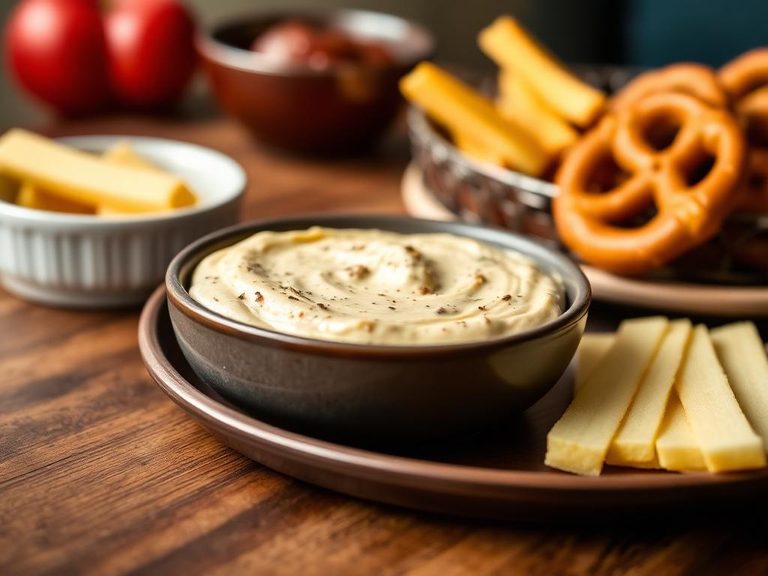
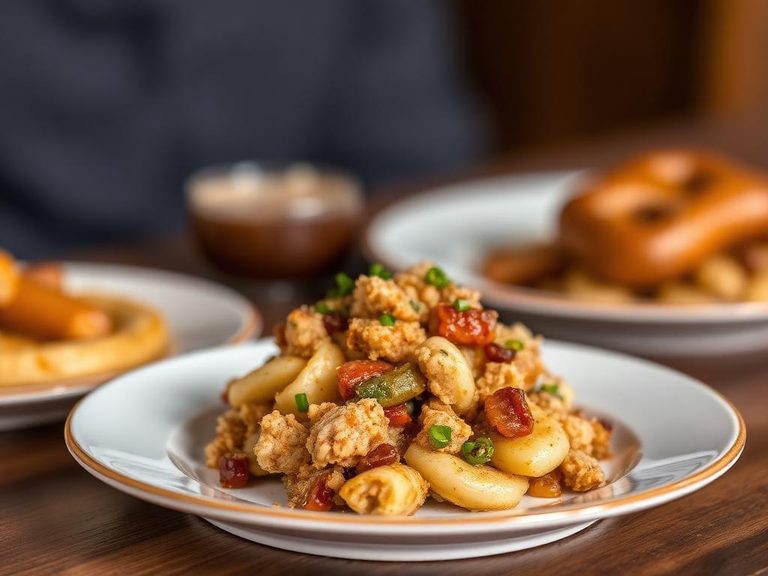
🌍 Where it's eaten
💡 Did you know?
The traditional twisted pretzel shape is said to represent a child's arms folded in prayer, which is why the snack is sometimes called 'little arms' in German ('Brezel').
Full nutrition (USDA data · scales with serving)
| Water | 3.3 g |
| Energy | 381 kcal |
| Protein | 9.1 g |
| Total lipid (fat) | 3.5 g |
| Carbohydrate, by difference | 79.2 g |
| Fiber, total dietary | 2.8 g |
| Total Sugars | 2.2 g |
| Calcium, Ca | 36.0 mg |
| Iron, Fe | 4.3 mg |
| Magnesium, Mg | 35.0 mg |
| Phosphorus, P | 113 mg |
| Potassium, K | 146 mg |
| Sodium, Na | 250 mg |
| Zinc, Zn | 0.85 mg |
| Copper, Cu | 0.26 mg |
| Selenium, Se | 5.8 ug |
| Vitamin C, total ascorbic acid | 0.00 mg |
| Thiamin | 0.46 mg |
| Riboflavin | 0.62 mg |
| Niacin | 5.3 mg |
| Vitamin B-6 | 0.12 mg |
| Folate, total | 171 ug |
| Folic acid | 88.0 ug |
| Folate, food | 83.0 ug |
| Folate, DFE | 233 ug |
| Choline, total | 23.5 mg |
| Vitamin B-12 | 0.00 ug |
| Vitamin B-12, added | 0.00 ug |
| Vitamin A, RAE | 0.00 ug |
| Retinol | 0.00 ug |
| Carotene, beta | 0.00 ug |
| Carotene, alpha | 0.00 ug |
| Cryptoxanthin, beta | 0.00 ug |
| Lycopene | 0.00 ug |
| Lutein + zeaxanthin | 0.00 ug |
| Vitamin E (alpha-tocopherol) | 0.35 mg |
| Vitamin E, added | 0.00 mg |
| Vitamin D (D2 + D3) | 0.00 ug |
| Vitamin K (phylloquinone) | 0.90 ug |
| Alcohol, ethyl | 0.00 g |
| Caffeine | 0.00 mg |
| Theobromine | 0.00 mg |
Fat & fatty acid profile (per 100g)
| Fatty acids, total saturated | 0.75 g |
| SFA 4:0 | 0.00 g |
| SFA 6:0 | 0.00 g |
| SFA 8:0 | 0.01 g |
| SFA 10:0 | 0.01 g |
| SFA 12:0 | 0.03 g |
| SFA 14:0 | 0.02 g |
| SFA 16:0 | 0.47 g |
| SFA 18:0 | 0.21 g |
| Fatty acids, total monounsaturated | 1.4 g |
| MUFA 16:1 | 0.02 g |
| MUFA 18:1 | 1.4 g |
| MUFA 20:1 | 0.00 g |
| MUFA 22:1 | 0.00 g |
| Fatty acids, total polyunsaturated | 1.2 g |
| PUFA 18:2 | 1.1 g |
| PUFA 18:3 | 0.06 g |
| PUFA 18:4 | 0.00 g |
| PUFA 20:4 | 0.00 g |
| PUFA 20:5 n-3 (EPA) | 0.00 g |
| PUFA 22:5 n-3 (DPA) | 0.00 g |
| PUFA 22:6 n-3 (DHA) | 0.00 g |
| Cholesterol | 0.00 mg |
Amino acid profile (per 100g)
Estimated from Snacks, pretzels, hard, confectioner's coating, chocolate-flavor — USDA does not publish this profile for Pretzels.
| Tryptophan | 0.10 g |
| Threonine | 0.25 g |
| Isoleucine | 0.29 g |
| Leucine | 0.53 g |
| Lysine | 0.25 g |
| Methionine | 0.13 g |
| Cystine | 0.15 g |
| Phenylalanine | 0.36 g |
| Tyrosine | 0.23 g |
| Valine | 0.33 g |
| Arginine | 0.31 g |
| Histidine | 0.16 g |
| Alanine | 0.27 g |
| Aspartic acid | 0.42 g |
| Glutamic acid | 2.2 g |
| Glycine | 0.27 g |
| Proline | 0.74 g |
| Serine | 0.36 g |
FAQ
What's the difference between a hard pretzel and a soft pretzel?
Hard pretzels are baked longer to remove most moisture, resulting in a dry, crunchy texture with a longer shelf life. Soft pretzels are baked briefly, keeping the interior doughy and moist, and are typically eaten fresh.
Are hard pretzels a healthy snack?
They can be part of a balanced diet. They are low in fat and provide carbohydrates for energy and some protein. However, they are calorie-dense and low in fiber, so pairing them with protein or fat (like cheese or peanut butter) makes for a more balanced and satisfying snack.
Why are plain hard pretzels often unsalted?
Unsalted varieties are common to allow for greater versatility in recipes (like crushing for breading) and to cater to low-sodium diets. They also provide a neutral base for custom seasoning at home.
Nutrient density (calculated · NRF9.3)
Nutrient Rich Foods index: beneficial nutrients (protein, fiber, vitamins, minerals) minus saturated fat, added sugar & sodium, per 100 kcal.
NRF9.3 index — Fulgoni, Keast & Drewnowski, 2009. Computed from USDA nutrients.
Weight-loss friendliness (composite index)
Energy density 3.81 kcal/g · 10% calories from protein · 2.8 g fiber · 2.2 g sugar per 100 g.
Composite of energy density (Rolls et al., 1999), protein & fiber satiety, minus sugar. A calculated heuristic — ranks satiety-per-calorie, not a clinical measure.
Dietary load (calculated from USDA values)
Potential renal acid load. Positive = acid-forming, negative = alkaline-forming.
Sodium-to-potassium ratio: 1.71 (lower is better — aim for ≤ 1)
Sodium:potassium per WHO potassium guidance. Computed from USDA nutrients.