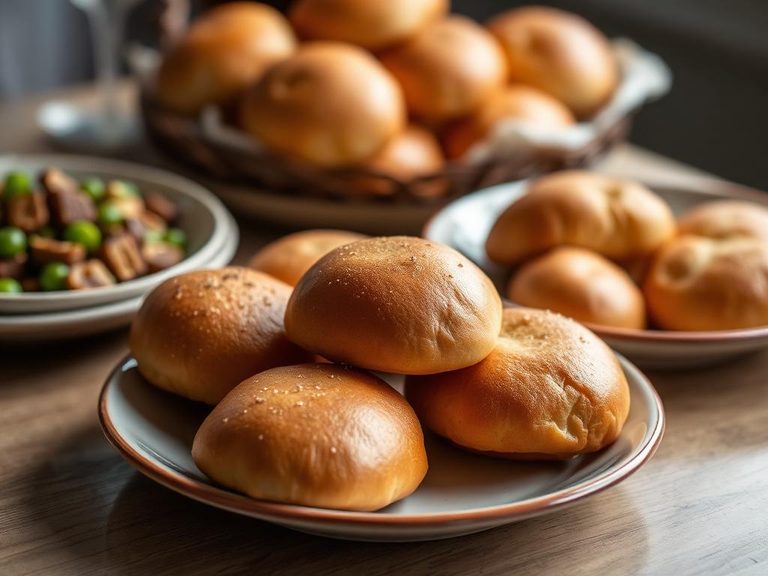
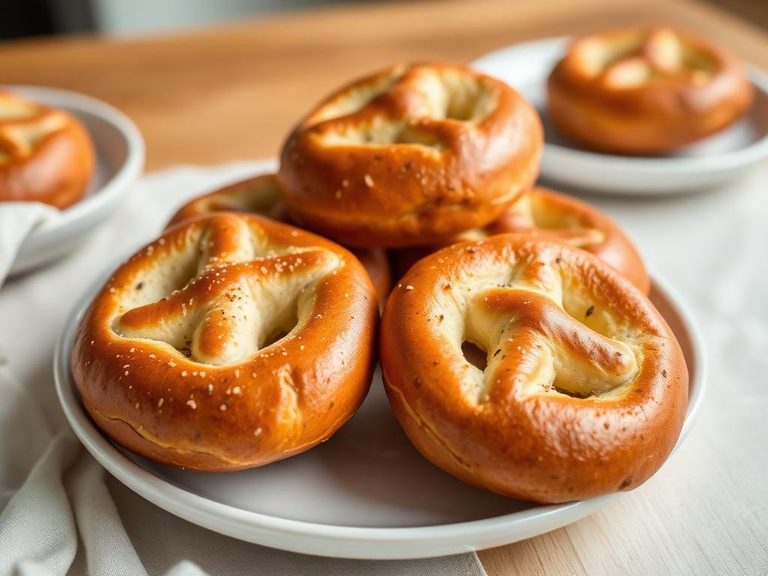
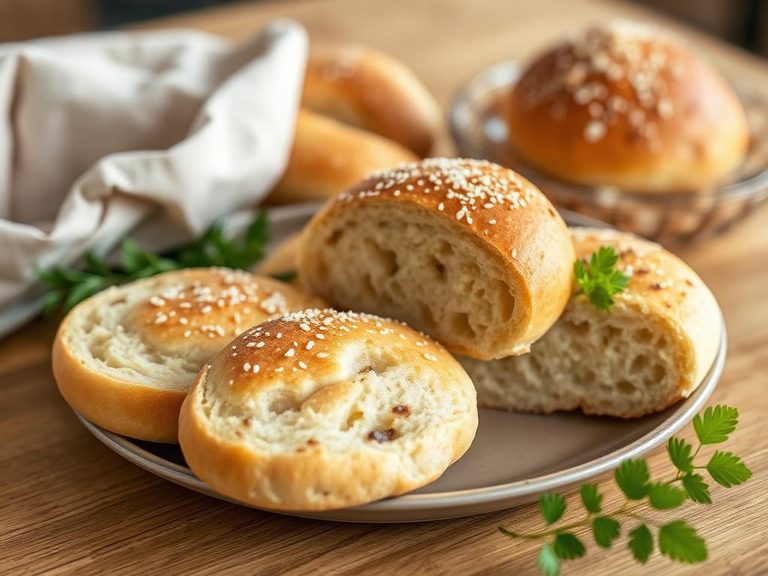
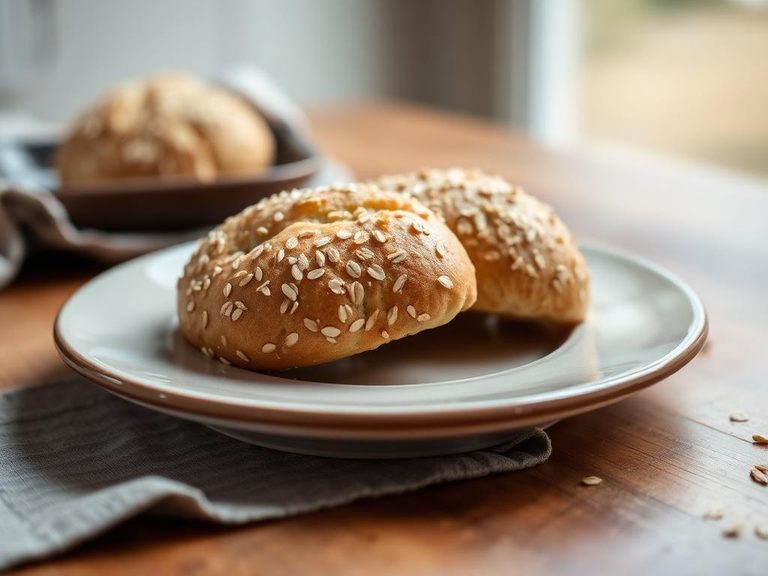
Pretzel bread rolls
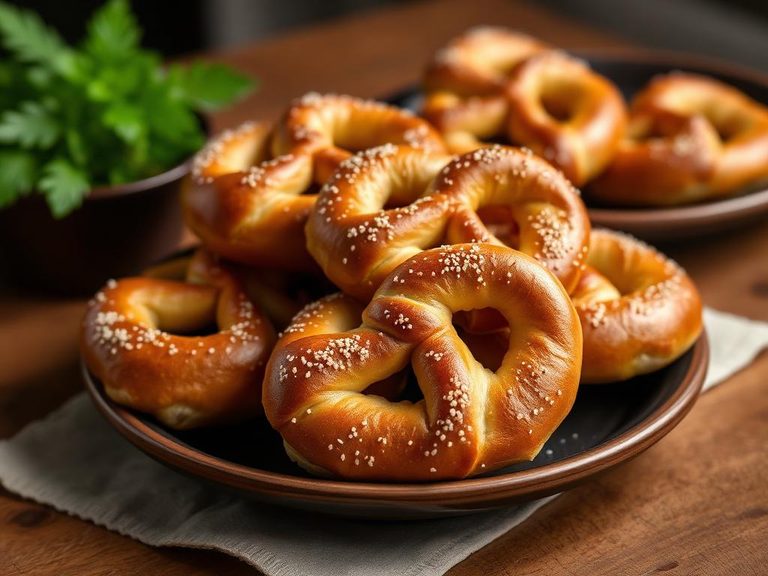
Pretzel bread rolls are a type of baked bread product known for their distinctive chewy texture and shiny, dark brown crust. They are traditionally made from a simple dough of flour, water, yeast, and salt, which is briefly dipped in an alkaline solution (like baking soda or food-grade lye) before baking to achieve their characteristic look and flavor. Originating in Europe, particularly in Germany and the Alsace region, they are a beloved snack and accompaniment to meals worldwide.
🍽️ Nutrition at a glance
Pretzel rolls are primarily a source of carbohydrates, providing energy, with a moderate amount of protein from the wheat flour. They are generally low in fat and contain small amounts of iron and B vitamins, with a typical roll containing roughly 150-200 calories.
Nutrition breakdown
| Calories | 160 kcal |
| Protein | 5 g |
| Carbs | 30 g |
| Fat | 2 g |
| Fiber | 1.5 g |
| Sugar | 2 g |
| Sodium | 400 mg |
| Iron | 2.5 mg |
| Thiamin (B1) | 0.3 mg |
| Niacin (B3) | 3.5 mg |
| Folate | 80 mcg |
| Calcium | 40 mg |
| Potassium | 60 mg |
| Magnesium | 15 mg |
| Phosphorus | 60 mg |
Per 1 roll (60 g) · estimated, varies by recipe
💡 What's interesting
The unique alkaline bath before baking triggers the Maillard reaction, creating the deep color and distinctive pretzel flavor, a technique similar to that used in bagel making. Nutritionally, they are often considered a slightly lower-fat alternative to many other bread rolls, though they can be higher in sodium.