

Potato chips, sour cream and onion flavored
Common food

Photo: Wikipedia
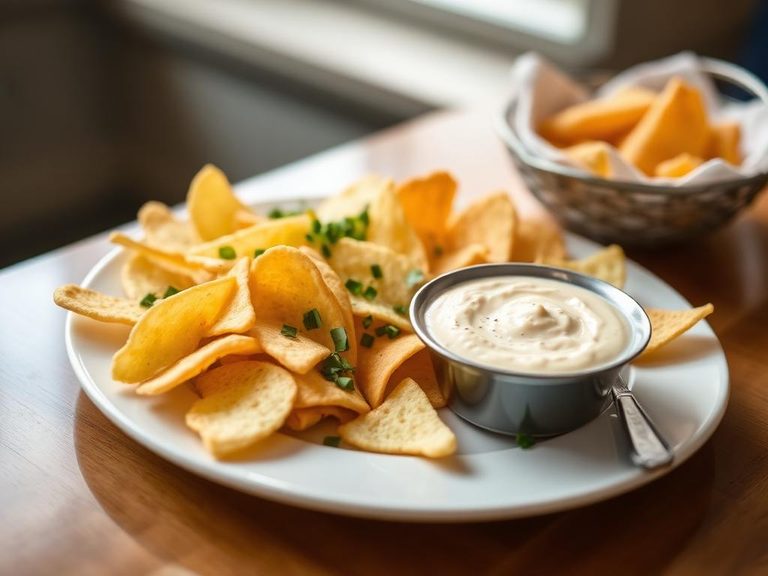
A thin, crispy potato slice fried to a golden crunch and coated in a tangy, savory blend of sour cream and onion seasoning. The texture is satisfyingly shatteringly crisp, with a rich, creamy flavor profile that balances the sharpness of onion with a subtle, buttery tang. Nutritionally, it's a calorie-dense snack, packing nearly 500 kcal and over 31g of fat per 100g, making it a high-energy, indulgent treat.
Calorie split: 5% protein · 42% carbs · 53% fat
↓ Full nutrition💚 Why it's loved
People love it for the addictive, savory-sour flavor combination that hits a perfect umami note, and the satisfying crunch that makes it a go-to comfort snack. It's a cultural staple in many regions, often associated with casual gatherings, movie nights, and road trips.
⚠️ Watch-outs & how to enjoy it better
The high sodium and fat content can contribute to blood pressure and weight gain if consumed in excess, and the refined carbohydrates may cause blood-sugar spikes. To counteract this, pair a small portion with a protein-rich food like Greek yogurt or nuts, and choose baked or air-fried versions to reduce fat intake.
Key benefits
- Provides a quick source of energy from carbohydrates and fats
- Contains a small amount of dietary fiber (3.8g per 100g)
- Offers a satisfying crunch that can curb snack cravings
- The sour cream and onion flavor is a classic, widely enjoyed taste combination
- Convenient and portable for on-the-go consumption
🍽️ Popular dishes

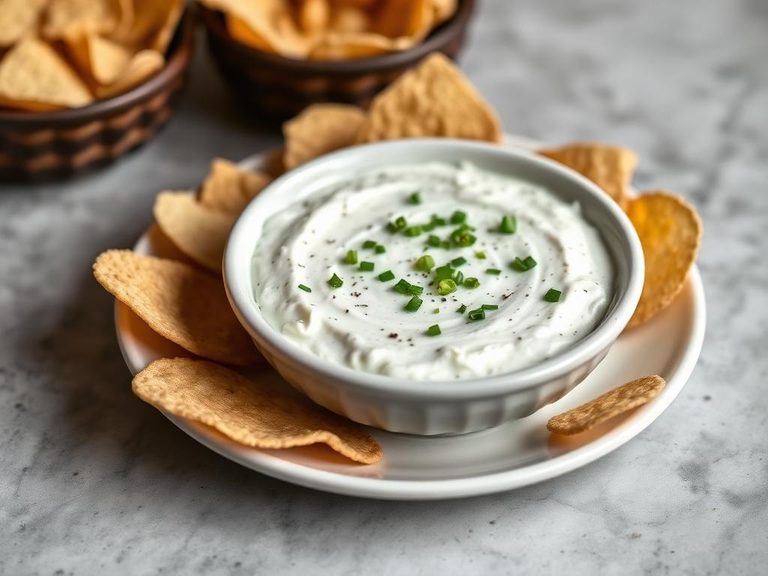
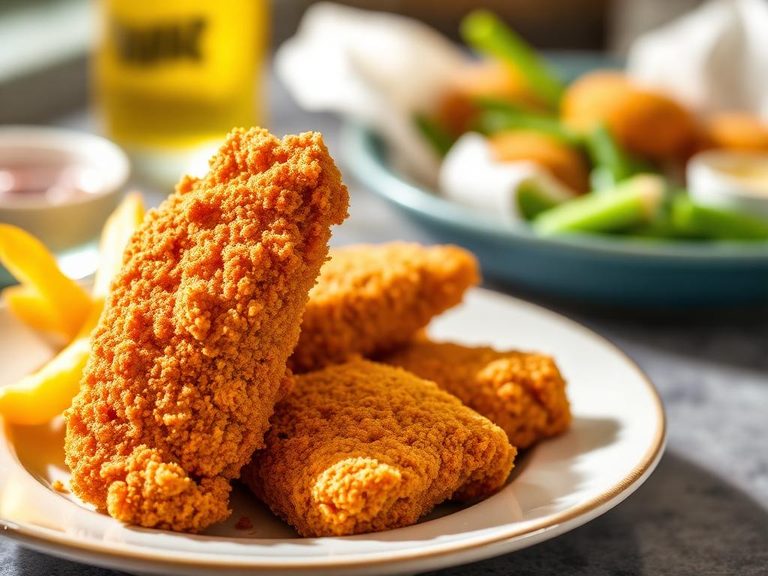
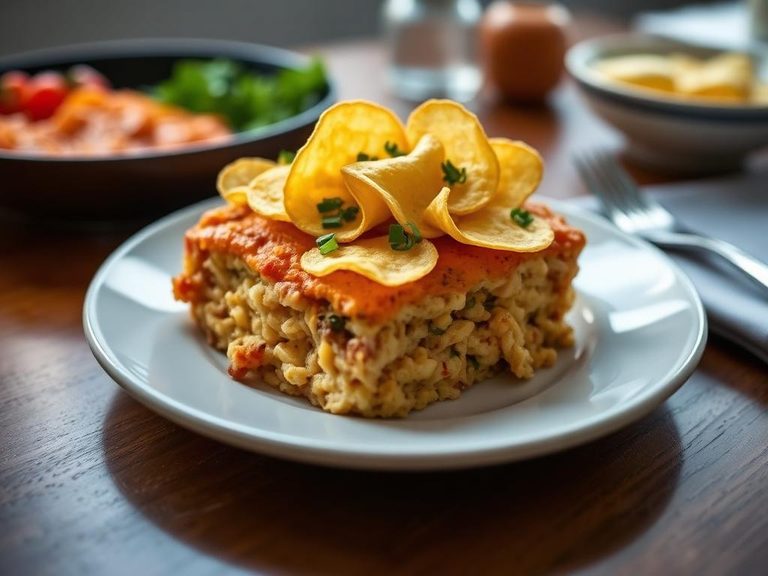
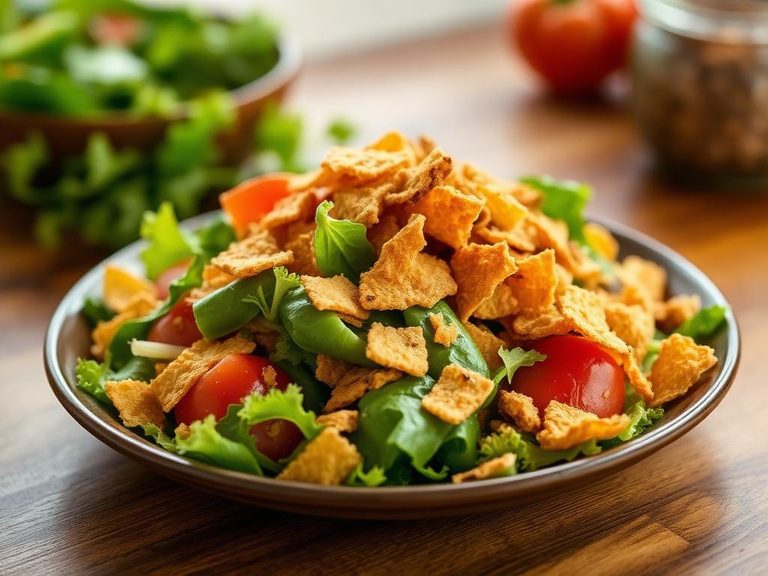
🌍 Where it's eaten
💡 Did you know?
The sour cream and onion flavor was first introduced by Lay's in 1970 and quickly became one of the top-selling chip flavors in the United States.
Full nutrition (USDA data · scales with serving)
| Water | 2.5 g |
| Energy | 487 kcal |
| Protein | 6.5 g |
| Total lipid (fat) | 31.1 g |
| Carbohydrate, by difference | 55.9 g |
| Fiber, total dietary | 3.8 g |
| Total Sugars | 5.5 g |
| Calcium, Ca | 32.0 mg |
| Iron, Fe | 1.4 mg |
| Magnesium, Mg | 58.0 mg |
| Phosphorus, P | 145 mg |
| Potassium, K | 1186 mg |
| Sodium, Na | 545 mg |
| Zinc, Zn | 0.98 mg |
| Copper, Cu | 0.25 mg |
| Selenium, Se | 0.40 ug |
| Vitamin C, total ascorbic acid | 62.4 mg |
| Thiamin | 0.22 mg |
| Riboflavin | 0.12 mg |
| Niacin | 5.0 mg |
| Vitamin B-6 | 0.38 mg |
| Folate, total | 64.0 ug |
| Folic acid | 0.00 ug |
| Folate, food | 64.0 ug |
| Folate, DFE | 64.0 ug |
| Choline, total | 11.5 mg |
| Vitamin B-12 | 0.00 ug |
| Vitamin B-12, added | 0.00 ug |
| Vitamin A, RAE | 20.0 ug |
| Retinol | 0.00 ug |
| Carotene, beta | 203 ug |
| Carotene, alpha | 5.0 ug |
| Cryptoxanthin, beta | 60.0 ug |
| Lycopene | 130 ug |
| Lutein + zeaxanthin | 151 ug |
| Vitamin E (alpha-tocopherol) | 4.4 mg |
| Vitamin E, added | 0.00 mg |
| Vitamin D (D2 + D3) | 0.00 ug |
| Vitamin K (phylloquinone) | 16.1 ug |
| Alcohol, ethyl | 0.00 g |
| Caffeine | 0.00 mg |
| Theobromine | 0.00 mg |
Fat & fatty acid profile (per 100g)
| Fatty acids, total saturated | 4.0 g |
| SFA 4:0 | 0.00 g |
| SFA 6:0 | 0.00 g |
| SFA 8:0 | 0.01 g |
| SFA 10:0 | 0.01 g |
| SFA 12:0 | 0.00 g |
| SFA 14:0 | 0.05 g |
| SFA 16:0 | 2.8 g |
| SFA 18:0 | 0.80 g |
| Fatty acids, total monounsaturated | 13.2 g |
| MUFA 16:1 | 0.05 g |
| MUFA 18:1 | 13.0 g |
| MUFA 20:1 | 0.12 g |
| MUFA 22:1 | 0.00 g |
| Fatty acids, total polyunsaturated | 12.2 g |
| PUFA 18:2 | 11.9 g |
| PUFA 18:3 | 0.30 g |
| PUFA 18:4 | 0.01 g |
| PUFA 20:4 | 0.01 g |
| PUFA 20:5 n-3 (EPA) | 0.00 g |
| PUFA 22:5 n-3 (DPA) | 0.00 g |
| PUFA 22:6 n-3 (DHA) | 0.00 g |
| Cholesterol | 0.00 mg |
Amino acid profile (per 100g)
Estimated from Snacks, potato chips, made from dried potatoes, sour-cream and onion-flavor — USDA does not publish this profile for Potato chips.
| Tryptophan | 0.07 g |
| Threonine | 0.28 g |
| Isoleucine | 0.31 g |
| Leucine | 0.48 g |
| Lysine | 0.44 g |
| Methionine | 0.10 g |
| Cystine | 0.08 g |
| Phenylalanine | 0.29 g |
| Tyrosine | 0.25 g |
| Valine | 0.38 g |
| Arginine | 0.31 g |
| Histidine | 0.15 g |
| Alanine | 0.25 g |
| Aspartic acid | 0.93 g |
| Glutamic acid | 1.1 g |
| Glycine | 0.21 g |
| Proline | 0.37 g |
| Serine | 0.29 g |
FAQ
Are sour cream and onion chips gluten-free?
Most mainstream brands are gluten-free, but always check the label for cross-contamination or added ingredients like wheat-based seasonings.
Can I make a healthier version at home?
Yes, slice potatoes thinly, toss with a small amount of oil, and bake or air-fry until crispy. Season with a mix of dried onion powder, sour cream powder, and a pinch of salt.
Why do these chips taste so addictive?
The combination of salt, fat, and umami from the sour cream and onion seasoning triggers the brain's reward centers, making it hard to stop eating.
Nutrient density (calculated · NRF9.3)
Nutrient Rich Foods index: beneficial nutrients (protein, fiber, vitamins, minerals) minus saturated fat, added sugar & sodium, per 100 kcal.
NRF9.3 index — Fulgoni, Keast & Drewnowski, 2009. Computed from USDA nutrients.
Weight-loss friendliness (composite index)
Energy density 4.87 kcal/g · 5% calories from protein · 3.8 g fiber · 5.5 g sugar per 100 g.
Composite of energy density (Rolls et al., 1999), protein & fiber satiety, minus sugar. A calculated heuristic — ranks satiety-per-calorie, not a clinical measure.
Dietary load (calculated from USDA values)
Potential renal acid load. Positive = acid-forming, negative = alkaline-forming.
Sodium-to-potassium ratio: 0.46 (lower is better — aim for ≤ 1)
Sodium:potassium per WHO potassium guidance. Computed from USDA nutrients.