

Pork, fresh, variety meats and by-products, ears, frozen, raw
Whole food · Pork Products
Frozen raw pork ears are a collagen-rich cut prized for their unique, cartilaginous texture that transforms from firm and crunchy when raw to tender and gelatinous when cooked. Nutritionally, they are a lean protein source with minimal fat and virtually no carbohydrates, making them a staple in various global cuisines for adding body and texture to dishes.
Calorie split: 39% protein · 1% carbs · 60% fat
↓ Full nutrition💚 Why it's loved
People love pork ears for their unparalleled ability to add a delightful, crunchy yet gelatinous texture to dishes, absorbing flavors beautifully from broths and sauces. They are a cornerstone of comfort food in many cultures, valued for transforming simple meals into hearty, textural experiences.
⚠️ Watch-outs & how to enjoy it better
The cartilaginous texture can be off-putting to those unfamiliar with it, and the cut requires careful cleaning and long cooking to become palatable. As an animal product, it may be high in cholesterol and should be consumed in moderation by individuals managing heart health; pairing with fiber-rich vegetables can help balance a meal.
Key benefits
- Excellent source of protein for muscle maintenance.
- Very low in carbohydrates and sugar.
- Rich in collagen, which supports skin and joint health.
- Provides a satisfying, unique texture to dishes.
- A budget-friendly cut with high culinary versatility.
🍽️ Popular dishes
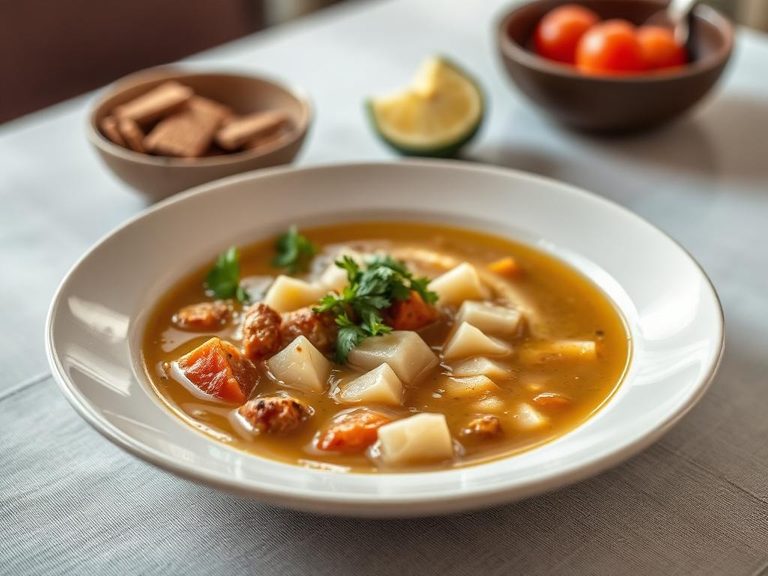

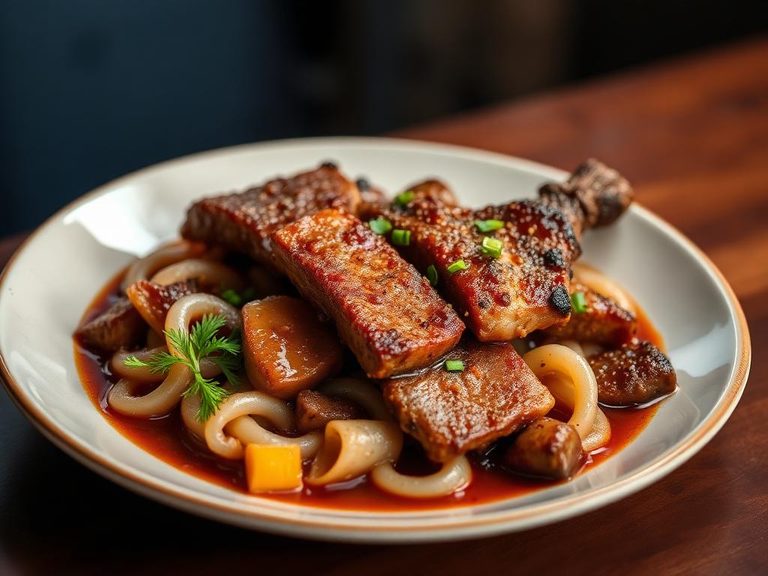
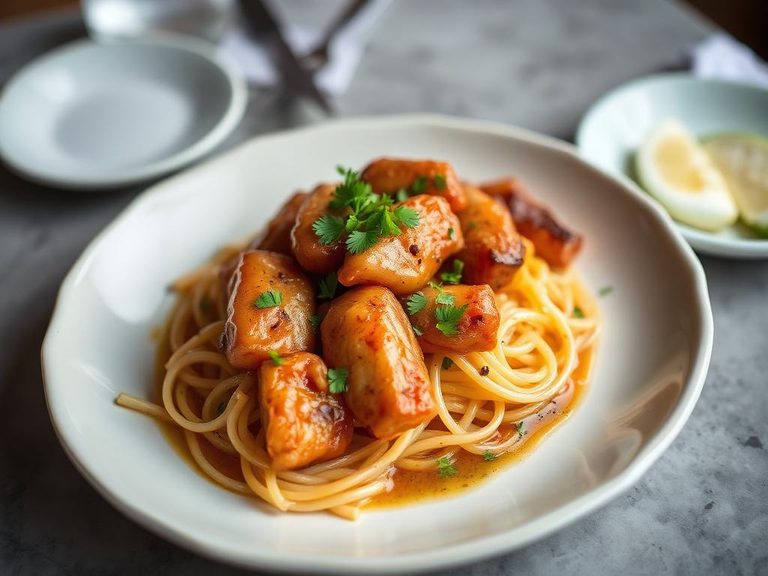
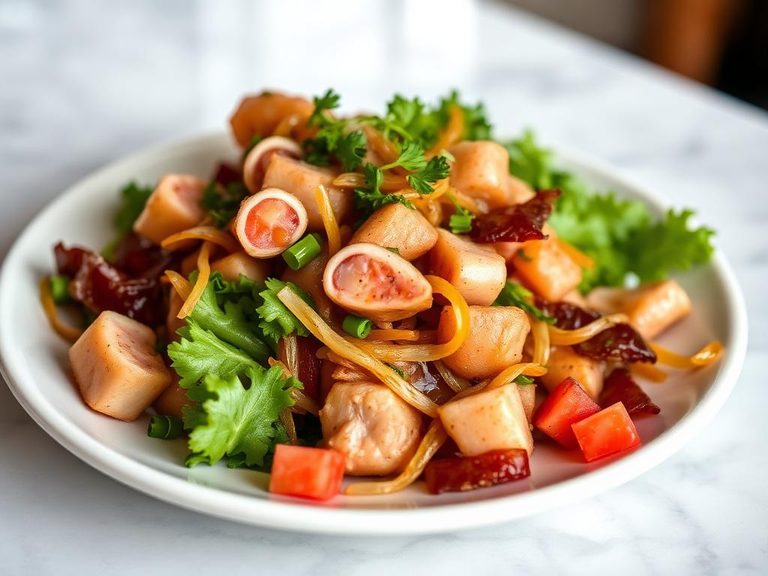
🌍 Where it's eaten
💡 Did you know?
Pork ears are approximately 30-40% collagen by weight, which is why they become incredibly gelatinous and are often used to naturally thicken soups and stews without added starches.
Full nutrition (USDA data · scales with serving)
| Water | 61.3 g |
| Energy | 234 kcal |
| Energy | 979 kj |
| Protein | 22.4 g |
| Total lipid (fat) | 15.1 g |
| Ash | 0.60 g |
| Carbohydrate, by difference | 0.60 g |
| Fiber, total dietary | 0.00 g |
| Calcium, Ca | 21.0 mg |
| Iron, Fe | 2.4 mg |
| Magnesium, Mg | 7.0 mg |
| Phosphorus, P | 41.0 mg |
| Potassium, K | 55.0 mg |
| Sodium, Na | 191 mg |
| Zinc, Zn | 0.19 mg |
| Copper, Cu | 0.01 mg |
| Manganese, Mn | 0.01 mg |
| Selenium, Se | 4.3 ug |
| Vitamin C, total ascorbic acid | 0.00 mg |
| Thiamin | 0.08 mg |
| Riboflavin | 0.11 mg |
| Niacin | 0.78 mg |
| Pantothenic acid | 0.07 mg |
| Vitamin B-6 | 0.02 mg |
| Folate, total | 0.00 ug |
| Folic acid | 0.00 ug |
| Folate, food | 0.00 ug |
| Folate, DFE | 0.00 ug |
| Vitamin B-12 | 0.07 ug |
| Vitamin A, RAE | 0.00 ug |
| Retinol | 0.00 ug |
| Vitamin A, IU | 0.00 iu |
| Alcohol, ethyl | 0.00 g |
Fat & fatty acid profile (per 100g)
| Fatty acids, total saturated | 5.4 g |
| SFA 4:0 | 0.00 g |
| SFA 6:0 | 0.00 g |
| SFA 8:0 | 0.00 g |
| SFA 10:0 | 0.00 g |
| SFA 12:0 | 0.01 g |
| SFA 14:0 | 0.20 g |
| SFA 16:0 | 3.4 g |
| SFA 18:0 | 1.8 g |
| Fatty acids, total monounsaturated | 6.9 g |
| MUFA 16:1 | 0.43 g |
| MUFA 18:1 | 6.4 g |
| MUFA 20:1 | 0.00 g |
| MUFA 22:1 | 0.00 g |
| Fatty acids, total polyunsaturated | 1.6 g |
| PUFA 18:2 | 1.4 g |
| PUFA 18:3 | 0.13 g |
| PUFA 18:4 | 0.00 g |
| PUFA 20:4 | 0.07 g |
| PUFA 20:5 n-3 (EPA) | 0.00 g |
| PUFA 22:5 n-3 (DPA) | 0.00 g |
| PUFA 22:6 n-3 (DHA) | 0.00 g |
| Cholesterol | 82.0 mg |
| Phytosterols | 0.00 mg |
Amino acid profile (per 100g)
| Tryptophan | 0.04 g |
| Threonine | 0.63 g |
| Isoleucine | 0.49 g |
| Leucine | 1.2 g |
| Lysine | 1.1 g |
| Methionine | 0.13 g |
| Cystine | 0.20 g |
| Phenylalanine | 0.72 g |
| Tyrosine | 0.40 g |
| Valine | 0.83 g |
| Arginine | 1.9 g |
| Histidine | 0.27 g |
| Alanine | 2.2 g |
| Aspartic acid | 1.7 g |
| Glutamic acid | 2.8 g |
| Glycine | 4.4 g |
| Proline | 2.8 g |
| Serine | 0.94 g |
FAQ
How do I prepare frozen pork ears before cooking?
Thaw completely in the refrigerator. Scrub the exterior thoroughly under cold water, then blanch in boiling water for 5-10 minutes to remove impurities. Rinse and trim any excess hair or cartilage before proceeding with your recipe.
How long do pork ears need to cook?
They require long, slow cooking to become tender. Simmering or braising for 1.5 to 3 hours is typical, depending on size and method. They are done when the cartilage is soft and gelatinous but still has a slight bite.
What do pork ears taste like?
The flavor is mild, savory, and porky, but the primary appeal is the texture—a unique combination of soft, gelatinous skin and a firm, crunchy cartilage center that absorbs the flavors of the cooking liquid.
Nutrient density (calculated · NRF9.3)
Nutrient Rich Foods index: beneficial nutrients (protein, fiber, vitamins, minerals) minus saturated fat, added sugar & sodium, per 100 kcal.
NRF9.3 index — Fulgoni, Keast & Drewnowski, 2009. Computed from USDA nutrients.
Weight-loss friendliness (composite index)
Energy density 2.34 kcal/g · 38% calories from protein · 0.0 g fiber · 0.0 g sugar per 100 g.
Composite of energy density (Rolls et al., 1999), protein & fiber satiety, minus sugar. A calculated heuristic — ranks satiety-per-calorie, not a clinical measure.
Dietary load (calculated from USDA values)
Potential renal acid load. Positive = acid-forming, negative = alkaline-forming.
Sodium-to-potassium ratio: 3.47 (lower is better — aim for ≤ 1)
Sodium:potassium per WHO potassium guidance. Computed from USDA nutrients.