

Popcorn, ready-to-eat, flavored, light
Common food

Photo: Wikipedia
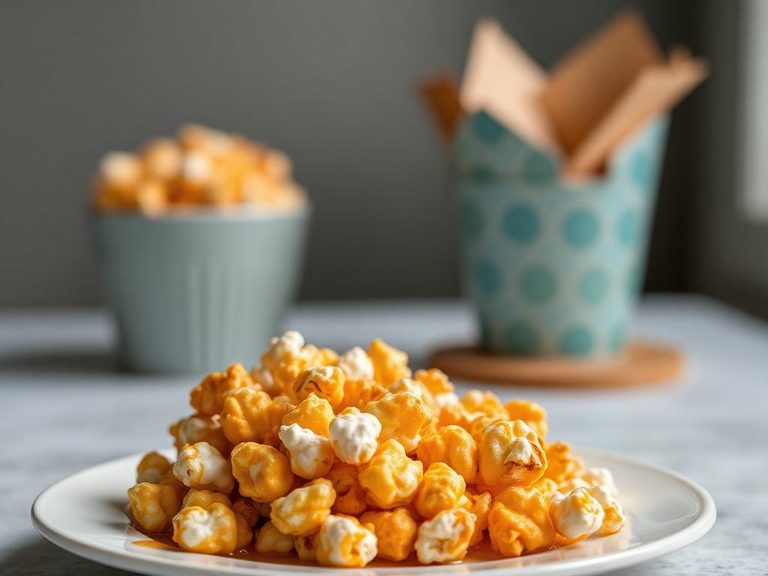
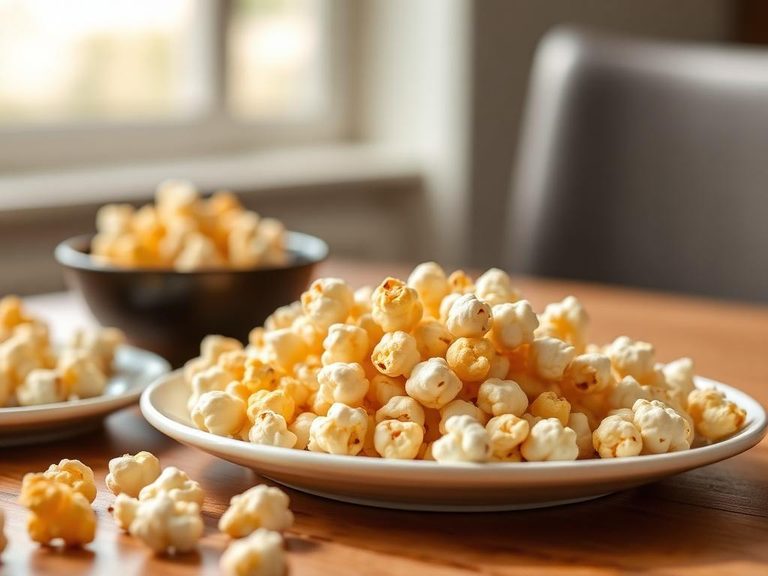
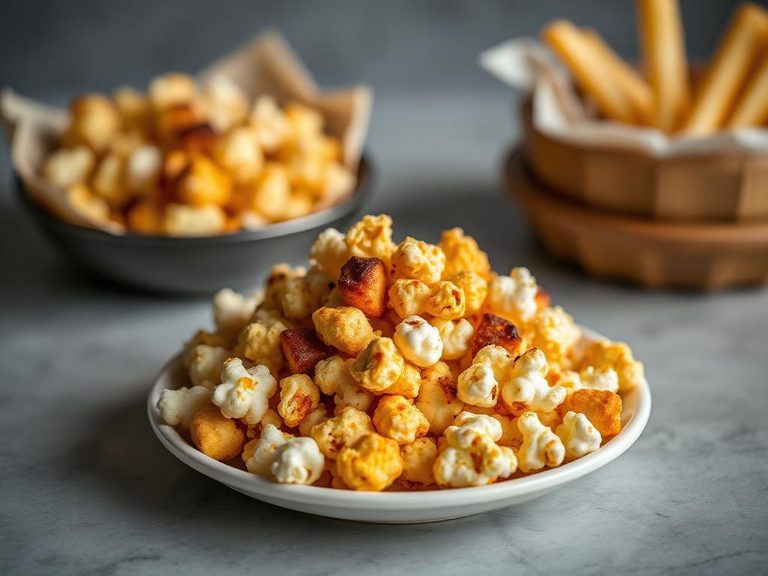
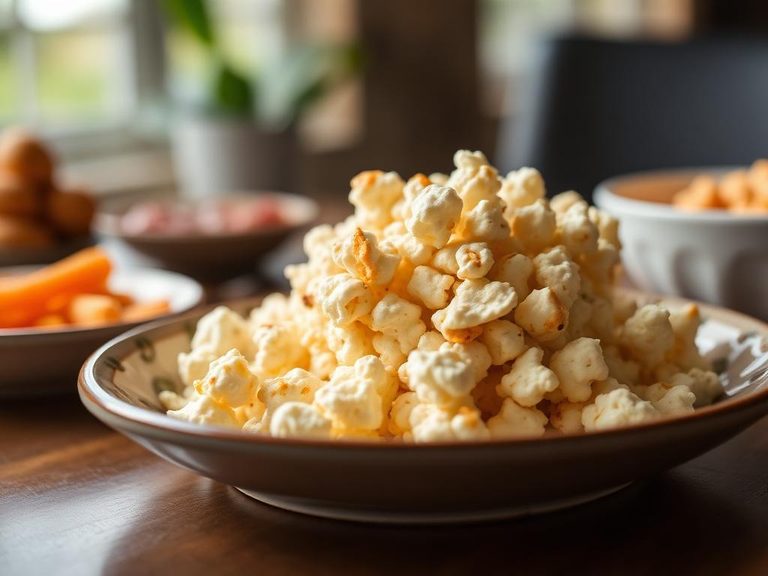
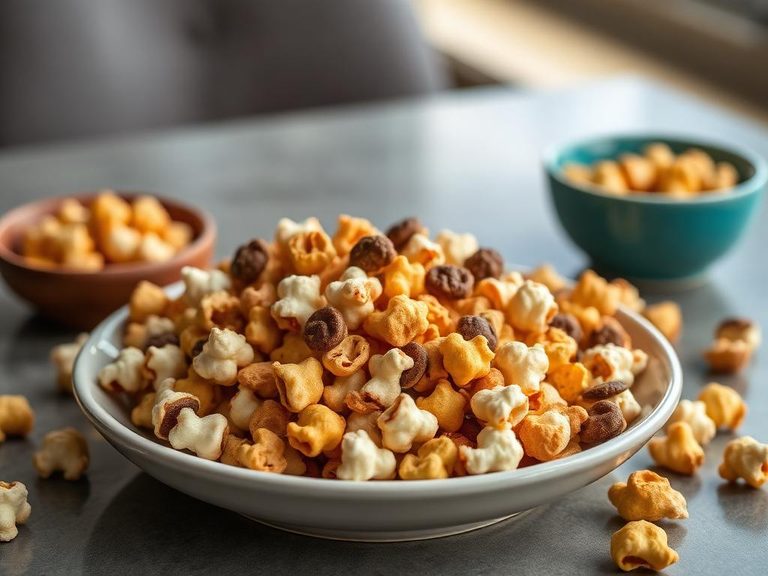
This is a light, airy, ready-to-eat popcorn, typically popped with hot air or a small amount of oil and coated with a savory or sweet flavoring. Its texture is crisp and fluffy, with a satisfying crunch that gives way to a melt-in-your-mouth feel. Despite its indulgent taste, it's a high-fiber snack with a notable protein content for its category.
Calorie split: 10% protein · 60% carbs · 30% fat
↓ Full nutrition💚 Why it's loved
People adore it for the explosive burst of flavor in every bite—whether it's buttery, cheesy, or spicy—and the nostalgic, communal joy of sharing a big bowl during movies or gatherings. Its versatility makes it a perfect canvas for both classic and adventurous seasonings.
⚠️ Watch-outs & how to enjoy it better
Flavored versions can be high in sodium and artificial additives, potentially causing bloating or blood-sugar spikes despite the fiber. To counteract, choose low-sodium varieties, pair with a source of protein or healthy fat (like nuts or cheese) to slow digestion, and practice portion control by measuring a single serving instead of eating from a large bag.
Key benefits
- High in dietary fiber (12.6g per 100g)
- Good source of plant-based protein (11.28g per 100g)
- Whole-grain snack, naturally low in sugar
- Light and airy, allowing for a large volume per serving
🍽️ Popular dishes

🌍 Where it's eaten
💡 Did you know?
Popcorn is one of the world's oldest snacks, with evidence of its consumption dating back nearly 5,000 years in Peru, where kernels were found preserved in coastal desert soils.
Full nutrition (USDA data · scales with serving)
| Water | 2.9 g |
| Energy | 435 kcal |
| Protein | 11.3 g |
| Total lipid (fat) | 14.8 g |
| Carbohydrate, by difference | 67.8 g |
| Fiber, total dietary | 12.6 g |
| Total Sugars | 0.76 g |
| Calcium, Ca | 7.0 mg |
| Iron, Fe | 2.8 mg |
| Magnesium, Mg | 125 mg |
| Phosphorus, P | 312 mg |
| Potassium, K | 287 mg |
| Sodium, Na | 766 mg |
| Zinc, Zn | 2.7 mg |
| Copper, Cu | 0.23 mg |
| Selenium, Se | 0.00 ug |
| Vitamin C, total ascorbic acid | 0.00 mg |
| Thiamin | 0.09 mg |
| Riboflavin | 0.07 mg |
| Niacin | 2.0 mg |
| Vitamin B-6 | 0.14 mg |
| Folate, total | 27.0 ug |
| Folic acid | 0.00 ug |
| Folate, food | 27.0 ug |
| Folate, DFE | 27.0 ug |
| Choline, total | 18.5 mg |
| Vitamin B-12 | 0.00 ug |
| Vitamin B-12, added | 0.00 ug |
| Vitamin A, RAE | 9.0 ug |
| Retinol | 0.00 ug |
| Carotene, beta | 78.0 ug |
| Carotene, alpha | 51.0 ug |
| Cryptoxanthin, beta | 0.00 ug |
| Lycopene | 0.00 ug |
| Lutein + zeaxanthin | 1264 ug |
| Vitamin E (alpha-tocopherol) | 2.7 mg |
| Vitamin E, added | 0.00 mg |
| Vitamin D (D2 + D3) | 0.00 ug |
| Vitamin K (phylloquinone) | 1.3 ug |
| Alcohol, ethyl | 0.00 g |
| Caffeine | 0.00 mg |
| Theobromine | 0.00 mg |
Fat & fatty acid profile (per 100g)
| Fatty acids, total saturated | 2.0 g |
| SFA 4:0 | 0.00 g |
| SFA 6:0 | 0.00 g |
| SFA 8:0 | 0.00 g |
| SFA 10:0 | 0.00 g |
| SFA 12:0 | 0.00 g |
| SFA 14:0 | 0.00 g |
| SFA 16:0 | 1.7 g |
| SFA 18:0 | 0.24 g |
| Fatty acids, total monounsaturated | 3.8 g |
| MUFA 16:1 | 0.01 g |
| MUFA 18:1 | 3.8 g |
| MUFA 20:1 | 0.05 g |
| MUFA 22:1 | 0.00 g |
| Fatty acids, total polyunsaturated | 7.8 g |
| PUFA 18:2 | 7.6 g |
| PUFA 18:3 | 0.16 g |
| PUFA 18:4 | 0.00 g |
| PUFA 20:4 | 0.00 g |
| PUFA 20:5 n-3 (EPA) | 0.00 g |
| PUFA 22:5 n-3 (DPA) | 0.00 g |
| PUFA 22:6 n-3 (DHA) | 0.00 g |
| Cholesterol | 0.00 mg |
Amino acid profile (per 100g)
Estimated from Snacks, popcorn, oil-popped, white popcorn, salt added — USDA does not publish this profile for Popcorn.
| Tryptophan | 0.06 g |
| Threonine | 0.34 g |
| Isoleucine | 0.32 g |
| Leucine | 1.1 g |
| Lysine | 0.25 g |
| Methionine | 0.19 g |
| Cystine | 0.16 g |
| Phenylalanine | 0.44 g |
| Tyrosine | 0.37 g |
| Valine | 0.46 g |
| Arginine | 0.45 g |
| Histidine | 0.28 g |
| Alanine | 0.67 g |
| Aspartic acid | 0.63 g |
| Glutamic acid | 1.7 g |
| Glycine | 0.37 g |
| Proline | 0.79 g |
| Serine | 0.43 g |
FAQ
Is flavored popcorn a whole grain?
Yes, popcorn itself is a 100% whole grain. The flavoring adds calories, fat, and sodium but does not change the whole-grain nature of the kernel.
Why is the fiber content so high?
Popcorn's bran (the outer hull) is very tough and fibrous, which allows it to retain a high amount of insoluble fiber compared to many other snack foods.
Is it suitable for a gluten-free diet?
Plain popcorn is naturally gluten-free. However, flavored varieties may contain additives or be processed in facilities that handle wheat, so always check the label for a certified gluten-free claim.
Nutrient density (calculated · NRF9.3)
Nutrient Rich Foods index: beneficial nutrients (protein, fiber, vitamins, minerals) minus saturated fat, added sugar & sodium, per 100 kcal.
NRF9.3 index — Fulgoni, Keast & Drewnowski, 2009. Computed from USDA nutrients.
Weight-loss friendliness (composite index)
Energy density 4.35 kcal/g · 10% calories from protein · 12.6 g fiber · 0.8 g sugar per 100 g.
Composite of energy density (Rolls et al., 1999), protein & fiber satiety, minus sugar. A calculated heuristic — ranks satiety-per-calorie, not a clinical measure.
Dietary load (calculated from USDA values)
Potential renal acid load. Positive = acid-forming, negative = alkaline-forming.
Sodium-to-potassium ratio: 2.67 (lower is better — aim for ≤ 1)
Sodium:potassium per WHO potassium guidance. Computed from USDA nutrients.