

Pizza, no cheese, thin crust
Common food

Photo: Wikipedia
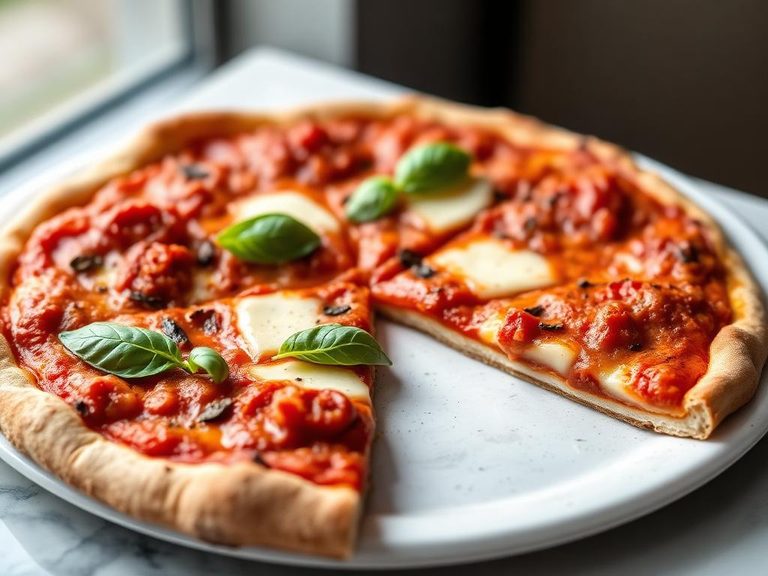
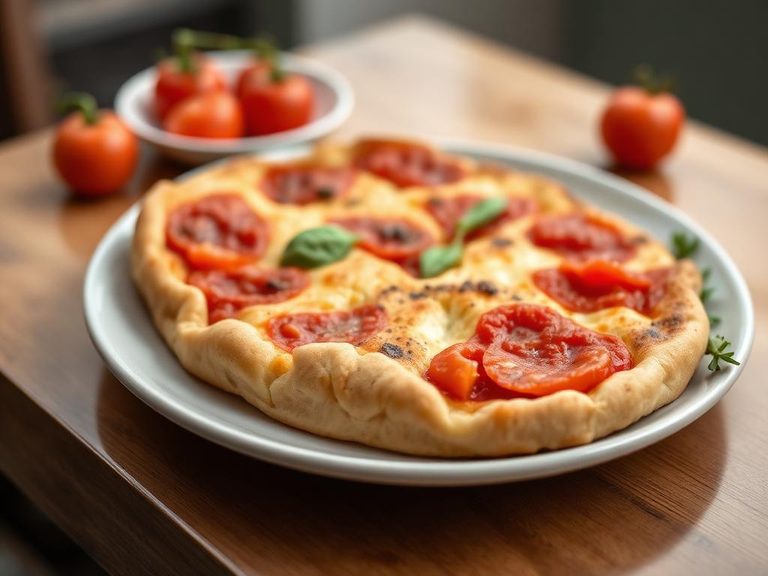
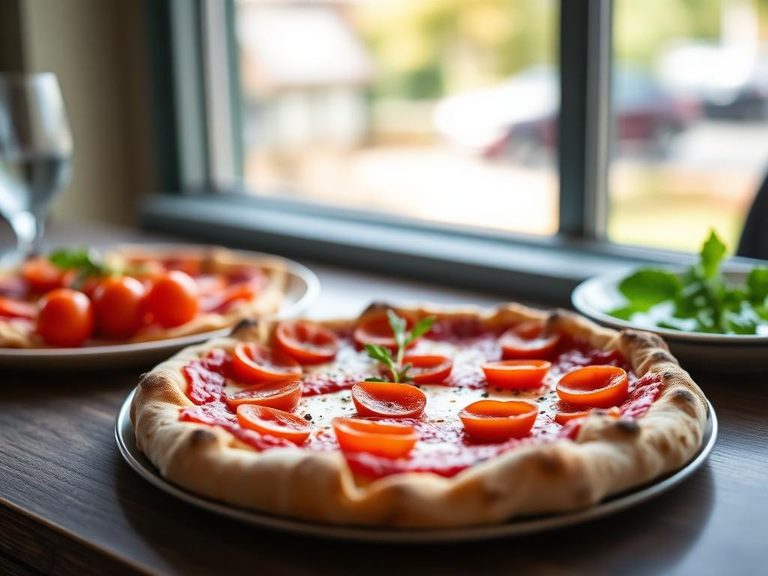
A crisp, minimalist canvas of dough, sauce, and toppings that lets each ingredient shine without the blanket of cheese. The thin crust offers a satisfying crunch, while the absence of cheese highlights the tang of tomato sauce and the savoriness of toppings like vegetables or cured meats. Nutritionally, it's a lighter, lower-calorie pizza option, though it still provides a notable source of fat from olive oil and toppings.
Calorie split: 11% protein · 45% carbs · 44% fat
↓ Full nutrition💚 Why it's loved
People love it for its pure, unadulterated flavors—the bright acidity of the sauce, the char of the crust, and the freshness of toppings aren't masked by heavy cheese. It's also a beloved choice for those seeking a lighter, more digestible meal that still delivers the comforting ritual of pizza night.
⚠️ Watch-outs & how to enjoy it better
Without cheese to buffer it, the acidity of the tomato sauce can be harsh on sensitive stomachs, and the sodium content in sauce and cured meat toppings can be high. To counteract, pair with a side salad or roasted vegetables to add fiber and volume, and opt for low-sodium sauce or fresh vegetable toppings like bell peppers and mushrooms.
Key benefits
- Lower in calories and saturated fat than cheese-laden versions.
- Can be a good source of lycopene from the tomato sauce.
- The thin crust often means a lower glycemic load per slice than thick, bready crusts.
- Versatile for accommodating dairy-free or vegan diets.
- Encourages focus on high-quality vegetable and protein toppings.
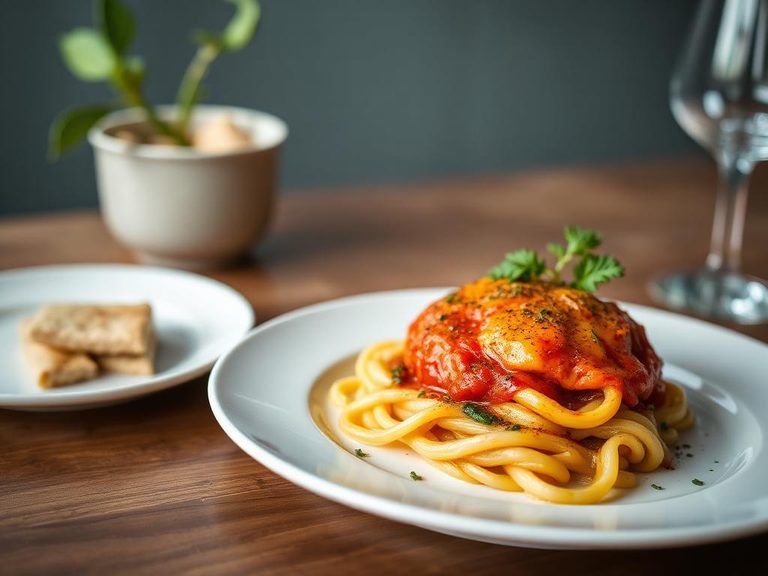
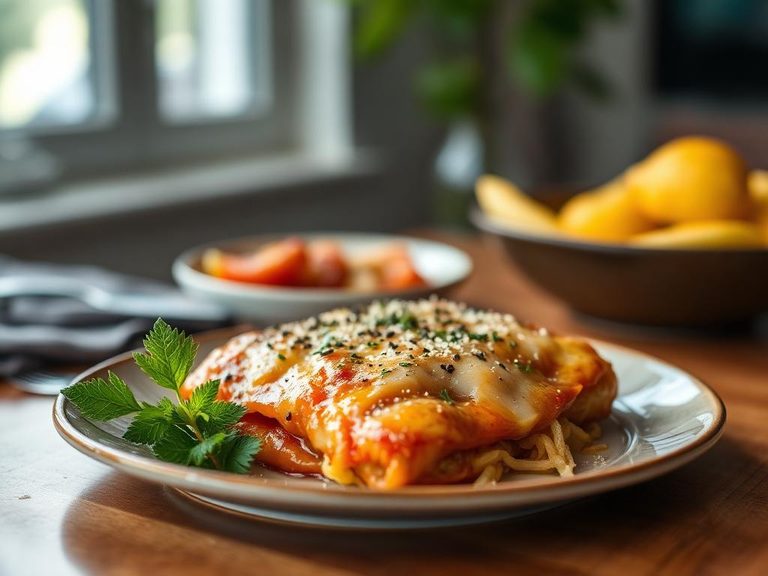
🍽️ Popular dishes
🌍 Where it's eaten
💡 Did you know?
The classic Pizza Marinara, a canonical no-cheese pizza from Naples, is so named not for a meat sauce, but because it was the simple, satisfying meal prepared for the 'marinai' (sailors) returning to port.
Full nutrition (USDA data · scales with serving)
| Water | 45.9 g |
| Energy | 276 kcal |
| Protein | 7.5 g |
| Total lipid (fat) | 13.7 g |
| Carbohydrate, by difference | 31.0 g |
| Fiber, total dietary | 1.8 g |
| Total Sugars | 5.0 g |
| Calcium, Ca | 26.0 mg |
| Iron, Fe | 2.8 mg |
| Magnesium, Mg | 18.0 mg |
| Phosphorus, P | 76.0 mg |
| Potassium, K | 195 mg |
| Sodium, Na | 551 mg |
| Zinc, Zn | 0.79 mg |
| Copper, Cu | 0.12 mg |
| Selenium, Se | 9.6 ug |
| Vitamin C, total ascorbic acid | 8.4 mg |
| Thiamin | 0.37 mg |
| Riboflavin | 0.22 mg |
| Niacin | 4.0 mg |
| Vitamin B-6 | 0.16 mg |
| Folate, total | 58.0 ug |
| Folic acid | 30.0 ug |
| Folate, food | 28.0 ug |
| Folate, DFE | 79.0 ug |
| Choline, total | 18.0 mg |
| Vitamin B-12 | 0.20 ug |
| Vitamin B-12, added | 0.00 ug |
| Vitamin A, RAE | 12.0 ug |
| Retinol | 2.0 ug |
| Carotene, beta | 117 ug |
| Carotene, alpha | 2.0 ug |
| Cryptoxanthin, beta | 1.0 ug |
| Lycopene | 2677 ug |
| Lutein + zeaxanthin | 118 ug |
| Vitamin E (alpha-tocopherol) | 2.0 mg |
| Vitamin E, added | 0.00 mg |
| Vitamin D (D2 + D3) | 0.20 ug |
| Vitamin K (phylloquinone) | 8.3 ug |
| Alcohol, ethyl | 0.00 g |
| Caffeine | 0.00 mg |
| Theobromine | 0.00 mg |
Fat & fatty acid profile (per 100g)
| Fatty acids, total saturated | 3.4 g |
| SFA 4:0 | 0.00 g |
| SFA 6:0 | 0.00 g |
| SFA 8:0 | 0.00 g |
| SFA 10:0 | 0.00 g |
| SFA 12:0 | 0.01 g |
| SFA 14:0 | 0.12 g |
| SFA 16:0 | 2.2 g |
| SFA 18:0 | 0.95 g |
| Fatty acids, total monounsaturated | 6.6 g |
| MUFA 16:1 | 0.24 g |
| MUFA 18:1 | 6.2 g |
| MUFA 20:1 | 0.08 g |
| MUFA 22:1 | 0.00 g |
| Fatty acids, total polyunsaturated | 2.6 g |
| PUFA 18:2 | 2.3 g |
| PUFA 18:3 | 0.21 g |
| PUFA 18:4 | 0.00 g |
| PUFA 20:4 | 0.02 g |
| PUFA 20:5 n-3 (EPA) | 0.00 g |
| PUFA 22:5 n-3 (DPA) | 0.00 g |
| PUFA 22:6 n-3 (DHA) | 0.00 g |
| Cholesterol | 16.0 mg |
Amino acid profile (per 100g)
Estimated from Fast Food, Pizza Chain, 14" pizza, cheese topping, stuffed crust — USDA does not publish this profile for Pizza.
| Tryptophan | 0.12 g |
| Threonine | 0.39 g |
| Isoleucine | 0.57 g |
| Leucine | 1.1 g |
| Lysine | 0.59 g |
| Methionine | 0.27 g |
| Phenylalanine | 0.64 g |
| Tyrosine | 0.40 g |
| Valine | 0.71 g |
| Arginine | 0.44 g |
| Histidine | 0.32 g |
| Alanine | 0.38 g |
| Aspartic acid | 0.81 g |
| Glutamic acid | 3.4 g |
| Glycine | 0.31 g |
| Proline | 1.7 g |
| Serine | 0.58 g |
| Hydroxyproline | 0.00 g |
FAQ
Is a no-cheese pizza healthier than a regular pizza?
It is generally lower in calories, saturated fat, and cholesterol. However, the overall healthiness depends heavily on the crust type, sauce sodium, and toppings chosen. A veggie-loaded thin crust is a very different proposition than a processed-meat-heavy version.
Does it have any protein?
Yes, but less than a cheese pizza. The protein comes primarily from the wheat flour in the crust (7.46g per 100g) and any protein-rich toppings like chicken, beans, or certain vegetables. It's not a significant protein source on its own.
Why is the fat content still relatively high without cheese?
The fat comes from two main sources: the olive oil often used in the dough and drizzled on top, and the fat content of any meat toppings like pepperoni or sausage. Even a simple 'Pizza Rossa' can have a generous amount of olive oil.
Nutrient density (calculated · NRF9.3)
Nutrient Rich Foods index: beneficial nutrients (protein, fiber, vitamins, minerals) minus saturated fat, added sugar & sodium, per 100 kcal.
NRF9.3 index — Fulgoni, Keast & Drewnowski, 2009. Computed from USDA nutrients.
Weight-loss friendliness (composite index)
Energy density 2.76 kcal/g · 11% calories from protein · 1.8 g fiber · 5.0 g sugar per 100 g.
Composite of energy density (Rolls et al., 1999), protein & fiber satiety, minus sugar. A calculated heuristic — ranks satiety-per-calorie, not a clinical measure.
Dietary load (calculated from USDA values)
Potential renal acid load. Positive = acid-forming, negative = alkaline-forming.
Sodium-to-potassium ratio: 2.83 (lower is better — aim for ≤ 1)
Sodium:potassium per WHO potassium guidance. Computed from USDA nutrients.