

Pizza, cheese, from school lunch, medium crust
Common food
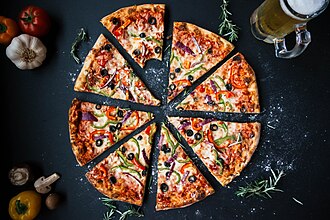
Photo: Wikipedia
This is the iconic, soft, and slightly chewy square slice of cheese pizza served in American school cafeterias, often with a thicker, bread-like crust that soaks up tomato sauce. Its flavor profile is a nostalgic blend of mild mozzarella, sweet tomato, and a hint of oregano, with a texture that ranges from soft to slightly crisp at the edges. Nutritionally, it's a surprisingly solid source of protein (nearly 14g per 100g) for a comfort food, though its carb and sugar content is notable.
Calorie split: 22% protein · 47% carbs · 31% fat
↓ Full nutrition💚 Why it's loved
People love this pizza for its comforting, familiar taste that evokes childhood memories and its simple, satisfying combination of melted cheese, tangy sauce, and soft bread. Its versatility as a quick meal or snack, and its cultural status as a staple of American school lunches, make it a universally recognized comfort food.
⚠️ Watch-outs & how to enjoy it better
The high carbohydrate content (nearly 30g per 100g) and added sugar can cause blood-sugar spikes, and the sodium level may be a concern for those monitoring their intake. To counteract this, pair a slice with a side of vegetables or a protein-rich food like a small salad or chicken to slow digestion, and practice portion control by sticking to one or two slices. It's also a common allergen (wheat, dairy), so those with sensitivities should be cautious.
Key benefits
- Provides a good source of protein for muscle maintenance and satiety.
- Offers calcium from cheese, essential for bone health.
- Contains fiber from the crust, aiding in digestion.
- A convenient, calorie-controlled meal option for children and adults.
- Serves as a familiar, palatable way to include dairy and grains.
🍽️ Popular dishes
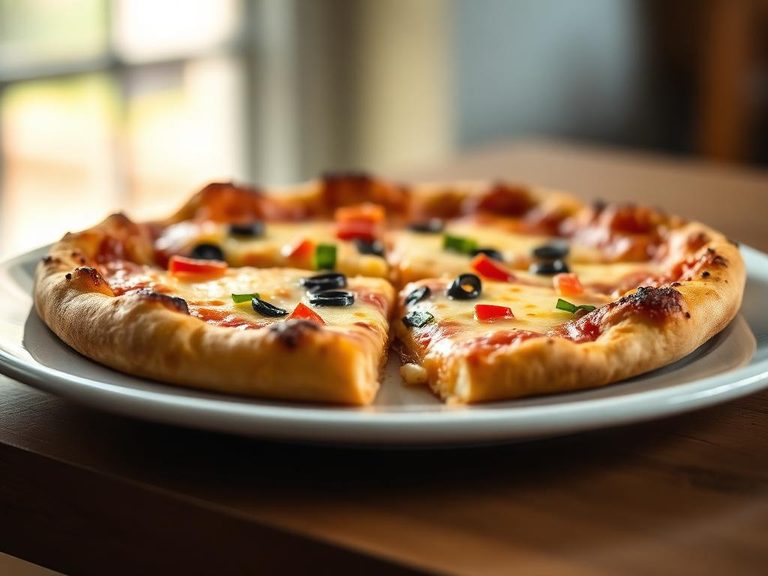
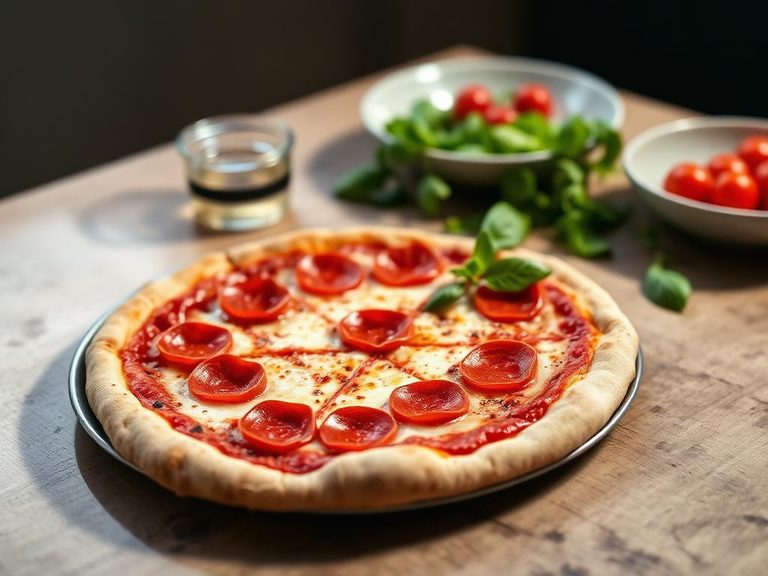
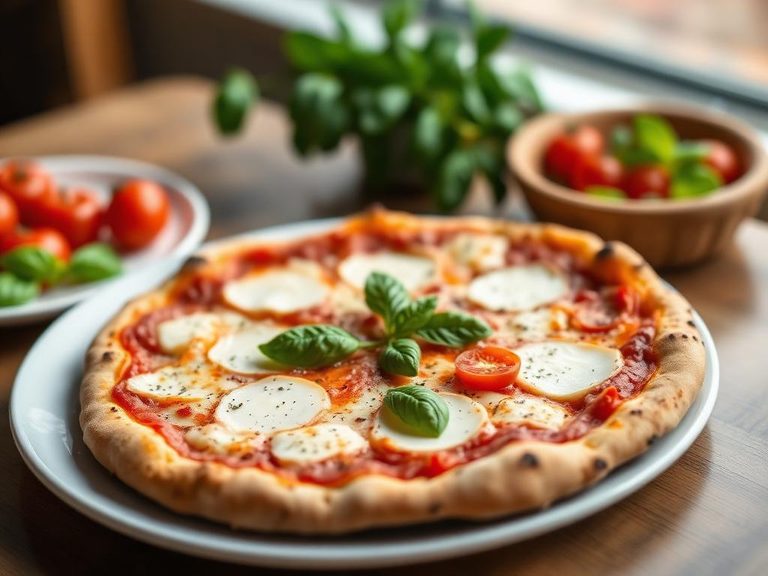
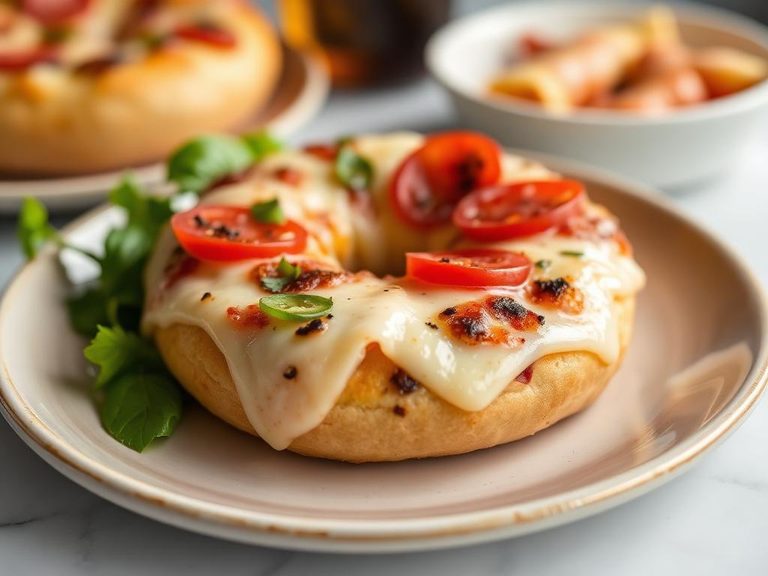
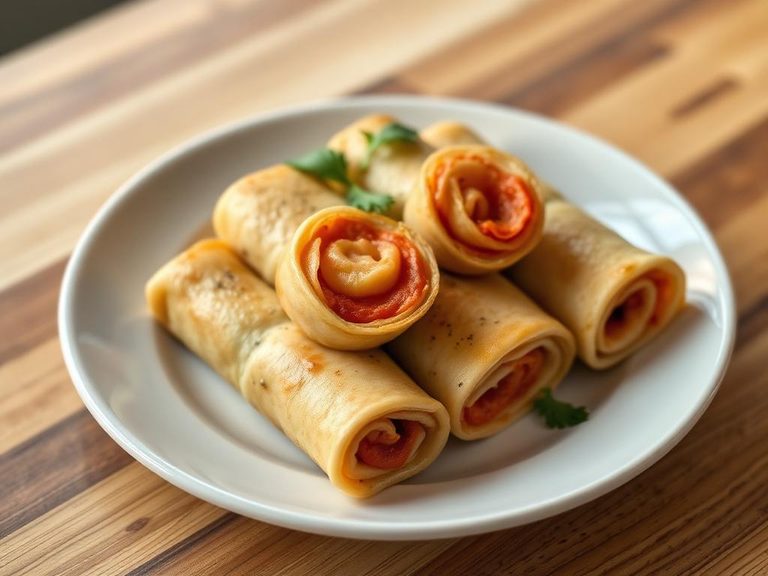
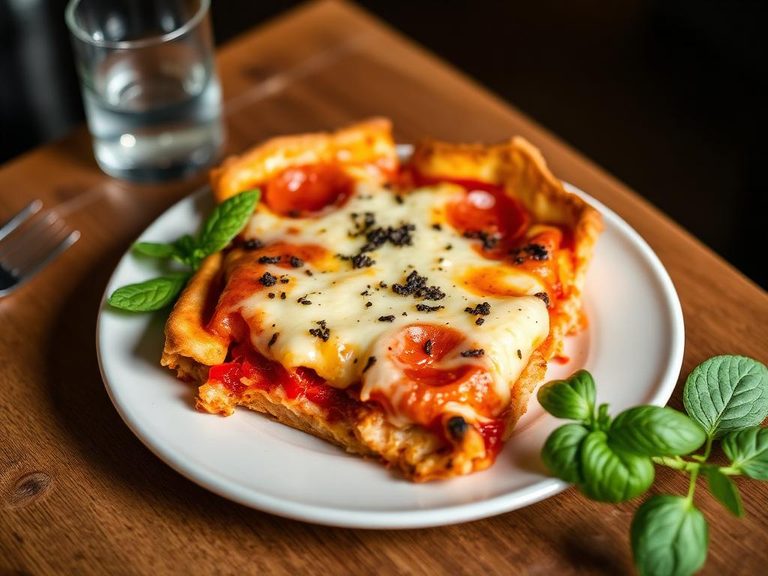
🌍 Where it's eaten
💡 Did you know?
The U.S. Department of Agriculture (USDA) has specific regulations for school lunch pizza, requiring it to contain at least 2 ounces of whole grain-rich dough and meet strict nutritional standards for sodium and saturated fat.
Full nutrition (USDA data · scales with serving)
| Water | 45.7 g |
| Energy | 250 kcal |
| Protein | 13.7 g |
| Total lipid (fat) | 8.6 g |
| Carbohydrate, by difference | 29.7 g |
| Fiber, total dietary | 3.4 g |
| Total Sugars | 6.1 g |
| Calcium, Ca | 206 mg |
| Iron, Fe | 2.6 mg |
| Magnesium, Mg | 46.0 mg |
| Phosphorus, P | 300 mg |
| Potassium, K | 326 mg |
| Sodium, Na | 421 mg |
| Zinc, Zn | 1.9 mg |
| Copper, Cu | 0.14 mg |
| Selenium, Se | 26.3 ug |
| Vitamin C, total ascorbic acid | 0.20 mg |
| Thiamin | 0.26 mg |
| Riboflavin | 0.26 mg |
| Niacin | 3.1 mg |
| Vitamin B-6 | 0.13 mg |
| Folate, total | 71.0 ug |
| Folic acid | 42.0 ug |
| Folate, food | 28.0 ug |
| Folate, DFE | 100 ug |
| Choline, total | 18.4 mg |
| Vitamin B-12 | 1.8 ug |
| Vitamin B-12, added | 0.00 ug |
| Vitamin A, RAE | 52.0 ug |
| Retinol | 46.0 ug |
| Carotene, beta | 80.0 ug |
| Carotene, alpha | 0.00 ug |
| Cryptoxanthin, beta | 0.00 ug |
| Lycopene | 1928 ug |
| Lutein + zeaxanthin | 43.0 ug |
| Vitamin E (alpha-tocopherol) | 0.74 mg |
| Vitamin E, added | 0.00 mg |
| Vitamin D (D2 + D3) | 0.00 ug |
| Vitamin K (phylloquinone) | 5.0 ug |
| Alcohol, ethyl | 0.00 g |
| Caffeine | 0.00 mg |
| Theobromine | 0.00 mg |
Fat & fatty acid profile (per 100g)
| Fatty acids, total saturated | 4.2 g |
| SFA 4:0 | 0.14 g |
| SFA 6:0 | 0.11 g |
| SFA 8:0 | 0.07 g |
| SFA 10:0 | 0.17 g |
| SFA 12:0 | 0.20 g |
| SFA 14:0 | 0.63 g |
| SFA 16:0 | 1.9 g |
| SFA 18:0 | 0.75 g |
| Fatty acids, total monounsaturated | 2.1 g |
| MUFA 16:1 | 0.10 g |
| MUFA 18:1 | 1.9 g |
| MUFA 20:1 | 0.02 g |
| MUFA 22:1 | 0.00 g |
| Fatty acids, total polyunsaturated | 0.92 g |
| PUFA 18:2 | 0.75 g |
| PUFA 18:3 | 0.07 g |
| PUFA 18:4 | 0.00 g |
| PUFA 20:4 | 0.01 g |
| PUFA 20:5 n-3 (EPA) | 0.00 g |
| PUFA 22:5 n-3 (DPA) | 0.00 g |
| PUFA 22:6 n-3 (DHA) | 0.00 g |
| Cholesterol | 16.0 mg |
Amino acid profile (per 100g)
Estimated from Fast Food, Pizza Chain, 14" pizza, cheese topping, stuffed crust — USDA does not publish this profile for Pizza.
| Tryptophan | 0.12 g |
| Threonine | 0.39 g |
| Isoleucine | 0.57 g |
| Leucine | 1.1 g |
| Lysine | 0.59 g |
| Methionine | 0.27 g |
| Phenylalanine | 0.64 g |
| Tyrosine | 0.40 g |
| Valine | 0.71 g |
| Arginine | 0.44 g |
| Histidine | 0.32 g |
| Alanine | 0.38 g |
| Aspartic acid | 0.81 g |
| Glutamic acid | 3.4 g |
| Glycine | 0.31 g |
| Proline | 1.7 g |
| Serine | 0.58 g |
| Hydroxyproline | 0.00 g |
FAQ
Is school pizza considered a healthy meal?
It can be part of a balanced diet when paired with vegetables and fruit, as it provides protein and calcium. However, it's often high in sodium and carbs, so moderation is key.
What makes school pizza different from regular pizza?
School pizza typically uses a thicker, softer crust, a milder cheese blend, and is prepared to meet federal nutrition guidelines, which may limit fat and sodium content compared to commercial pizzas.
Can I make a healthier version at home?
Yes, use whole-wheat crust, low-fat cheese, and load up on vegetable toppings like spinach, bell peppers, and mushrooms to boost fiber and nutrients while reducing calories.
Nutrient density (calculated · NRF9.3)
Nutrient Rich Foods index: beneficial nutrients (protein, fiber, vitamins, minerals) minus saturated fat, added sugar & sodium, per 100 kcal.
NRF9.3 index — Fulgoni, Keast & Drewnowski, 2009. Computed from USDA nutrients.
Weight-loss friendliness (composite index)
Energy density 2.50 kcal/g · 22% calories from protein · 3.4 g fiber · 6.1 g sugar per 100 g.
Composite of energy density (Rolls et al., 1999), protein & fiber satiety, minus sugar. A calculated heuristic — ranks satiety-per-calorie, not a clinical measure.
Dietary load (calculated from USDA values)
Potential renal acid load. Positive = acid-forming, negative = alkaline-forming.
Sodium-to-potassium ratio: 1.29 (lower is better — aim for ≤ 1)
Sodium:potassium per WHO potassium guidance. Computed from USDA nutrients.