

Peaches, dried, sulfured, stewed, with added sugar
Whole food · Fruits and Fruit Juices

Photo: Wikipedia
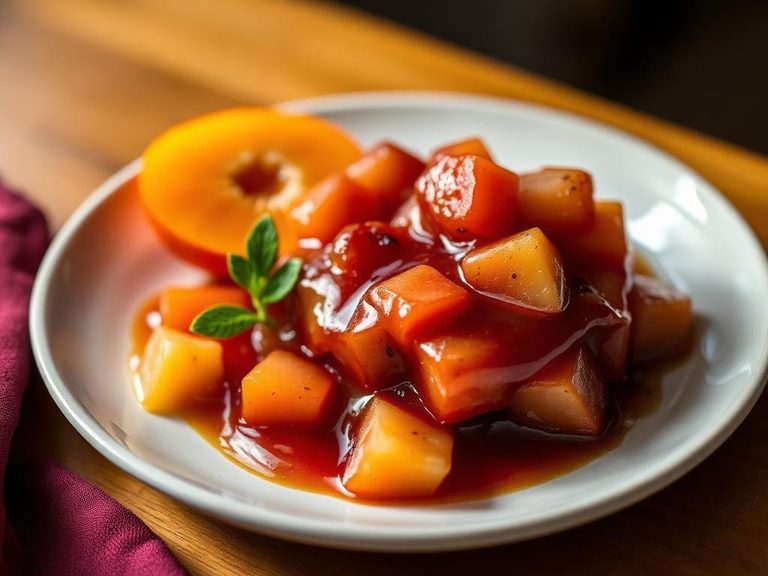
This is a sweet, jewel-toned preserve made from dried peaches that have been rehydrated and gently simmered in a sugar syrup. The texture is uniquely tender and plump, offering a soft, yielding bite that's less chewy than a raw dried peach but more concentrated than a fresh one. Nutritionally, it's a source of quick energy from its carbohydrates, but notably low in fat and provides a modest amount of dietary fiber.
Calorie split: 4% protein · 94% carbs · 2% fat
↓ Full nutrition💚 Why it's loved
People adore it for its intensely sweet, fragrant peach flavor and its luxuriously soft, spoonable texture that feels like a comforting dessert. It's a nostalgic treat in many cultures, often enjoyed as a simple sweet course or a topping for other foods.
⚠️ Watch-outs & how to enjoy it better
The significant added sugar content can cause rapid blood-sugar spikes, making it a poor choice for those managing diabetes or watching sugar intake. To counteract this, pair a small portion with a source of protein or healthy fat (like Greek yogurt or nuts) to slow glucose absorption, and practice strict portion control. The sulfuring process, used to preserve color, can trigger reactions in sulfite-sensitive individuals; looking for unsulfured versions is the best tip.
Key benefits
- Provides a quick source of energy from natural and added sugars.
- Contains dietary fiber, which aids in digestion.
- Offers a concentrated source of potassium, an important electrolyte.
- A shelf-stable way to enjoy peach flavor year-round.
- Can be a palatable way to increase fruit intake for some individuals.
🍽️ Popular dishes
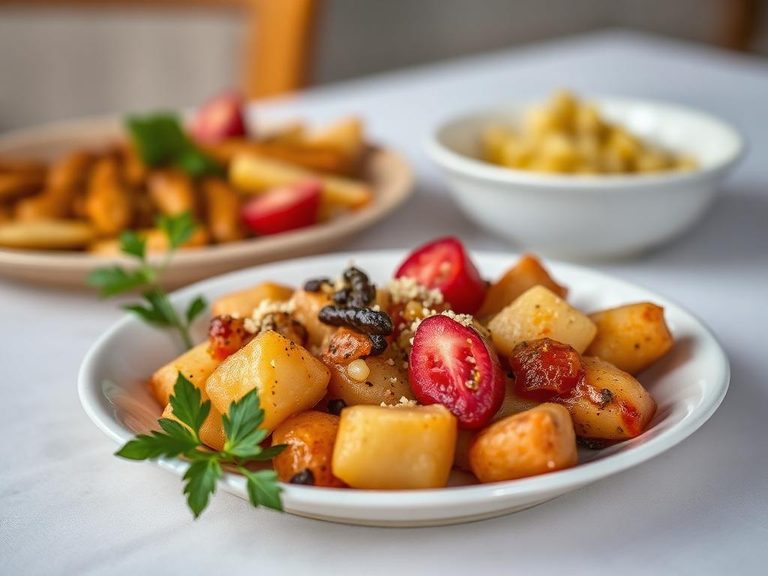
🌍 Where it's eaten
💡 Did you know?
The sulfuring process that gives these dried peaches their bright, golden color involves exposing them to sulfur dioxide gas, which not only prevents browning but also acts as a preservative and can slightly alter the fruit's vitamin B1 (thiamine) content.
Full nutrition (USDA data · scales with serving)
| Water | 71.4 g |
| Energy | 103 kcal |
| Energy | 431 kj |
| Protein | 1.1 g |
| Total lipid (fat) | 0.22 g |
| Ash | 0.73 g |
| Carbohydrate, by difference | 26.6 g |
| Fiber, total dietary | 2.4 g |
| Calcium, Ca | 8.0 mg |
| Iron, Fe | 1.2 mg |
| Magnesium, Mg | 12.0 mg |
| Phosphorus, P | 35.0 mg |
| Potassium, K | 292 mg |
| Sodium, Na | 2.0 mg |
| Zinc, Zn | 0.17 mg |
| Copper, Cu | 0.11 mg |
| Manganese, Mn | 0.09 mg |
| Selenium, Se | 0.70 ug |
| Vitamin C, total ascorbic acid | 3.4 mg |
| Thiamin | 0.01 mg |
| Riboflavin | 0.02 mg |
| Niacin | 1.4 mg |
| Pantothenic acid | 0.17 mg |
| Vitamin B-6 | 0.04 mg |
| Folate, total | 0.00 ug |
| Folic acid | 0.00 ug |
| Folate, food | 0.00 ug |
| Folate, DFE | 0.00 ug |
| Vitamin B-12 | 0.00 ug |
| Vitamin A, RAE | 9.0 ug |
| Retinol | 0.00 ug |
| Vitamin A, IU | 180 iu |
| Vitamin D (D2 + D3), International Units | 0.00 iu |
| Vitamin D (D2 + D3) | 0.00 ug |
| Alcohol, ethyl | 0.00 g |
Fat & fatty acid profile (per 100g)
| Fatty acids, total saturated | 0.02 g |
| SFA 4:0 | 0.00 g |
| SFA 6:0 | 0.00 g |
| SFA 8:0 | 0.00 g |
| SFA 10:0 | 0.00 g |
| SFA 12:0 | 0.00 g |
| SFA 14:0 | 0.00 g |
| SFA 16:0 | 0.02 g |
| SFA 18:0 | 0.00 g |
| Fatty acids, total monounsaturated | 0.08 g |
| MUFA 16:1 | 0.00 g |
| MUFA 18:1 | 0.08 g |
| MUFA 20:1 | 0.00 g |
| MUFA 22:1 | 0.00 g |
| Fatty acids, total polyunsaturated | 0.11 g |
| PUFA 18:2 | 0.10 g |
| PUFA 18:3 | 0.00 g |
| PUFA 18:4 | 0.00 g |
| PUFA 20:4 | 0.00 g |
| PUFA 20:5 n-3 (EPA) | 0.00 g |
| PUFA 22:5 n-3 (DPA) | 0.00 g |
| PUFA 22:6 n-3 (DHA) | 0.00 g |
| Cholesterol | 0.00 mg |
Amino acid profile (per 100g)
| Tryptophan | 0.00 g |
| Threonine | 0.04 g |
| Isoleucine | 0.03 g |
| Leucine | 0.06 g |
| Lysine | 0.03 g |
| Methionine | 0.03 g |
| Cystine | 0.01 g |
| Phenylalanine | 0.03 g |
| Tyrosine | 0.03 g |
| Valine | 0.06 g |
| Arginine | 0.03 g |
| Histidine | 0.02 g |
| Alanine | 0.06 g |
| Aspartic acid | 0.18 g |
| Glutamic acid | 0.16 g |
| Glycine | 0.04 g |
| Proline | 0.04 g |
| Serine | 0.05 g |
FAQ
How is this different from regular dried peaches?
Regular dried peaches are dehydrated to be chewy and concentrated. These are dried first, then rehydrated and cooked in a sugar syrup, resulting in a much softer, plumper, and sweeter product with added sugar.
Can I use this in savory cooking?
While primarily sweet, its concentrated flavor can complement savory dishes. It can be chopped and added to chutneys, glazes for pork or chicken, or grain salads for a sweet-tart contrast.
What does 'sulfured' mean and is it safe?
Sulfured means treated with sulfur dioxide, a common preservative that maintains color and extends shelf life. It's safe for most people, but those with sulfite sensitivities (a subset of asthma sufferers) may need to avoid it and seek unsulfured alternatives.
Nutrient density (calculated · NRF9.3)
Nutrient Rich Foods index: beneficial nutrients (protein, fiber, vitamins, minerals) minus saturated fat, added sugar & sodium, per 100 kcal.
NRF9.3 index — Fulgoni, Keast & Drewnowski, 2009. Computed from USDA nutrients.
Weight-loss friendliness (composite index)
Energy density 1.03 kcal/g · 4% calories from protein · 2.4 g fiber · 0.0 g sugar per 100 g.
Composite of energy density (Rolls et al., 1999), protein & fiber satiety, minus sugar. A calculated heuristic — ranks satiety-per-calorie, not a clinical measure.
Dietary load (calculated from USDA values)
Potential renal acid load. Positive = acid-forming, negative = alkaline-forming.
Sodium-to-potassium ratio: 0.01 (lower is better — aim for ≤ 1)
Sodium:potassium per WHO potassium guidance. Computed from USDA nutrients.