

Pastry, made with bean or lotus seed paste filling, baked
Common food

Photo: Wikipedia
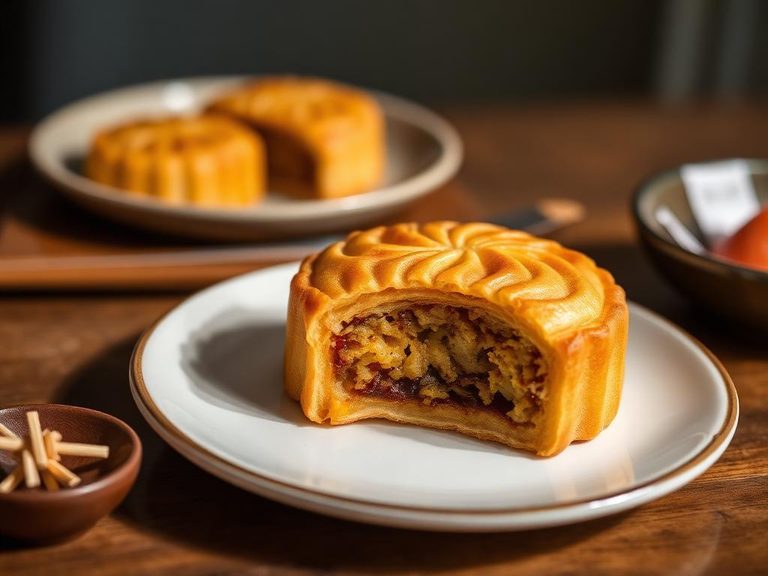
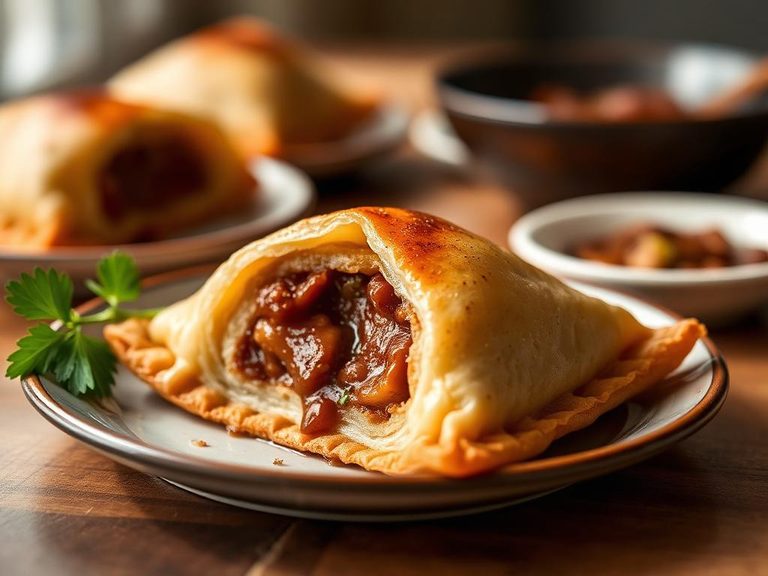
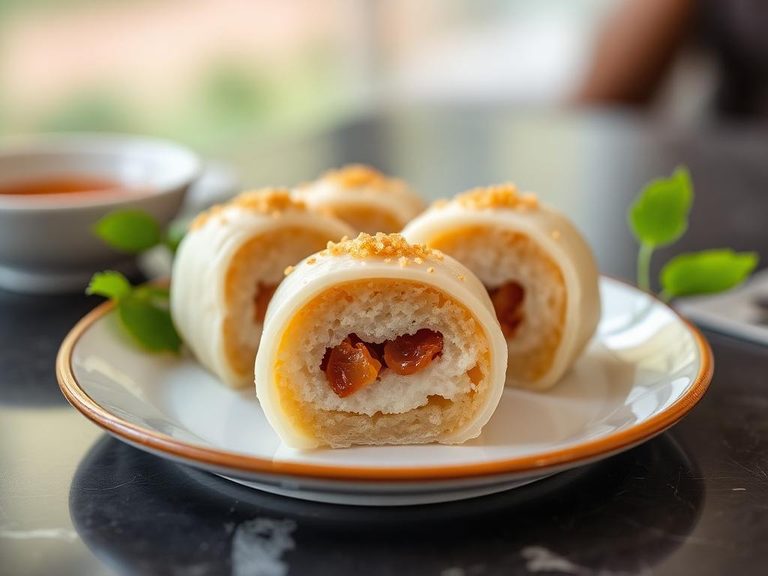
A classic East Asian baked pastry, typically featuring a flaky, golden crust encasing a dense, sweet filling of red bean or lotus seed paste. The texture is a delightful contrast between the crumbly, buttery exterior and the smooth, earthy-sweet interior. Nutritionally, it is a high-carbohydrate energy source, with the majority of its calories coming from starches and sugars.
Calorie split: 8% protein · 80% carbs · 12% fat
↓ Full nutrition💚 Why it's loved
People adore it for the harmonious balance of its sweet, nuanced filling and the rich, flaky pastry. It's a beloved staple during festivals like the Mid-Autumn Festival, symbolizing reunion and completeness.
⚠️ Watch-outs & how to enjoy it better
Its high sugar and refined carbohydrate content can cause rapid blood-sugar spikes, making it less suitable for those managing diabetes or seeking low-glycemic foods. To mitigate this, enjoy a small portion alongside a source of protein or healthy fat (like unsweetened tea or a handful of nuts) to slow sugar absorption.
Key benefits
- Provides a quick, dense source of energy from carbohydrates.
- Contains plant-based protein from the bean or seed filling.
- Offers some dietary fiber, which can aid in digestion.
- A culturally significant treat for celebrations and gifting.
🍽️ Popular dishes
🌍 Where it's eaten
💡 Did you know?
The intricate, symbolic patterns stamped on the top of mooncakes aren't just decorative; they traditionally indicated the filling type and the bakery's name before ingredient labels were common.
Full nutrition (USDA data · scales with serving)
| Water | 19.8 g |
| Energy | 340 kcal |
| Protein | 7.0 g |
| Total lipid (fat) | 4.5 g |
| Carbohydrate, by difference | 68.1 g |
| Fiber, total dietary | 2.7 g |
| Total Sugars | 36.5 g |
| Calcium, Ca | 19.0 mg |
| Iron, Fe | 2.6 mg |
| Magnesium, Mg | 22.0 mg |
| Phosphorus, P | 83.0 mg |
| Potassium, K | 125 mg |
| Sodium, Na | 87.0 mg |
| Zinc, Zn | 0.60 mg |
| Copper, Cu | 0.09 mg |
| Selenium, Se | 10.2 ug |
| Vitamin C, total ascorbic acid | 0.20 mg |
| Thiamin | 0.32 mg |
| Riboflavin | 0.21 mg |
| Niacin | 2.3 mg |
| Vitamin B-6 | 0.04 mg |
| Folate, total | 82.0 ug |
| Folic acid | 35.0 ug |
| Folate, food | 48.0 ug |
| Folate, DFE | 107 ug |
| Choline, total | 42.3 mg |
| Vitamin B-12 | 0.10 ug |
| Vitamin B-12, added | 0.00 ug |
| Vitamin A, RAE | 22.0 ug |
| Retinol | 21.0 ug |
| Carotene, beta | 3.0 ug |
| Carotene, alpha | 0.00 ug |
| Cryptoxanthin, beta | 2.0 ug |
| Lycopene | 0.00 ug |
| Lutein + zeaxanthin | 66.0 ug |
| Vitamin E (alpha-tocopherol) | 0.49 mg |
| Vitamin E, added | 0.00 mg |
| Vitamin D (D2 + D3) | 0.30 ug |
| Vitamin K (phylloquinone) | 5.4 ug |
| Alcohol, ethyl | 0.00 g |
| Caffeine | 0.00 mg |
| Theobromine | 0.00 mg |
Fat & fatty acid profile (per 100g)
| Fatty acids, total saturated | 0.84 g |
| SFA 4:0 | 0.00 g |
| SFA 6:0 | 0.00 g |
| SFA 8:0 | 0.00 g |
| SFA 10:0 | 0.00 g |
| SFA 12:0 | 0.00 g |
| SFA 14:0 | 0.01 g |
| SFA 16:0 | 0.61 g |
| SFA 18:0 | 0.20 g |
| Fatty acids, total monounsaturated | 1.0 g |
| MUFA 16:1 | 0.03 g |
| MUFA 18:1 | 0.98 g |
| MUFA 20:1 | 0.01 g |
| MUFA 22:1 | 0.00 g |
| Fatty acids, total polyunsaturated | 1.8 g |
| PUFA 18:2 | 1.6 g |
| PUFA 18:3 | 0.18 g |
| PUFA 18:4 | 0.00 g |
| PUFA 20:4 | 0.00 g |
| PUFA 20:5 n-3 (EPA) | 0.00 g |
| PUFA 22:5 n-3 (DPA) | 0.00 g |
| PUFA 22:6 n-3 (DHA) | 0.00 g |
| Cholesterol | 49.0 mg |
Amino acid profile (per 100g)
Estimated from Puff pastry, frozen, ready-to-bake, baked — USDA does not publish this profile for Pastry.
| Tryptophan | 0.09 g |
| Threonine | 0.20 g |
| Isoleucine | 0.28 g |
| Leucine | 0.51 g |
| Lysine | 0.14 g |
| Methionine | 0.13 g |
| Cystine | 0.17 g |
| Phenylalanine | 0.37 g |
| Tyrosine | 0.20 g |
| Valine | 0.31 g |
| Arginine | 0.26 g |
| Histidine | 0.16 g |
| Alanine | 0.23 g |
| Aspartic acid | 0.30 g |
| Glutamic acid | 2.6 g |
| Glycine | 0.26 g |
| Proline | 0.88 g |
| Serine | 0.36 g |
FAQ
What is the difference between red bean and lotus seed paste?
Red bean paste (made from adzuki beans) has a slightly grainier texture and a deeper, earthier sweetness. Lotus seed paste is smoother, more starchy, and has a more delicate, floral sweetness.
Is this pastry vegan?
The filling (bean or lotus seed paste) is typically vegan. However, the pastry dough often contains lard, butter, or eggs for flakiness. You must check the specific recipe or product label for vegan versions.
How should I store leftover pastries?
Store in an airtight container at room temperature for 2-3 days, or refrigerate for up to a week. Reheat briefly in a toaster oven to restore crispness; microwaving can make the pastry soggy.
Nutrient density (calculated · NRF9.3)
Nutrient Rich Foods index: beneficial nutrients (protein, fiber, vitamins, minerals) minus saturated fat, added sugar & sodium, per 100 kcal.
NRF9.3 index — Fulgoni, Keast & Drewnowski, 2009. Computed from USDA nutrients.
Weight-loss friendliness (composite index)
Energy density 3.40 kcal/g · 8% calories from protein · 2.7 g fiber · 36.5 g sugar per 100 g.
Composite of energy density (Rolls et al., 1999), protein & fiber satiety, minus sugar. A calculated heuristic — ranks satiety-per-calorie, not a clinical measure.
Dietary load (calculated from USDA values)
Potential renal acid load. Positive = acid-forming, negative = alkaline-forming.
Sodium-to-potassium ratio: 0.70 (lower is better — aim for ≤ 1)
Sodium:potassium per WHO potassium guidance. Computed from USDA nutrients.