

Muffin, wheat
Common food

Photo: Wikipedia
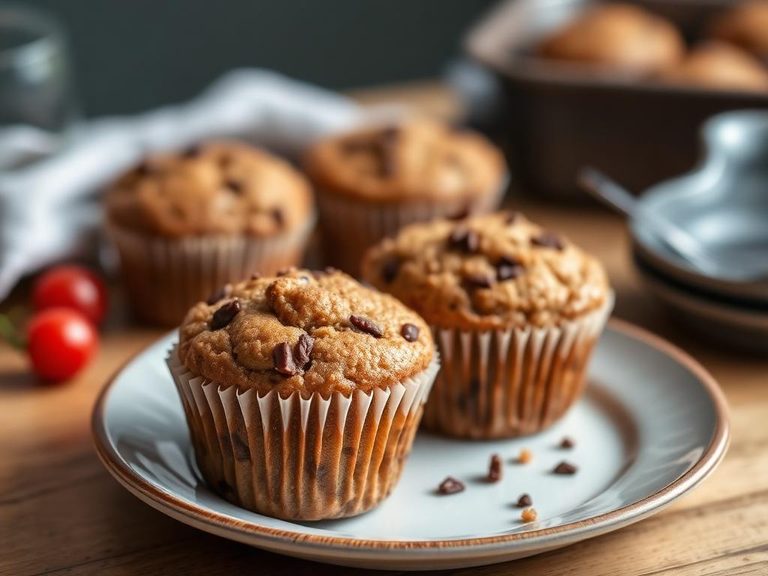
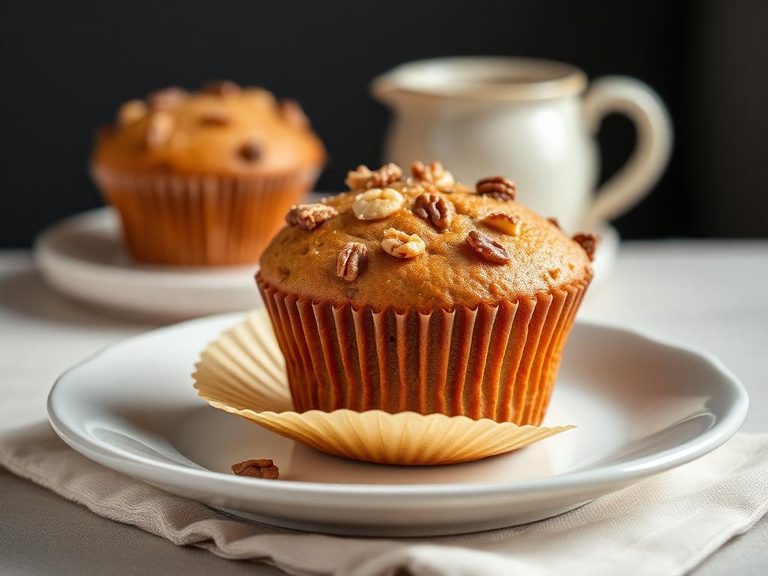
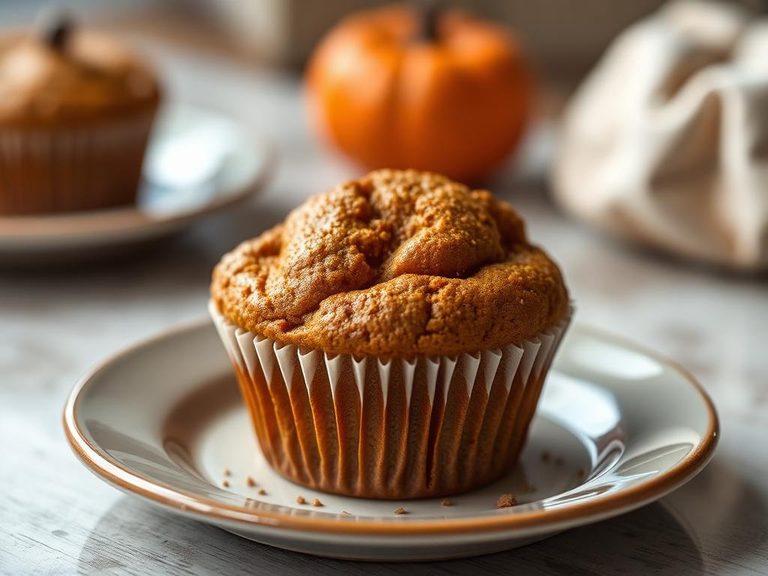
A wheat muffin is a tender, slightly crumbly quick bread, often with a golden-brown top and a subtly sweet, nutty flavor from whole wheat flour. Its texture is denser than a cupcake but softer than a slice of bread, offering a satisfying chew. Nutritionally, it provides a significant energy boost from carbohydrates and fats, with a moderate amount of protein.
Calorie split: 7% protein · 49% carbs · 44% fat
↓ Full nutrition💚 Why it's loved
People love wheat muffins for their comforting, homemade appeal and incredible versatility—they can be a wholesome breakfast staple, a satisfying snack, or a sweet treat. Their mild, adaptable flavor pairs perfectly with everything from fresh fruit and butter to savory cheese and herbs.
⚠️ Watch-outs & how to enjoy it better
Wheat muffins, especially commercial ones, can be high in added sugars and refined fats, leading to blood sugar spikes. Those with gluten intolerance or celiac disease must avoid them. To mitigate, opt for whole-wheat versions, pair with protein (like Greek yogurt or nuts), and practice portion control.
Key benefits
- Provides quick energy from complex carbohydrates.
- Contains some plant-based protein from wheat flour.
- Whole wheat varieties offer dietary fiber and B vitamins.
- A versatile base for both sweet and savory additions.
🍽️ Popular dishes


🌍 Where it's eaten
💡 Did you know?
The muffin's modern form was popularized in North America in the 19th century, but its name derives from the Old French 'moufflet,' meaning soft bread.
Full nutrition (USDA data · scales with serving)
| Water | 27.0 g |
| Energy | 372 kcal |
| Protein | 6.9 g |
| Total lipid (fat) | 18.0 g |
| Carbohydrate, by difference | 45.7 g |
| Fiber, total dietary | 1.8 g |
| Total Sugars | 19.9 g |
| Calcium, Ca | 168 mg |
| Iron, Fe | 2.2 mg |
| Magnesium, Mg | 27.0 mg |
| Phosphorus, P | 163 mg |
| Potassium, K | 143 mg |
| Sodium, Na | 389 mg |
| Zinc, Zn | 0.83 mg |
| Copper, Cu | 0.09 mg |
| Selenium, Se | 11.1 ug |
| Vitamin C, total ascorbic acid | 0.00 mg |
| Thiamin | 0.24 mg |
| Riboflavin | 0.21 mg |
| Niacin | 2.0 mg |
| Vitamin B-6 | 0.06 mg |
| Folate, total | 36.0 ug |
| Folic acid | 22.0 ug |
| Folate, food | 14.0 ug |
| Folate, DFE | 51.0 ug |
| Choline, total | 46.5 mg |
| Vitamin B-12 | 0.21 ug |
| Vitamin B-12, added | 0.00 ug |
| Vitamin A, RAE | 44.0 ug |
| Retinol | 43.0 ug |
| Carotene, beta | 2.0 ug |
| Carotene, alpha | 0.00 ug |
| Cryptoxanthin, beta | 2.0 ug |
| Lycopene | 0.00 ug |
| Lutein + zeaxanthin | 94.0 ug |
| Vitamin E (alpha-tocopherol) | 3.1 mg |
| Vitamin E, added | 0.00 mg |
| Vitamin D (D2 + D3) | 0.70 ug |
| Vitamin K (phylloquinone) | 15.7 ug |
| Alcohol, ethyl | 0.00 g |
| Caffeine | 0.00 mg |
| Theobromine | 0.00 mg |
Fat & fatty acid profile (per 100g)
| Fatty acids, total saturated | 3.0 g |
| SFA 4:0 | 0.01 g |
| SFA 6:0 | 0.01 g |
| SFA 8:0 | 0.01 g |
| SFA 10:0 | 0.02 g |
| SFA 12:0 | 0.02 g |
| SFA 14:0 | 0.08 g |
| SFA 16:0 | 2.1 g |
| SFA 18:0 | 0.62 g |
| Fatty acids, total monounsaturated | 7.2 g |
| MUFA 16:1 | 0.10 g |
| MUFA 18:1 | 7.0 g |
| MUFA 20:1 | 0.10 g |
| MUFA 22:1 | 0.00 g |
| Fatty acids, total polyunsaturated | 6.4 g |
| PUFA 18:2 | 5.6 g |
| PUFA 18:3 | 0.68 g |
| PUFA 18:4 | 0.00 g |
| PUFA 20:4 | 0.00 g |
| PUFA 20:5 n-3 (EPA) | 0.00 g |
| PUFA 22:5 n-3 (DPA) | 0.00 g |
| PUFA 22:6 n-3 (DHA) | 0.00 g |
| Cholesterol | 59.0 mg |
Amino acid profile (per 100g)
Estimated from Muffins, blueberry, commercially prepared (Includes mini-muffins) — USDA does not publish this profile for Muffin.
| Tryptophan | 0.07 g |
| Threonine | 0.18 g |
| Isoleucine | 0.22 g |
| Leucine | 0.42 g |
| Lysine | 0.20 g |
| Methionine | 0.12 g |
| Cystine | 0.11 g |
| Phenylalanine | 0.28 g |
| Tyrosine | 0.18 g |
| Valine | 0.26 g |
| Arginine | 0.24 g |
| Histidine | 0.13 g |
| Alanine | 0.21 g |
| Aspartic acid | 0.32 g |
| Glutamic acid | 1.5 g |
| Glycine | 0.19 g |
| Proline | 0.54 g |
| Serine | 0.30 g |
| Hydroxyproline | 0.00 g |
FAQ
Are wheat muffins healthy?
It depends. Whole-wheat versions offer fiber and nutrients, but many store-bought or bakery muffins are high in sugar, fat, and calories, making them more of a treat than a health food.
How should I store leftover muffins?
Store in an airtight container at room temperature for 1-2 days, or freeze them individually wrapped for up to 3 months. Reheat from frozen in a toaster or oven for best texture.
Can I make muffins gluten-free?
Yes, by using a gluten-free flour blend (often based on rice, almond, or oat flour) and adding a binder like xanthan gum to mimic the structure gluten provides.
Nutrient density (calculated · NRF9.3)
Nutrient Rich Foods index: beneficial nutrients (protein, fiber, vitamins, minerals) minus saturated fat, added sugar & sodium, per 100 kcal.
NRF9.3 index — Fulgoni, Keast & Drewnowski, 2009. Computed from USDA nutrients.
Weight-loss friendliness (composite index)
Energy density 3.72 kcal/g · 7% calories from protein · 1.8 g fiber · 19.9 g sugar per 100 g.
Composite of energy density (Rolls et al., 1999), protein & fiber satiety, minus sugar. A calculated heuristic — ranks satiety-per-calorie, not a clinical measure.
Dietary load (calculated from USDA values)
Potential renal acid load. Positive = acid-forming, negative = alkaline-forming.
Sodium-to-potassium ratio: 2.72 (lower is better — aim for ≤ 1)
Sodium:potassium per WHO potassium guidance. Computed from USDA nutrients.