

Milk shake, home recipe, chocolate, light
Common food

Photo: Wikipedia
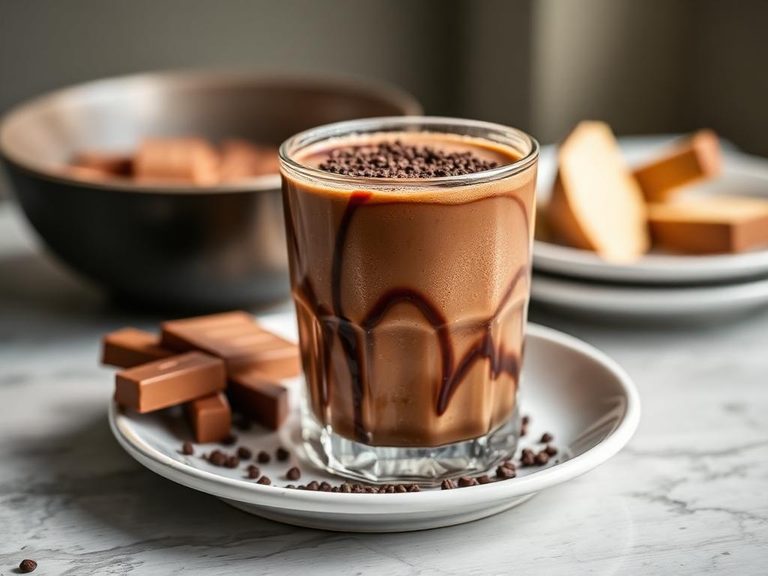
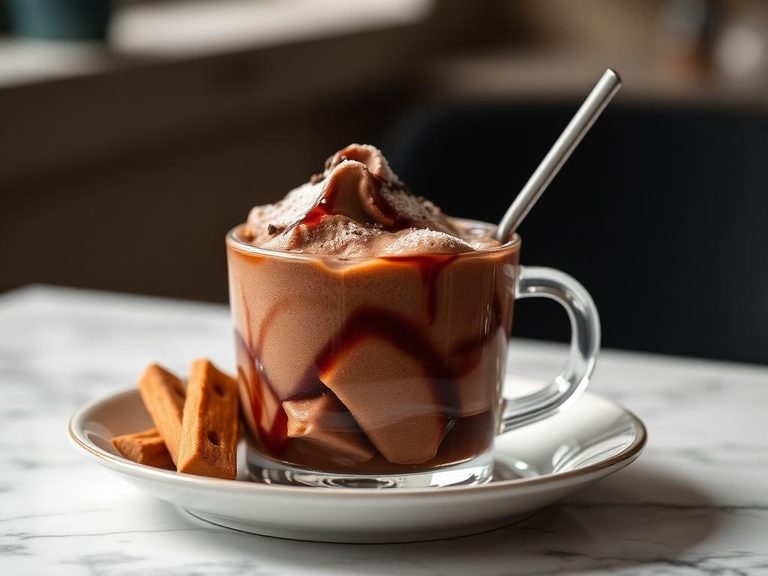
A light, homemade chocolate milkshake blends creamy milk, cocoa, and a touch of sweetener into a frothy, indulgent drink. It delivers a rich chocolate flavor with a smooth, velvety texture, offering a satisfying treat at a modest 97 calories per 100g. With 4g of protein and only 12g of carbs, it's a lighter way to enjoy a classic dessert beverage.
Calorie split: 16% protein · 53% carbs · 31% fat
↓ Full nutrition💚 Why it's loved
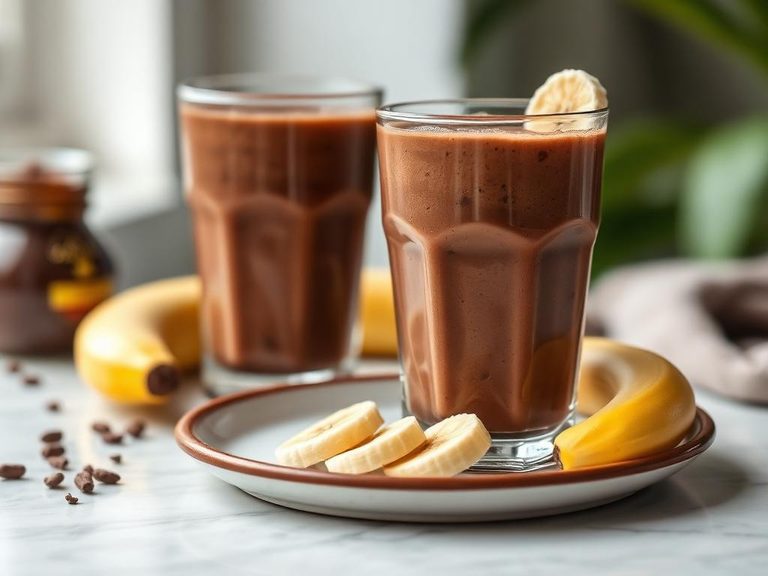
People adore it for the nostalgic comfort of chocolate and cream, offering a guilt-free way to satisfy a sweet craving. Its versatility allows for endless tweaks—like adding a banana or a dash of espresso—to match any mood or dietary preference.
⚠️ Watch-outs & how to enjoy it better
The 12g of sugar per 100g can cause a rapid blood-sugar spike, especially for those with insulin sensitivity. To counteract this, pair it with a source of protein or healthy fat (like a handful of nuts) or enjoy a smaller portion alongside a fiber-rich snack to slow sugar absorption.
Key benefits
- Lower calorie than traditional milkshakes
- Good source of protein from milk
- Provides calcium and vitamin D
- Quick energy from natural sugars
- Can be customized with healthy add-ins
🍽️ Popular dishes
🌍 Where it's eaten
💡 Did you know?
The modern milkshake as we know it—cold, thick, and blended—was only made possible by the invention of the electric blender in the early 1920s.
Full nutrition (USDA data · scales with serving)
| Water | 79.0 g |
| Energy | 97.0 kcal |
| Protein | 4.0 g |
| Total lipid (fat) | 3.3 g |
| Carbohydrate, by difference | 12.9 g |
| Fiber, total dietary | 0.30 g |
| Total Sugars | 12.4 g |
| Calcium, Ca | 138 mg |
| Iron, Fe | 0.26 mg |
| Magnesium, Mg | 15.0 mg |
| Phosphorus, P | 95.0 mg |
| Potassium, K | 163 mg |
| Sodium, Na | 51.0 mg |
| Zinc, Zn | 0.43 mg |
| Copper, Cu | 0.04 mg |
| Selenium, Se | 2.1 ug |
| Vitamin C, total ascorbic acid | 0.50 mg |
| Thiamin | 0.04 mg |
| Riboflavin | 0.14 mg |
| Niacin | 0.12 mg |
| Vitamin B-6 | 0.05 mg |
| Folate, total | 3.0 ug |
| Folic acid | 0.00 ug |
| Folate, food | 3.0 ug |
| Folate, DFE | 3.0 ug |
| Choline, total | 18.2 mg |
| Vitamin B-12 | 0.43 ug |
| Vitamin B-12, added | 0.00 ug |
| Vitamin A, RAE | 63.0 ug |
| Retinol | 59.0 ug |
| Carotene, beta | 52.0 ug |
| Carotene, alpha | 0.00 ug |
| Cryptoxanthin, beta | 0.00 ug |
| Lycopene | 0.00 ug |
| Lutein + zeaxanthin | 0.00 ug |
| Vitamin E (alpha-tocopherol) | 0.09 mg |
| Vitamin E, added | 0.00 mg |
| Vitamin D (D2 + D3) | 0.70 ug |
| Vitamin K (phylloquinone) | 0.30 ug |
| Alcohol, ethyl | 0.00 g |
| Caffeine | 1.0 mg |
| Theobromine | 26.0 mg |
Fat & fatty acid profile (per 100g)
| Fatty acids, total saturated | 2.0 g |
| SFA 4:0 | 0.10 g |
| SFA 6:0 | 0.04 g |
| SFA 8:0 | 0.04 g |
| SFA 10:0 | 0.07 g |
| SFA 12:0 | 0.05 g |
| SFA 14:0 | 0.32 g |
| SFA 16:0 | 0.92 g |
| SFA 18:0 | 0.38 g |
| Fatty acids, total monounsaturated | 0.91 g |
| MUFA 16:1 | 0.08 g |
| MUFA 18:1 | 0.83 g |
| MUFA 20:1 | 0.00 g |
| MUFA 22:1 | 0.00 g |
| Fatty acids, total polyunsaturated | 0.11 g |
| PUFA 18:2 | 0.08 g |
| PUFA 18:3 | 0.03 g |
| PUFA 18:4 | 0.00 g |
| PUFA 20:4 | 0.00 g |
| PUFA 20:5 n-3 (EPA) | 0.00 g |
| PUFA 22:5 n-3 (DPA) | 0.00 g |
| PUFA 22:6 n-3 (DHA) | 0.00 g |
| Cholesterol | 14.0 mg |
Amino acid profile (per 100g)
Estimated from Milk shakes, thick chocolate — USDA does not publish this profile for Milk shake.
| Tryptophan | 0.04 g |
| Threonine | 0.14 g |
| Isoleucine | 0.18 g |
| Leucine | 0.30 g |
| Lysine | 0.24 g |
| Methionine | 0.08 g |
| Cystine | 0.03 g |
| Phenylalanine | 0.15 g |
| Tyrosine | 0.15 g |
| Valine | 0.20 g |
| Arginine | 0.11 g |
| Histidine | 0.08 g |
| Alanine | 0.10 g |
| Aspartic acid | 0.23 g |
| Glutamic acid | 0.64 g |
| Glycine | 0.07 g |
| Proline | 0.29 g |
| Serine | 0.17 g |
FAQ
How can I make it even lighter?
Use skim or plant-based milk, replace sugar with a zero-calorie sweetener, and add a frozen banana for natural sweetness and thickness without extra calories.
Is it suitable for a post-workout drink?
Yes, the combination of carbs and protein can help with recovery. For a better balance, consider adding a scoop of protein powder.
Can I make it dairy-free?
Absolutely. Use almond, oat, or soy milk as the base and ensure your chocolate powder is dairy-free.
Nutrient density (calculated · NRF9.3)
Nutrient Rich Foods index: beneficial nutrients (protein, fiber, vitamins, minerals) minus saturated fat, added sugar & sodium, per 100 kcal.
NRF9.3 index — Fulgoni, Keast & Drewnowski, 2009. Computed from USDA nutrients.
Weight-loss friendliness (composite index)
Energy density 0.97 kcal/g · 16% calories from protein · 0.3 g fiber · 12.4 g sugar per 100 g.
Composite of energy density (Rolls et al., 1999), protein & fiber satiety, minus sugar. A calculated heuristic — ranks satiety-per-calorie, not a clinical measure.
Dietary load (calculated from USDA values)
Potential renal acid load. Positive = acid-forming, negative = alkaline-forming.
Sodium-to-potassium ratio: 0.31 (lower is better — aim for ≤ 1)
Sodium:potassium per WHO potassium guidance. Computed from USDA nutrients.