

Lasagna, meatless
Common food

Photo: Wikipedia
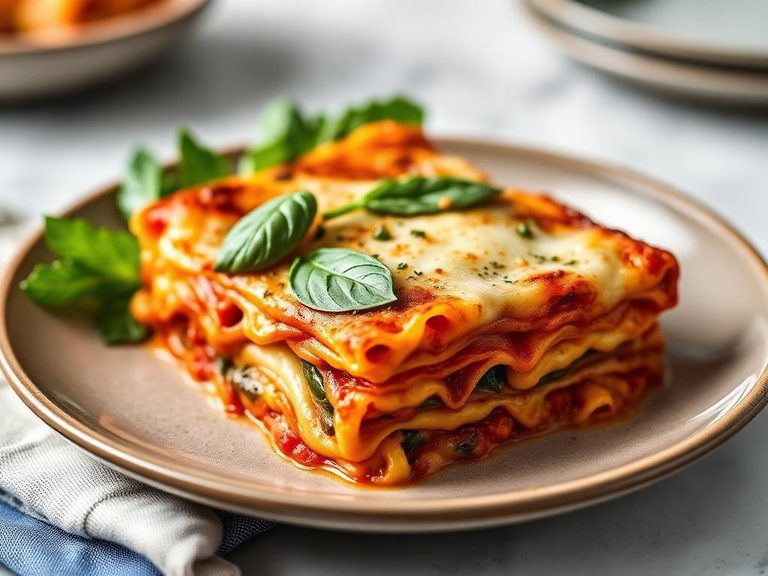
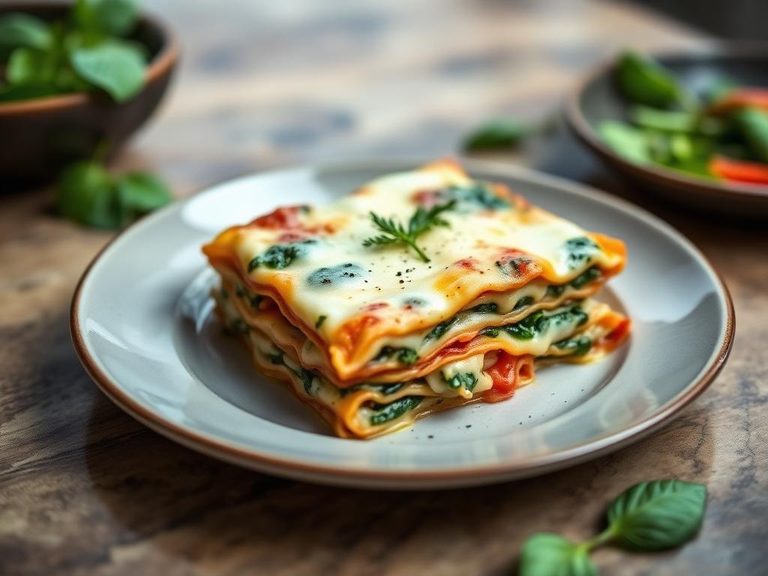
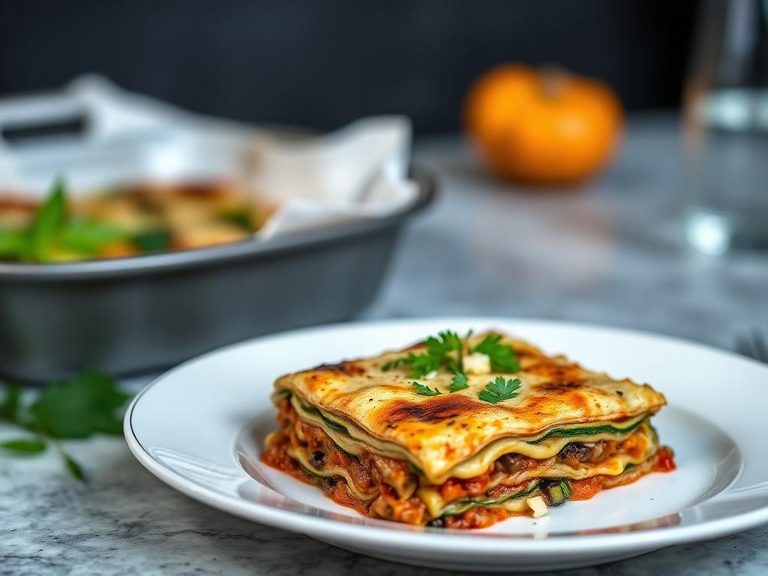
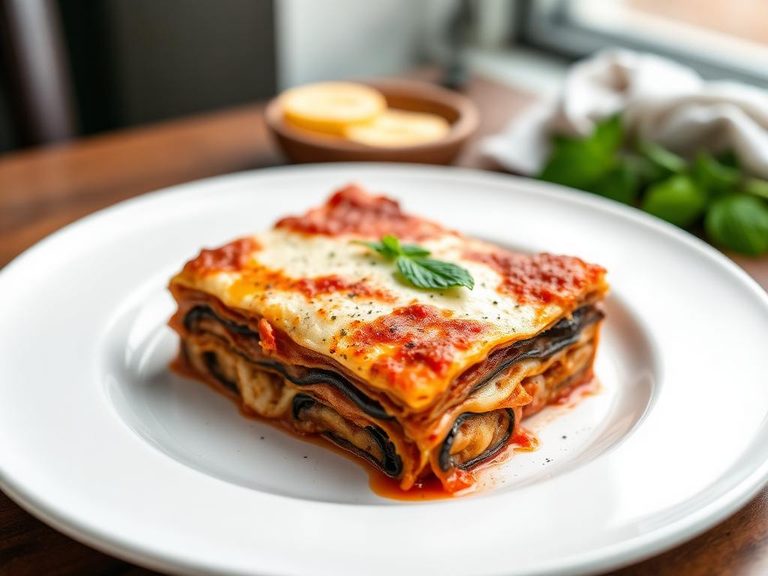
Meatless lasagna is a layered pasta dish where tender sheets of pasta are stacked with rich tomato sauce, creamy béchamel or ricotta, and often vegetables like spinach or zucchini. The texture is a delightful contrast between the soft, yielding pasta and the warm, savory filling, creating a comforting and satisfying bite. Nutritionally, it's a lighter take on the classic, offering a good balance of protein and carbs with a moderate calorie count per serving.
Calorie split: 20% protein · 43% carbs · 37% fat
↓ Full nutrition💚 Why it's loved
People love meatless lasagna for its comforting, layered flavors that meld together beautifully—the tangy tomato sauce, creamy cheese, and savory herbs create a deeply satisfying experience. It's also incredibly versatile, easily adapted to seasonal vegetables or different cheese blends, making it a beloved staple in home cooking and Italian-American cuisine.
⚠️ Watch-outs & how to enjoy it better
The dish can be high in sodium from canned sauces and cheeses, and the pasta and cheese may cause blood-sugar spikes for some. To counteract this, opt for low-sodium tomato sauce, use whole-grain pasta for more fiber, and pair the meal with a side salad to add volume and slow digestion. Those with gluten or dairy sensitivities should seek out specific alternatives.
Key benefits
- Good source of plant-based protein from cheese and legumes if included
- Provides dietary fiber from vegetables and whole-grain pasta options
- Lower in saturated fat compared to meat-based versions
- Rich in vitamins like A and C from tomato sauce and vegetables
- Can be a hearty, satisfying meal for vegetarians and flexitarians
🍽️ Popular dishes

🌍 Where it's eaten
💡 Did you know?
The word 'lasagna' likely comes from the Greek 'lasanon,' which referred to a type of cooking pot or chamber pot, not the pasta itself—the dish evolved from a Greek layered noodle recipe called 'laganon.'
Full nutrition (USDA data · scales with serving)
| Water | 72.8 g |
| Energy | 130 kcal |
| Protein | 6.5 g |
| Total lipid (fat) | 5.3 g |
| Carbohydrate, by difference | 13.8 g |
| Fiber, total dietary | 1.7 g |
| Total Sugars | 4.2 g |
| Calcium, Ca | 111 mg |
| Iron, Fe | 1.3 mg |
| Magnesium, Mg | 21.0 mg |
| Phosphorus, P | 107 mg |
| Potassium, K | 182 mg |
| Sodium, Na | 284 mg |
| Zinc, Zn | 0.91 mg |
| Copper, Cu | 0.11 mg |
| Selenium, Se | 26.2 ug |
| Vitamin C, total ascorbic acid | 13.7 mg |
| Thiamin | 0.09 mg |
| Riboflavin | 0.14 mg |
| Niacin | 1.2 mg |
| Vitamin B-6 | 0.06 mg |
| Folate, total | 22.0 ug |
| Folic acid | 18.0 ug |
| Folate, food | 4.0 ug |
| Folate, DFE | 36.0 ug |
| Choline, total | 9.8 mg |
| Vitamin B-12 | 0.57 ug |
| Vitamin B-12, added | 0.00 ug |
| Vitamin A, RAE | 44.0 ug |
| Retinol | 37.0 ug |
| Carotene, beta | 83.0 ug |
| Carotene, alpha | 2.0 ug |
| Cryptoxanthin, beta | 0.00 ug |
| Lycopene | 2640 ug |
| Lutein + zeaxanthin | 27.0 ug |
| Vitamin E (alpha-tocopherol) | 0.88 mg |
| Vitamin E, added | 0.00 mg |
| Vitamin D (D2 + D3) | 0.00 ug |
| Vitamin K (phylloquinone) | 9.1 ug |
| Alcohol, ethyl | 0.00 g |
| Caffeine | 0.00 mg |
| Theobromine | 0.00 mg |
Fat & fatty acid profile (per 100g)
| Fatty acids, total saturated | 2.1 g |
| SFA 4:0 | 0.00 g |
| SFA 6:0 | 0.00 g |
| SFA 8:0 | 0.00 g |
| SFA 10:0 | 0.00 g |
| SFA 12:0 | 0.06 g |
| SFA 14:0 | 0.37 g |
| SFA 16:0 | 1.2 g |
| SFA 18:0 | 0.47 g |
| Fatty acids, total monounsaturated | 1.6 g |
| MUFA 16:1 | 0.11 g |
| MUFA 18:1 | 1.5 g |
| MUFA 20:1 | 0.00 g |
| MUFA 22:1 | 0.00 g |
| Fatty acids, total polyunsaturated | 1.0 g |
| PUFA 18:2 | 0.89 g |
| PUFA 18:3 | 0.13 g |
| PUFA 18:4 | 0.00 g |
| PUFA 20:4 | 0.00 g |
| PUFA 20:5 n-3 (EPA) | 0.00 g |
| PUFA 22:5 n-3 (DPA) | 0.00 g |
| PUFA 22:6 n-3 (DHA) | 0.00 g |
| Cholesterol | 13.0 mg |
Amino acid profile (per 100g)
Estimated from Babyfood, dinner, beef lasagna, toddler — USDA does not publish this profile for Lasagna.
| Tryptophan | 0.05 g |
| Threonine | 0.16 g |
| Isoleucine | 0.21 g |
| Leucine | 0.32 g |
| Lysine | 0.30 g |
| Methionine | 0.08 g |
| Cystine | 0.05 g |
| Phenylalanine | 0.18 g |
| Tyrosine | 0.13 g |
| Valine | 0.23 g |
| Arginine | 0.25 g |
| Histidine | 0.10 g |
| Alanine | 0.27 g |
| Aspartic acid | 0.35 g |
| Glutamic acid | 0.89 g |
| Glycine | 0.28 g |
| Proline | 0.33 g |
| Serine | 0.12 g |
FAQ
Is meatless lasagna a good source of protein?
Yes, it can be. The cheese (ricotta, mozzarella, Parmesan) provides a good amount of protein, and adding ingredients like lentils, beans, or tofu can significantly boost the protein content.
Can I make meatless lasagna ahead of time?
Absolutely. In fact, assembling it the day before allows the flavors to meld. Cover and refrigerate for up to 24 hours before baking, or freeze unbaked lasagna for up to 3 months.
What's the best way to reheat leftover lasagna?
For the best texture, reheat slices in a 375°F (190°C) oven for about 20-25 minutes, covered with foil to prevent drying. Microwaving is quicker but can make the pasta slightly rubbery.
Nutrient density (calculated · NRF9.3)
Nutrient Rich Foods index: beneficial nutrients (protein, fiber, vitamins, minerals) minus saturated fat, added sugar & sodium, per 100 kcal.
NRF9.3 index — Fulgoni, Keast & Drewnowski, 2009. Computed from USDA nutrients.
Weight-loss friendliness (composite index)
Energy density 1.30 kcal/g · 20% calories from protein · 1.7 g fiber · 4.2 g sugar per 100 g.
Composite of energy density (Rolls et al., 1999), protein & fiber satiety, minus sugar. A calculated heuristic — ranks satiety-per-calorie, not a clinical measure.
Dietary load (calculated from USDA values)
Potential renal acid load. Positive = acid-forming, negative = alkaline-forming.
Sodium-to-potassium ratio: 1.56 (lower is better — aim for ≤ 1)
Sodium:potassium per WHO potassium guidance. Computed from USDA nutrients.