

Honey butter
Common food

Photo: Wikipedia
Honey butter is a rich, sweet spread made by whipping together honey and butter until light and fluffy. Its taste is a decadent blend of creamy, salty butter and floral, caramelized sweetness, with a smooth, spreadable texture that melts instantly on warm surfaces. Nutritionally, it is an energy-dense condiment, providing a high concentration of fats and sugars with minimal protein or fiber.
Calorie split: 0% protein · 39% carbs · 61% fat
↓ Full nutrition💚 Why it's loved
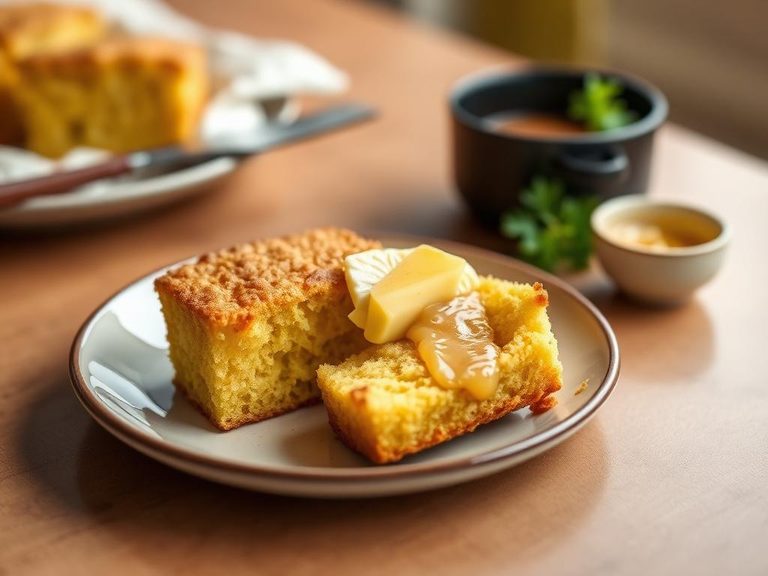
People love honey butter for its luxurious, indulgent flavor that transforms simple foods like cornbread or toast into a treat. Its versatility as a spread, glaze, or baking ingredient makes it a beloved staple in many kitchens.
⚠️ Watch-outs & how to enjoy it better
The high sugar and fat content can contribute to blood sugar spikes and excess calorie intake if consumed in large amounts. To counteract this, pair it with high-fiber foods like whole-grain bread or use it sparingly as a flavor accent rather than a main component.
Key benefits
- Provides a quick source of energy from carbohydrates and fats.
- Adds rich flavor to plain foods like bread or vegetables.
- Contains small amounts of fat-soluble vitamins from the butter component.
- Can be used as a flavor enhancer in baking and cooking.
🍽️ Popular dishes
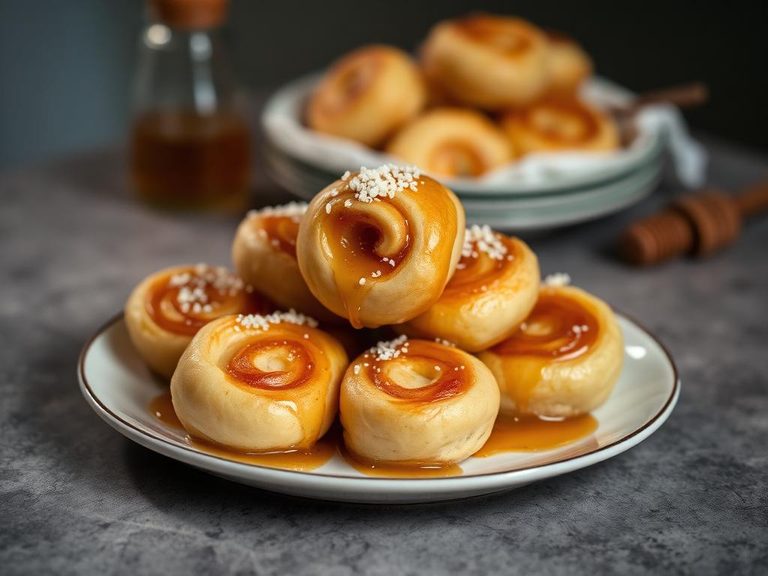
🌍 Where it's eaten
💡 Did you know?
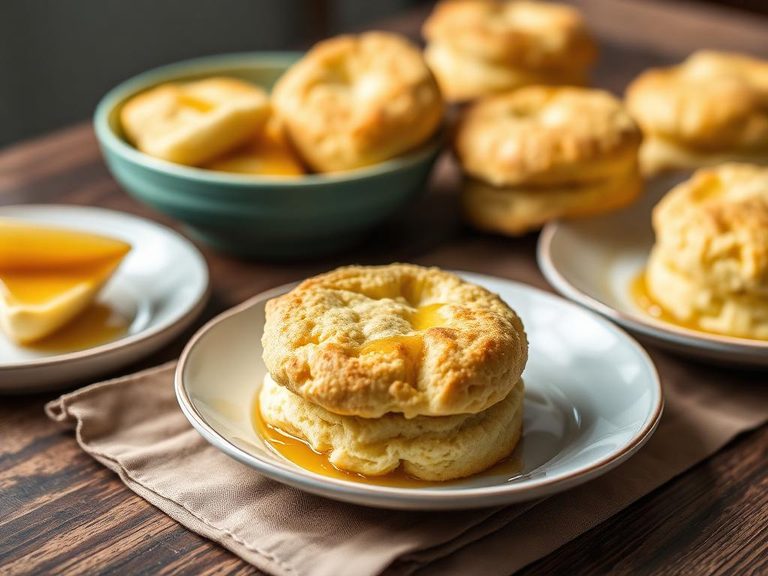
Honey butter was a popular condiment on American railroad dining cars in the early 20th century, often served with warm biscuits to passengers.
Full nutrition (USDA data · scales with serving)
| Water | 16.6 g |
| Energy | 485 kcal |
| Protein | 0.53 g |
| Total lipid (fat) | 33.9 g |
| Carbohydrate, by difference | 48.5 g |
| Fiber, total dietary | 0.10 g |
| Total Sugars | 48.5 g |
| Calcium, Ca | 12.0 mg |
| Iron, Fe | 0.27 mg |
| Magnesium, Mg | 2.0 mg |
| Phosphorus, P | 11.0 mg |
| Potassium, K | 40.0 mg |
| Sodium, Na | 218 mg |
| Zinc, Zn | 0.16 mg |
| Copper, Cu | 0.02 mg |
| Selenium, Se | 0.50 ug |
| Vitamin C, total ascorbic acid | 0.30 mg |
| Thiamin | 0.00 mg |
| Riboflavin | 0.02 mg |
| Niacin | 0.07 mg |
| Vitamin B-6 | 0.01 mg |
| Folate, total | 3.0 ug |
| Folic acid | 0.00 ug |
| Folate, food | 3.0 ug |
| Folate, DFE | 3.0 ug |
| Choline, total | 9.0 mg |
| Vitamin B-12 | 0.00 ug |
| Vitamin B-12, added | 0.00 ug |
| Vitamin A, RAE | 312 ug |
| Retinol | 306 ug |
| Carotene, beta | 69.0 ug |
| Carotene, alpha | 1.0 ug |
| Cryptoxanthin, beta | 3.0 ug |
| Lycopene | 0.00 ug |
| Lutein + zeaxanthin | 0.00 ug |
| Vitamin E (alpha-tocopherol) | 0.00 mg |
| Vitamin E, added | 0.00 mg |
| Vitamin D (D2 + D3) | 0.20 ug |
| Vitamin K (phylloquinone) | 2.9 ug |
| Alcohol, ethyl | 0.00 g |
| Caffeine | 0.00 mg |
| Theobromine | 0.00 mg |
Fat & fatty acid profile (per 100g)
| Fatty acids, total saturated | 18.8 g |
| SFA 4:0 | 0.84 g |
| SFA 6:0 | 0.59 g |
| SFA 8:0 | 0.35 g |
| SFA 10:0 | 0.79 g |
| SFA 12:0 | 0.91 g |
| SFA 14:0 | 2.9 g |
| SFA 16:0 | 8.7 g |
| SFA 18:0 | 3.1 g |
| Fatty acids, total monounsaturated | 7.0 g |
| MUFA 16:1 | 0.41 g |
| MUFA 18:1 | 6.2 g |
| MUFA 20:1 | 0.05 g |
| MUFA 22:1 | 0.00 g |
| Fatty acids, total polyunsaturated | 1.0 g |
| PUFA 18:2 | 0.93 g |
| PUFA 18:3 | 0.14 g |
| PUFA 18:4 | 0.01 g |
| PUFA 20:4 | 0.04 g |
| PUFA 20:5 n-3 (EPA) | 0.01 g |
| PUFA 22:5 n-3 (DPA) | 0.02 g |
| PUFA 22:6 n-3 (DHA) | 0.00 g |
| Cholesterol | 97.0 mg |
Amino acid profile (per 100g)
Estimated from Candies, honey-combed, with peanut butter — USDA does not publish this profile for Honey butter.
| Tryptophan | 0.09 g |
| Threonine | 0.21 g |
| Isoleucine | 0.24 g |
| Leucine | 0.61 g |
| Lysine | 0.27 g |
| Methionine | 0.10 g |
| Cystine | 0.09 g |
| Phenylalanine | 0.47 g |
| Tyrosine | 0.33 g |
| Valine | 0.31 g |
| Arginine | 1.1 g |
| Histidine | 0.22 g |
| Alanine | 0.36 g |
| Aspartic acid | 1.2 g |
| Glutamic acid | 2.0 g |
| Glycine | 0.56 g |
| Proline | 0.55 g |
| Serine | 0.58 g |
FAQ
How is honey butter made?
Honey butter is made by creaming together softened butter and honey until smooth and fluffy, often with a pinch of salt to balance the sweetness.
Can honey butter be used in baking?
Yes, honey butter can be used in baking to add moisture and sweetness to cakes, cookies, and breads, though it may affect the texture due to its high fat and sugar content.
Is honey butter a healthy option?
Honey butter is not considered a health food due to its high calorie, fat, and sugar content, but it can be enjoyed in moderation as part of a balanced diet.
Nutrient density (calculated · NRF9.3)
Nutrient Rich Foods index: beneficial nutrients (protein, fiber, vitamins, minerals) minus saturated fat, added sugar & sodium, per 100 kcal.
NRF9.3 index — Fulgoni, Keast & Drewnowski, 2009. Computed from USDA nutrients.
Weight-loss friendliness (composite index)
Energy density 4.85 kcal/g · 0% calories from protein · 0.1 g fiber · 48.5 g sugar per 100 g.
Composite of energy density (Rolls et al., 1999), protein & fiber satiety, minus sugar. A calculated heuristic — ranks satiety-per-calorie, not a clinical measure.
Dietary load (calculated from USDA values)
Potential renal acid load. Positive = acid-forming, negative = alkaline-forming.
Sodium-to-potassium ratio: 5.45 (lower is better — aim for ≤ 1)
Sodium:potassium per WHO potassium guidance. Computed from USDA nutrients.