

Ham, honey, smoked, cooked
Whole food · Sausages and Luncheon Meats
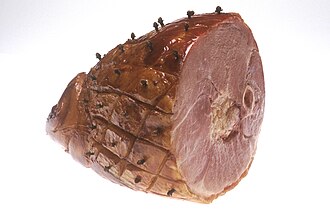
Photo: Wikipedia
Smoked honey ham is a cured pork leg, typically pre-cooked and finished with a sweet, smoky glaze. Its flavor is a savory-sweet balance with a tender, slightly fibrous texture that slices cleanly. Nutritionally, it's a lean protein powerhouse with minimal fat and zero sugar, despite the honey in its name.
Calorie split: 59% protein · 24% carbs · 17% fat
↓ Full nutrition💚 Why it's loved
People love it for its perfect harmony of savory, smoky, and subtly sweet flavors that elevate sandwiches and salads. It's a cultural staple for holiday feasts and a versatile, ready-to-eat protein for everyday meals.
⚠️ Watch-outs & how to enjoy it better
The primary concern is its high sodium content from the curing process, which can be problematic for those monitoring blood pressure. To counteract this, pair it with potassium-rich foods like leafy greens or avocado, and practice portion control. It is also a common allergen for those with pork sensitivities.
Key benefits
- Excellent source of high-quality protein for muscle maintenance.
- Very low in fat, making it a lean meat choice.
- Provides essential minerals like zinc and selenium.
- Convenient, pre-cooked protein for quick meals.
- Zero sugar and zero fiber per serving.
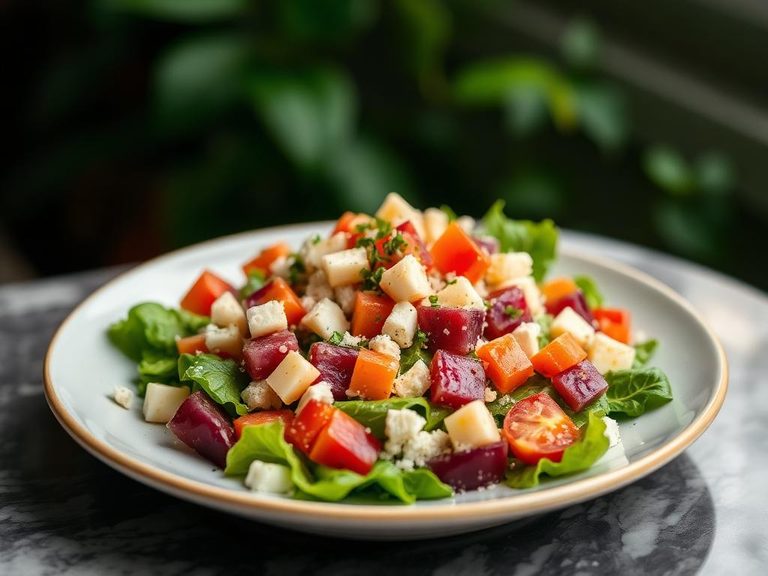
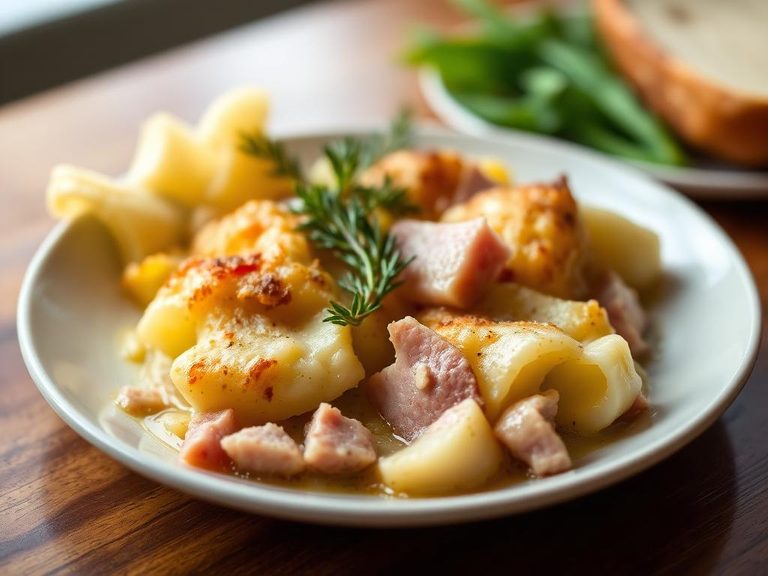
🍽️ Popular dishes




🌍 Where it's eaten
💡 Did you know?
The 'smoked' flavor in many commercial honey hams comes from liquid smoke applied to the surface, not from traditional wood-smoking the entire leg.
Full nutrition (USDA data · scales with serving)
| Water | 69.9 g |
| Energy | 122 kcal |
| Energy | 511 kj |
| Protein | 17.9 g |
| Total lipid (fat) | 2.4 g |
| Ash | 2.5 g |
| Carbohydrate, by difference | 7.3 g |
| Fiber, total dietary | 0.00 g |
| Total Sugars | 0.00 g |
| Calcium, Ca | 6.0 mg |
| Iron, Fe | 0.39 mg |
| Magnesium, Mg | 8.0 mg |
| Phosphorus, P | 384 mg |
| Potassium, K | 165 mg |
| Sodium, Na | 900 mg |
| Zinc, Zn | 0.91 mg |
| Copper, Cu | 0.04 mg |
| Manganese, Mn | 0.03 mg |
| Selenium, Se | 10.4 ug |
| Vitamin C, total ascorbic acid | 0.60 mg |
| Thiamin | 0.40 mg |
| Riboflavin | 0.10 mg |
| Niacin | 2.3 mg |
| Pantothenic acid | 0.24 mg |
| Vitamin B-6 | 0.23 mg |
| Folate, total | 2.0 ug |
| Folic acid | 0.00 ug |
| Folate, food | 2.0 ug |
| Folate, DFE | 2.0 ug |
| Vitamin B-12 | 0.38 ug |
| Vitamin A, RAE | 0.00 ug |
| Retinol | 0.00 ug |
| Carotene, beta | 0.00 ug |
| Carotene, alpha | 0.00 ug |
| Cryptoxanthin, beta | 0.00 ug |
| Vitamin A, IU | 0.00 iu |
| Lycopene | 0.00 ug |
| Lutein + zeaxanthin | 0.00 ug |
| Alcohol, ethyl | 0.00 g |
| Caffeine | 0.00 mg |
| Theobromine | 0.00 mg |
Fat & fatty acid profile (per 100g)
| Fatty acids, total saturated | 0.87 g |
| SFA 12:0 | 0.00 g |
| SFA 14:0 | 0.04 g |
| SFA 16:0 | 0.58 g |
| SFA 18:0 | 0.25 g |
| Fatty acids, total monounsaturated | 1.2 g |
| MUFA 16:1 | 0.07 g |
| MUFA 18:1 | 1.2 g |
| Fatty acids, total polyunsaturated | 0.23 g |
| PUFA 18:2 | 0.22 g |
| PUFA 18:3 | 0.01 g |
| Cholesterol | 22.0 mg |
Amino acid profile (per 100g)
Estimated from Ham, chopped, canned — USDA does not publish this profile for Ham.
| Tryptophan | 0.18 g |
| Threonine | 0.72 g |
| Isoleucine | 0.69 g |
| Leucine | 1.2 g |
| Lysine | 1.4 g |
| Methionine | 0.42 g |
| Cystine | 0.19 g |
| Phenylalanine | 0.62 g |
| Tyrosine | 0.53 g |
| Valine | 0.72 g |
| Arginine | 1.00 g |
| Histidine | 0.64 g |
| Alanine | 0.92 g |
| Aspartic acid | 1.5 g |
| Glutamic acid | 2.4 g |
| Glycine | 0.79 g |
| Proline | 0.68 g |
| Serine | 0.63 g |
FAQ
Is honey smoked ham already cooked?
Yes, it is fully cooked and safe to eat cold. It is typically reheated to an internal temperature of 140°F (60°C) for serving.
How is honey smoked ham different from regular ham?
It is distinguished by a glaze or rub containing honey and a smoking process (or liquid smoke) that imparts a characteristic sweet and smoky flavor profile.
Can I eat the ham if I'm watching my sugar intake?
Despite the 'honey' name, this ham has 0g of sugar per 100g, making it a suitable choice for low-sugar diets. Always check the label for any added glazes.
Nutrient density (calculated · NRF9.3)
Nutrient Rich Foods index: beneficial nutrients (protein, fiber, vitamins, minerals) minus saturated fat, added sugar & sodium, per 100 kcal.
NRF9.3 index — Fulgoni, Keast & Drewnowski, 2009. Computed from USDA nutrients.
Weight-loss friendliness (composite index)
Energy density 1.22 kcal/g · 59% calories from protein · 0.0 g fiber · 0.0 g sugar per 100 g.
Composite of energy density (Rolls et al., 1999), protein & fiber satiety, minus sugar. A calculated heuristic — ranks satiety-per-calorie, not a clinical measure.
Dietary load (calculated from USDA values)
Potential renal acid load. Positive = acid-forming, negative = alkaline-forming.
Sodium-to-potassium ratio: 5.45 (lower is better — aim for ≤ 1)
Sodium:potassium per WHO potassium guidance. Computed from USDA nutrients.