

Fish, halibut, greenland, cooked, dry heat
Whole food · Finfish and Shellfish Products

Photo: Wikipedia
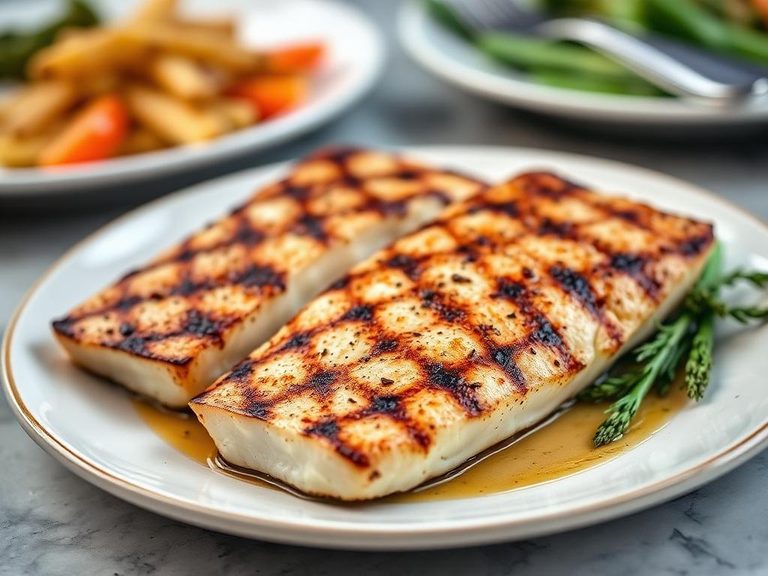
Greenland halibut, when cooked with dry heat, transforms into a firm, snow-white steak with a delicate, buttery flavor and a meaty, flakey texture. It's a nutritional powerhouse, delivering a substantial 18.42g of protein per 100g while being completely carb-free and providing a rich source of healthy fats.
Calorie split: 32% protein · 0% carbs · 68% fat
↓ Full nutrition💚 Why it's loved
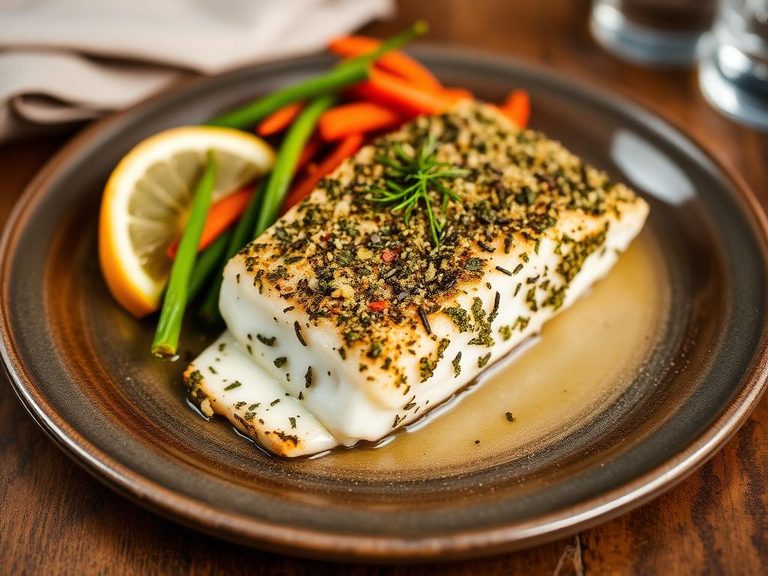
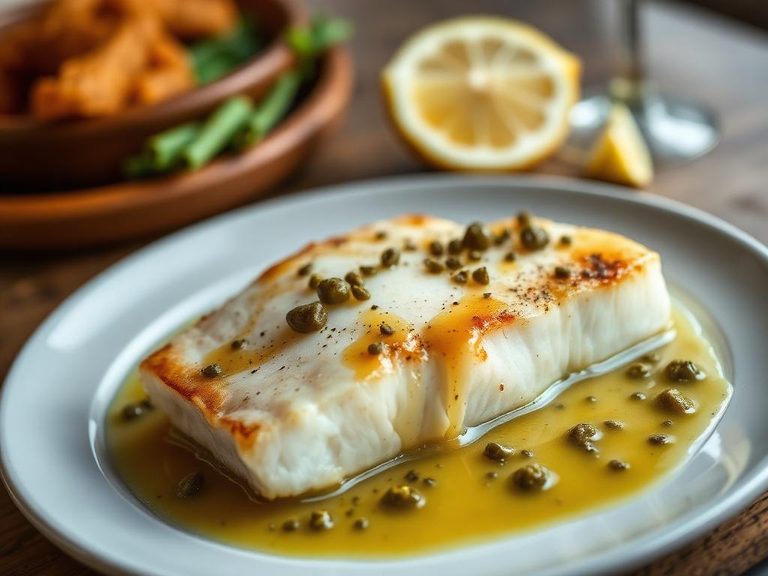
People cherish its clean, sweet ocean flavor that is robust yet not overpowering, and its firm texture holds up beautifully to grilling, broiling, or pan-searing. It's celebrated for its versatility, serving as a premium canvas for everything from simple lemon-butter preparations to complex spice rubs.
⚠️ Watch-outs & how to enjoy it better
Its high fat content, while mostly healthy, makes it a calorie-dense choice, so portion control is key for those monitoring energy intake. As a finfish, it is a common allergen; individuals with fish or shellfish allergies must avoid it. To counteract potential dryness from overcooking, use a meat thermometer (aim for 145°F/63°C internal temp) and consider basting with butter or oil.
Key benefits
- Excellent source of high-quality protein for muscle maintenance.
- Rich in omega-3 fatty acids, supporting heart and brain health.
- Provides essential nutrients like selenium, niacin, and vitamin B12.
- Naturally zero in carbohydrates and sugars, ideal for low-carb diets.
- A lean, satisfying protein source that promotes satiety.
🍽️ Popular dishes
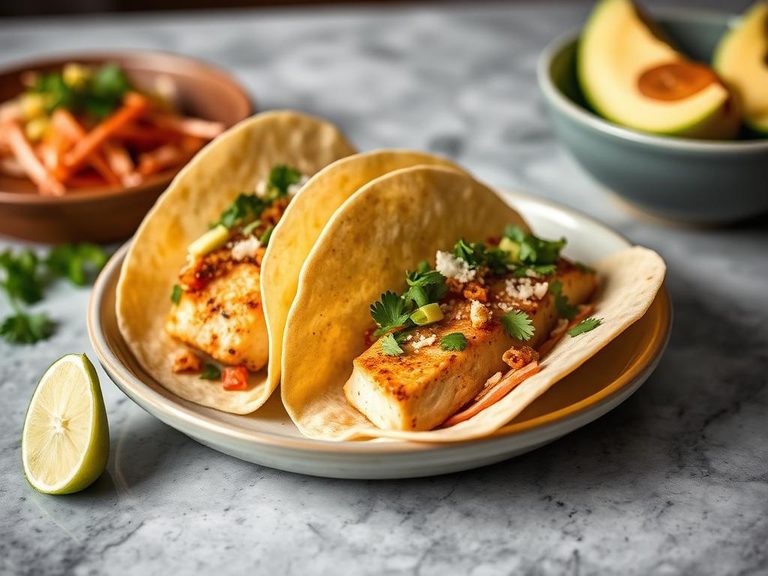
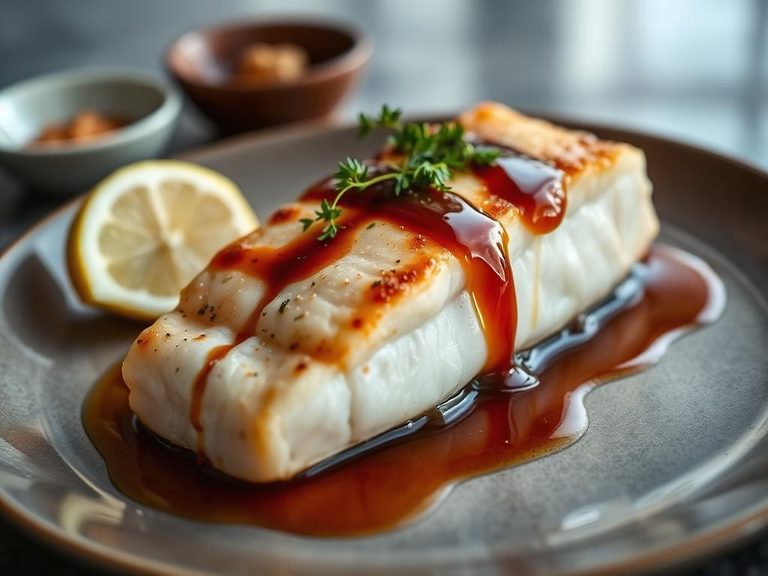
🌍 Where it's eaten
💡 Did you know?
Greenland halibut is not a true flatfish like its Atlantic or Pacific cousins; it's actually a member of the right-eye flounder family and is known to swim in a more upright, conventional fish posture at times.
Full nutrition (USDA data · scales with serving)
| Water | 61.9 g |
| Energy | 239 kcal |
| Energy | 1000 kj |
| Protein | 18.4 g |
| Total lipid (fat) | 17.7 g |
| Ash | 1.3 g |
| Carbohydrate, by difference | 0.00 g |
| Fiber, total dietary | 0.00 g |
| Calcium, Ca | 4.0 mg |
| Iron, Fe | 0.85 mg |
| Magnesium, Mg | 33.0 mg |
| Phosphorus, P | 210 mg |
| Potassium, K | 344 mg |
| Sodium, Na | 103 mg |
| Zinc, Zn | 0.51 mg |
| Copper, Cu | 0.04 mg |
| Manganese, Mn | 0.01 mg |
| Selenium, Se | 46.8 ug |
| Vitamin C, total ascorbic acid | 0.00 mg |
| Thiamin | 0.07 mg |
| Riboflavin | 0.10 mg |
| Niacin | 1.9 mg |
| Pantothenic acid | 0.29 mg |
| Vitamin B-6 | 0.48 mg |
| Folate, total | 1.0 ug |
| Folic acid | 0.00 ug |
| Folate, food | 1.0 ug |
| Folate, DFE | 1.0 ug |
| Vitamin B-12 | 0.96 ug |
| Vitamin A, RAE | 18.0 ug |
| Retinol | 18.0 ug |
| Vitamin A, IU | 60.0 iu |
Fat & fatty acid profile (per 100g)
| Fatty acids, total saturated | 3.1 g |
| SFA 12:0 | 0.01 g |
| SFA 14:0 | 0.97 g |
| SFA 16:0 | 1.8 g |
| SFA 18:0 | 0.25 g |
| Fatty acids, total monounsaturated | 10.7 g |
| MUFA 16:1 | 2.3 g |
| MUFA 18:1 | 3.1 g |
| MUFA 20:1 | 2.9 g |
| MUFA 22:1 | 2.5 g |
| Fatty acids, total polyunsaturated | 1.8 g |
| PUFA 18:2 | 0.16 g |
| PUFA 18:3 | 0.06 g |
| PUFA 18:4 | 0.17 g |
| PUFA 20:4 | 0.08 g |
| PUFA 20:5 n-3 (EPA) | 0.67 g |
| PUFA 22:5 n-3 (DPA) | 0.11 g |
| PUFA 22:6 n-3 (DHA) | 0.50 g |
| Cholesterol | 59.0 mg |
Amino acid profile (per 100g)
| Tryptophan | 0.21 g |
| Threonine | 0.81 g |
| Isoleucine | 0.85 g |
| Leucine | 1.5 g |
| Lysine | 1.7 g |
| Methionine | 0.55 g |
| Cystine | 0.20 g |
| Phenylalanine | 0.72 g |
| Tyrosine | 0.62 g |
| Valine | 0.95 g |
| Arginine | 1.1 g |
| Histidine | 0.54 g |
| Alanine | 1.1 g |
| Aspartic acid | 1.9 g |
| Glutamic acid | 2.8 g |
| Glycine | 0.88 g |
| Proline | 0.65 g |
| Serine | 0.75 g |
FAQ
How is Greenland halibut different from regular halibut?
Greenland halibut (Reinhardtius hippoglossoides) is a distinct species found in cold, deep North Atlantic and Arctic waters. It has a higher fat content, a darker flesh, and a slightly richer flavor than the more common Atlantic or Pacific halibut.
What's the best way to cook it to keep it moist?
Dry-heat methods like grilling, broiling, or pan-searing work best. Avoid overcooking—cook just until the flesh is opaque and flakes easily. Basting with butter or oil and finishing with a sauce or salsa helps retain moisture.
Is it safe to eat raw, like in sushi?
While some halibut species are used in sashimi, Greenland halibut is typically sold frozen to kill parasites, making it safer for raw consumption if properly handled. Always source from a reputable supplier and follow food safety guidelines.
Nutrient density (calculated · NRF9.3)
Nutrient Rich Foods index: beneficial nutrients (protein, fiber, vitamins, minerals) minus saturated fat, added sugar & sodium, per 100 kcal.
NRF9.3 index — Fulgoni, Keast & Drewnowski, 2009. Computed from USDA nutrients.
Weight-loss friendliness (composite index)
Energy density 2.39 kcal/g · 31% calories from protein · 0.0 g fiber · 0.0 g sugar per 100 g.
Composite of energy density (Rolls et al., 1999), protein & fiber satiety, minus sugar. A calculated heuristic — ranks satiety-per-calorie, not a clinical measure.
Dietary load (calculated from USDA values)
Potential renal acid load. Positive = acid-forming, negative = alkaline-forming.
Sodium-to-potassium ratio: 0.30 (lower is better — aim for ≤ 1)
Sodium:potassium per WHO potassium guidance. Computed from USDA nutrients.