

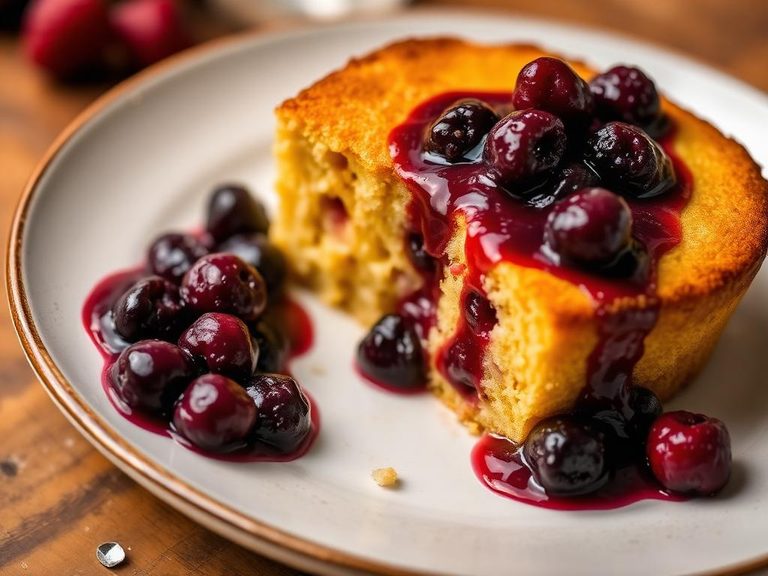
Cornbread muffin, stick, round, made from home recipe
Common food

Photo: Wikipedia
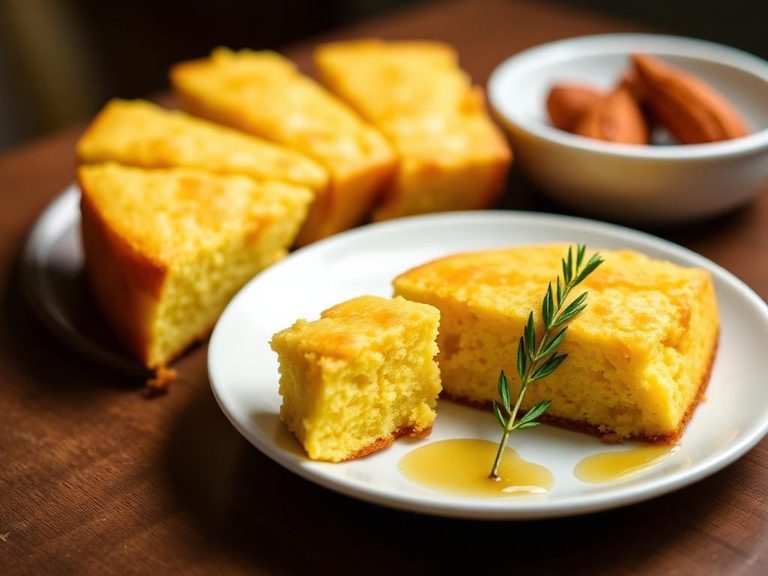
This is a golden, crumbly quick bread baked in a round stick or muffin tin, boasting a sweet corn aroma and a tender, cake-like interior with a slightly crisp edge. Its primary nutritional highlight is its substantial carbohydrate content, providing a quick source of energy. The home recipe version typically uses simple, wholesome ingredients like cornmeal, flour, and buttermilk.
Calorie split: 9% protein · 60% carbs · 31% fat
↓ Full nutrition💚 Why it's loved
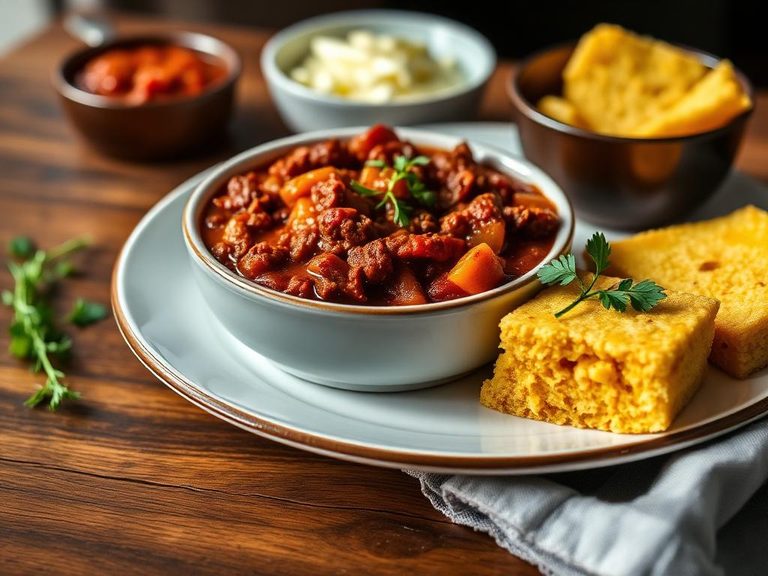
People adore it for its comforting, slightly sweet corn flavor and its perfect balance of a moist crumb with a satisfyingly crisp top. Its versatility is key—it’s equally at home slathered with honey butter, serving as a base for chili, or standing alone as a snack.
⚠️ Watch-outs & how to enjoy it better
Its high carbohydrate and sugar content can cause blood-sugar spikes, making it a concern for diabetics or those monitoring glycemic load. The refined flour and sugar in many recipes offer little nutritional density. To counteract this, pair a small portion with a protein like chili or a healthy fat like avocado, or opt for a recipe using whole-grain cornmeal and reduced sugar.
Key benefits
- Provides quick energy from complex carbohydrates.
- Contains some plant-based protein from cornmeal.
- A versatile base for both sweet and savory toppings.
- Simple, comforting, and easy to prepare at home.
- Can be a good source of dietary fiber if made with whole-grain cornmeal.
🍽️ Popular dishes
🌍 Where it's eaten
💡 Did you know?
The earliest forms of cornbread were not baked but were unleavened flatbreads made by indigenous peoples of the Americas using ground maize, predating the introduction of European-style ovens and wheat flour.
Full nutrition (USDA data · scales with serving)
| Water | 33.6 g |
| Energy | 307 kcal |
| Protein | 7.0 g |
| Total lipid (fat) | 10.5 g |
| Carbohydrate, by difference | 45.9 g |
| Fiber, total dietary | 1.6 g |
| Total Sugars | 7.3 g |
| Calcium, Ca | 217 mg |
| Iron, Fe | 2.9 mg |
| Magnesium, Mg | 22.0 mg |
| Phosphorus, P | 170 mg |
| Potassium, K | 152 mg |
| Sodium, Na | 519 mg |
| Zinc, Zn | 0.65 mg |
| Copper, Cu | 0.06 mg |
| Selenium, Se | 10.1 ug |
| Vitamin C, total ascorbic acid | 0.00 mg |
| Thiamin | 0.31 mg |
| Riboflavin | 0.28 mg |
| Niacin | 2.6 mg |
| Vitamin B-6 | 0.08 mg |
| Folate, total | 69.0 ug |
| Folic acid | 55.0 ug |
| Folate, food | 15.0 ug |
| Folate, DFE | 107 ug |
| Choline, total | 35.4 mg |
| Vitamin B-12 | 0.22 ug |
| Vitamin B-12, added | 0.00 ug |
| Vitamin A, RAE | 45.0 ug |
| Retinol | 43.0 ug |
| Carotene, beta | 24.0 ug |
| Carotene, alpha | 15.0 ug |
| Cryptoxanthin, beta | 1.0 ug |
| Lycopene | 0.00 ug |
| Lutein + zeaxanthin | 426 ug |
| Vitamin E (alpha-tocopherol) | 1.6 mg |
| Vitamin E, added | 0.00 mg |
| Vitamin D (D2 + D3) | 0.70 ug |
| Vitamin K (phylloquinone) | 8.0 ug |
| Alcohol, ethyl | 0.00 g |
| Caffeine | 0.00 mg |
| Theobromine | 0.00 mg |
Fat & fatty acid profile (per 100g)
| Fatty acids, total saturated | 2.0 g |
| SFA 4:0 | 0.02 g |
| SFA 6:0 | 0.02 g |
| SFA 8:0 | 0.01 g |
| SFA 10:0 | 0.03 g |
| SFA 12:0 | 0.03 g |
| SFA 14:0 | 0.10 g |
| SFA 16:0 | 1.3 g |
| SFA 18:0 | 0.41 g |
| Fatty acids, total monounsaturated | 4.0 g |
| MUFA 16:1 | 0.07 g |
| MUFA 18:1 | 3.9 g |
| MUFA 20:1 | 0.05 g |
| MUFA 22:1 | 0.00 g |
| Fatty acids, total polyunsaturated | 3.5 g |
| PUFA 18:2 | 3.1 g |
| PUFA 18:3 | 0.36 g |
| PUFA 18:4 | 0.00 g |
| PUFA 20:4 | 0.00 g |
| PUFA 20:5 n-3 (EPA) | 0.00 g |
| PUFA 22:5 n-3 (DPA) | 0.00 g |
| PUFA 22:6 n-3 (DHA) | 0.00 g |
| Cholesterol | 42.0 mg |
Amino acid profile (per 100g)
Estimated from Bread, cornbread, dry mix, unenriched (includes corn muffin mix) — USDA does not publish this profile for Cornbread muffin.
| Tryptophan | 0.07 g |
| Threonine | 0.22 g |
| Isoleucine | 0.25 g |
| Leucine | 0.63 g |
| Lysine | 0.20 g |
| Methionine | 0.13 g |
| Cystine | 0.13 g |
| Phenylalanine | 0.34 g |
| Tyrosine | 0.24 g |
| Valine | 0.32 g |
| Arginine | 0.30 g |
| Histidine | 0.18 g |
| Alanine | 0.34 g |
| Aspartic acid | 0.38 g |
| Glutamic acid | 1.8 g |
| Glycine | 0.25 g |
| Proline | 0.71 g |
| Serine | 0.34 g |
FAQ
What's the difference between cornbread and corn muffins?
The batter is essentially the same, but the name reflects the baking vessel and final shape. 'Cornbread' is typically baked in a skillet or square pan and cut into squares, while 'corn muffins' are baked in a muffin tin, yielding individual portions. The texture can vary slightly, with muffins often being a bit lighter.
Why is my cornbread dry or crumbly?
Overbaking is the most common culprit. Cornbread continues to cook from residual heat after leaving the oven. Also, ensure your measurements are accurate—too much cornmeal or flour relative to liquid will dry it out. Using buttermilk or adding a touch of honey can help retain moisture.
Can I make cornbread gluten-free?
Yes, cornbread is easily adapted. Use a gluten-free all-purpose flour blend in place of the wheat flour, and ensure all other ingredients (like baking powder) are certified gluten-free. The cornmeal itself is naturally gluten-free, but cross-contamination is possible, so check labels.
Nutrient density (calculated · NRF9.3)
Nutrient Rich Foods index: beneficial nutrients (protein, fiber, vitamins, minerals) minus saturated fat, added sugar & sodium, per 100 kcal.
NRF9.3 index — Fulgoni, Keast & Drewnowski, 2009. Computed from USDA nutrients.
Weight-loss friendliness (composite index)
Energy density 3.07 kcal/g · 9% calories from protein · 1.6 g fiber · 7.3 g sugar per 100 g.
Composite of energy density (Rolls et al., 1999), protein & fiber satiety, minus sugar. A calculated heuristic — ranks satiety-per-calorie, not a clinical measure.
Dietary load (calculated from USDA values)
Potential renal acid load. Positive = acid-forming, negative = alkaline-forming.
Sodium-to-potassium ratio: 3.41 (lower is better — aim for ≤ 1)
Sodium:potassium per WHO potassium guidance. Computed from USDA nutrients.