

Cornbread, made from home recipe
Common food

Photo: Wikipedia
Homemade cornbread is a golden, crumbly quick bread with a slightly sweet, earthy corn flavor and a tender, cake-like texture. Nutritionally, it's a carbohydrate-rich energy source, providing about 43g of carbs per 100g, with a modest amount of protein and fat from its core ingredients of cornmeal, flour, eggs, and fat.
Calorie split: 9% protein · 60% carbs · 31% fat
↓ Full nutrition💚 Why it's loved
People cherish homemade cornbread for its comforting, nostalgic flavor that evokes family kitchens and regional traditions. Its remarkable versatility allows it to be a sweet side with honey butter, a savory base for chili, or a simple snack on its own.
⚠️ Watch-outs & how to enjoy it better
The primary downside is its high glycemic load, which can cause blood-sugar spikes, making it a cautionary choice for diabetics or those managing blood sugar. To counteract this, pair it with a protein or healthy fat (like chili with beans, eggs, or avocado) and practice portion control. Some recipes can also be high in sodium or contain common allergens like wheat or eggs.
Key benefits
- Provides quick energy from complex carbohydrates
- Contains some protein from cornmeal and eggs
- Source of dietary fiber, especially if made with whole-grain cornmeal
- Can be a gluten-free staple if prepared with certified gluten-free cornmeal
- Versatile base for both sweet and savory meals
🍽️ Popular dishes
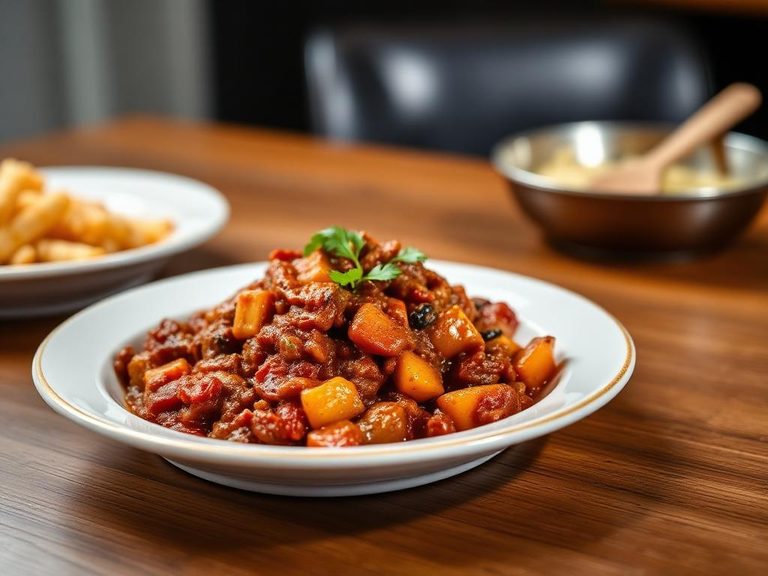
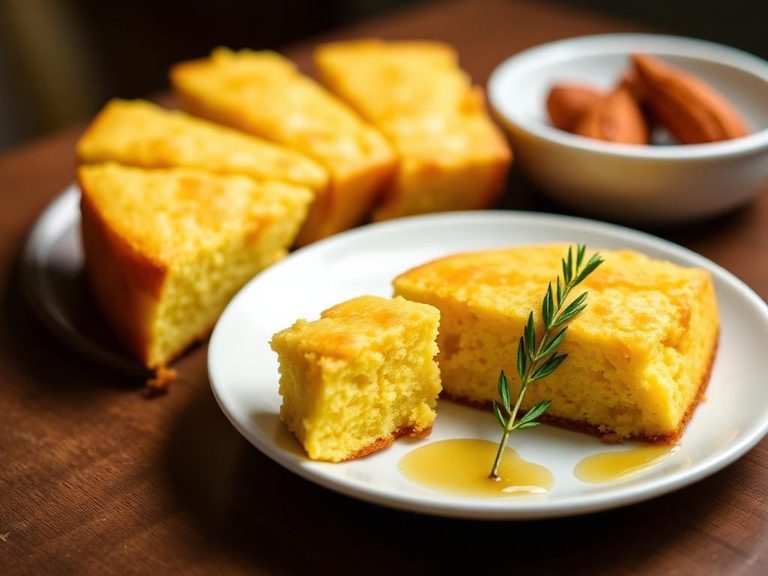


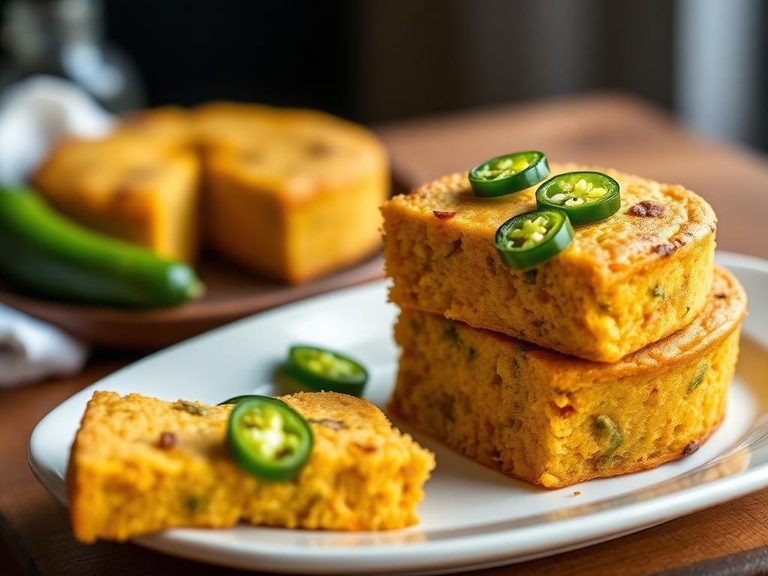
🌍 Where it's eaten
💡 Did you know?
Traditional Southern cornbread recipes often contain no sugar at all, relying purely on the natural sweetness of the corn and the savory notes from buttermilk and bacon drippings.
Full nutrition (USDA data · scales with serving)
| Water | 38.0 g |
| Energy | 287 kcal |
| Protein | 6.5 g |
| Total lipid (fat) | 9.8 g |
| Carbohydrate, by difference | 42.9 g |
| Fiber, total dietary | 1.5 g |
| Total Sugars | 6.8 g |
| Calcium, Ca | 203 mg |
| Iron, Fe | 2.7 mg |
| Magnesium, Mg | 20.0 mg |
| Phosphorus, P | 159 mg |
| Potassium, K | 142 mg |
| Sodium, Na | 485 mg |
| Zinc, Zn | 0.60 mg |
| Copper, Cu | 0.05 mg |
| Selenium, Se | 9.4 ug |
| Vitamin C, total ascorbic acid | 0.00 mg |
| Thiamin | 0.29 mg |
| Riboflavin | 0.26 mg |
| Niacin | 2.4 mg |
| Vitamin B-6 | 0.08 mg |
| Folate, total | 64.0 ug |
| Folic acid | 51.0 ug |
| Folate, food | 14.0 ug |
| Folate, DFE | 100 ug |
| Choline, total | 33.0 mg |
| Vitamin B-12 | 0.20 ug |
| Vitamin B-12, added | 0.00 ug |
| Vitamin A, RAE | 42.0 ug |
| Retinol | 40.0 ug |
| Carotene, beta | 23.0 ug |
| Carotene, alpha | 14.0 ug |
| Cryptoxanthin, beta | 1.0 ug |
| Lycopene | 0.00 ug |
| Lutein + zeaxanthin | 398 ug |
| Vitamin E (alpha-tocopherol) | 1.5 mg |
| Vitamin E, added | 0.00 mg |
| Vitamin D (D2 + D3) | 0.70 ug |
| Vitamin K (phylloquinone) | 7.5 ug |
| Alcohol, ethyl | 0.00 g |
| Caffeine | 0.00 mg |
| Theobromine | 0.00 mg |
Fat & fatty acid profile (per 100g)
| Fatty acids, total saturated | 1.9 g |
| SFA 4:0 | 0.02 g |
| SFA 6:0 | 0.01 g |
| SFA 8:0 | 0.01 g |
| SFA 10:0 | 0.02 g |
| SFA 12:0 | 0.03 g |
| SFA 14:0 | 0.09 g |
| SFA 16:0 | 1.2 g |
| SFA 18:0 | 0.38 g |
| Fatty acids, total monounsaturated | 3.7 g |
| MUFA 16:1 | 0.06 g |
| MUFA 18:1 | 3.6 g |
| MUFA 20:1 | 0.05 g |
| MUFA 22:1 | 0.00 g |
| Fatty acids, total polyunsaturated | 3.3 g |
| PUFA 18:2 | 2.9 g |
| PUFA 18:3 | 0.33 g |
| PUFA 18:4 | 0.00 g |
| PUFA 20:4 | 0.00 g |
| PUFA 20:5 n-3 (EPA) | 0.00 g |
| PUFA 22:5 n-3 (DPA) | 0.00 g |
| PUFA 22:6 n-3 (DHA) | 0.00 g |
| Cholesterol | 39.0 mg |
Amino acid profile (per 100g)
Estimated from Bread, stuffing, cornbread, dry mix — USDA does not publish this profile for Cornbread.
| Tryptophan | 0.10 g |
| Threonine | 0.32 g |
| Isoleucine | 0.36 g |
| Leucine | 0.87 g |
| Lysine | 0.28 g |
| Methionine | 0.19 g |
| Cystine | 0.20 g |
| Phenylalanine | 0.50 g |
| Tyrosine | 0.34 g |
| Valine | 0.45 g |
| Arginine | 0.44 g |
| Histidine | 0.25 g |
| Alanine | 0.48 g |
| Aspartic acid | 0.55 g |
| Glutamic acid | 2.7 g |
| Glycine | 0.38 g |
| Proline | 1.0 g |
| Serine | 0.49 g |
FAQ
Is cornbread healthy?
It's a source of energy and some nutrients, but it's calorie-dense and high in carbs. Its healthiness depends on the recipe (e.g., using whole-grain cornmeal, less sugar/fat) and how it's served. Pairing it with protein and fiber-rich foods makes it a more balanced meal.
Why is my cornbread dry?
Overbaking is the most common cause. Cornbread should be removed from the oven when a toothpick comes out with a few moist crumbs, not clean. Also, using too much cornmeal or not enough liquid (like buttermilk) can lead to dryness.
Can I make cornbread gluten-free?
Yes, absolutely. Use certified gluten-free cornmeal and replace wheat flour with a gluten-free all-purpose flour blend. Ensure all other ingredients, like baking powder, are also certified gluten-free to avoid cross-contamination.
Nutrient density (calculated · NRF9.3)
Nutrient Rich Foods index: beneficial nutrients (protein, fiber, vitamins, minerals) minus saturated fat, added sugar & sodium, per 100 kcal.
NRF9.3 index — Fulgoni, Keast & Drewnowski, 2009. Computed from USDA nutrients.
Weight-loss friendliness (composite index)
Energy density 2.87 kcal/g · 9% calories from protein · 1.5 g fiber · 6.8 g sugar per 100 g.
Composite of energy density (Rolls et al., 1999), protein & fiber satiety, minus sugar. A calculated heuristic — ranks satiety-per-calorie, not a clinical measure.
Dietary load (calculated from USDA values)
Potential renal acid load. Positive = acid-forming, negative = alkaline-forming.
Sodium-to-potassium ratio: 3.42 (lower is better — aim for ≤ 1)
Sodium:potassium per WHO potassium guidance. Computed from USDA nutrients.