

Chicken, broilers or fryers, giblets, raw
Whole food · Poultry Products
Chicken giblets are the edible internal organs—typically the heart, liver, and gizzard—of a young broiler or fryer, prized for their rich, mineral-forward flavor and dense, slightly chewy texture. Nutritionally, they are a powerhouse of protein and essential minerals like iron and zinc, with a relatively low calorie count and minimal fat. Their deep, savory taste makes them a cornerstone of traditional stock-making and rustic cuisine.
Calorie split: 60% protein · 6% carbs · 34% fat
↓ Full nutrition💚 Why it's loved
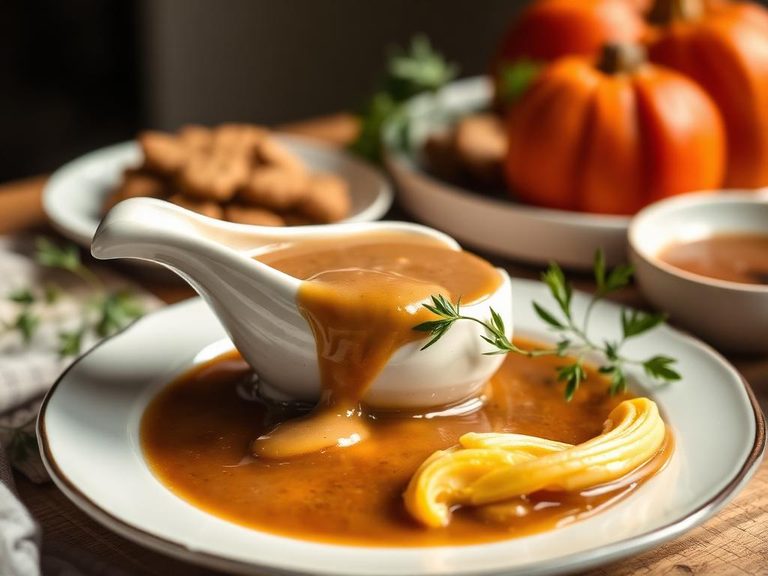
People love giblets for their intense, concentrated umami flavor that adds profound depth to gravies and stocks. They are also cherished in many cultures as a frugal, nose-to-tail ingredient that transforms simple meals into hearty, flavorful feasts.
⚠️ Watch-outs & how to enjoy it better
Some find the texture of liver or gizzard off-putting, and the strong flavor can be overwhelming if not prepared properly. For those with high cholesterol or iron overload conditions, moderation is key; pairing with vitamin C-rich foods like citrus or bell peppers can help manage iron absorption.
Key benefits
- Excellent source of high-quality protein for muscle maintenance.
- Rich in heme iron, which is more easily absorbed than plant-based iron.
- Provides a significant amount of zinc for immune function.
- Naturally low in carbohydrates and sugars.
- Contains B vitamins, particularly B12, crucial for nerve health.
🍽️ Popular dishes
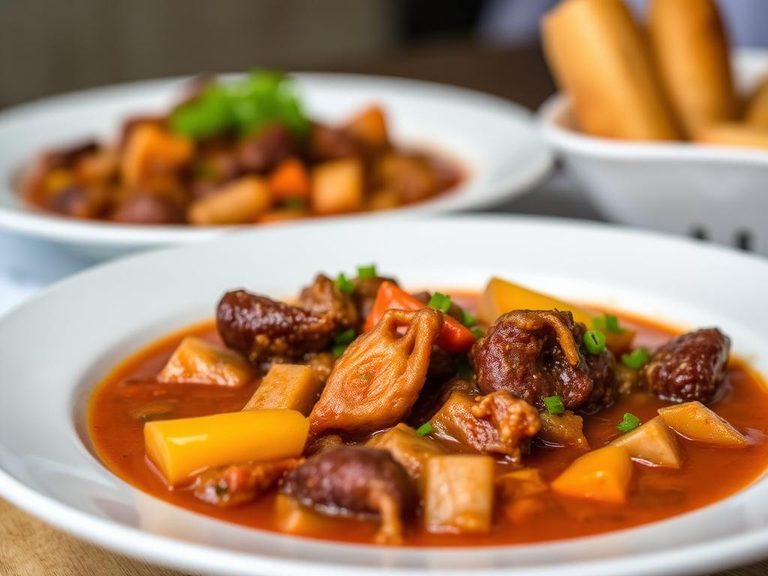
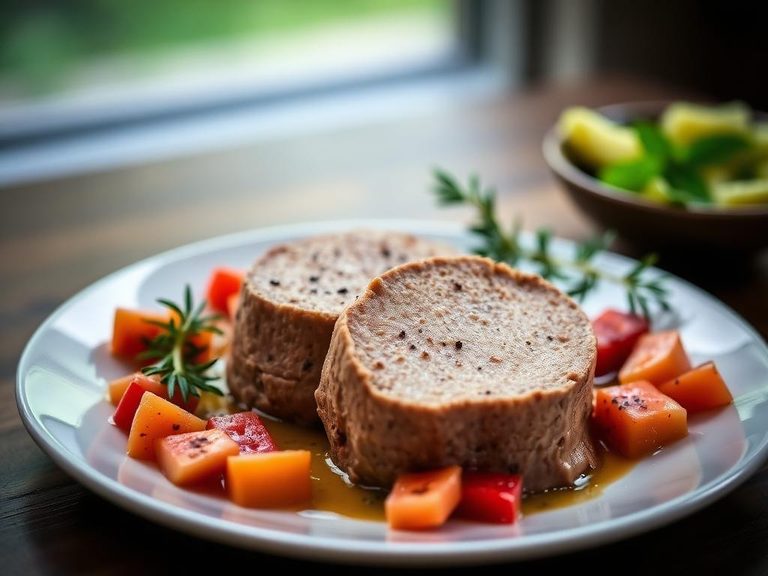
🌍 Where it's eaten
💡 Did you know?
Chicken gizzards are actually a muscular part of the stomach that uses small stones or grit to grind up food, which is why they have a uniquely tough, chewy texture.
Full nutrition (USDA data · scales with serving)
| Water | 74.9 g |
| Energy | 124 kcal |
| Energy | 519 kj |
| Protein | 17.9 g |
| Total lipid (fat) | 4.5 g |
| Ash | 0.99 g |
| Carbohydrate, by difference | 1.8 g |
| Fiber, total dietary | 0.00 g |
| Calcium, Ca | 10.0 mg |
| Iron, Fe | 5.9 mg |
| Magnesium, Mg | 18.0 mg |
| Phosphorus, P | 197 mg |
| Potassium, K | 228 mg |
| Sodium, Na | 77.0 mg |
| Zinc, Zn | 3.3 mg |
| Copper, Cu | 0.24 mg |
| Manganese, Mn | 0.15 mg |
| Selenium, Se | 55.2 ug |
| Vitamin C, total ascorbic acid | 16.2 mg |
| Thiamin | 0.09 mg |
| Riboflavin | 0.99 mg |
| Niacin | 6.7 mg |
| Pantothenic acid | 3.2 mg |
| Vitamin B-6 | 0.42 mg |
| Folate, total | 345 ug |
| Folic acid | 0.00 ug |
| Folate, food | 345 ug |
| Folate, DFE | 345 ug |
| Vitamin B-12 | 11.4 ug |
| Vitamin A, RAE | 2657 ug |
| Retinol | 2657 ug |
| Vitamin A, IU | 8847 iu |
| Alcohol, ethyl | 0.00 g |
Fat & fatty acid profile (per 100g)
| Fatty acids, total saturated | 1.4 g |
| SFA 4:0 | 0.00 g |
| SFA 6:0 | 0.00 g |
| SFA 8:0 | 0.00 g |
| SFA 10:0 | 0.00 g |
| SFA 12:0 | 0.00 g |
| SFA 14:0 | 0.02 g |
| SFA 16:0 | 0.75 g |
| SFA 18:0 | 0.47 g |
| Fatty acids, total monounsaturated | 1.1 g |
| MUFA 16:1 | 0.16 g |
| MUFA 18:1 | 0.95 g |
| MUFA 20:1 | 0.01 g |
| MUFA 22:1 | 0.00 g |
| Fatty acids, total polyunsaturated | 1.1 g |
| PUFA 18:2 | 0.75 g |
| PUFA 18:3 | 0.03 g |
| PUFA 18:4 | 0.00 g |
| PUFA 20:4 | 0.27 g |
| PUFA 20:5 n-3 (EPA) | 0.01 g |
| PUFA 22:5 n-3 (DPA) | 0.00 g |
| PUFA 22:6 n-3 (DHA) | 0.02 g |
| Cholesterol | 262 mg |
Amino acid profile (per 100g)
| Tryptophan | 0.20 g |
| Threonine | 0.81 g |
| Isoleucine | 0.90 g |
| Leucine | 1.4 g |
| Lysine | 1.3 g |
| Methionine | 0.45 g |
| Cystine | 0.24 g |
| Phenylalanine | 0.81 g |
| Tyrosine | 0.59 g |
| Valine | 0.95 g |
| Arginine | 1.2 g |
| Histidine | 0.42 g |
| Alanine | 0.88 g |
| Aspartic acid | 1.7 g |
| Glutamic acid | 2.7 g |
| Glycine | 0.98 g |
| Proline | 0.91 g |
| Serine | 0.78 g |
FAQ
What exactly are chicken giblets?
Giblets are the edible internal organs of a chicken, typically including the heart, liver, gizzard, and sometimes the neck. They are often found in a small bag inside the cavity of a whole bird.
How do I cook chicken giblets to make them tender?
For gizzards, slow-cooking, braising, or simmering in stock for 1-2 hours is best to break down the tough muscle. Liver cooks very quickly (2-3 minutes per side) and can become rubbery if overcooked.
Are chicken giblets nutritious?
Yes, they are very nutrient-dense, providing high protein, iron, zinc, and B vitamins. However, they are also high in cholesterol, so they should be consumed in moderation as part of a balanced diet.
Nutrient density (calculated · NRF9.3)
Nutrient Rich Foods index: beneficial nutrients (protein, fiber, vitamins, minerals) minus saturated fat, added sugar & sodium, per 100 kcal.
NRF9.3 index — Fulgoni, Keast & Drewnowski, 2009. Computed from USDA nutrients.
Weight-loss friendliness (composite index)
Energy density 1.24 kcal/g · 58% calories from protein · 0.0 g fiber · 0.0 g sugar per 100 g.
Composite of energy density (Rolls et al., 1999), protein & fiber satiety, minus sugar. A calculated heuristic — ranks satiety-per-calorie, not a clinical measure.
Dietary load (calculated from USDA values)
Potential renal acid load. Positive = acid-forming, negative = alkaline-forming.
Sodium-to-potassium ratio: 0.34 (lower is better — aim for ≤ 1)
Sodium:potassium per WHO potassium guidance. Computed from USDA nutrients.