

Cereal, rice squares
Common food

Photo: Wikipedia
Cereal rice squares are light, airy, and crisp puffed rice treats, bound together with a sweet, often marshmallowy or sugary coating. They offer a satisfyingly crunchy texture that dissolves quickly in the mouth, delivering a concentrated burst of sweetness. Nutritionally, they are a high-carbohydrate, low-protein, and very low-fat energy source, primarily from refined grains and added sugars.
Calorie split: 8% protein · 87% carbs · 6% fat
↓ Full nutrition💚 Why it's loved
People love them for their nostalgic, playful sweetness and the delightful textural contrast of a crisp bite giving way to a soft, chewy interior. Their versatility allows them to be enjoyed as a standalone snack, a crunchy topping for yogurt, or a fun base for homemade dessert bars.
⚠️ Watch-outs & how to enjoy it better
The high sugar and refined carbohydrate content can lead to rapid blood sugar spikes and subsequent crashes, making them a poor choice for sustained energy or for individuals managing diabetes. They are also often made with common allergens like soy lecithin and may contain added sodium. To mitigate this, pair a small portion with a source of protein or healthy fat (like nuts or Greek yogurt) to slow sugar absorption, and always check labels for allergen information.
Key benefits
- Quick source of energy due to high carbohydrate content.
- Low in fat, making it a lighter snack option compared to many baked goods.
- Provides some dietary fiber, though not a significant source.
- Convenient, shelf-stable, and requires no preparation.
- Often fortified with vitamins and minerals in commercial versions.
🍽️ Popular dishes
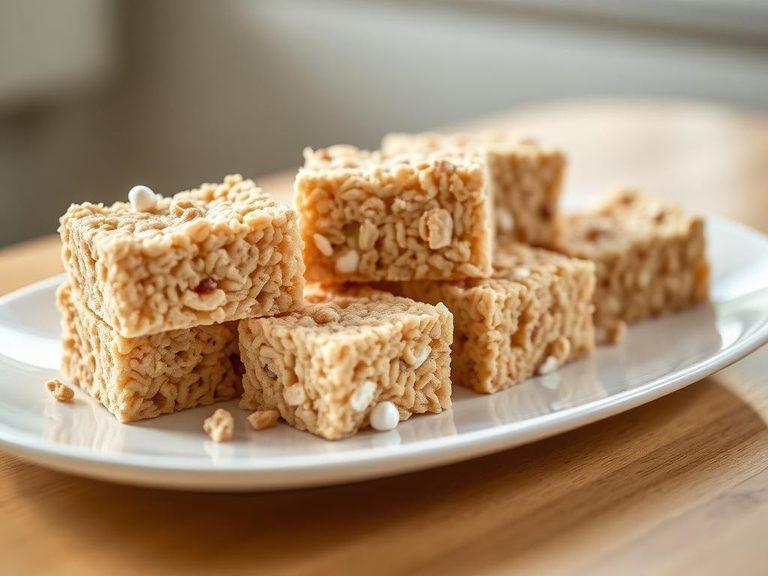
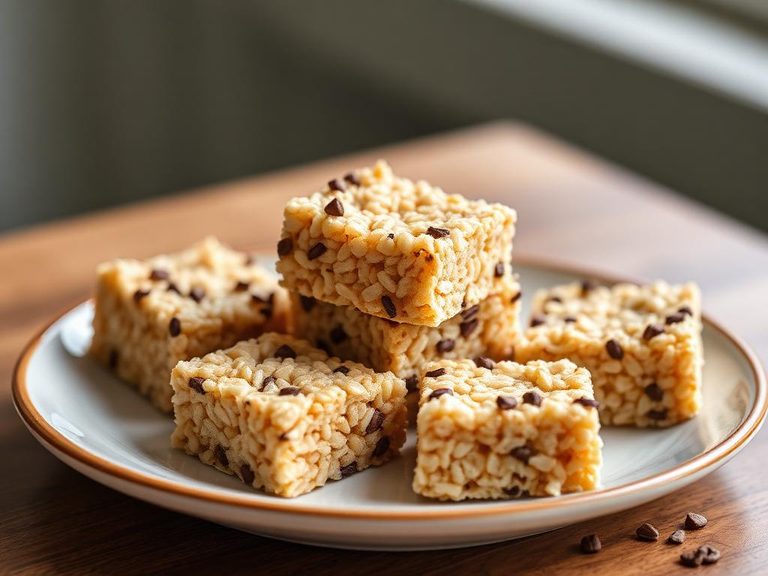
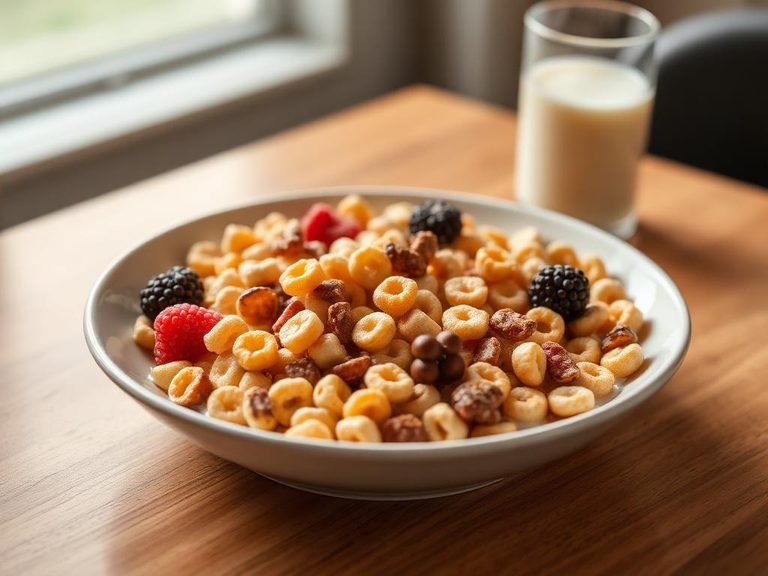
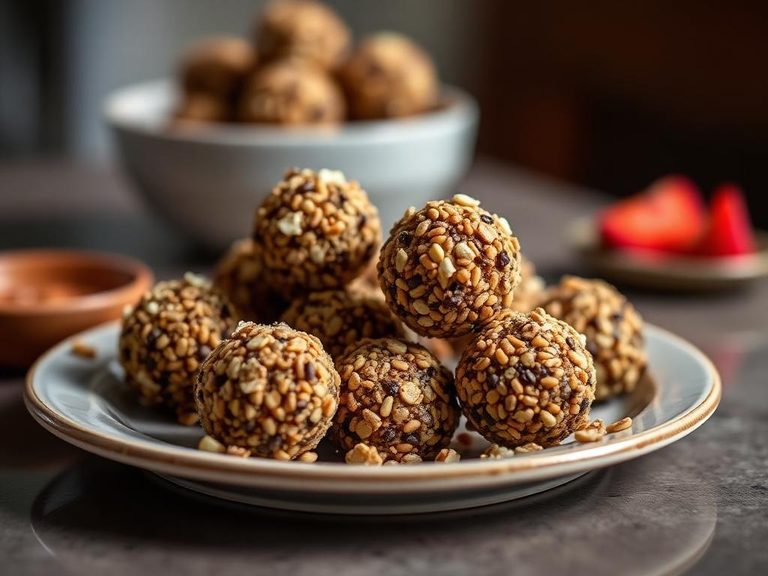
🌍 Where it's eaten
💡 Did you know?
The iconic binding agent for the most famous rice square treat, the Rice Krispies Treat, was originally created by a camp counselor in 1939 using melted marshmallows and butter as a quick, no-bake recipe for her charges.
Full nutrition (USDA data · scales with serving)
| Water | 10.3 g |
| Energy | 357 kcal |
| Protein | 7.0 g |
| Total lipid (fat) | 2.2 g |
| Carbohydrate, by difference | 77.4 g |
| Fiber, total dietary | 5.4 g |
| Total Sugars | 7.0 g |
| Calcium, Ca | 323 mg |
| Iron, Fe | 26.9 mg |
| Magnesium, Mg | 21.0 mg |
| Phosphorus, P | 91.0 mg |
| Potassium, K | 67.0 mg |
| Sodium, Na | 813 mg |
| Zinc, Zn | 1.1 mg |
| Copper, Cu | 0.20 mg |
| Selenium, Se | 4.7 ug |
| Vitamin C, total ascorbic acid | 22.6 mg |
| Thiamin | 0.52 mg |
| Riboflavin | 0.48 mg |
| Niacin | 7.0 mg |
| Vitamin B-6 | 0.67 mg |
| Folate, total | 134 ug |
| Folic acid | 118 ug |
| Folate, food | 16.0 ug |
| Folate, DFE | 216 ug |
| Choline, total | 7.0 mg |
| Vitamin B-12 | 0.88 ug |
| Vitamin B-12, added | 0.88 ug |
| Vitamin A, RAE | 0.00 ug |
| Retinol | 0.00 ug |
| Carotene, beta | 0.00 ug |
| Carotene, alpha | 0.00 ug |
| Cryptoxanthin, beta | 0.00 ug |
| Lycopene | 0.00 ug |
| Lutein + zeaxanthin | 0.00 ug |
| Vitamin E (alpha-tocopherol) | 0.27 mg |
| Vitamin E, added | 0.00 mg |
| Vitamin D (D2 + D3) | 4.9 ug |
| Vitamin K (phylloquinone) | 0.70 ug |
| Alcohol, ethyl | 0.00 g |
| Caffeine | 0.00 mg |
| Theobromine | 0.00 mg |
Fat & fatty acid profile (per 100g)
| Fatty acids, total saturated | 0.41 g |
| SFA 4:0 | 0.00 g |
| SFA 6:0 | 0.00 g |
| SFA 8:0 | 0.00 g |
| SFA 10:0 | 0.00 g |
| SFA 12:0 | 0.00 g |
| SFA 14:0 | 0.01 g |
| SFA 16:0 | 0.35 g |
| SFA 18:0 | 0.04 g |
| Fatty acids, total monounsaturated | 1.0 g |
| MUFA 16:1 | 0.01 g |
| MUFA 18:1 | 0.98 g |
| MUFA 20:1 | 0.02 g |
| MUFA 22:1 | 0.00 g |
| Fatty acids, total polyunsaturated | 0.60 g |
| PUFA 18:2 | 0.47 g |
| PUFA 18:3 | 0.13 g |
| PUFA 18:4 | 0.00 g |
| PUFA 20:4 | 0.00 g |
| PUFA 20:5 n-3 (EPA) | 0.00 g |
| PUFA 22:5 n-3 (DPA) | 0.00 g |
| PUFA 22:6 n-3 (DHA) | 0.00 g |
| Cholesterol | 0.00 mg |
Amino acid profile (per 100g)
Estimated from Cereals ready-to-eat, POST, HONEY BUNCHES OF OATS, honey roasted — USDA does not publish this profile for Cereal.
| Tryptophan | 0.09 g |
| Threonine | 0.24 g |
| Isoleucine | 0.26 g |
| Leucine | 0.80 g |
| Lysine | 0.12 g |
| Methionine | 0.10 g |
| Cystine | 0.11 g |
| Phenylalanine | 0.39 g |
| Tyrosine | 0.21 g |
| Valine | 0.34 g |
| Arginine | 0.24 g |
| Histidine | 0.18 g |
| Alanine | 0.46 g |
| Aspartic acid | 0.48 g |
| Glutamic acid | 1.9 g |
| Glycine | 0.27 g |
| Proline | 0.49 g |
| Serine | 0.38 g |
FAQ
Are rice squares a healthy breakfast?
They are typically high in added sugar and refined carbohydrates with minimal protein or healthy fats, making them a less balanced breakfast choice that may lead to mid-morning hunger and energy dips.
Can I use rice squares in baking?
Yes, they can be crushed and used as a crunchy topping for casseroles, a base for pie crusts, or mixed into no-bake dessert recipes to add texture.
Why do they stay crispy in milk longer than other cereals?
The puffing process creates a structure with tiny air pockets, and the sugary coating can act as a temporary moisture barrier, though they will eventually become soggy.
Nutrient density (calculated · NRF9.3)
Nutrient Rich Foods index: beneficial nutrients (protein, fiber, vitamins, minerals) minus saturated fat, added sugar & sodium, per 100 kcal.
NRF9.3 index — Fulgoni, Keast & Drewnowski, 2009. Computed from USDA nutrients.
Weight-loss friendliness (composite index)
Energy density 3.57 kcal/g · 8% calories from protein · 5.4 g fiber · 7.0 g sugar per 100 g.
Composite of energy density (Rolls et al., 1999), protein & fiber satiety, minus sugar. A calculated heuristic — ranks satiety-per-calorie, not a clinical measure.
Dietary load (calculated from USDA values)
Potential renal acid load. Positive = acid-forming, negative = alkaline-forming.
Sodium-to-potassium ratio: 12.13 (lower is better — aim for ≤ 1)
Sodium:potassium per WHO potassium guidance. Computed from USDA nutrients.