

Cereal, other, plain
Common food

Photo: Wikipedia
This is a plain, unadorned cereal, likely a simple oat or wheat-based flake or puffed grain, with a mild, toasty flavor and a satisfyingly crisp or chewy texture. It's a blank canvas, offering a clean, grain-forward taste that's subtly nutty. Nutritionally, it's a significant source of carbohydrates for energy, with a respectable 7 grams of fiber per 100g.
Calorie split: 10% protein · 80% carbs · 10% fat
↓ Full nutrition💚 Why it's loved
People love it for its incredible versatility and comforting, neutral flavor that acts as a perfect backdrop for fruits, nuts, or spices. It's a nostalgic, quick, and reliable staple for breakfast or a simple snack.
⚠️ Watch-outs & how to enjoy it better
As a plain cereal, it can be dry and bland on its own, and its high carbohydrate content may cause blood-sugar spikes if not paired with protein or healthy fats. To counteract this, always serve it with a source of protein (like milk, yogurt, or nuts) and healthy fats (like seeds or nut butter) to slow digestion and create a more balanced meal.
Key benefits
- High in complex carbohydrates for sustained energy
- Good source of dietary fiber (7g per 100g) for digestive health
- Low in fat (3.89g per 100g)
- Provides a moderate amount of plant-based protein (9.41g per 100g)
- Versatile base for both sweet and savory preparations
🍽️ Popular dishes
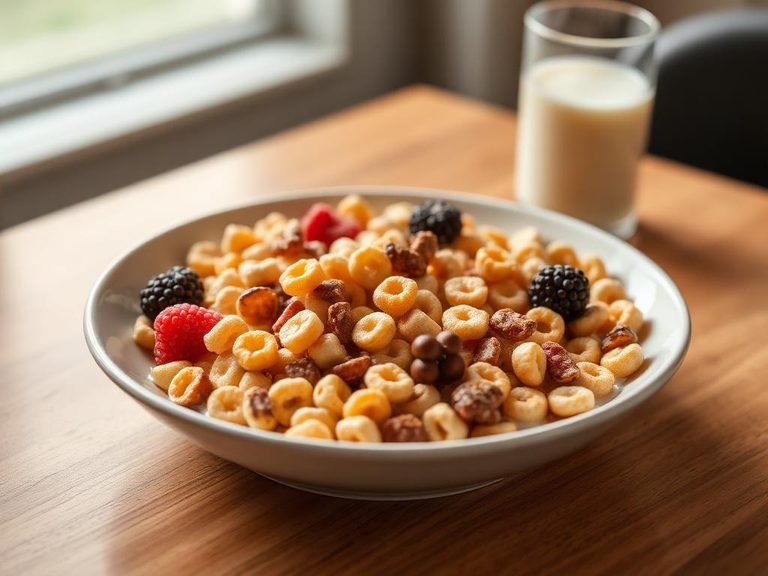
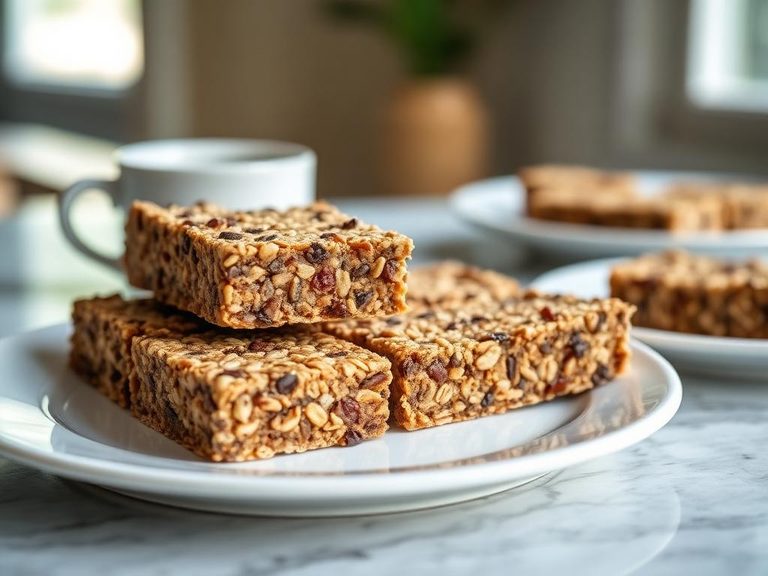
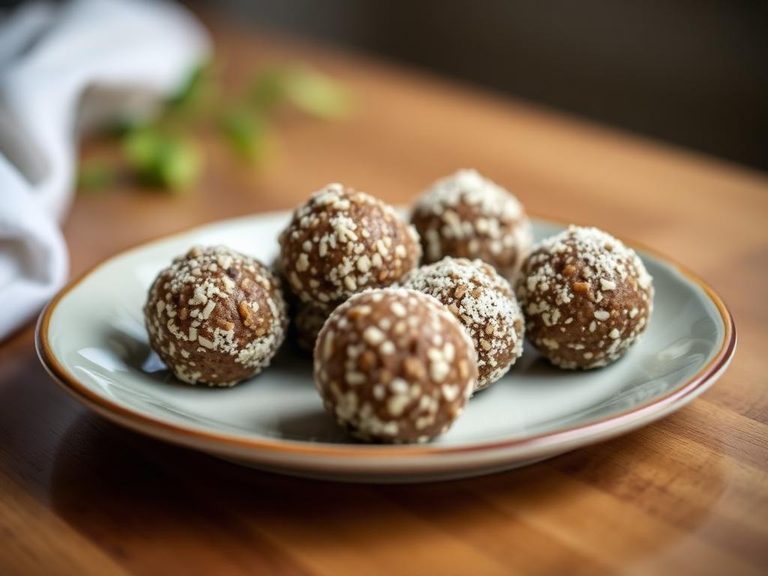

🌍 Where it's eaten
💡 Did you know?
The process of toasting or puffing cereal grains can increase the bioavailability of some nutrients and create a lighter, crunchier texture that many find more palatable than raw grains.
Full nutrition (USDA data · scales with serving)
| Water | 10.2 g |
| Energy | 370 kcal |
| Protein | 9.4 g |
| Total lipid (fat) | 3.9 g |
| Carbohydrate, by difference | 73.7 g |
| Fiber, total dietary | 7.0 g |
| Total Sugars | 7.2 g |
| Calcium, Ca | 186 mg |
| Iron, Fe | 29.4 mg |
| Magnesium, Mg | 80.0 mg |
| Phosphorus, P | 238 mg |
| Potassium, K | 235 mg |
| Sodium, Na | 605 mg |
| Zinc, Zn | 2.0 mg |
| Copper, Cu | 0.22 mg |
| Selenium, Se | 18.4 ug |
| Vitamin C, total ascorbic acid | 11.4 mg |
| Thiamin | 0.95 mg |
| Riboflavin | 0.83 mg |
| Niacin | 10.0 mg |
| Vitamin B-6 | 1.1 mg |
| Folate, total | 238 ug |
| Folic acid | 210 ug |
| Folate, food | 29.0 ug |
| Folate, DFE | 385 ug |
| Choline, total | 23.0 mg |
| Vitamin B-12 | 1.4 ug |
| Vitamin B-12, added | 1.4 ug |
| Vitamin A, RAE | 5.0 ug |
| Retinol | 0.00 ug |
| Carotene, beta | 44.0 ug |
| Carotene, alpha | 28.0 ug |
| Cryptoxanthin, beta | 0.00 ug |
| Lycopene | 0.00 ug |
| Lutein + zeaxanthin | 818 ug |
| Vitamin E (alpha-tocopherol) | 0.25 mg |
| Vitamin E, added | 0.00 mg |
| Vitamin D (D2 + D3) | 5.0 ug |
| Vitamin K (phylloquinone) | 0.90 ug |
| Alcohol, ethyl | 0.00 g |
| Caffeine | 0.00 mg |
| Theobromine | 0.00 mg |
Fat & fatty acid profile (per 100g)
| Fatty acids, total saturated | 0.62 g |
| SFA 4:0 | 0.00 g |
| SFA 6:0 | 0.00 g |
| SFA 8:0 | 0.00 g |
| SFA 10:0 | 0.00 g |
| SFA 12:0 | 0.01 g |
| SFA 14:0 | 0.01 g |
| SFA 16:0 | 0.52 g |
| SFA 18:0 | 0.05 g |
| Fatty acids, total monounsaturated | 1.1 g |
| MUFA 16:1 | 0.01 g |
| MUFA 18:1 | 1.1 g |
| MUFA 20:1 | 0.00 g |
| MUFA 22:1 | 0.00 g |
| Fatty acids, total polyunsaturated | 1.5 g |
| PUFA 18:2 | 1.4 g |
| PUFA 18:3 | 0.06 g |
| PUFA 18:4 | 0.00 g |
| PUFA 20:4 | 0.00 g |
| PUFA 20:5 n-3 (EPA) | 0.00 g |
| PUFA 22:5 n-3 (DPA) | 0.00 g |
| PUFA 22:6 n-3 (DHA) | 0.00 g |
| Cholesterol | 0.00 mg |
Amino acid profile (per 100g)
Estimated from Cereals ready-to-eat, POST, HONEY BUNCHES OF OATS, honey roasted — USDA does not publish this profile for Cereal.
| Tryptophan | 0.09 g |
| Threonine | 0.24 g |
| Isoleucine | 0.26 g |
| Leucine | 0.80 g |
| Lysine | 0.12 g |
| Methionine | 0.10 g |
| Cystine | 0.11 g |
| Phenylalanine | 0.39 g |
| Tyrosine | 0.21 g |
| Valine | 0.34 g |
| Arginine | 0.24 g |
| Histidine | 0.18 g |
| Alanine | 0.46 g |
| Aspartic acid | 0.48 g |
| Glutamic acid | 1.9 g |
| Glycine | 0.27 g |
| Proline | 0.49 g |
| Serine | 0.38 g |
FAQ
Is plain cereal a healthy breakfast option?
It can be, especially if it's high in fiber and low in added sugar. Its healthiness depends largely on what you pair it with—adding fruit, nuts, and protein-rich milk or yogurt creates a balanced meal.
How can I use plain cereal in cooking beyond breakfast?
It can be crushed to make a crunchy coating for baked chicken or fish, used as a binder in meatloaf, or mixed into homemade granola bars and energy bites.
Why does my plain cereal get soggy so quickly?
The porous structure of the cereal absorbs liquid rapidly. To maintain crunch, serve the cereal immediately after adding milk, or try adding the cereal to the milk just before eating.
Nutrient density (calculated · NRF9.3)
Nutrient Rich Foods index: beneficial nutrients (protein, fiber, vitamins, minerals) minus saturated fat, added sugar & sodium, per 100 kcal.
NRF9.3 index — Fulgoni, Keast & Drewnowski, 2009. Computed from USDA nutrients.
Weight-loss friendliness (composite index)
Energy density 3.70 kcal/g · 10% calories from protein · 7.0 g fiber · 7.2 g sugar per 100 g.
Composite of energy density (Rolls et al., 1999), protein & fiber satiety, minus sugar. A calculated heuristic — ranks satiety-per-calorie, not a clinical measure.
Dietary load (calculated from USDA values)
Potential renal acid load. Positive = acid-forming, negative = alkaline-forming.
Sodium-to-potassium ratio: 2.57 (lower is better — aim for ≤ 1)
Sodium:potassium per WHO potassium guidance. Computed from USDA nutrients.