

Broccoli, frozen, cooked with butter or margarine
Common food

Photo: Wikipedia
This is broccoli that has been blanched, frozen, and then sautéed or steamed with a pat of butter or margarine, resulting in tender-crisp florets with a rich, savory coating. The cooking method mellows its raw, sulfurous edge into a sweeter, more rounded vegetable flavor, while the added fat creates a silky mouthfeel. Nutritionally, it's a low-calorie powerhouse, delivering a solid dose of fiber and plant protein with minimal impact on blood sugar.
Calorie split: 23% protein · 39% carbs · 39% fat
↓ Full nutrition💚 Why it's loved
People love it for its perfect balance of convenience and comfort; it transforms a simple frozen vegetable into a warm, savory side dish in minutes. The buttery flavor is universally appealing, making it a kid-friendly favorite and a reliable staple for quick weeknight dinners.
⚠️ Watch-outs & how to enjoy it better
Some may find the texture less vibrant than fresh broccoli, and the added butter or margarine increases the calorie and saturated fat content. For those monitoring fat intake or with dairy allergies (if using butter), a light steam or a drizzle of olive oil is a healthier swap. Using low-sodium margarine can also help control salt intake.
Key benefits
- Excellent source of dietary fiber (2.9g per 100g)
- Good plant-based protein content (3.02g per 100g)
- Very low in natural sugars (1.43g per 100g)
- Provides essential vitamins like C and K
- Butter/margarine adds satiety and aids absorption of fat-soluble vitamins
🍽️ Popular dishes
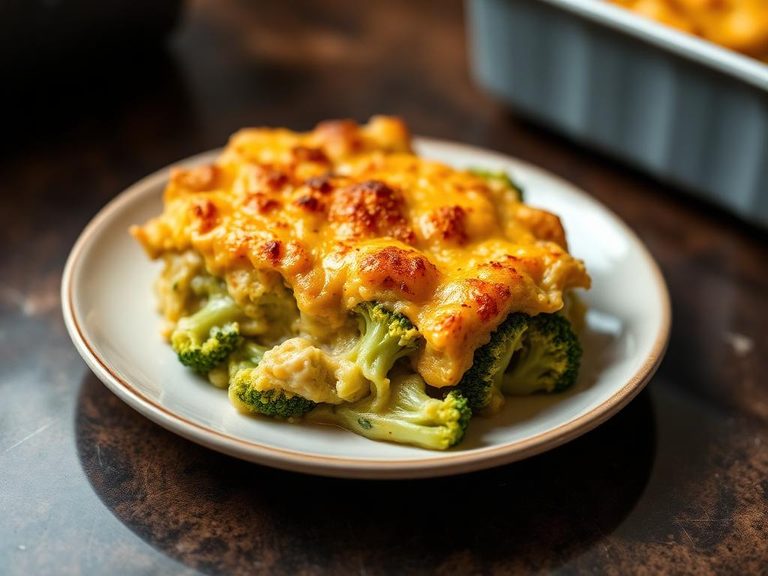
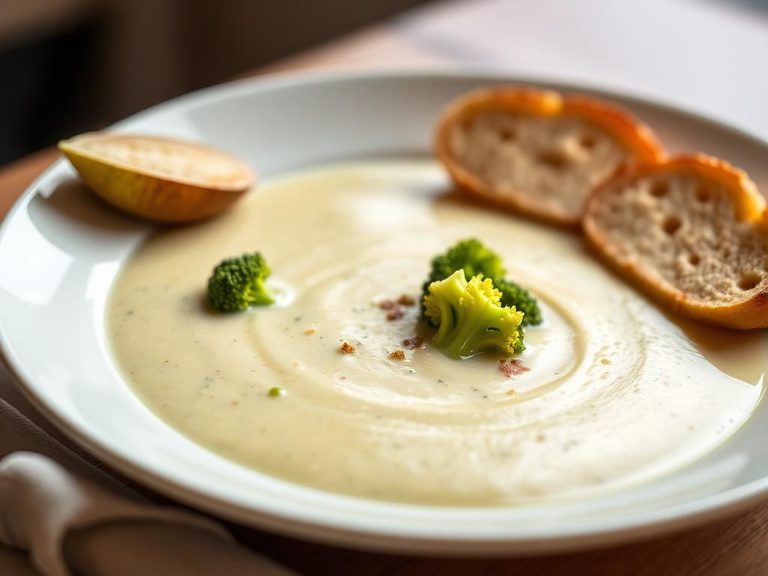
🌍 Where it's eaten
💡 Did you know?
Freezing broccoli actually locks in its peak nutritional value, often preserving more vitamins (like Vitamin C) than 'fresh' broccoli that has traveled long distances to the supermarket.
Full nutrition (USDA data · scales with serving)
| Water | 88.5 g |
| Energy | 47.0 kcal |
| Protein | 3.0 g |
| Total lipid (fat) | 2.3 g |
| Carbohydrate, by difference | 5.2 g |
| Fiber, total dietary | 2.9 g |
| Total Sugars | 1.4 g |
| Calcium, Ca | 33.0 mg |
| Iron, Fe | 0.59 mg |
| Magnesium, Mg | 13.0 mg |
| Phosphorus, P | 48.0 mg |
| Potassium, K | 138 mg |
| Sodium, Na | 140 mg |
| Zinc, Zn | 0.27 mg |
| Copper, Cu | 0.03 mg |
| Selenium, Se | 0.70 ug |
| Vitamin C, total ascorbic acid | 38.8 mg |
| Thiamin | 0.05 mg |
| Riboflavin | 0.08 mg |
| Niacin | 0.44 mg |
| Vitamin B-6 | 0.16 mg |
| Folate, total | 54.0 ug |
| Folic acid | 0.00 ug |
| Folate, food | 54.0 ug |
| Folate, DFE | 54.0 ug |
| Choline, total | 16.1 mg |
| Vitamin B-12 | 0.00 ug |
| Vitamin B-12, added | 0.00 ug |
| Vitamin A, RAE | 72.0 ug |
| Retinol | 22.0 ug |
| Carotene, beta | 588 ug |
| Carotene, alpha | 18.0 ug |
| Cryptoxanthin, beta | 1.0 ug |
| Lycopene | 0.00 ug |
| Lutein + zeaxanthin | 1060 ug |
| Vitamin E (alpha-tocopherol) | 1.5 mg |
| Vitamin E, added | 0.00 mg |
| Vitamin D (D2 + D3) | 0.00 ug |
| Vitamin K (phylloquinone) | 86.6 ug |
| Alcohol, ethyl | 0.00 g |
| Caffeine | 0.00 mg |
| Theobromine | 0.00 mg |
Fat & fatty acid profile (per 100g)
| Fatty acids, total saturated | 0.96 g |
| SFA 4:0 | 0.04 g |
| SFA 6:0 | 0.03 g |
| SFA 8:0 | 0.01 g |
| SFA 10:0 | 0.03 g |
| SFA 12:0 | 0.04 g |
| SFA 14:0 | 0.13 g |
| SFA 16:0 | 0.47 g |
| SFA 18:0 | 0.19 g |
| Fatty acids, total monounsaturated | 0.58 g |
| MUFA 16:1 | 0.02 g |
| MUFA 18:1 | 0.55 g |
| MUFA 20:1 | 0.00 g |
| MUFA 22:1 | 0.00 g |
| Fatty acids, total polyunsaturated | 0.40 g |
| PUFA 18:2 | 0.32 g |
| PUFA 18:3 | 0.08 g |
| PUFA 18:4 | 0.00 g |
| PUFA 20:4 | 0.00 g |
| PUFA 20:5 n-3 (EPA) | 0.00 g |
| PUFA 22:5 n-3 (DPA) | 0.00 g |
| PUFA 22:6 n-3 (DHA) | 0.00 g |
| Cholesterol | 4.0 mg |
Amino acid profile (per 100g)
Estimated from Broccoli, cooked, boiled, drained, with salt — USDA does not publish this profile for Broccoli.
| Tryptophan | 0.03 g |
| Threonine | 0.10 g |
| Isoleucine | 0.09 g |
| Leucine | 0.15 g |
| Lysine | 0.15 g |
| Methionine | 0.04 g |
| Cystine | 0.03 g |
| Phenylalanine | 0.12 g |
| Tyrosine | 0.06 g |
| Valine | 0.14 g |
| Arginine | 0.20 g |
| Histidine | 0.06 g |
| Alanine | 0.11 g |
| Aspartic acid | 0.33 g |
| Glutamic acid | 0.55 g |
| Glycine | 0.10 g |
| Proline | 0.11 g |
| Serine | 0.13 g |
FAQ
Is frozen broccoli as nutritious as fresh?
Yes, often more so. Broccoli is typically flash-frozen shortly after harvest, which preserves nutrients better than fresh broccoli that may spend days in transit and on shelves.
How do I prevent it from getting mushy?
Cook from frozen—don't thaw. Use high heat for a short time: sauté for 3-4 minutes or steam for 5-6 minutes until just tender-crisp.
Can I use this in a stir-fry?
Absolutely. Add it near the end of cooking to heat through without overcooking. Its pre-blanched texture holds up well to high-heat wok cooking.
Nutrient density (calculated · NRF9.3)
Nutrient Rich Foods index: beneficial nutrients (protein, fiber, vitamins, minerals) minus saturated fat, added sugar & sodium, per 100 kcal.
NRF9.3 index — Fulgoni, Keast & Drewnowski, 2009. Computed from USDA nutrients.
Weight-loss friendliness (composite index)
Energy density 0.47 kcal/g · 26% calories from protein · 2.9 g fiber · 1.4 g sugar per 100 g.
Composite of energy density (Rolls et al., 1999), protein & fiber satiety, minus sugar. A calculated heuristic — ranks satiety-per-calorie, not a clinical measure.
Dietary load (calculated from USDA values)
Potential renal acid load. Positive = acid-forming, negative = alkaline-forming.
Sodium-to-potassium ratio: 1.01 (lower is better — aim for ≤ 1)
Sodium:potassium per WHO potassium guidance. Computed from USDA nutrients.