

Black beans, from fast food / restaurant
Common food
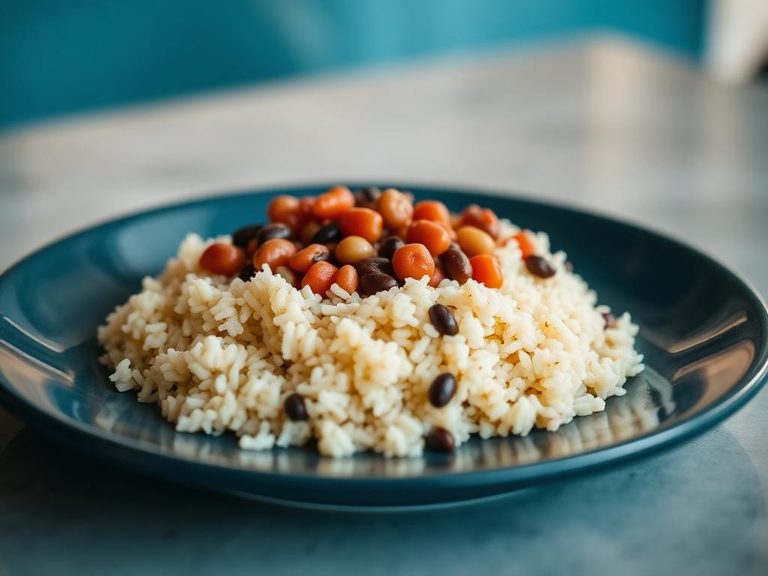
Fast-food black beans are a hearty, savory staple, typically simmered until creamy with a rich, earthy flavor and a satisfying, slightly starchy texture. They pack a notable protein and fiber punch for their calorie count, making them a substantial plant-based component of a meal. The preparation often adds a layer of umami and subtle spice, distinguishing them from plain home-cooked beans.
Calorie split: 16% protein · 42% carbs · 42% fat
↓ Full nutrition💚 Why it's loved
People love them for their comforting, savory depth and incredible versatility—they serve as a hearty side, a protein-rich topping, or a base for countless dishes. They are a beloved staple in many cultures, offering a satisfying, filling element that complements a wide range of flavors.
⚠️ Watch-outs & how to enjoy it better
They can be high in sodium due to restaurant seasoning, which may be a concern for those monitoring salt intake. To counteract this, pair them with fresh, low-sodium sides like a green salad or avocado, and be mindful of portion size if you're sensitive to salt. Additionally, the high fiber content, while beneficial, can cause digestive discomfort in some; starting with a smaller portion and drinking plenty of water can help.
Key benefits
- High in dietary fiber, supporting digestive health.
- Good source of plant-based protein for muscle maintenance.
- Rich in complex carbohydrates for sustained energy.
- Contains antioxidants like anthocyanins from the dark skin.
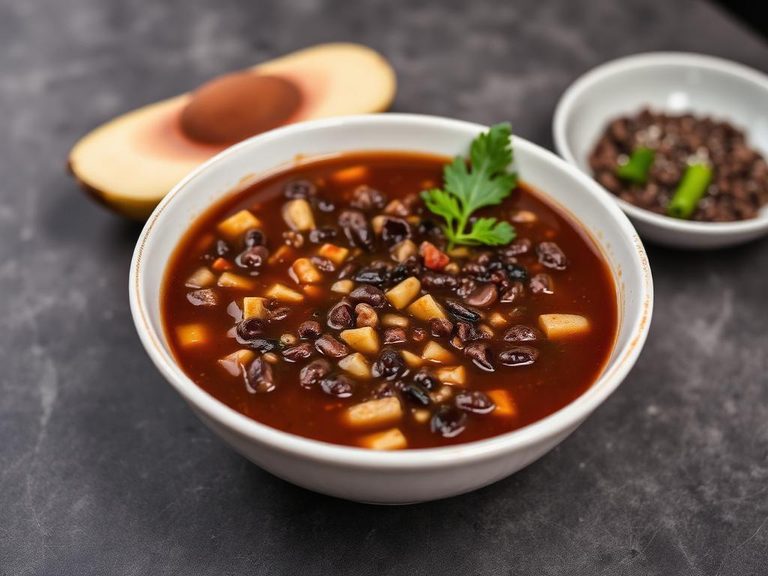
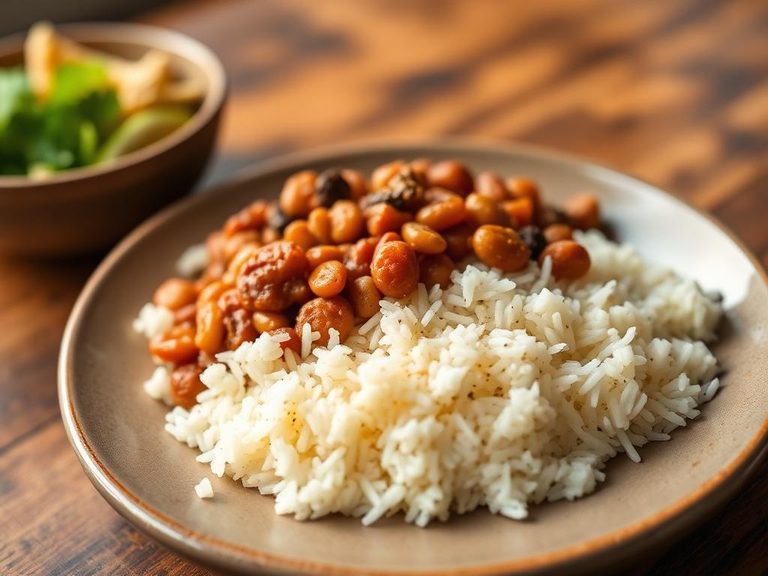
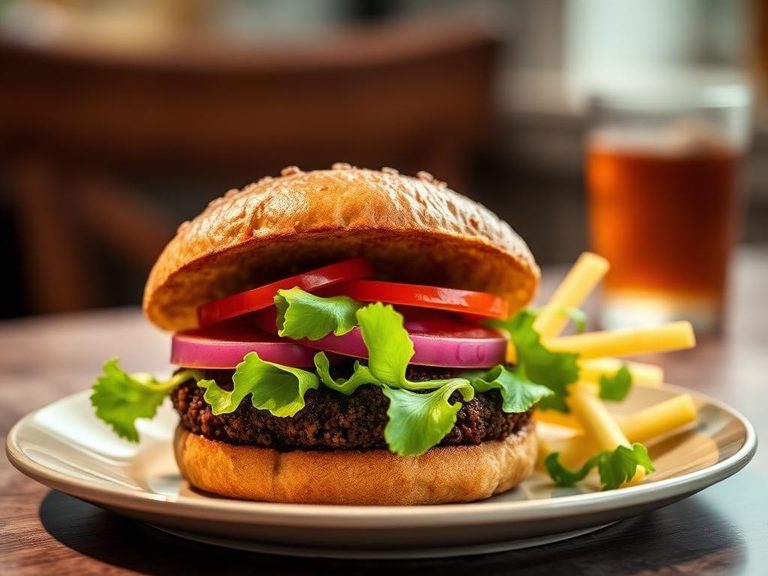
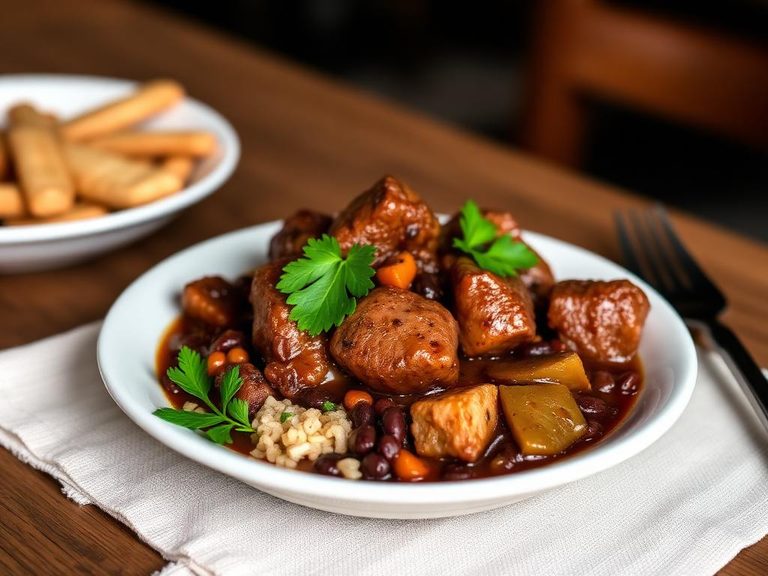
🍽️ Popular dishes
🌍 Where it's eaten
💡 Did you know?
The black bean's dark color comes from anthocyanins, the same powerful antioxidants found in blueberries and red wine.
Full nutrition (USDA data · scales with serving)
| Water | 59.2 g |
| Energy | 200 kcal |
| Protein | 8.0 g |
| Total lipid (fat) | 9.5 g |
| Carbohydrate, by difference | 21.4 g |
| Fiber, total dietary | 7.8 g |
| Total Sugars | 0.29 g |
| Calcium, Ca | 25.0 mg |
| Iron, Fe | 1.9 mg |
| Magnesium, Mg | 63.0 mg |
| Phosphorus, P | 126 mg |
| Potassium, K | 320 mg |
| Sodium, Na | 350 mg |
| Zinc, Zn | 1.0 mg |
| Copper, Cu | 0.19 mg |
| Selenium, Se | 1.1 ug |
| Vitamin C, total ascorbic acid | 0.00 mg |
| Thiamin | 0.21 mg |
| Riboflavin | 0.05 mg |
| Niacin | 0.43 mg |
| Vitamin B-6 | 0.06 mg |
| Folate, total | 128 ug |
| Folic acid | 0.00 ug |
| Folate, food | 128 ug |
| Folate, DFE | 128 ug |
| Choline, total | 29.4 mg |
| Vitamin B-12 | 0.00 ug |
| Vitamin B-12, added | 0.00 ug |
| Vitamin A, RAE | 0.00 ug |
| Retinol | 0.00 ug |
| Carotene, beta | 0.00 ug |
| Carotene, alpha | 0.00 ug |
| Cryptoxanthin, beta | 0.00 ug |
| Lycopene | 0.00 ug |
| Lutein + zeaxanthin | 0.00 ug |
| Vitamin E (alpha-tocopherol) | 2.5 mg |
| Vitamin E, added | 0.00 mg |
| Vitamin D (D2 + D3) | 0.00 ug |
| Vitamin K (phylloquinone) | 12.0 ug |
| Alcohol, ethyl | 0.00 g |
| Caffeine | 0.00 mg |
| Theobromine | 0.00 mg |
Fat & fatty acid profile (per 100g)
| Fatty acids, total saturated | 1.3 g |
| SFA 4:0 | 0.00 g |
| SFA 6:0 | 0.00 g |
| SFA 8:0 | 0.00 g |
| SFA 10:0 | 0.00 g |
| SFA 12:0 | 0.00 g |
| SFA 14:0 | 0.01 g |
| SFA 16:0 | 0.98 g |
| SFA 18:0 | 0.27 g |
| Fatty acids, total monounsaturated | 3.9 g |
| MUFA 16:1 | 0.03 g |
| MUFA 18:1 | 3.8 g |
| MUFA 20:1 | 0.06 g |
| MUFA 22:1 | 0.00 g |
| Fatty acids, total polyunsaturated | 3.7 g |
| PUFA 18:2 | 3.2 g |
| PUFA 18:3 | 0.49 g |
| PUFA 18:4 | 0.00 g |
| PUFA 20:4 | 0.00 g |
| PUFA 20:5 n-3 (EPA) | 0.00 g |
| PUFA 22:5 n-3 (DPA) | 0.00 g |
| PUFA 22:6 n-3 (DHA) | 0.00 g |
| Cholesterol | 0.00 mg |
Amino acid profile (per 100g)
Estimated from Beans, black, mature seeds, raw — USDA does not publish this profile for Black beans.
| Tryptophan | 0.26 g |
| Threonine | 0.91 g |
| Isoleucine | 0.95 g |
| Leucine | 1.7 g |
| Lysine | 1.5 g |
| Methionine | 0.33 g |
| Cystine | 0.23 g |
| Phenylalanine | 1.2 g |
| Tyrosine | 0.61 g |
| Valine | 1.1 g |
| Arginine | 1.3 g |
| Histidine | 0.60 g |
| Alanine | 0.91 g |
| Aspartic acid | 2.6 g |
| Glutamic acid | 3.3 g |
| Glycine | 0.84 g |
| Proline | 0.92 g |
| Serine | 1.2 g |
FAQ
Are black beans from fast food restaurants healthy?
They can be a nutritious choice, offering good protein and fiber, but they are often prepared with added salt and sometimes fat. Checking for low-sodium options or balancing with other low-salt foods is advisable.
How do I reduce the sodium in restaurant black beans?
You can request them without added salt, pair them with unsalted sides, or rinse them if they are served in a liquid (though this is less common in a restaurant setting).
Can black beans cause digestive issues?
Yes, due to their high fiber and oligosaccharide content, they can cause gas or bloating in some people. Starting with small portions and ensuring adequate water intake can help mitigate this.
Nutrient density (calculated · NRF9.3)
Nutrient Rich Foods index: beneficial nutrients (protein, fiber, vitamins, minerals) minus saturated fat, added sugar & sodium, per 100 kcal.
NRF9.3 index — Fulgoni, Keast & Drewnowski, 2009. Computed from USDA nutrients.
Weight-loss friendliness (composite index)
Energy density 2.00 kcal/g · 16% calories from protein · 7.8 g fiber · 0.3 g sugar per 100 g.
Composite of energy density (Rolls et al., 1999), protein & fiber satiety, minus sugar. A calculated heuristic — ranks satiety-per-calorie, not a clinical measure.
Dietary load (calculated from USDA values)
Potential renal acid load. Positive = acid-forming, negative = alkaline-forming.
Sodium-to-potassium ratio: 1.09 (lower is better — aim for ≤ 1)
Sodium:potassium per WHO potassium guidance. Computed from USDA nutrients.