

Black bean sauce
Common food

Photo: Wikipedia
Black bean sauce is a thick, savory Chinese condiment made from fermented black soybeans, garlic, and chili. It delivers a potent, salty, umami punch with a slightly coarse texture from the whole beans. While calorie-dense at 168 kcal per 100g, it provides a notable 6.28g of protein and 8.45g of fat, making it a flavor amplifier rather than a primary nutrient source.
Calorie split: 15% protein · 41% carbs · 45% fat
↓ Full nutrition💚 Why it's loved
People love it for its intense, savory depth that can transform a stir-fry or noodle dish with just a spoonful. It's a cornerstone of Cantonese and Sichuan cooking, valued for its ability to instantly boost the flavor profile of vegetables, tofu, and meats.
⚠️ Watch-outs & how to enjoy it better
Its high sodium and sugar content can be problematic for those monitoring blood pressure or blood sugar. To counteract, use it sparingly as a seasoning, not a sauce, and pair it with plenty of fresh vegetables and lean protein to balance the meal. Rinsing the beans can slightly reduce sodium.
Key benefits
- Rich in plant-based protein from fermented soybeans
- Contains gut-friendly probiotics from natural fermentation
- High in umami, reducing need for added salt or sugar
- Source of antioxidants like anthocyanins from black beans
- Adds depth and complexity to simple dishes
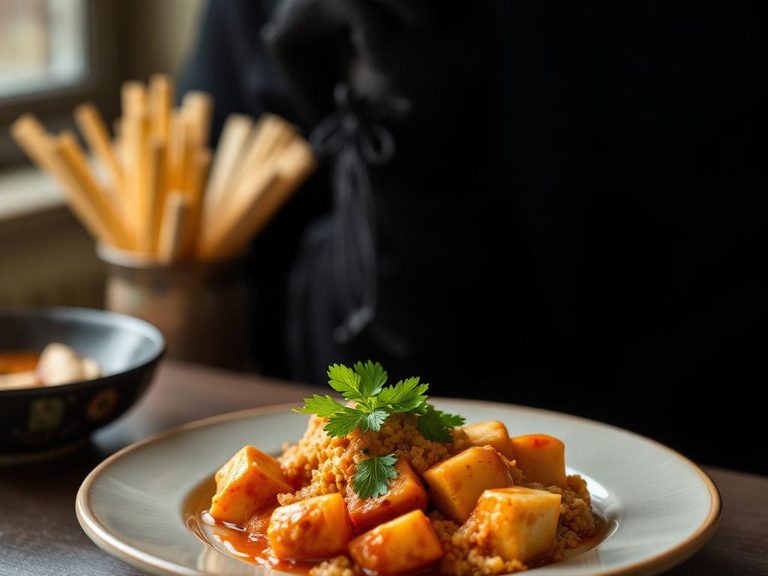
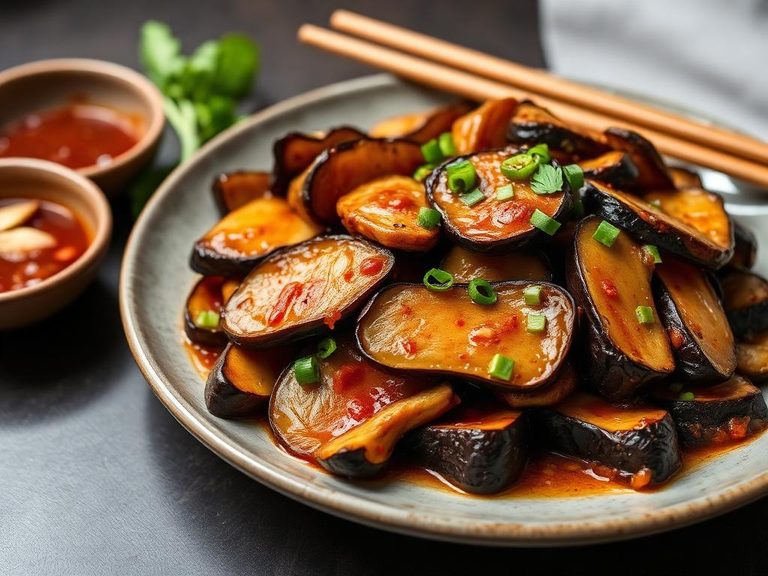
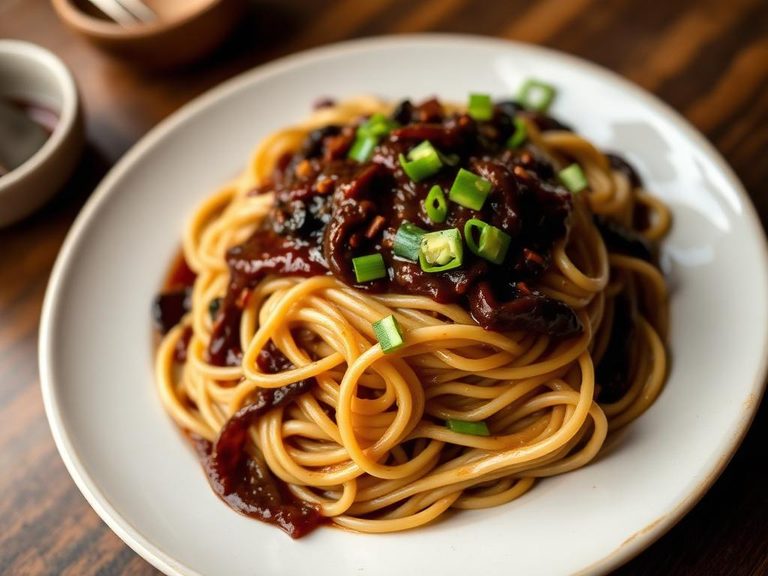
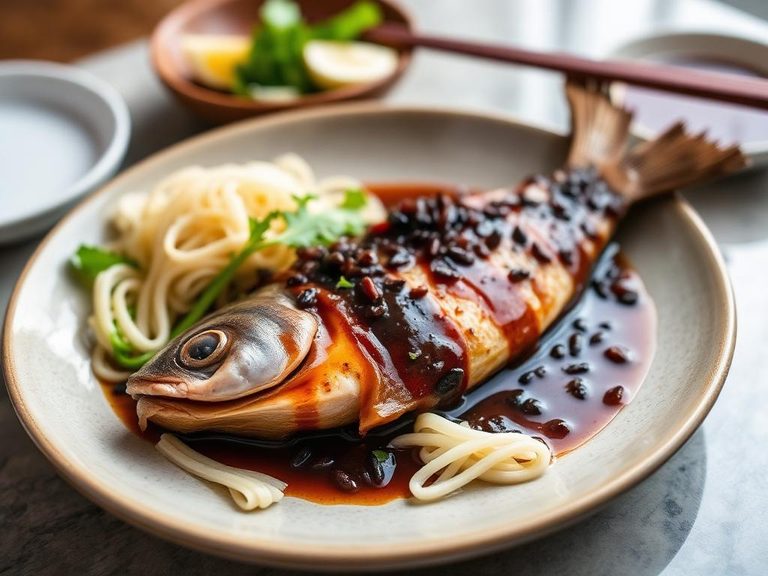
🍽️ Popular dishes
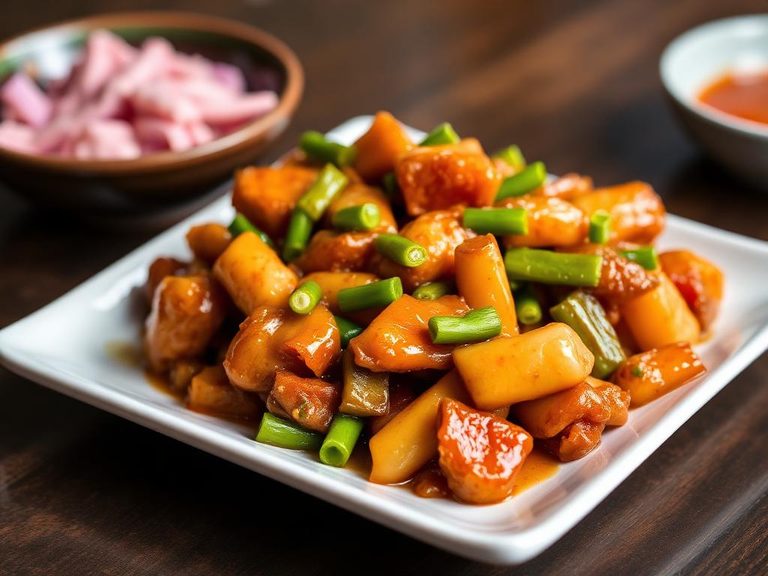
🌍 Where it's eaten
💡 Did you know?
The fermentation process for douchi (the base ingredient) can take months, during which complex enzymes break down proteins into savory amino acids, creating its signature 'xian' (umami) flavor.
Full nutrition (USDA data · scales with serving)
| Water | 52.0 g |
| Energy | 168 kcal |
| Protein | 6.3 g |
| Total lipid (fat) | 8.4 g |
| Carbohydrate, by difference | 17.4 g |
| Fiber, total dietary | 2.6 g |
| Total Sugars | 9.3 g |
| Calcium, Ca | 27.0 mg |
| Iron, Fe | 1.3 mg |
| Magnesium, Mg | 54.0 mg |
| Phosphorus, P | 118 mg |
| Potassium, K | 307 mg |
| Sodium, Na | 5843 mg |
| Zinc, Zn | 0.72 mg |
| Copper, Cu | 0.07 mg |
| Selenium, Se | 0.60 ug |
| Vitamin C, total ascorbic acid | 0.00 mg |
| Thiamin | 0.08 mg |
| Riboflavin | 0.10 mg |
| Niacin | 1.2 mg |
| Vitamin B-6 | 0.09 mg |
| Folate, total | 44.0 ug |
| Folic acid | 0.00 ug |
| Folate, food | 44.0 ug |
| Folate, DFE | 44.0 ug |
| Choline, total | 17.3 mg |
| Vitamin B-12 | 0.00 ug |
| Vitamin B-12, added | 0.00 ug |
| Vitamin A, RAE | 0.00 ug |
| Retinol | 0.00 ug |
| Carotene, beta | 0.00 ug |
| Carotene, alpha | 0.00 ug |
| Cryptoxanthin, beta | 0.00 ug |
| Lycopene | 0.00 ug |
| Lutein + zeaxanthin | 0.00 ug |
| Vitamin E (alpha-tocopherol) | 1.2 mg |
| Vitamin E, added | 0.00 mg |
| Vitamin D (D2 + D3) | 0.00 ug |
| Vitamin K (phylloquinone) | 15.5 ug |
| Alcohol, ethyl | 0.00 g |
| Caffeine | 0.00 mg |
| Theobromine | 0.00 mg |
Fat & fatty acid profile (per 100g)
| Fatty acids, total saturated | 1.3 g |
| SFA 4:0 | 0.00 g |
| SFA 6:0 | 0.00 g |
| SFA 8:0 | 0.00 g |
| SFA 10:0 | 0.00 g |
| SFA 12:0 | 0.00 g |
| SFA 14:0 | 0.01 g |
| SFA 16:0 | 0.89 g |
| SFA 18:0 | 0.30 g |
| Fatty acids, total monounsaturated | 1.8 g |
| MUFA 16:1 | 0.01 g |
| MUFA 18:1 | 1.8 g |
| MUFA 20:1 | 0.05 g |
| MUFA 22:1 | 0.00 g |
| Fatty acids, total polyunsaturated | 4.8 g |
| PUFA 18:2 | 4.2 g |
| PUFA 18:3 | 0.57 g |
| PUFA 18:4 | 0.00 g |
| PUFA 20:4 | 0.00 g |
| PUFA 20:5 n-3 (EPA) | 0.00 g |
| PUFA 22:5 n-3 (DPA) | 0.00 g |
| PUFA 22:6 n-3 (DHA) | 0.00 g |
| Cholesterol | 0.00 mg |
Amino acid profile (per 100g)
Estimated from Restaurant, Latino, black bean soup — USDA does not publish this profile for Black bean sauce.
| Tryptophan | 0.04 g |
| Threonine | 0.17 g |
| Isoleucine | 0.16 g |
| Leucine | 0.32 g |
| Lysine | 0.27 g |
| Methionine | 0.10 g |
| Cystine | 0.04 g |
| Phenylalanine | 0.16 g |
| Tyrosine | 0.13 g |
| Valine | 0.20 g |
| Arginine | 0.35 g |
| Histidine | 0.09 g |
| Alanine | 0.35 g |
| Aspartic acid | 0.38 g |
| Glutamic acid | 0.72 g |
| Glycine | 0.58 g |
| Proline | 0.36 g |
| Serine | 0.20 g |
FAQ
Is black bean sauce the same as black bean paste?
Not exactly. Black bean sauce (doubanjiang) is typically a smoother, seasoned paste with added chili and garlic. Black bean paste (douchi) is just the fermented soybeans themselves, saltier and more pungent. They are used interchangeably in some recipes but have distinct textures and intensities.
How should I store opened black bean sauce?
Always refrigerate it in a sealed container after opening. The high salt and fermentation help preserve it, but it will dry out and lose potency over time. For best flavor, use within 6 months.
Can I make a vegetarian version at home?
Yes. You can buy fermented black soybeans (douchi), rinse them, and mash with minced garlic, ginger, a touch of sugar, and a neutral oil. Sauté briefly to meld flavors. This gives you control over sodium and avoids any fish sauce sometimes added in commercial versions.
Nutrient density (calculated · NRF9.3)
Nutrient Rich Foods index: beneficial nutrients (protein, fiber, vitamins, minerals) minus saturated fat, added sugar & sodium, per 100 kcal.
NRF9.3 index — Fulgoni, Keast & Drewnowski, 2009. Computed from USDA nutrients.
Weight-loss friendliness (composite index)
Energy density 1.68 kcal/g · 15% calories from protein · 2.6 g fiber · 9.3 g sugar per 100 g.
Composite of energy density (Rolls et al., 1999), protein & fiber satiety, minus sugar. A calculated heuristic — ranks satiety-per-calorie, not a clinical measure.
Dietary load (calculated from USDA values)
Potential renal acid load. Positive = acid-forming, negative = alkaline-forming.
Sodium-to-potassium ratio: 19.03 (lower is better — aim for ≤ 1)
Sodium:potassium per WHO potassium guidance. Computed from USDA nutrients.