

Beef, Australian, imported, Wagyu, loin, top loin steak/roast, boneless, separable lean only, Aust. marble score 9, raw
Whole food · Beef Products

Photo: Wikipedia
This is a premium cut of raw Australian Wagyu beef, specifically from the top loin, prized for its extraordinary intramuscular fat, or marbling, which is rated at a high Australian Marble Score 9. The meat is incredibly tender, with a buttery, rich flavor that practically melts in your mouth due to the fine, web-like fat distribution. Nutritionally, it's a dense source of protein and healthy fats, with virtually no carbohydrates.
Calorie split: 20% protein · 0% carbs · 79% fat
↓ Full nutrition💚 Why it's loved
People adore it for the unparalleled, luxurious eating experience—the buttery flavor and fork-tender texture are considered the pinnacle of steak. It's a centerpiece for celebratory meals and fine dining, representing both culinary craftsmanship and a special indulgence.
⚠️ Watch-outs & how to enjoy it better
The high fat content, while flavorful, makes it very calorie-dense, which requires mindful portion control for those monitoring energy intake. Its richness can also be overwhelming for some palates or digestive systems. To balance a meal, pair a modest portion with fiber-rich vegetables like roasted asparagus or a crisp salad to add volume and nutrients without excessive calories.
Key benefits
- Exceptionally high in monounsaturated fats (oleic acid)
- Rich source of complete protein for muscle maintenance
- Contains conjugated linoleic acid (CLA), a beneficial fatty acid
- Provides essential minerals like zinc and iron
- The high marbling ensures exceptional juiciness and tenderness
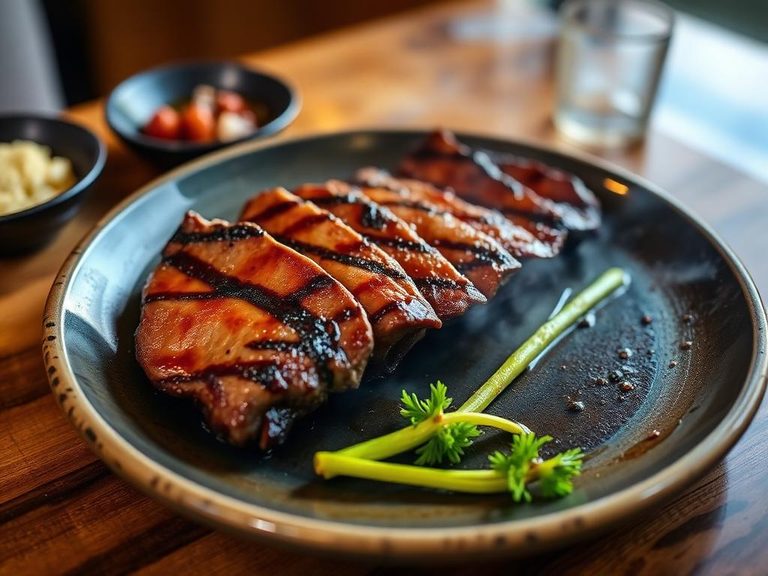
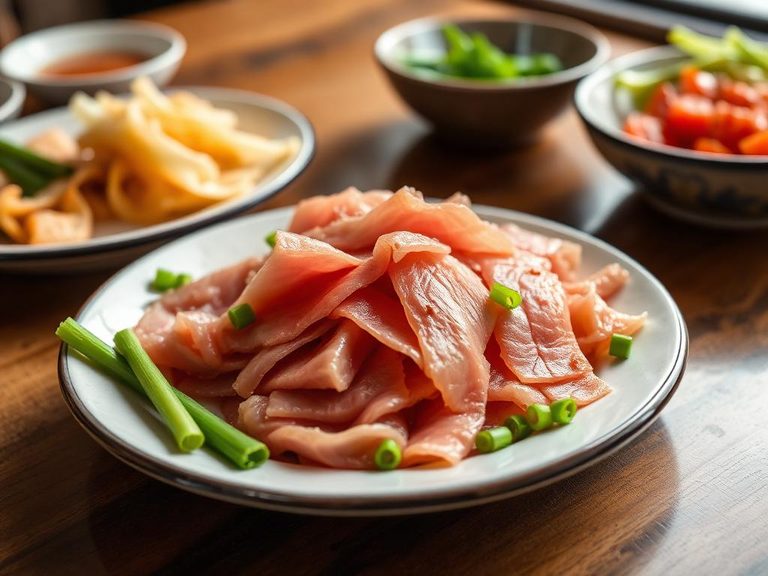
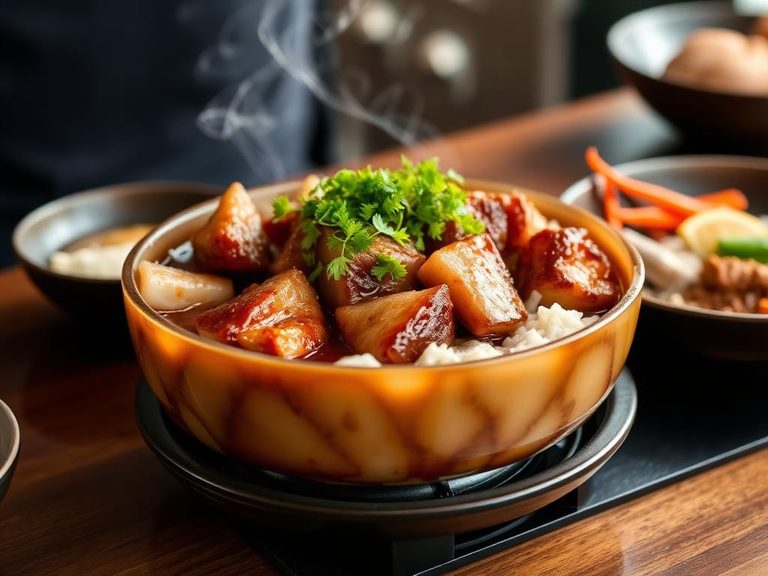
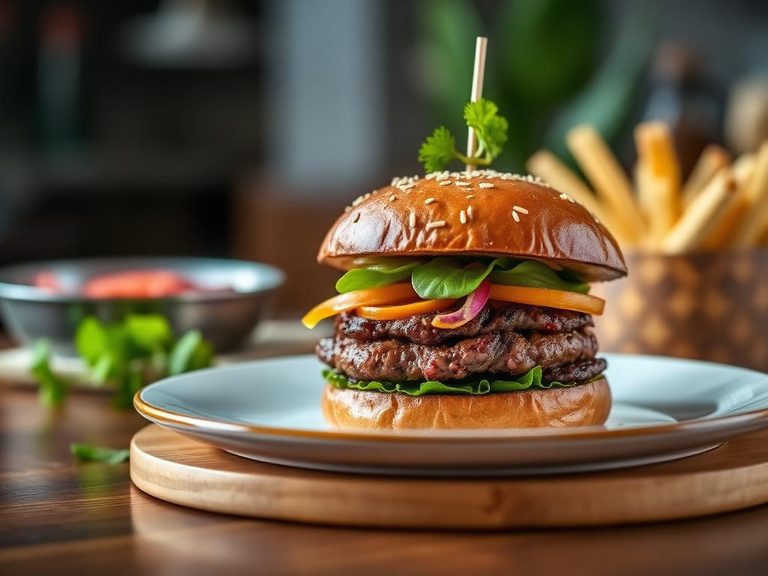
🍽️ Popular dishes
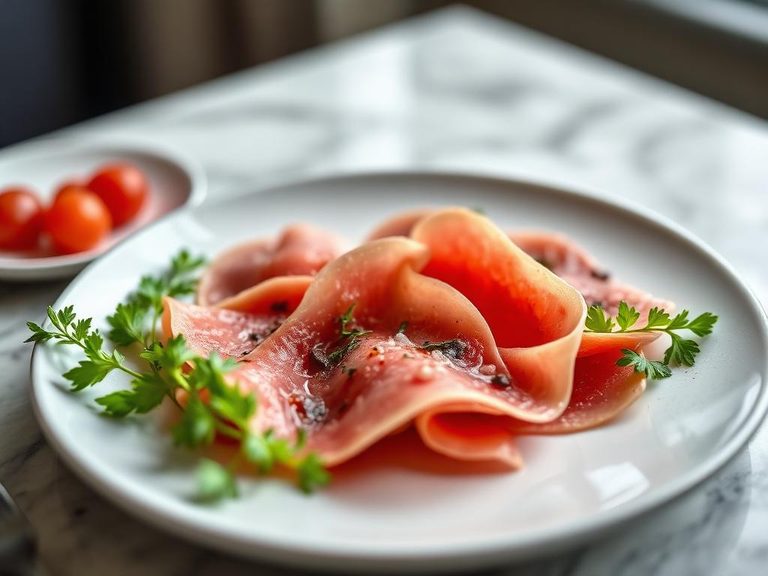
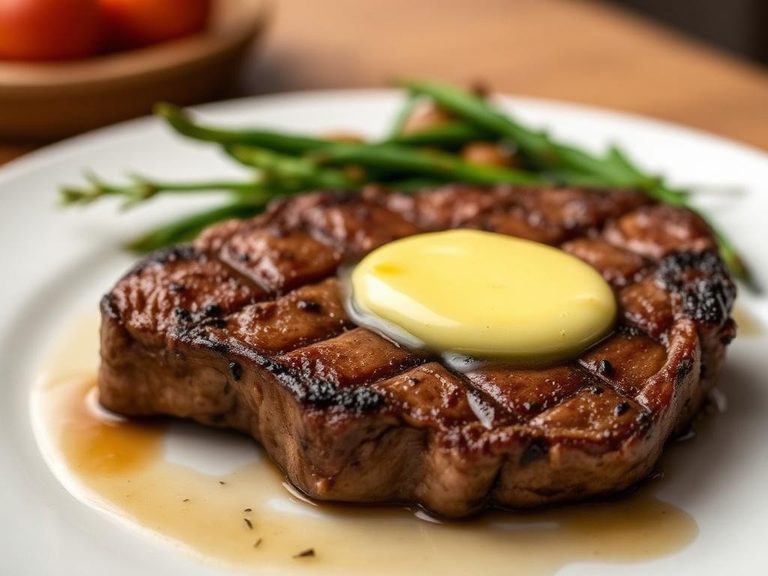
🌍 Where it's eaten
💡 Did you know?
The unique marbling in Wagyu is so fine and evenly distributed that it has a lower melting point than other beef fats, which is why it literally begins to dissolve at the temperature of a human hand.
Full nutrition (USDA data · scales with serving)
| Water | 53.1 g |
| Energy | 331 kcal |
| Energy | 1383 kj |
| Protein | 16.9 g |
| Total lipid (fat) | 29.1 g |
| Ash | 0.71 g |
| Carbohydrate, by difference | 0.13 g |
| Fiber, total dietary | 0.00 g |
| Total Sugars | 0.00 g |
| Calcium, Ca | 4.0 mg |
| Iron, Fe | 1.7 mg |
| Sodium, Na | 68.0 mg |
| Vitamin C, total ascorbic acid | 0.00 mg |
| Vitamin A, RAE | 0.00 ug |
| Carotene, beta | 0.00 ug |
| Carotene, alpha | 0.00 ug |
| Cryptoxanthin, beta | 0.00 ug |
| Vitamin A, IU | 0.00 iu |
| Lycopene | 0.00 ug |
| Lutein + zeaxanthin | 0.00 ug |
| Alcohol, ethyl | 0.00 g |
| Caffeine | 0.00 mg |
| Theobromine | 0.00 mg |
Fat & fatty acid profile (per 100g)
| Fatty acids, total saturated | 10.3 g |
| SFA 4:0 | 0.00 g |
| SFA 6:0 | 0.00 g |
| SFA 8:0 | 0.00 g |
| SFA 10:0 | 0.01 g |
| SFA 12:0 | 0.02 g |
| SFA 14:0 | 0.80 g |
| SFA 15:0 | 0.09 g |
| SFA 16:0 | 6.6 g |
| SFA 17:0 | 0.23 g |
| SFA 18:0 | 2.5 g |
| SFA 20:0 | 0.02 g |
| SFA 22:0 | 0.01 g |
| Fatty acids, total monounsaturated | 15.4 g |
| MUFA 14:1 | 0.31 g |
| MUFA 16:1 | 1.3 g |
| MUFA 18:1 | 13.7 g |
| MUFA 18:1 c | 13.0 g |
| MUFA 20:1 | 0.08 g |
| Fatty acids, total polyunsaturated | 1.1 g |
| PUFA 18:2 | 0.94 g |
| PUFA 18:2 n-6 c,c | 0.78 g |
| PUFA 18:3 | 0.08 g |
| PUFA 18:3 n-3 c,c,c (ALA) | 0.04 g |
| PUFA 18:3i | 0.04 g |
| PUFA 18:4 | 0.00 g |
| PUFA 20:2 n-6 c,c | 0.01 g |
| PUFA 20:4 | 0.04 g |
| PUFA 20:5 n-3 (EPA) | 0.01 g |
| PUFA 22:5 n-3 (DPA) | 0.01 g |
| Fatty acids, total trans | 0.89 g |
| Fatty acids, total trans-monoenoic | 0.69 g |
| TFA 18:1 t | 0.69 g |
| TFA 18:2 t not further defined | 0.17 g |
| Fatty acids, total trans-polyenoic | 0.20 g |
| Cholesterol | 61.0 mg |
Amino acid profile (per 100g)
| Tryptophan | 0.19 g |
| Threonine | 0.77 g |
| Isoleucine | 0.74 g |
| Leucine | 1.4 g |
| Lysine | 1.5 g |
| Methionine | 0.49 g |
| Cystine | 0.18 g |
| Phenylalanine | 0.66 g |
| Tyrosine | 0.60 g |
| Valine | 0.78 g |
| Arginine | 1.1 g |
| Histidine | 0.56 g |
| Alanine | 0.98 g |
| Aspartic acid | 1.6 g |
| Glutamic acid | 2.8 g |
| Glycine | 0.75 g |
| Proline | 0.70 g |
| Serine | 0.67 g |
| Hydroxyproline | 0.09 g |
FAQ
What does 'Australian Marble Score 9' mean?
It's a grading system (AUS-MEAT) that rates marbling from 0 to 9+. A score of 9 indicates 'very high' marbling, with an extensive, fine web of intramuscular fat throughout the muscle.
How should I cook this premium steak?
Due to its high fat content, it cooks quickly. Use high, dry heat: sear in a very hot cast-iron skillet or on a grill for a deep crust. Cook to medium-rare or medium to keep it tender and juicy, as overcooking can cause the fat to render out excessively.
Is this the same as Japanese Wagyu?
Not exactly. Australian Wagyu is typically a crossbreed (e.g., Japanese Wagyu genetics with Australian cattle), raised in Australia. It follows similar feeding practices to develop marbling but may have a slightly different flavor profile and grading scale than the strict Japanese system.
Nutrient density (calculated · NRF9.3)
Nutrient Rich Foods index: beneficial nutrients (protein, fiber, vitamins, minerals) minus saturated fat, added sugar & sodium, per 100 kcal.
NRF9.3 index — Fulgoni, Keast & Drewnowski, 2009. Computed from USDA nutrients.
Weight-loss friendliness (composite index)
Energy density 3.31 kcal/g · 20% calories from protein · 0.0 g fiber · 0.0 g sugar per 100 g.
Composite of energy density (Rolls et al., 1999), protein & fiber satiety, minus sugar. A calculated heuristic — ranks satiety-per-calorie, not a clinical measure.